
30 min 37 sec
The Varieties of Religious Experience: A Study in Human Nature
An investigation into the psychological foundations of spiritual life, exploring how individual religious experiences shape human nature, mental health, and our collective understanding of reality beyond institutional dogmas and traditional rituals.
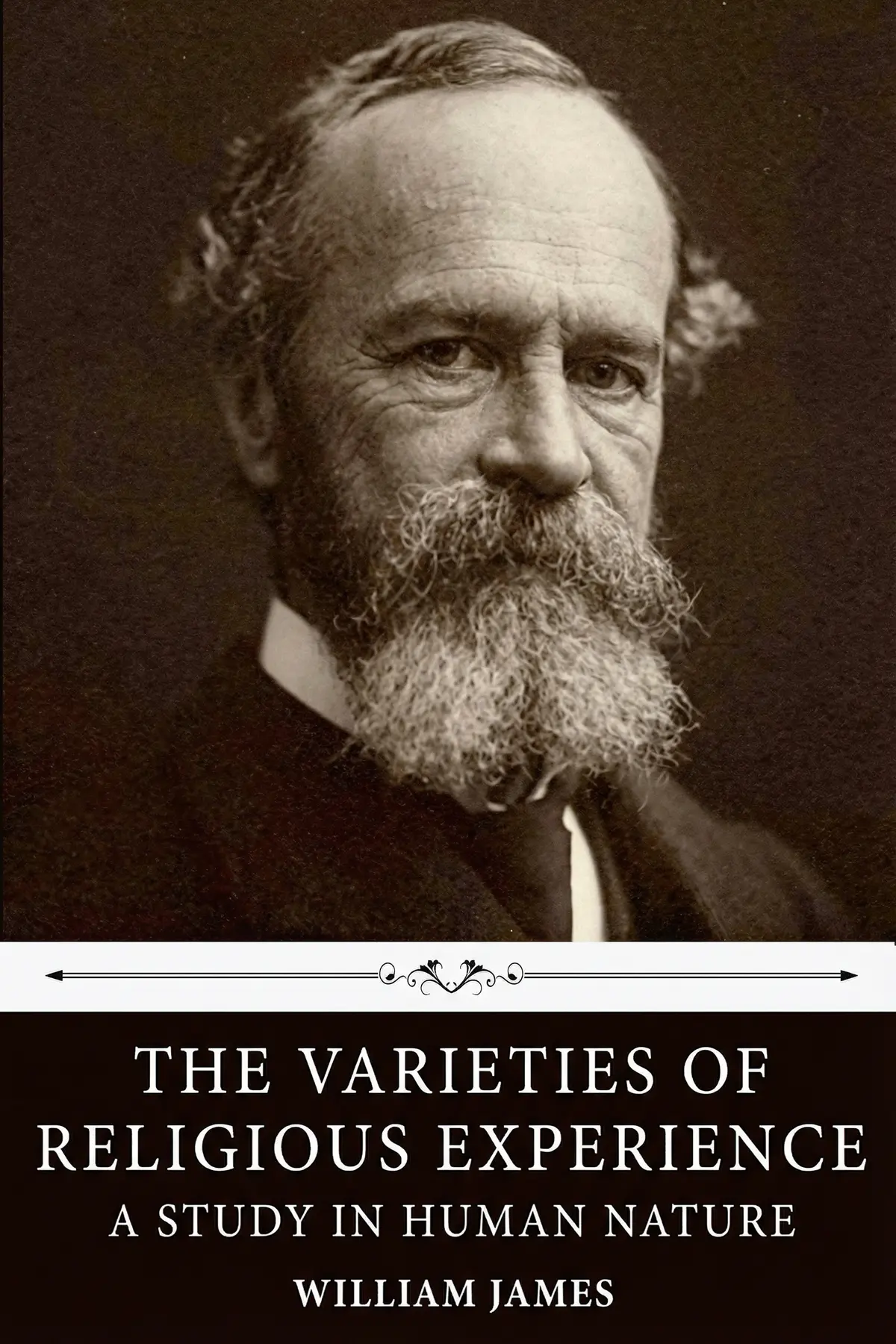
Table of Content
1. Introduction
1 min 52 sec
In our modern era, we often hear that the world is becoming increasingly secular. We see reports of rising atheism and the decline of traditional church attendance. Yet, if we look closer, we find that the vast majority of the global population still identifies with some form of religious belief. This suggests that religion isn’t just a relic of the past; it remains a fundamental pillar of the human experience, influencing everything from private daily routines to the grand stage of international politics. But if we want to understand the true heart of this phenomenon, we have to look past the buildings, the rituals, and the ancient texts. We have to ask: what is happening inside the person?
When we strip away the institutional layers, we are left with something deeply personal and psychological. This is where we find the ‘Varieties of Religious Experience.’ In the following segments, we’re going to explore the multifaceted world of the human spirit as seen through the eyes of one of the most influential thinkers in American history. We will discover why it is impossible to truly understand the human mind without accounting for the spiritual impulses that drive us. We’ll see how these experiences can act as a bridge between despair and hope, and how they have the power to fundamentally reshape a person’s identity.
We will journey through the stories of historical figures who found light in the midst of psychotic visions, and we will analyze the profound shifts that occur during moments of religious conversion. We will even touch on what something as seemingly mundane as laughing gas can reveal about the boundaries of our consciousness. This isn’t just a study of theology; it’s an investigation into human nature itself. By the end, you’ll see that whether or not one believes in the divine, the psychological reality of religious experience is an undeniable and essential part of what it means to be human.
2. The Psychological Significance of Spirituality
2 min 13 sec
Spirituality often reveals more about the human mind than science can explain alone, offering a window into our most mysterious internal landscapes.
3. Personal Conviction Versus Institutional Tradition
2 min 34 sec
True religious experience is found not in the rituals we inherit, but in the personal truths that anchor our individual lives.
4. The Power of the Unseen Reality
2 min 29 sec
Our lives are often governed by abstract ideas and invisible forces that feel more real and impactful than the physical objects we can touch.
5. Healthy-Mindedness and the Power of Positive Belief
2 min 17 sec
Some individuals possess a natural buoyancy of spirit, while others must consciously cultivate an optimistic outlook to navigate the world’s challenges.
6. The Sick Soul and the Journey Through Depression
2 min 04 sec
A profound awareness of the world’s darkness can lead to a ‘sick soul,’ but this very depth of despair can become the catalyst for a radical spiritual awakening.
7. Healing the Fractured Identity
2 min 04 sec
The internal conflict between who we are and who we wish to be can create a divided self, a tension that is often resolved through sudden or gradual transformation.
8. The Mechanics and Magic of Conversion
2 min 06 sec
Conversion is more than a change of mind; it is a total shift in our ‘habitual center of energy,’ often occurring when we finally stop trying so hard.
9. The Anatomy of the Saintly Character
2 min 20 sec
When spiritual emotions become the primary driver of a person’s life, they develop a distinct set of traits known as saintliness, characterized by sacrifice and bliss.
10. The Changing Value of Saintliness in Society
2 min 06 sec
The traits we admire in a spiritual life are not fixed; they evolve over time based on what society needs and values in any given era.
11. Mysticism: A Glimpse Behind the Veil
2 min 30 sec
Mystical states offer a fleeting but profound sense of direct knowledge that defies verbal description, yet feels more real than everyday consciousness.
12. Experience as the Foundation of Faith
2 min 03 sec
Theology and religious philosophy are often just after-the-fact attempts to explain what was first felt as a raw, personal experience.
13. Prayer, Energy, and the Subconscious Mind
2 min 15 sec
Prayer acts as a vital conduit for psychological energy, tapping into the subconscious to provide solace and dissolve the barriers of the ego.
14. Conclusion
1 min 44 sec
As we conclude this exploration into the diverse landscape of spiritual life, we are left with a powerful realization: the true value of religion lies not in its institutions, but in its ability to transform the individual. We have seen how religious experiences can serve as a profound psychological tool, offering a way for the ‘sick soul’ to find healing and for the ‘divided self’ to find unity. From the joyous optimism of the once-born to the hard-won peace of the converted, these internal shifts reveal the incredible depth and resilience of the human spirit.
William James has shown us that to understand ourselves, we must be willing to look at these experiences with both empathy and a critical eye. We should not dismiss spiritual events as mere madness, nor should we accept every dogma as absolute truth. Instead, by treating these experiences as psychological facts, we can begin to build a ‘science of religion’—one that focuses on what actually helps a human being live a more meaningful and purposeful life.
The takeaway is clear: the ‘unseen’ forces of our beliefs and our subconscious mind are some of the most powerful drivers of our behavior. Whether you consider yourself religious, spiritual, or entirely secular, the lesson remains the same. Our internal world—our hopes, our fears, and our moments of surrender—shapes our reality. By understanding the varieties of these experiences, we gain a better map of the human heart, and a deeper appreciation for the many ways we all seek to find our place in the universe. Let this be a call to look inward and recognize the profound power of your own subjective experience.
About this book
What is this book about?
What does it mean to have a religious experience? In this foundational work, the focus shifts away from the cold architecture of churches and the rigid structure of holy books to the internal, lived reality of the individual. The book explores the vast spectrum of human spirituality, from the ecstatic joy of the 'healthy-minded' to the deep, transformative despair of the 'sick soul.' It examines how these internal shifts can lead to profound psychological healing and permanent character change. By treating spiritual phenomena as psychological facts, the narrative provides a framework for understanding conversion, saintliness, and mysticism. It suggests that while institutional religion is often a matter of heritage, personal religion is a vital force that connects humans to a perceived higher order. The promise of this exploration is a deeper understanding of the 'unseen' forces that guide human behavior and the potential for spiritual experiences to act as a therapeutic power in the face of mental distress.
Book Information
About the Author
William James
William James was a trained physician, American psychologist, and philosopher who lived from 1842 to 1910. Often recognized as the father of American psychology, James was a pivotal figure in the development of pragmatism and radical empiricism.
Ratings & Reviews
Ratings at a glance
What people think
Listeners describe William James’s seminal masterpiece as a deep investigation into spirituality, emphasizing individual internal awareness rather than strict doctrines. Although perspectives differ regarding the text's complex writing style and its focus on radical historical examples, listeners value James’s analytical accuracy and "joyful curiosity" about humanity. Furthermore, they appreciate the way this work affirms individual emotions as a path to truth, with one listener highlighting that the author approaches even the most extreme conditions with "even-handed finesse." They also point out that the volume offers a solid basis for religious diversity, creating a perspective that continues to offer clarity more than one hundred years since it was first published.
Top reviews
Yulia
This seminal work offers a refreshing pivot from dry theology toward the pulsating, private reality of individual belief. James argues that the raw, subjective encounter with the divine carries more weight than any institutionalized creed or rigid dogma ever could. While the 19th-century prose can feel somewhat cumbersome for a modern reader, his intellectual precision remains sharp and remarkably relevant. He approaches the 'sick-souled' and the 'healthy-minded' with a unique brand of empathetic curiosity that refuses to dismiss their intense visions as mere pathology. It is a profound exploration of how we construct meaning in an often indifferent universe. By prioritizing personal truth over external validation, James provides a sturdy foundation for modern religious pluralism that still feels revolutionary today.
Show moreBae
Rarely does a philosopher capture the 'private and dumb' nature of our internal feelings with such incredible, even-handed finesse. James doesn't just analyze the religious impulse; he treats it as a vital, living component of the human condition that deserves our full attention. I found myself deeply moved by his description of the 'twice-born' soul and the struggle to find light in a world of desolation. While he admits he hasn't had many of these experiences himself, his joyful curiosity bridges the gap between the observer and the believer perfectly. This book gave me a vocabulary for things I have felt but never knew how to explain to others. It’s a masterpiece that validates the interior landscape of the individual against the cold machinery of rationalism.
Show moreKenji
After hearing about this book for years, I finally got around to tackling the full series of lectures. James possesses a rare ability to dissect the mystical with both the precision of a surgeon and the heart of a poet. He doesn't look down on his subjects, even when they seem 'sick-souled' or entirely detached from reality. Instead, he asks what these experiences do for the person having them and whether they produce 'good fruits' in the world. The writing style is definitely dense, and I’ll admit I skimmed some of the longer block quotes from obscure historical figures. But the way he connects prayer to a sense of 'transaction' with a higher power is truly brilliant. It’s a foundational text for anyone interested in why the spiritual impulse remains so persistent.
Show moreKomsan
William James manages to do something nearly impossible: he validates the spiritual life without ever once sounding like he’s trying to sell you a lifestyle. He treats the furor of the mystic and the quiet contentment of the healthy-minded with the same even-handed finesse. This isn't just a book about religion; it's a deep dive into what it means to be a conscious human being navigating an invisible world. I was struck by how he could take these wild, intense emotional states and lay them bare with such literary grace and psychological clarity. Even the most extreme examples he uses serve to build a framework that has lasted for over a century. If you value the subjective as a source of truth, this book is an absolute must-read.
Show moreJonathan
Picked this up because I kept seeing it cited in everything from psychology textbooks to spiritual memoirs. Truth is, James is a fantastic writer who manages to be both clinical and deeply respectful of his subject matter. He doesn’t try to sell you on a specific deity, but instead examines the 'fruits' of religious experience in everyday life. Some sections, particularly the ones filled with endless quotes from 17th-century saints, can feel repetitive and unnecessarily long. However, his analysis of conversion and saintliness provides a fascinating framework for understanding why people behave the way they do when they feel touched by something greater. It’s a dense read, but one that rewards your patience with genuine psychological insight.
Show moreLayla
As a 'none' who still feels a persistent spiritual pull, I found James’s perspective to be an incredibly welcoming and sophisticated middle ground. He avoids the traps of both militant atheism and dogmatic proselytizing by focusing entirely on how religion is actually lived and felt. The lectures on 'Healthy-Mindedness' were particularly enlightening, offering a psychological look at optimism that still resonates with today’s wellness culture. He treats every 'variant' of experience with a sympathetic sensibility that makes you feel like your own private thoughts are part of a larger, historical tapestry. The book is definitely a product of its time, especially in its limited focus on non-Christian traditions. Nevertheless, the core argument about the validity of subjective truth is something everyone should engage with.
Show morePete
Ever wonder why some people are just naturally 'born again' while others struggle with a dark night of the soul? James breaks this down with a level of intellectual precision that manages to be accessible without ever feeling patronizing or overly simplistic. He looks at religion not as a set of rules, but as a 'cosmic emotion' that can transform a person's entire character in an instant. Personally, I found the chapters on mysticism to be the highlights, even if the prose occasionally gets bogged down in 19th-century academic formalities. It is a thick book that requires a lot of mental energy, but it offers a rich framework for understanding human nature. James proves that you can be a skeptic and still appreciate the profound beauty of faith.
Show moreNam
Is it a classic? Yes. Is it an easy read? Absolutely not. My biggest gripe is that James seems to think the best way to study religion is by looking at its most extreme, borderline-pathological manifestations. He fills hundreds of pages with tedious accounts of mystics and ascetics that feel more like case studies in mental illness than spiritual enlightenment. Frankly, the book would be twice as good if it were half as long, as the repetitious footnotes often stretch on for pages. To be fair, he does write with a certain grace, and his ideas about the importance of subjective experience are compelling. Still, the lack of modern scientific rigor and the heavy cherry-picking of data make it a frustrating journey for anyone seeking objective clarity.
Show moreRatree
Frankly, the terminology James uses—like 'once-born' and 'twice-born'—is fascinating, but the book’s heavy Christian bias is impossible to ignore. He gives a cursory glance at other traditions, yet the vast majority of his 'varieties' are rooted in a very specific Western, Protestant context. The middle section on saintliness dragged on quite a bit with examples of extreme asceticism that felt more repetitive than insightful. To be fair, his argument that 'feeling' is the backbone of all religion is a powerful one that challenges our modern obsession with rationalism. I appreciated his 'joyful curiosity,' though I wish he had been more critical of the data he chose to include. It’s an important historical document, but it’s definitely showing its age in certain chapters.
Show moreThawee
Look, I really tried to find the brilliance in this, but the 'scientific' explanations felt like little more than fancy Latin names for hand-waving ideas. James claims to be using psychology, but there are no experiments or falsifiable claims here—just a massive pile of anecdotes selected to fit his specific narrative. Focusing on extreme saints who practiced self-torture is an odd way to explain the religious feeling of the average person. It’s like trying to understand human romance by only studying accounts of extreme BDSM; you end up with a very distorted picture. The prose is admittedly beautiful in spots, but the sheer volume of repetitious, unconvincing examples made this an annoying and exhausting slog. I expected more rigorous analysis and less armchair theorizing.
Show moreReaders also enjoyed
A Force for Good: The Dalai Lama's Vision for Our World
Daniel Goleman
59 Seconds: Change Your Life in Under a Minute
Richard Wiseman
A New Earth: Awakening to Your Life’s Purpose
Eckhart Tolle
A Return to Love: Reflections on the Principles of a Course in Miracles
Marianne Williamson
AUDIO SUMMARY AVAILABLE
Listen to The Varieties of Religious Experience in 15 minutes
Get the key ideas from The Varieties of Religious Experience by William James, plus 5,000+ more titles in English and Thai.
- 5,000+ titles
- Listen as much as you want
- 7-day free trial
- Cancel anytime







