
21 min 14 sec
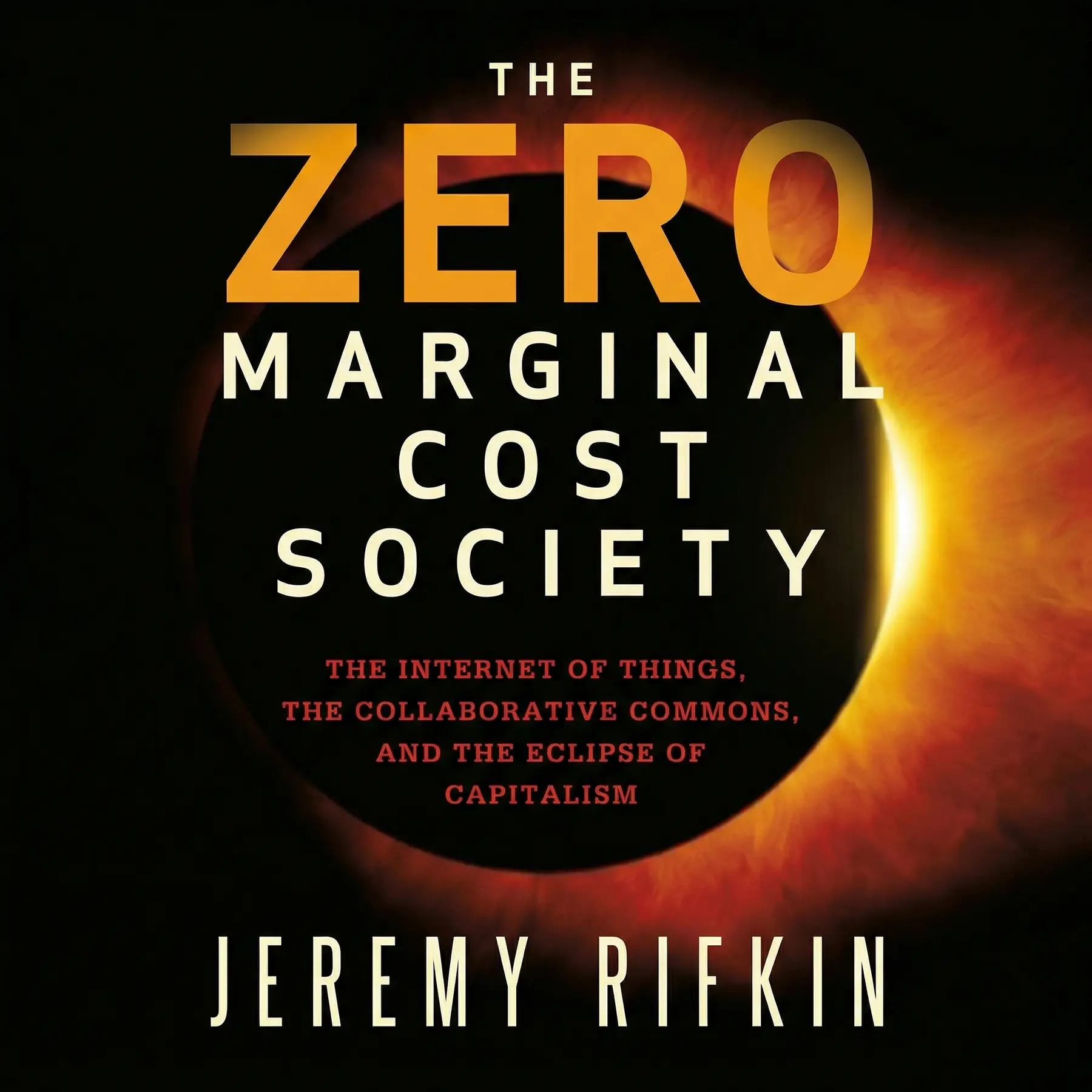
The Zero Marginal Cost Society: The Internet of Things, the Collaborative Commons and the Eclipse of Capitalism
Jeremy Rifkin explores how the Internet of Things and nearly zero marginal costs are triggering the decline of traditional capitalism, paving the way for a more sustainable, collaborative, and democratized global economy.
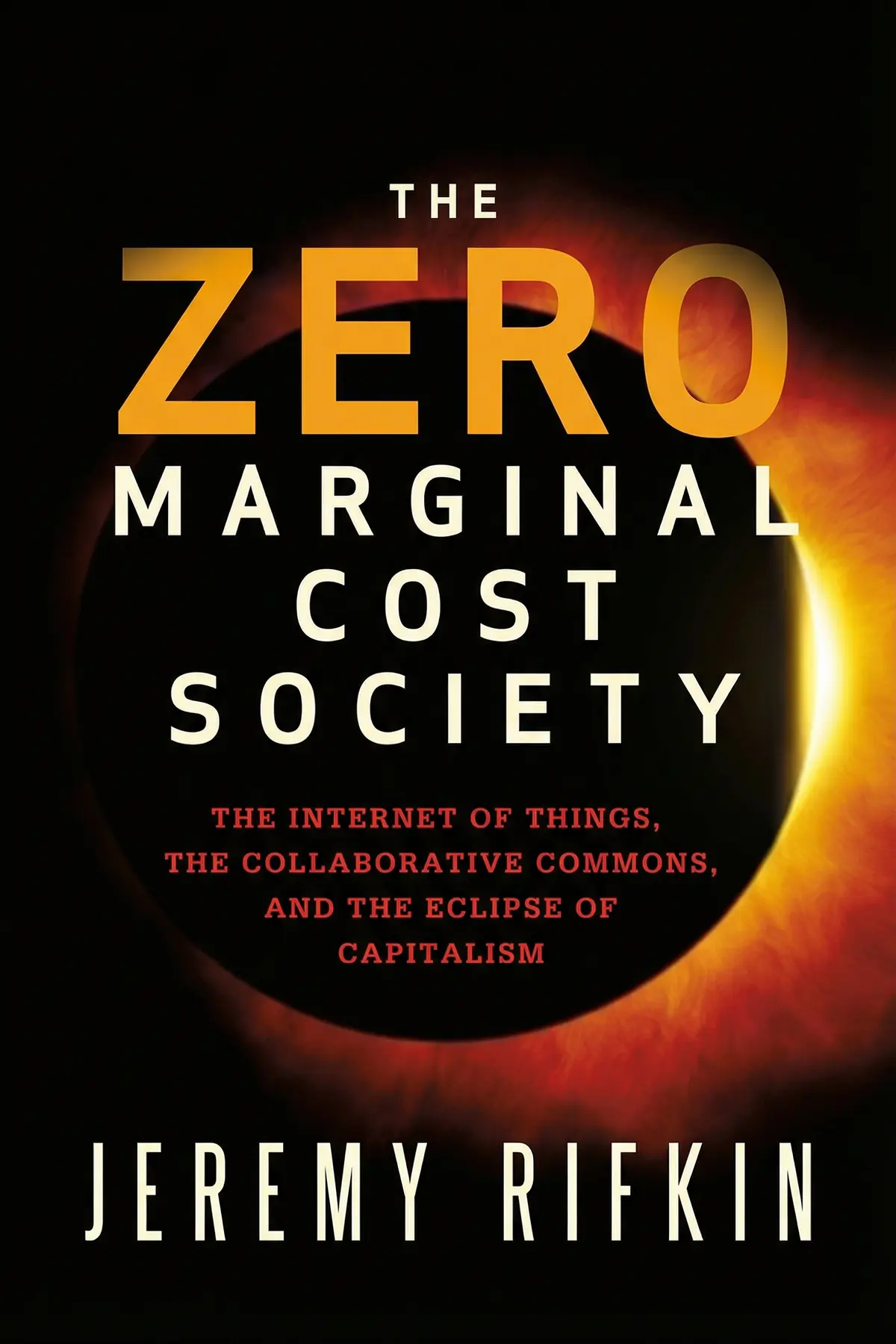
Table of Content
1. Introduction
1 min 30 sec
Welcome to an exploration of a future that is already unfolding around us. We often hear stories of tech startups that go from a garage operation to a global powerhouse in a few short years. These aren’t just anomalies; they are signals of a profound tectonic shift in how our world operates. In this summary of The Zero Marginal Cost Society, we are going to look at the work of Jeremy Rifkin, a thinker who suggests that the very foundations of capitalism are being shaken by the technologies we use every day.
At the heart of this transition is the concept of marginal cost—the expense of producing one more item after the initial setup is done. Rifkin’s central throughline is that as we integrate the internet into every facet of our lives, from energy to logistics, these costs are plummeting toward zero. This isn’t just a minor business trend; it’s a disruption that threatens the core logic of profit-making.
We’ll dive into how automation is changing the nature of work, why the laws of physics might actually limit how much a capitalist system can grow, and how a new generation of ‘prosumers’ is choosing sharing over ownership. By the end of this journey, you’ll see how the Internet of Things is stitching together a new kind of society—one that values collaboration and ecological sustainability over traditional market competition. Let’s begin by looking at the double-edged sword of automation.
2. The Paradox of Automation
2 min 27 sec
As machines become more capable than humans, companies face a strange dilemma: they can produce more than ever, but they might be destroying their own customer base in the process.
3. The Eclipse of Profit
2 min 21 sec
Discover why the ultimate success of a competitive market actually leads to the collapse of the profit motive and the traditional business model.
4. Thermodynamics and the Limits of Growth
2 min 21 sec
The universe operates on laws that don’t always align with economic theories, suggesting that endless growth may be physically impossible.
5. The Birth of the Prosumer
2 min 15 sec
The internet is blurring the line between who makes and who buys, creating a new class of people who prioritize access over ownership.
6. The Decentralized Energy Internet
2 min 11 sec
Traditional power companies are losing their grip as homeowners and small businesses begin to generate and share their own renewable energy.
7. Streamlining the Logistics Internet
2 min 15 sec
The way we move goods is incredibly wasteful, but a new open-source approach to shipping and storage could change everything.
8. 3D Printing and the End of Mass Production
2 min 10 sec
Massive factories are being replaced by small-scale, local manufacturing that is cheaper, faster, and much better for the environment.
9. Education for a Collaborative Age
2 min 13 sec
The traditional classroom is being replaced by a more open, interdisciplinary, and student-led model that mirrors the new economy.
10. Conclusion
1 min 31 sec
As we reach the end of our journey through Jeremy Rifkin’s vision, the throughline becomes clear: the era of traditional capitalism is not ending because of a sudden failure, but because of its own spectacular success. By relentlessly pursuing efficiency, we have created a technological infrastructure—the Internet of Things—that is driving the cost of our most basic needs toward zero.
This transition from a world of scarcity and ownership to one of abundance and access is not without its challenges. We will have to navigate the disruption of labor markets and the resistance of old-guard industries. Yet, the promise of the Collaborative Commons is immense. It offers a path toward a more equitable society where the tools of production are in the hands of the many rather than the few. It provides a blueprint for a sustainable future that respects the physical limits of our planet while fostering human creativity and connection.
The takeaway for all of us is to lean into this collaborative spirit. Whether it’s through generating your own green energy, participating in the sharing economy, or supporting open-source education, you are already a part of this transformation. The age of competition for private gain is giving way to an age of collaboration for the common good. In the zero marginal cost society, our greatest wealth is not what we own, but what we are willing to share.
About this book
What is this book about?
The Zero Marginal Cost Society provides a sweeping look at the future of our economic systems. Jeremy Rifkin argues that the very mechanisms that made capitalism successful—namely, the drive for extreme productivity and efficiency—are now leading to its eventual eclipse. As technology advances, the cost of producing an additional unit of goods or services is dropping toward zero, making it nearly impossible for traditional profit-driven businesses to survive. In place of the old guard, Rifkin identifies the rise of the Collaborative Commons. This new paradigm is built on the Internet of Things, which connects a Communication Internet, an Energy Internet, and a Logistics Internet. This shift transforms us from passive consumers into proactive prosumers who share energy, goods, and knowledge. The book promises a vision of a world where sustainability replaces endless growth, and where the democratization of production through 3D printing and renewable energy allows for a more equitable human experience.
Book Information
About the Author
Jeremy Rifkin
Jeremy Rifkin is one of the most popular and influential thought leaders of the modern era. He has shared his expertise as an advisor to leading global corporations, heads of state, and the European Union. Rifkin is the bestselling author of twenty books, including notable works such as The End of Work and The Empathic Civilization, which explore the intersections of technology, labor, and society.
Ratings & Reviews
Ratings at a glance
What people think
Listeners find this work both stimulating and deep, especially valuing Rifkin’s unique outlook on significant economic movements. It is characterized as a must-read that dives into many fresh subjects and provides a strong summary, with one listener highlighting its elegantly detailed explanations. The book receives favorable remarks regarding its social influence, as one listener points to the way it investigates the sharing and social economy. Although listeners consider the material gripping, they do have some reservations about the speed of the narrative, noting it feels underfunded. Perspectives on the author's logic are split; one listener feels the points are sound, while another complains about a superficial understanding of economic principles.
Top reviews
Supachai
Rifkin’s vision for a post-capitalist world is nothing short of revolutionary. He masterfully connects the dots between the Internet of Things, renewable energy, and the rise of the collaborative commons to show how our current economic model is being disrupted. While some might find his optimism a bit extreme, I found his exploration of 3D printing and the decline of marginal costs to be genuinely eye-opening. The shift from a society focused on private ownership to one defined by shared access feels inevitable after reading his arguments. Frankly, this book changed the way I look at my daily consumption habits and the potential of decentralized energy grids. It’s a dense read, and the pacing slows down in the middle chapters, but the intellectual payoff is worth the effort. For anyone worried about the future of our planet, this offers a rare and necessary glimpse of hope.
Show moreAmelia
After hearing doom and gloom scenarios for years, finding a book that offers a positive outlook was a breath of fresh air. Rifkin suggests that we are moving toward an era of abundance where the struggle for survival is replaced by a focus on social capital and meaning. I loved the section on how our innate nature is actually cooperative rather than competitive, which flies in the face of traditional capitalist theory. The idea that we are building a "global brain" through the Internet of Things is both exciting and terrifying, but Rifkin leans into the potential for good. Personally, this book gave me a renewed sense of hope for the next generation and their ability to solve the climate crisis. It’s not just about gadgets; it’s about a fundamental shift in human consciousness and how we relate to one another. You might not agree with every conclusion, but you can’t deny the power of the narrative he weaves.
Show moreThanit
Finally got around to finishing this, and I feel like I have a completely new framework for understanding the news. Every time I see a story about 3D printing or community-owned solar grids, I think back to Rifkin’s "Third Industrial Revolution." He manages to weave together disparate trends into a single, cohesive narrative about where humanity is headed. The truth is, we are living through a period of radical upheaval, and this book helps make sense of the chaos. I appreciated his honesty about the risks, like cyberterrorism and climate change, which could easily derail his optimistic timeline. Even with those caveats, the focus on the collaborative commons provides a beautiful, in-depth explanation of how we might actually survive the collapse of the industrial age. It is a chunky book that requires a significant time investment, but the perspective it provides is absolutely essential. Five stars for the sheer ambition and the wealth of information presented.
Show moreTaweesak
Ever wonder why so many things are becoming free or nearly free online? Rifkin tackles this phenomenon head-on by explaining how the "zero marginal cost" effect is bleeding from the digital world into the physical one. He provides a fascinating overview of how smart infrastructure will eventually allow us to produce our own energy and goods at almost no expense. I appreciated the deep dive into the history of previous industrial revolutions, as it grounded his futuristic predictions in historical reality. However, the book does feel a bit bloated with repetitive examples that could have been trimmed for a more punchy delivery. To be fair, his logic holds up well for the most part, even if he glosses over the potential for corporate capture of the sharing economy. It’s a thought-provoking piece of social analysis that everyone should at least skim to understand where we're headed.
Show moreWanphen
Picked this up after hearing a lecture on the "Third Industrial Revolution" and I wasn't disappointed. Rifkin manages to make the dry subject of economics feel deeply human by linking technological shifts to the evolution of empathy. He argues that as we become more interconnected through the Internet of Things, our sense of responsibility will expand to include the entire biosphere. It’s a bold claim, but his historical parallels make it seem plausible rather than just idealistic. Look, the book is undeniably long, and he does repeat himself to drive points home, which might frustrate some readers. Still, the exploration of the social and sharing economy is one of the most comprehensive I’ve encountered so far. It challenges the cynical view that humans are purely selfish actors, suggesting instead that we thrive on collaboration. Even if only half of his predictions come true, the world will be a vastly different place.
Show moreRatree
As someone who works in tech, I found Rifkin’s take on the future of automation and labor to be quite sobering. He doesn't shy away from the fact that a zero marginal cost society might mean the end of traditional employment for billions. The tension between a growing world population and the shrinking need for human labor is the central challenge of our time. Rifkin explores various ways we might handle this, from shorter work weeks to a completely new social welfare paradigm based on the commons. While the book is definitely underfunded in terms of concise editing, the breadth of topics—from 3D printing to green energy—is staggering. My only real gripe is that he occasionally underestimates the resilience of old-guard corporate interests to maintain their monopolies. Despite that, it remains a required read for anyone trying to navigate the complexities of our changing global economy.
Show moreStella
Not what I expected from an economics book, but in a very good way. Rifkin moves beyond charts and graphs to talk about the real-world impact of the sharing economy and car-sharing apps. He paints a picture of a world where sustainability isn't just a buzzword but a built-in feature of our infrastructure. I found the chapter on the Internet of Things particularly insightful because it explains the "how" behind the transition to green energy. Not gonna lie, there were parts where the logic felt a bit shaky, especially regarding how we'll fund the massive infrastructure changes he proposes. But the overall vision is so compelling that it’s easy to overlook some of the smaller flaws in his argument. It serves as a great overview of the various technological trends that are currently converging. Definitely a thought-provoking read that will spark plenty of conversations with friends and colleagues.
Show moreWatchara
This was a bit of a slog to get through, despite the incredibly interesting premise. Jeremy Rifkin is clearly a brilliant thinker, but he desperately needed a more aggressive editor for this particular volume. He spends hundreds of pages rehashing the same few points about the collaborative commons and the death of traditional capitalism. I found myself nodding along for the first fifty pages, then checking how much was left every twenty minutes after that. The truth is, the core of his argument could have easily been condensed into a long-form essay or a TED talk without losing much substance. I still give it three stars because the data on green energy and decentralized manufacturing is genuinely valuable. It’s just buried under so much academic fluff that it feels underfunded in terms of structural polish. If you have the patience, there’s a lot to learn here, but prepare for a marathon rather than a sprint.
Show moreAiden
I’ve been following Rifkin’s work on YouTube for a while, so I finally decided to dive into the source material. To be honest, I think his lectures are a lot more efficient at getting the point across than this 400-page tome. The book is packed with fascinating data points, but it suffers from a major pacing problem that makes it hard to finish. He uses five examples when one would have sufficed, leading to a lot of skimming on my part. The core message about the transition from ownership to access is brilliant, but the execution is just too dense for the average reader. If you’re a die-hard fan of social analysis, you’ll enjoy the thorough notes and the deep dive into historical energy regimes. Otherwise, you might find yourself better served by watching his interviews. It’s a good book buried inside a much longer, repetitive one.
Show moreJan
While the data points gathered here are impressive, the underlying economic logic feels fundamentally flawed. Rifkin assumes that because the cost of production is dropping, the entire market system will simply evaporate into a utopian "commons." This ignores the reality of R&D costs and the way initial high prices recoup investment before commoditization happens. He paints a seductive picture for millennials—sharing cars, 3D printing everything, the end of advertising—but it feels more like wishful thinking than rigorous forecasting. I also noticed a tendency to cherry-pick facts from his footnotes to support a pre-determined narrative about the demise of capitalism. The information on the Internet of Things is certainly educational, yet I couldn't shake the feeling that he was over-interpreting trends to fit his personal worldview. It’s a decent collection of observations, but as a roadmap for the future, it lacks the necessary economic nuance to be truly convincing.
Show moreReaders also enjoyed
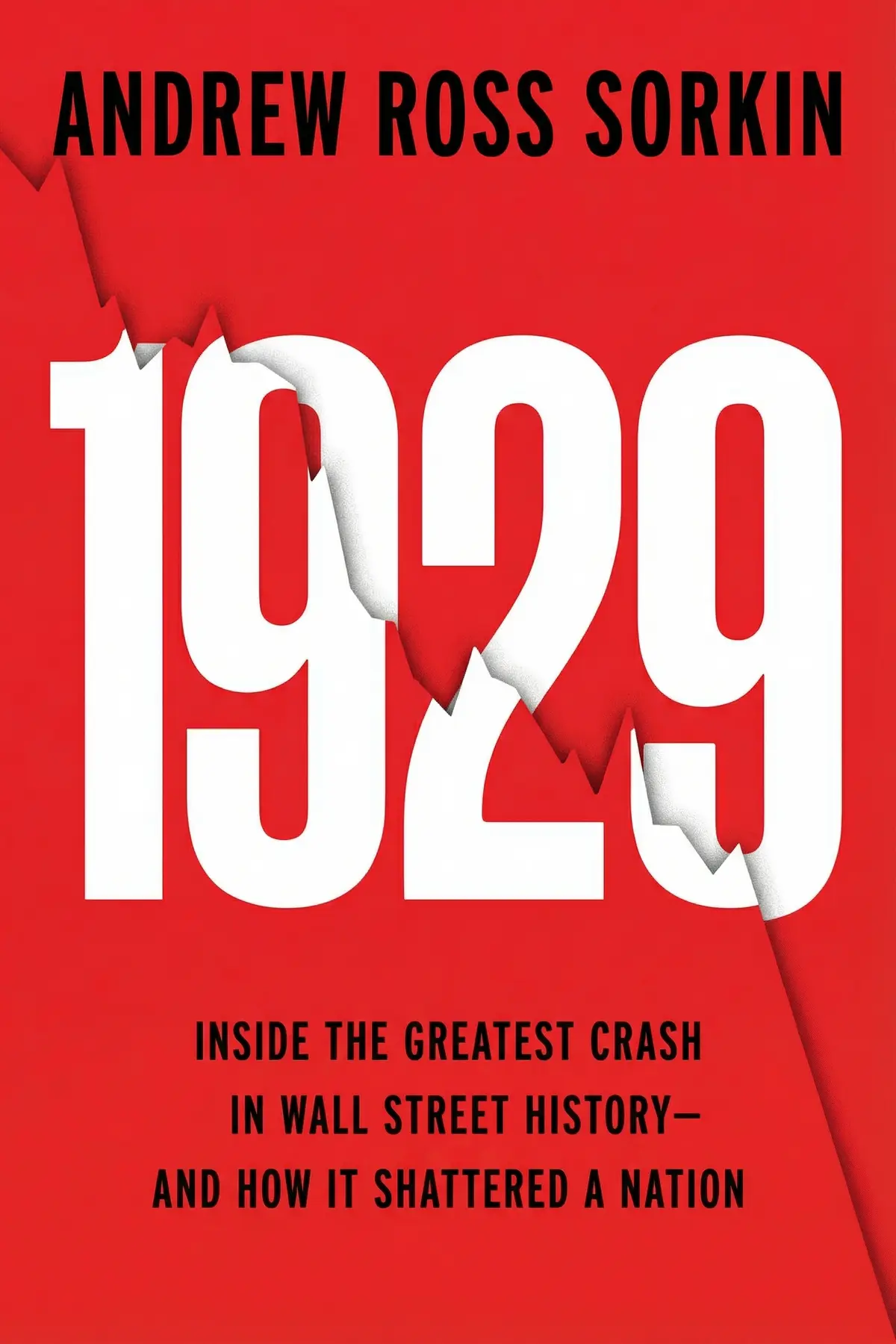
1929: Inside the Greatest Crash in Wall Street History--and How It
Andrew Ross Sorkin
23 Things They Don’t Tell You About Capitalism
Ha-Joon Chang

A Little History of Economics
Niall Kishtainy
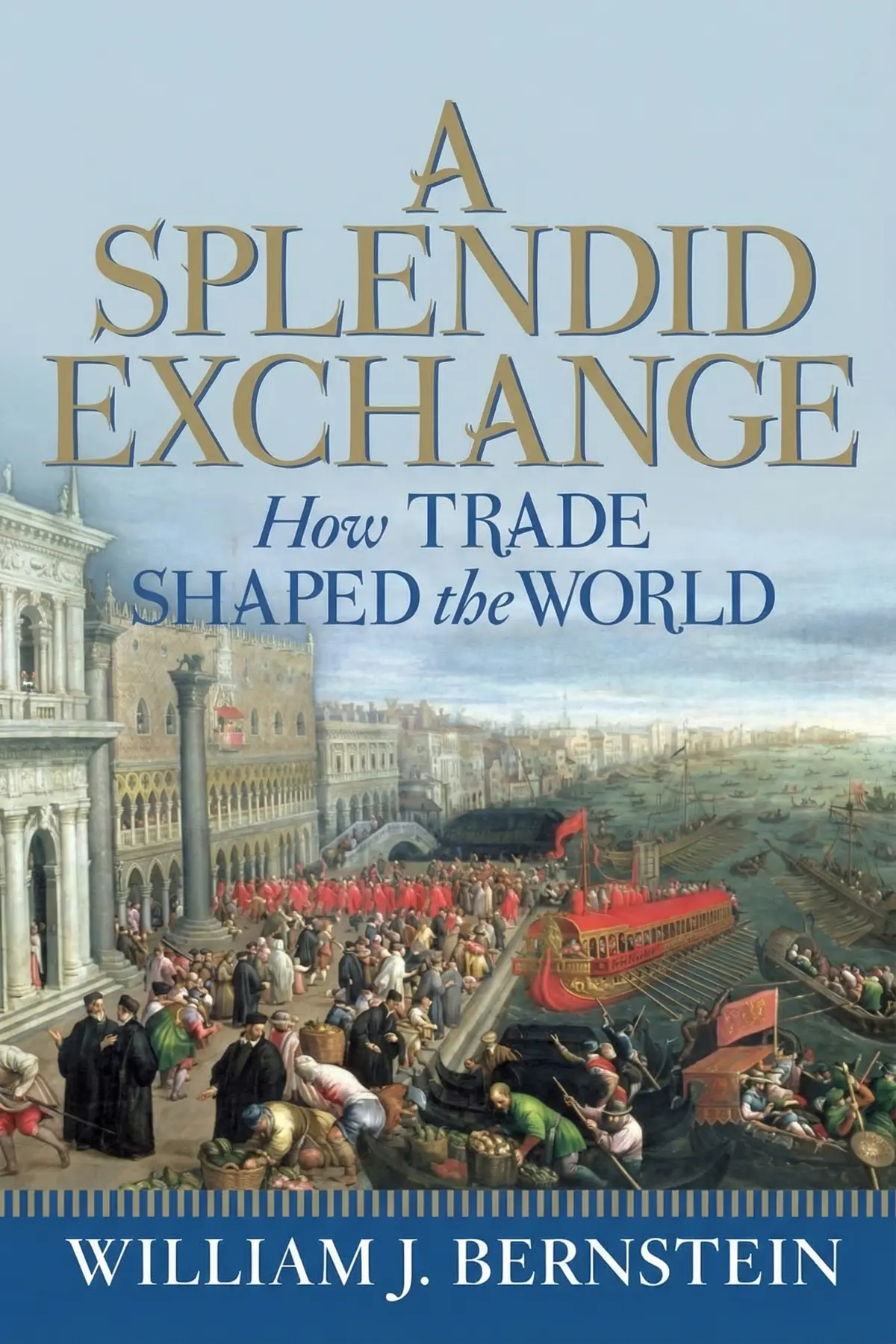
A Splendid Exchange: How Trade Shaped the World
William J. Bernstein

AUDIO SUMMARY AVAILABLE
Listen to The Zero Marginal Cost Society in 15 minutes
Get the key ideas from The Zero Marginal Cost Society by Jeremy Rifkin, plus 5,000+ more titles in English and Thai.
- 5,000+ titles
- Listen as much as you want
- 7-day free trial
- Cancel anytime







