
19 min 18 sec
Thinking 101: How to Reason Better to Live Better
Explore the cognitive traps that skew our judgment and discover practical, research-backed strategies to sharpen your reasoning, improve your decision-making, and navigate the complexities of daily life with greater clarity.
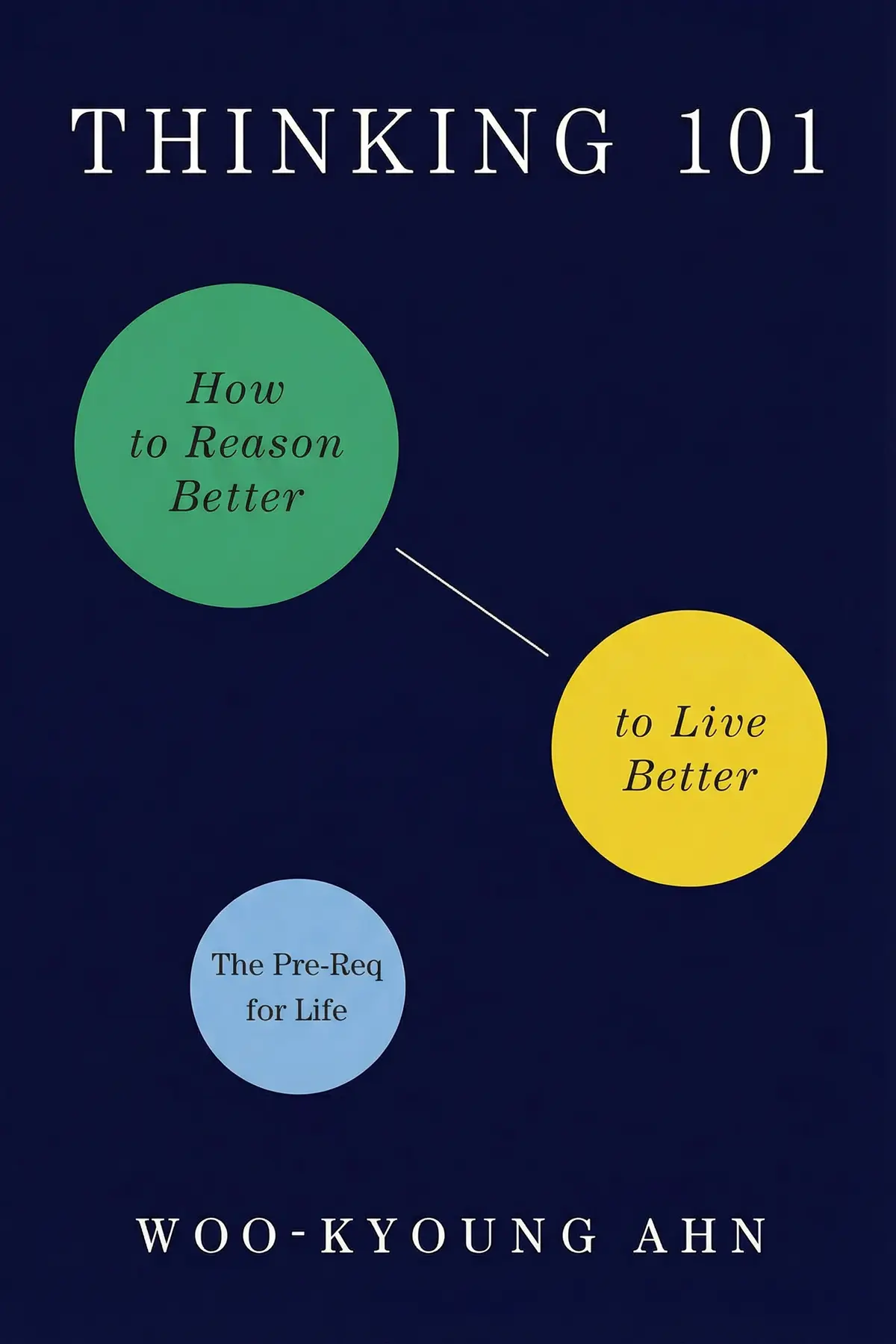
Table of Content
1. Introduction
1 min 43 sec
Imagine walking onto the campus of Yale University, one of the most prestigious academic institutions in the world. Amidst the specialized lectures on quantum physics, constitutional law, and neurobiology, there is one course that consistently draws a massive crowd of undergraduates. It isn’t a class on high finance or complex engineering. It’s simply called Thinking.
This course, developed by Professor Woo-kyoung Ahn, addresses a fundamental truth that many of us ignore: most of our problems, both personal and societal, don’t stem from a lack of information, but from how we process that information. We are all equipped with powerful biological computers between our ears, but those computers come with a set of factory-default settings that often lead us into the same repetitive traps. We overstate our skills, we ignore evidence that doesn’t suit us, and we let our emotions cloud our logic.
You don’t need a Yale ID to benefit from these insights. The core philosophy of this exploration is that by identifying these cognitive pitfalls, we can start to build a more accurate map of reality. This isn’t just about being right in an argument; it’s about making decisions that lead to a better life. From the way we manage our money to the way we treat our neighbors, the quality of our outcomes is directly tied to the quality of our thinking. Over the next several segments, we will dive into the specific biases that shape our world, examining why they happen and, most importantly, how we can implement simple, practical mental shifts to overcome them. By the end, you’ll have a clearer understanding of how to navigate a world full of noise with a mind that is sharp, fair, and focused.
2. The Illusion of Mastery
2 min 24 sec
Have you ever felt confident about a task just by watching someone else do it, only to fail miserably once you tried it yourself?
3. The Trap of Confirmation
2 min 16 sec
We often believe we are looking for the truth, but more often, we are simply looking for a mirror that reflects our current beliefs.
4. The Power of the Single Story
2 min 24 sec
Statistics provide the facts, but anecdotes provide the feelings—and our brains are wired to prioritize feelings over data.
5. The Weight of Ownership and Loss
2 min 06 sec
Why is it so much harder to give something up than it was to decide to get it in the first place?
6. The Filters We Can't Unsee
2 min 14 sec
Our existing beliefs act like a tinted lens, coloring every new piece of information that passes through them.
7. The Empathy Gap in Communication
2 min 15 sec
We think we are being perfectly clear, but to everyone else, we are often a complete mystery.
8. The Struggle with Our Future Selves
2 min 15 sec
Why do we treat our future selves like strangers, sacrificing their long-term happiness for a small reward today?
9. Conclusion
1 min 41 sec
As we have seen, the human mind is a paradox. It is capable of incredible feats of creativity and logic, yet it is also remarkably prone to consistent, predictable errors. From the overconfidence born of easy processing to the emotional weight of loss and the struggle to connect with our future selves, these cognitive biases are woven into the very fabric of how we function.
But the core message of Thinking 101 isn’t that we are doomed to be irrational. Instead, it is a call to awareness. Like a pilot learning to trust their instruments over their own physical sensations during a storm, we can learn to trust these psychological tools over our gut instincts. By applying the 50 percent rule to our plans, actively seeking out evidence that contradicts our beliefs, and treating our future selves with the same kindness we would show a friend, we can begin to untangle the knots in our thinking.
This isn’t just an academic exercise. Better reasoning leads to a life with fewer regrets, more meaningful relationships, and a clearer sense of purpose. On a larger scale, a society made up of individuals who are aware of their own biases is a society that is more compassionate, less polarized, and better equipped to solve its most pressing problems. The ‘Thinking’ course at Yale is popular because it offers a way to navigate the world with more agency and less error. By taking these lessons to heart, you are not just improving your mind—you are improving your world. Start small: the next time you are certain you are right, take a moment to ask why you might be wrong. That single moment of reflection is where better thinking begins.
About this book
What is this book about?
Thinking 101 explores the fascinating and often frustrating ways our brains lead us astray. Drawing from one of Yale University’s most popular courses, the book identifies the most common cognitive biases—from the illusion of mastery to the pitfalls of confirmation bias—and explains how these mental shortcuts can result in poor financial choices, strained relationships, and societal prejudices. The book promises a toolkit for mental recalibration. It isn't just a list of mistakes we make; it's a guide to living better by reasoning better. By understanding the underlying mechanics of how we process information, stories, and emotions, you can learn to override your default settings. The core promise is that by making small, intentional shifts in how we evaluate evidence and communicate with others, we can significantly improve our individual lives and contribute to a more rational, cooperative society.
Book Information
About the Author
Woo-Kyoung Ahn
Woo-kyoung Ahn serves as the John Hay Whitney Professor of Psychology at Yale University. She is the visionary mind behind the undergraduate course titled Thinking, which has grown to become one of the most sought-after and popular classes at the university. Her work focuses on bridging the gap between high-level psychological research and practical, everyday applications for better reasoning.
Ratings & Reviews
Ratings at a glance
What people think
Listeners find that although some feel the content merely touches on familiar psychological concepts, the work functions as a very approachable and captivating starting point for those unfamiliar with cognitive science. They value how the author utilizes everyday, practical scenarios to clarify intricate biases, and one listener described the book's worth as a sequence of "mental pushups" to maintain cognitive sharpness. Furthermore, listeners prize the actionable techniques for enhancing everyday choices and fostering self-empathy. They also point out that the observations are ready for instant use in life, with one listener emphasizing that grasping the "planning fallacy" resulted in immediate stress relief.
Top reviews
Ahmed
Wow. I didn't expect a psychology book to provide this much immediate stress relief, but here we are. The discussion on the planning fallacy was a total lightbulb moment for me. I used to beat myself up for always being behind on projects, thinking I was just lazy or disorganized. Realizing that this is a documented cognitive process allowed me to have more self-empathy and grace for my own shortcomings. Truth is, we often treat our brains like computers, but they are evolved for quick survival decisions, not perfect logic. Dr. Ahn’s writing is incredibly engaging and makes these complex Yale-level concepts feel like a conversation over coffee. I’ve already started applying the strategies for confirmation bias in my daily news consumption. It's a powerful reminder of our shared human flaws and how we can navigate them with a bit more patience.
Show moreSiraporn
Picked this up because I wanted to understand why people believe things that are so clearly disprovable. I’ve watched friends fall down rabbit holes of misinformation lately, and this book helped me see the cognitive mechanics behind that. Ahn explains how confirmation bias leads us to seek out only what supports our existing views while ignoring everything else. The strategy she offers—actively seeking to disprove your own hypothesis—is something everyone should practice before posting on social media. It also helped me realize how much I struggle with the 'not me' bias, thinking I’m immune to these flaws while others are not. The book is surprisingly emotional and made me feel more connected to the rest of humanity. It’s not just about thinking better; it’s about finding a little more grace for the people around us.
Show moreWyatt
Ever wonder why you think you can do something just because you’ve watched someone else do it? The chapter on the fluency effect explains this perfectly using the Michael Jackson moonwalk example. Just because you've seen the moonwalk twenty times doesn't mean your muscles know the mechanics of the move. This book is full of these 'aha' moments that make you look at your own overconfidence in a whole new light. To be fair, some of the sections on racism and systemic bias felt a bit rushed, as if the author didn't want to dig too deep into the controversy. However, the overall package is an excellent introduction to how we trick ourselves daily. It’s readable, fun, and doesn’t get bogged down in too much academic jargon. If you want to argue better and plan your life more effectively, this is a solid place to start.
Show moreSin
Finally got around to reading this after seeing it all over my social media feed. It turns out the hype for this Yale professor’s work is mostly justified if you’re looking for a clear, introductory text. I particularly appreciated the use of Bayes Theorem to explain why conflating terrorism with specific religions is statistically unsound. It’s these kinds of pointed, real-world applications that make the book feel relevant to current events. The writing style is brisk and avoids the dry tone of most textbooks. Not gonna lie, I was a bit annoyed by some of the personal value statements she threw in without much supporting evidence. They felt out of place in a book about logical thinking. Still, the core lessons on causal attribution and biased interpretation are incredibly valuable for anyone trying to navigate today’s polarized political climate.
Show moreAnthony
Look, this book is basically a condensed version of a popular Yale course, and you can definitely feel that energy in the prose. It’s punchy, examples-heavy, and very focused on student-level engagement. The chapter on the problem of examples was especially enlightening for me. We often rely on stories because they are concrete, even when statistics provide a more accurate picture of reality. Ahn’s breakdown of the fluency effect—where we mistake ease of understanding for actual mastery—is a lesson I think every creator needs to hear. Personally, I found the book to be a great way to keep my thinking sharp without having to slog through a thousand pages of data. It’s an accessible gateway into cognitive science that doesn't feel like homework. Some might call it derivative, but I call it highly efficient communication.
Show moreJom
After hearing a friend talk about the Walgreens car breakdown example from this book, I knew I had to read it. It’s a perfect illustration of how we assign blame to things we think we can control, even when they’re just random events like a dead battery. The book is full of these relatable moments that bridge the gap between high-level psychology and everyday life. I loved the distinction between maximizers and satisficers in the chapter on confirmation bias. Realizing that always looking for the best option can actually make you less happy was eye-opening for me. The truth is, my mental health has actually improved since I started identifying these biases in my own head. It’s a quick read that packs a punch, even if some of the strategies feel a bit simplistic at times.
Show moreSau
The chapter on fluency and the Dunning-Kruger effect was a personal attack in the best way possible. I recently tried to bake bread after watching a single YouTube video, and the results were disastrous—basically a salty cracker. Ahn’s book explained exactly why I felt so confident despite having zero actual skill. This isn't just a book of definitions; it's a toolkit for understanding why we fail and how we can do better next time. I appreciated the specific details, like the advice on using empathy to combat perspective-taking biases. While it might not be the most rigorous academic text on the market, its accessibility is its greatest strength. It makes the world feel a little less chaotic by explaining the hidden logic behind our most common mistakes. Highly recommended for anyone who wants to stop being their own worst enemy.
Show moreLook
As a student in a research methods course, I found this to be a bit of a mixed bag. My professor assigned several chapters, and while the definitions of bias are clear, the examples sometimes felt weak or overly generalized. For instance, the COVID-19 generalizations in the opening chapter left my margins filled with question marks. Bias usually necessitates at least two actors and is heavily influenced by our environments, but Ahn often focuses strictly on the individual scale. I also struggled with the idea that 'one study shows' something, because we’re taught that a single study is never enough to form a conclusion. That said, for someone who has never heard of the illusion of explanatory depth, this would be a mind-blowing read. It’s a very self-helpy take on cognitive science that might reach an audience that usually avoids dense academic texts.
Show moreEye
To be fair, this book is mostly a collection of mental pushups rather than groundbreaking new research. If you’re a veteran of the pop-psych genre, you won’t find much here that hasn't been covered by Gladwell or Kahneman. However, there is something to be said for the way Ahn simplifies these terms for a general audience. The definitions are google-able, sure, but her framing makes them feel more actionable for daily life. I found the chapter on delayed gratification and the marshmallow test to be a bit repetitive, yet it served as a good reminder of how our future selves are often strangers to us. It’s a strong 3-star read—perfect for a plane ride or a quick weekend study. It skims the surface of the human mind without ever quite diving into the deep end of the pool.
Show moreRoydao
Thinking 101 feels like another unneeded entry into the already crowded cognitive bias genre. While Ahn is an active research scientist at Yale, the book prioritizes accessibility so much that it loses necessary rigor. I expected a deep dive into causal inference given her background, but we mostly get a surface-level tour of well-known biases like loss aversion and confirmation bias. Frankly, it seems like an academic branding exercise rather than a serious contribution to psychology. If you’ve read Thinking, Fast and Slow, you’ve already encountered these ideas in a much more substantial format. It is a decent enough primer for a novice, yet I found the delivery glib and the anecdotes somewhat workshopped. The title is also misleading, as it focuses more on mental shortcuts than on deliberate, logical reasoning processes. It is safe to assume this was written primarily for promotional reasons.
Show moreReaders also enjoyed
Age of Propaganda: The Everyday Use and Abuse of Persuasion
Anthony Pratkanis
59 Seconds: Change Your Life in Under a Minute
Richard Wiseman
A Liberated Mind: How to Pivot Toward What Matters
Steven C. Hayes
AUDIO SUMMARY AVAILABLE
Listen to Thinking 101 in 15 minutes
Get the key ideas from Thinking 101 by Woo-Kyoung Ahn, plus 5,000+ more titles in English and Thai.
- 5,000+ titles
- Listen as much as you want
- 7-day free trial
- Cancel anytime







