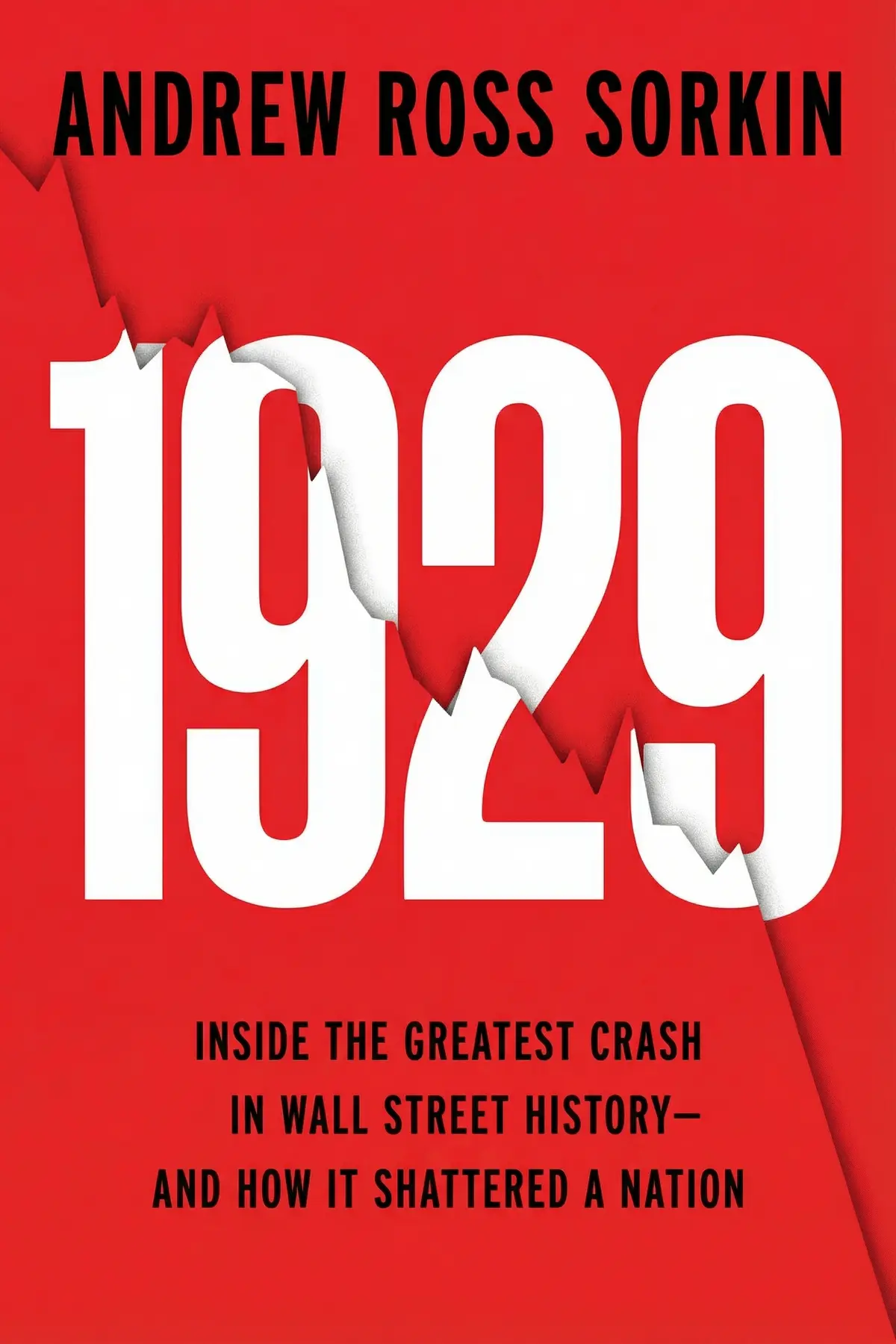
1929: Inside the Greatest Crash in Wall Street History--and How It
Andrew Ross Sorkin
An intense exploration of the 2008 financial crisis, chronicling the desperate actions of Wall Street executives and government officials as they fought to prevent a total global economic collapse.
1 min 33 sec
The year 2008 serves as a stark reminder of how quickly the foundations of the modern world can begin to crumble. It was a time when names like Lehman Brothers and Bear Stearns transitioned from symbols of American prosperity to warnings of economic disaster. At the heart of this collapse was a question that would define an era: what happens when the institutions we rely on for stability become the primary sources of risk?
This is the story of a system built on optimism and leverage that suddenly found itself staring into an abyss. As we begin this journey, imagine the pressure of being a central player in this drama—a CEO or a government regulator tasked with saving a global economy that is falling apart by the hour. We will walk through the corridors of power, from the plush executive offices in Manhattan to the high-stakes meeting rooms of the Federal Reserve.
Through this narrative, we will explore the throughline of human ambition and the devastating consequences of systemic fragility. We’ll see how a lack of transparency and an over-reliance on complex debt products created a domino effect that no one seemed able to stop. This isn’t just a history of numbers and interest rates; it’s a deeply human account of ego, panic, and the desperate search for a solution in a world where the old rules no longer applied. By the end, you’ll understand the mechanics of the crisis and the lasting impact of the decisions made during those frantic months.
2 min 15 sec
The crisis began not with a sudden explosion, but with the quiet realization that the bedrock of the financial world was built on shifting sand.
2 min 06 sec
As the private sector faltered, the focus shifted to Washington, where leaders grappled with the ethics and necessity of a public rescue.
1 min 57 sec
Lehman Brothers found itself increasingly isolated as its leaders searched for a lifeline in a market that had grown cold and suspicious.
2 min 07 sec
In a high-stakes summit, the titans of Wall Street were forced into a room to decide the fate of their rival and the global economy.
2 min 06 sec
The fall of Lehman Brothers proved that no institution is an island, as the resulting shockwaves devastated the global financial landscape.
1 min 56 sec
The narrative of the 2008 financial crisis, as seen through the lens of those who lived it, is a powerful study in the limits of leadership and the dangers of complexity. We have seen how the fall of Lehman Brothers was not just an isolated business failure, but the result of a long period of unchecked risk and a fundamental misunderstanding of how interconnected our global economy has become. From the initial shocks of the subprime market to the desperate final hours in the New York Fed, the story highlights a recurring theme: in a crisis of this magnitude, there are no easy choices, only varying degrees of risk.
The throughline of this summary has been the precarious balance between the drive for profit and the need for stability. The figures we’ve discussed—Fuld, Paulson, Geithner—were all operating in an environment where the information was incomplete and the stakes were existential. Their story serves as a cautionary tale for any leader. It teaches us the importance of transparency, the necessity of rigorous risk assessment, and the danger of assuming that the past is always a reliable guide to the future.
As you reflect on these events, consider how the lessons of 2008 apply to the world today. The financial landscape has changed, but the underlying human elements—fear, greed, and the search for security—remain the same. Understanding the story of ‘Too Big to Fail’ is not just about learning history; it’s about developing the foresight to recognize the signs of fragility in our own systems before they reach a breaking point. The ultimate takeaway is that the health of the economy depends not just on the strength of individual institutions, but on the resilience and integrity of the entire system. Safeguarding that system requires constant vigilance and a willingness to confront uncomfortable truths before they turn into a crisis.
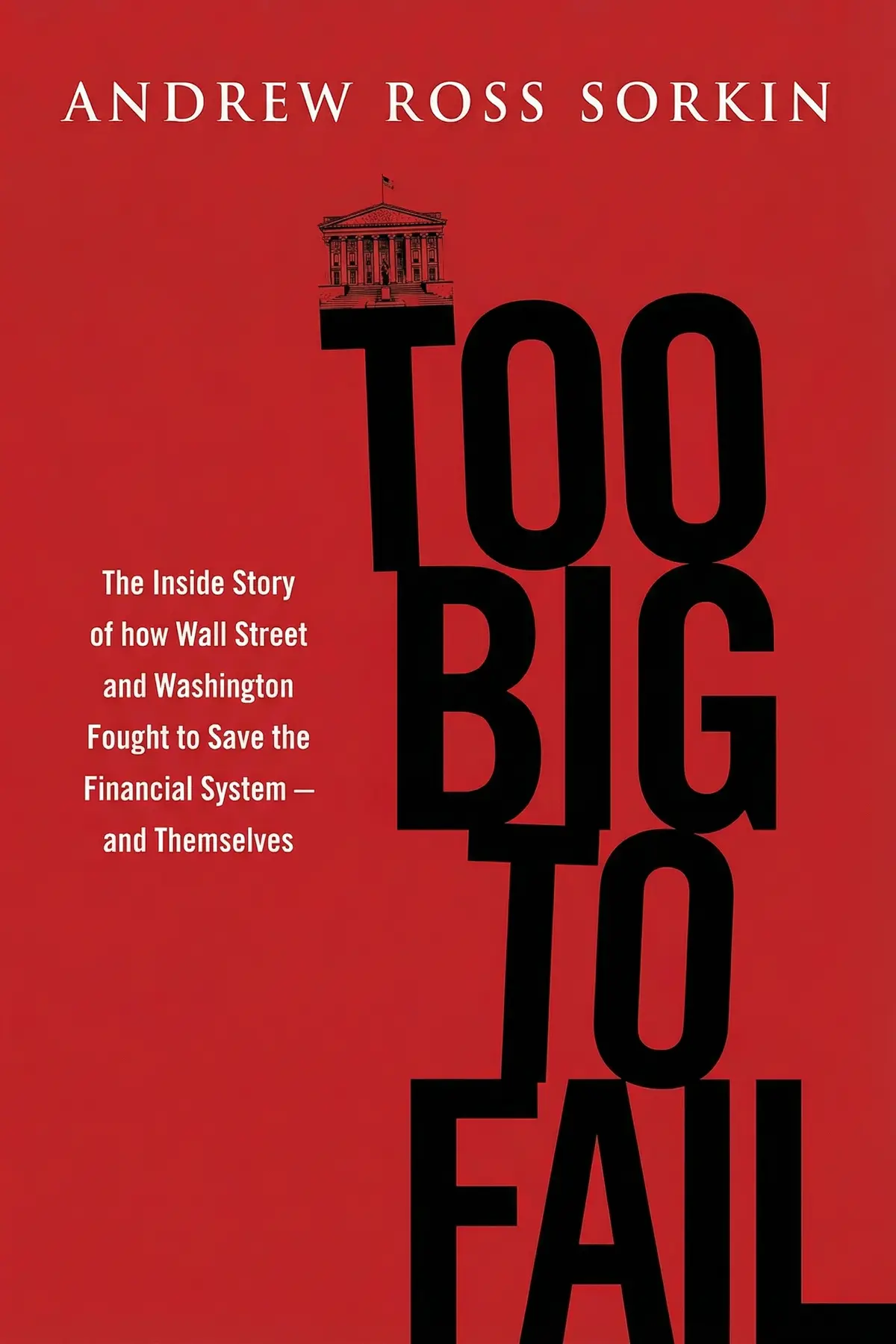
Too Big to Fail provides a minute-by-minute account of the most harrowing months in modern financial history. It details the internal struggles and high-stakes decisions within massive institutions like Lehman Brothers and Bear Stearns during the 2008 meltdown. The narrative focuses on the pivotal figures at the center of the storm, including Richard Fuld, Hank Paulson, and Timothy Geithner. The book promises a deep understanding of the systemic risks that nearly brought the world economy to its knees. It explores the tension between free-market ideology and the necessity of government intervention. Listeners will learn how interconnectedness, excessive leverage, and a lack of regulatory oversight combined to create a perfect storm, ultimately leading to the largest bankruptcy in United States history and a complete restructuring of the financial landscape.
Andrew Ross Sorkin is a prominent journalist and author known for his extensive coverage of the business world and economic affairs. He has built a reputation for his ability to untangle complex financial narratives and present them with clarity and depth. In addition to his reporting on major financial crises, Sorkin is the author of 1929, which chronicles the stock market crash of 1929 and its aftermath. His expertise makes him a leading voice for those seeking to understand the inner workings of global finance.
Andrew Ross Sorkin
Listeners find the book plays out like a blockbuster thriller providing fascinating perspectives on the financial meltdown, and one review calls it a meticulously researched pageturner. The prose is quite approachable and the story moves quickly, making for a brisk experience. While many consider it straightforward to understand, some observe that the intricate financial details can occasionally be difficult to track.
Wow. This felt less like a dry financial history and more like a high-stakes political thriller that moves at a breakneck pace. Sorkin manages to turn complex credit default swaps and liquidity ratios into a narrative that feels visceral and immediate. You are right there in the executive offices with Hank Paulson as he’s dry-heaving from stress or watching Dick Fuld’s world crumble around him at Lehman. The detail is exhaustive. It is a massive book, yet I flew through it in just a few sittings because the tension never lets up. While it doesn't spend much time on the systemic causes like subprime mortgage fraud, it captures the sheer panic of those frantic weekends better than anything else I’ve read. Highly recommended for anyone wanting a front-row seat to the collapse.
Show morePicked this up during a flight and couldn't put it down until we landed, which says a lot for such a thick business book. Sorkin captures the frenetic pace of Wall Street perfectly, making the reader feel the same sleep-deprived urgency as the characters on the page. The way he describes the collapse of Bear Stearns and the subsequent domino effect is masterfully handled. You don't need a PhD in economics to follow the plot, though some of the finer points of the TARP infusions can get a little dense. What makes this work is the focus on the personalities—the egos, the "shotgun weddings," and the desperate attempts to save face. It’s a fascinating, if somewhat terrifying, look at how close we came to total systemic failure because of a few arrogant men.
Show moreThe sheer scale of research involved in Too Big to Fail is mind-boggling when you consider the timeline of the actual events. Sorkin must have had every banker on speed dial to get this level of intimacy regarding their internal thoughts and private conversations. It’s a compelling insight into the financial crisis that manages to be both informative and deeply entertaining throughout. I loved the Cast of Characters section at the beginning because it helps navigate the labyrinth of investment firms and government agencies. This isn't just a book about money; it’s a book about power, ego, and the fragility of the global economy. Frankly, it’s one of those rare nonfiction books that keeps you on the edge of your seat even though you already know how it ends.
Show moreTruth is, I expected a snooze-fest but ended up staying up until 2 a.m. to see if Lehman Brothers would actually make it. Sorkin manages to make "making deals" feel like a life-or-death struggle, which, for the global economy, it actually was. The detail about Warren Buffett’s skepticism and the constant pressure on Geithner and Paulson creates a palpable sense of dread. It’s an accessible read that avoids getting bogged down in too much jargon while still providing a ton of fly-on-the-wall anecdotes. Even if you aren't a finance nerd, the drama of these men trying to save a system they helped break is absolutely riveting. Highly recommended for anyone who wants to see the gears of power turning in real-time. It's a massive achievement in business journalism.
Show moreNot what I expected from a 600-page tome on subprime mortgages and liquidity crises. Instead of a dry textbook, I got a meticulously researched thriller that feels like it belongs on a bestseller list for fiction. Sorkin’s writing is sharp and his ability to weave together hundreds of different accounts into a single, cohesive timeline is impressive. I particularly liked the focus on the moral hazard debate—the conflict between wanting to punish greed and needing to prevent a total collapse. It’s a terrifying reminder of how much of our world depends on the confidence and snap judgments of a small group of people. While it is a long journey through the halls of power, every chapter adds a new layer to the story of how the financial world changed forever.
Show moreAfter hearing so much hype about the film adaptation, I finally dove into the source material to see if it lived up to the reputation. It’s a meticulously researched page-turner that provides an incredible amount of insight into the decision-making processes of the Fed and the Treasury during 2008. I was particularly struck by how Sorkin humanizes these larger-than-life figures, making you feel the heavy weight of their exhaustion and arrogance. My only real gripe is that it can be a bit challenging to follow the endless stream of minor characters and junior bankers who start to blend together after 400 pages. At times, the narrative feels slightly too sympathetic to the "masters of the universe" who actually caused the mess. Still, the writing is accessible and the flow is excellent, making it a must-read for history buffs.
Show moreSorkin’s ability to reconstruct conversations from the New York Fed and the Treasury is nothing short of masterclass reporting. He somehow took a subject as dry as banking law and turned it into a financial thriller that reads like a modern suspense novel. I appreciated the granular detail, even if knowing the intimate nicknames Hank Paulson has for his anatomy was a bit too much information for my taste. The book effectively highlights the chaos and confusion of 2008, showing how even the most powerful regulators were basically running around like chickens with their heads cut off. While it leans heavily into the insider perspective, it’s an essential record of those crucial months. Just be prepared for a massive cast of characters that requires keeping a finger on the index.
Show moreAs someone who worked in retail banking during 2008, reading the top-down perspective was both illuminating and incredibly frustrating. The arrogance of the CEOs described in these pages is truly staggering, yet Sorkin presents it with a neutral, journalistic tone that lets the actions speak for themselves. The narrative flows well, moving from boardrooms to the Treasury with ease, though the complexity of some deals can be a hurdle for casual readers. It’s a fast read despite its length, largely because the stakes feel so incredibly high on every page. My only criticism is that the author seems a bit enamored with some of the players, giving them a heroic edit they probably didn't deserve. Overall, it’s a brilliant piece of reportage that captures the atmosphere of a world on the brink.
Show moreEver wonder how $700 billion can be authorized over a weekend by people who haven't slept in three days? This book answers that, but it does so by repeating the same basic scene over and over again for hundreds of pages. There are only so many times I can read about a CEO screaming into a telephone or a frantic meeting at 4 a.m. before it starts to feel repetitive. Sorkin is a gifted writer, but I found him cramming in every single detail he gathered, regardless of whether it actually moved the story forward. The lack of context regarding the origins of the housing bubble is also a glaring weakness if you aren't already familiar with the terminology. It’s an interesting play-by-play, but it lacks the analytical depth I was hoping for.
Show moreLook, if you want a gossip column about what billionaires ate at San Pietro while the world burned, this is probably your dream book. I went in expecting a deep dive into the financial mechanics of the 2008 collapse, but instead, I got 600 pages of who called whom from their private jets. Sorkin spends so much time examining the bark and the leaves that he completely loses sight of the forest. We get page after page of descriptions regarding Tim Geithner’s fitness routine or the specific real estate Lehman execs were buying. It feels incredibly slanted and partisan, often lionizing figures like Jamie Dimon while glossing over the actual greed that led to the crisis. If you want a serious explanation of why our economy exploded, read something else. This is just high-society voyeurism masquerading as history.
Show more
Niall Kishtainy
Michael Axworthy
Tom Standage
William J. Bernstein

Ishmael Beah
AUDIO SUMMARY AVAILABLE
Get the key ideas from Too Big to Fail by Andrew Ross Sorkin, plus 5,000+ more titles in English and Thai.