
22 min 06 sec
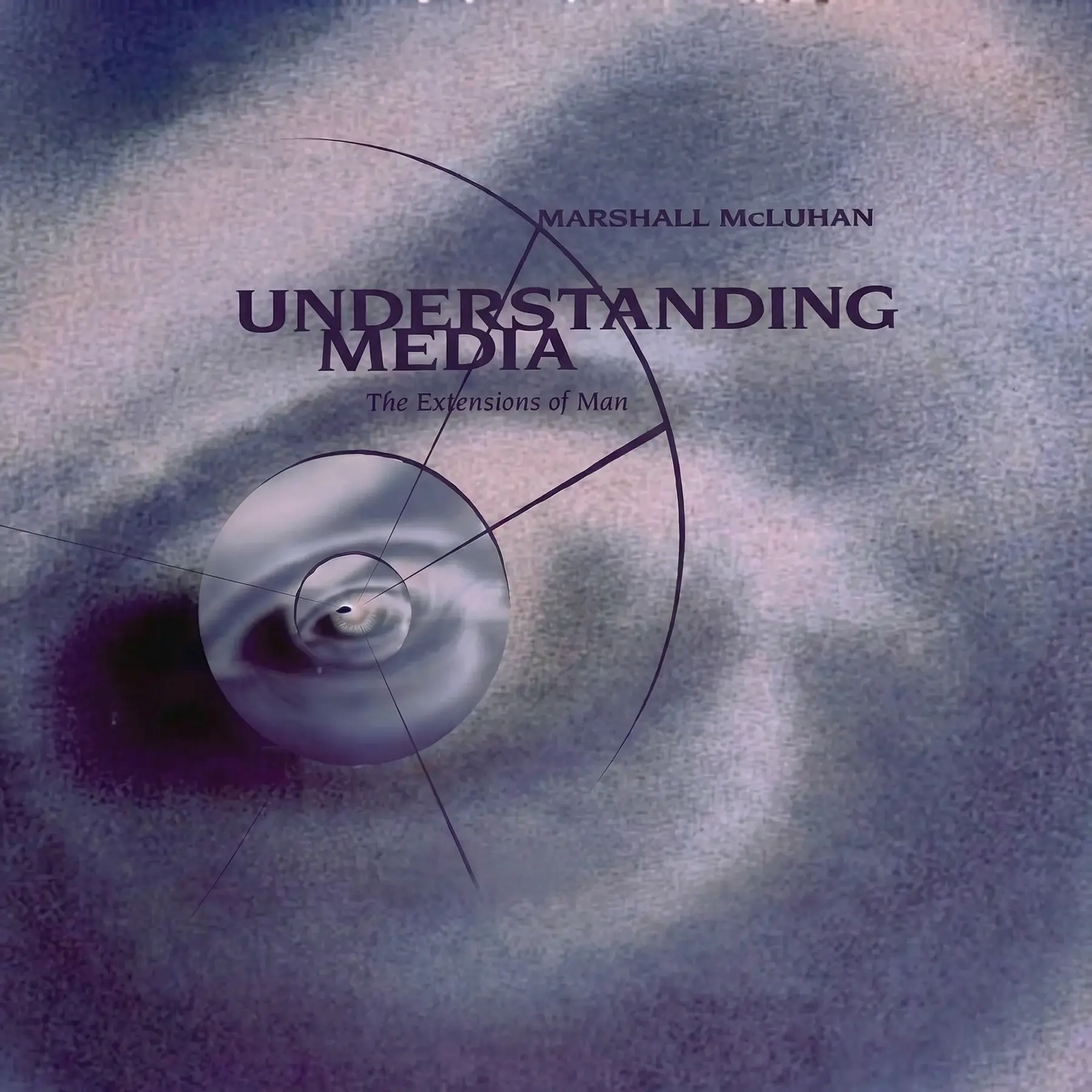
Understanding Media: The Extensions of Man
A profound analysis of how media and technology act as extensions of the human body and mind, fundamentally altering our perception, social structures, and collective behavior in a globally connected world.
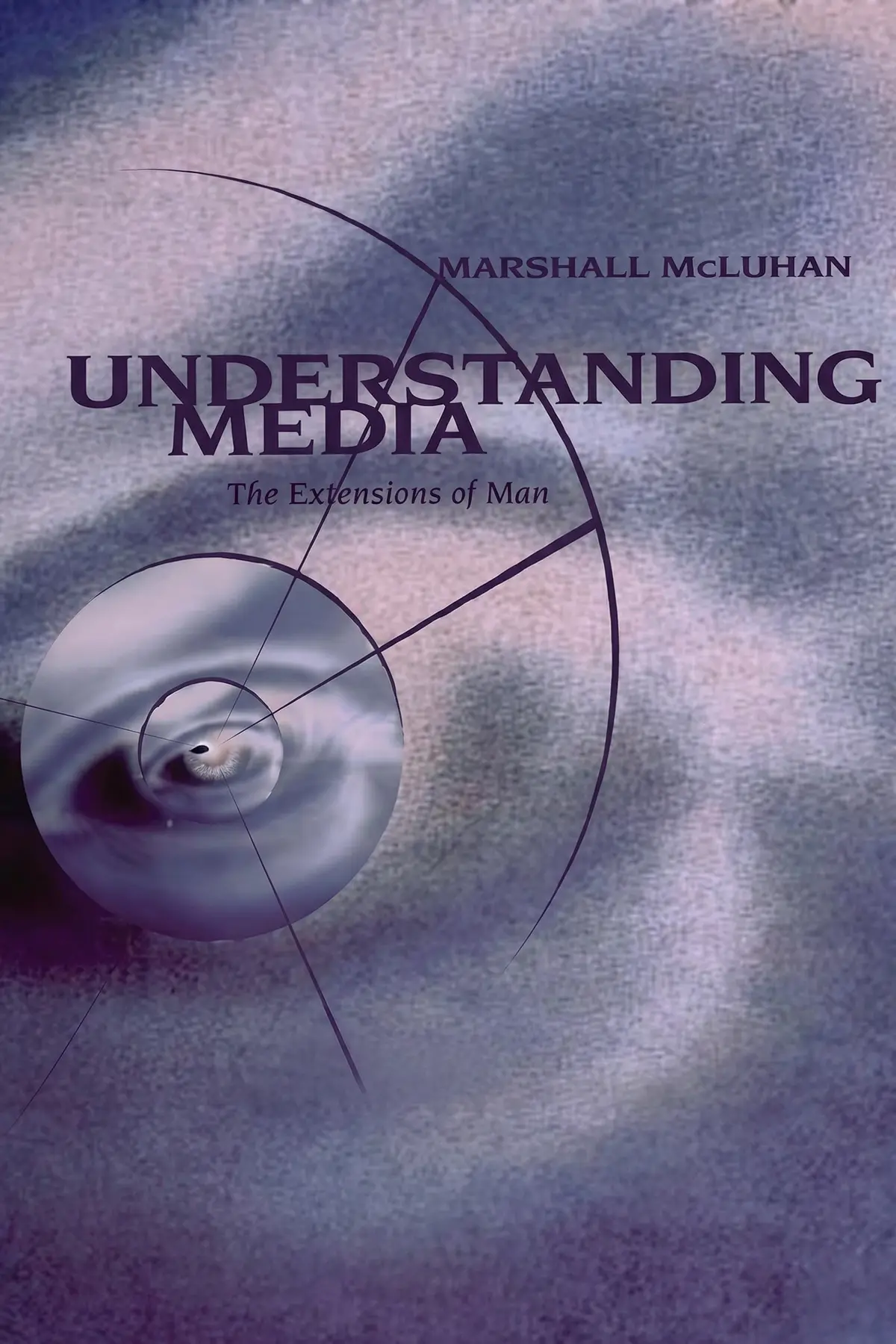
Table of Content
1. Introduction
1 min 33 sec
Every time you pick up a smartphone, turn on a television, or even flick a light switch, you aren’t just using a tool. You are stepping into a system that fundamentally reshapes your mind and your society. In 1964, a Canadian philosopher named Marshall McLuhan released a book that would change the way we look at technology forever. Understanding Media: The Extensions of Man moved the conversation away from what we are saying through our gadgets and toward what the gadgets are doing to us.
McLuhan’s central throughline is radical: he argues that the content of a medium is like a juicy piece of meat carried by a burglar to distract the watchdog of the mind. While we are busy arguing over what we see on the screen, the screen itself is busy re-wiring our social structures, our perceptions of time, and our sense of identity. This work introduced the world to the idea of the global village—a world where electronic speed makes us all neighbors in a way that is both exhilarating and overwhelming.
In the following minutes, we will explore how various technologies—from the phonetic alphabet to modern automation—act as literal extensions of our physical bodies and nervous systems. We will learn why some media demand our full participation while others leave us passive, and why the shift from a mechanical world to an electronic one has made isolation a thing of the past. By the end of this journey, you’ll see the technological landscape not as a collection of appliances, but as an environment that defines the very essence of human experience.
2. The Medium as the Message
1 min 49 sec
Discover why the content of a television show or a book is secondary to the physical and social impact of the medium itself on our daily lives.
3. Living in the Global Village
2 min 01 sec
Explore how the speed of electricity has collapsed the barriers of time and space, forcing the entire world into an intimate and sometimes chaotic proximity.
4. The Distinction Between Hot and Cool Media
1 min 52 sec
Learn how the ‘temperature’ of a medium determines whether we remain passive observers or become active participants in the creation of meaning.
5. Media as Extensions of the Body
1 min 54 sec
Discover the psychological theory that our tools are not separate from us, but are actually functional expansions of our physical and mental systems.
6. The Narcissus Myth and Autoamputation
2 min 00 sec
Explore the dangerous numbing effect that occurs when we become so mesmerized by our own technological reflections that we lose touch with reality.
7. The Impact of Literacy and the Written Word
1 min 57 sec
Trace the history of the phonetic alphabet and how it transformed us from communal, sensory beings into individualistic, analytical thinkers.
8. Radio and the Revival of the Tribal Drum
1 min 50 sec
Understand how the power of sound through radio can bypass the analytical mind and tap into our deepest collective emotions and fears.
9. The Illusion of the Moving Image
1 min 45 sec
Delve into the world of cinema and how it blends the mechanical and the organic to reshape our understanding of time, space, and fantasy.
10. Television as a Tactile Experience
1 min 46 sec
Why the low-resolution nature of television actually makes it more engaging and participatory than the high-quality images of the cinema.
11. The Promise and Peril of Automation
1 min 53 sec
Look toward a future where machines take over routine tasks, forcing us to rethink the boundaries between work, leisure, and education.
12. Conclusion
1 min 46 sec
Marshall McLuhan’s journey through the landscape of media brings us to a vital realization: we are the architects of our own environments, but we are also the inhabitants of them. By understanding that ‘the medium is the message,’ we gain the power to look past the distractions of content and see the structural forces that are actually shaping our lives. We have seen how our tools are literal extensions of ourselves, how the global village has made us all intensely involved in one another’s destinies, and how the ‘temperature’ of our media determines our level of engagement with the world.
The actionable takeaway from this exploration is a call for critical awareness. We live in an age of constant technological acceleration, and it is easy to fall into the ‘numbness’ of Narcissus, accepting every new gadget as a neutral benefit. But as we have seen, no technology is neutral. Every new medium brings a new message, a new pace, and a new way of being.
To navigate the future, we must move toward an integrated way of thinking. We must bridge the gaps between our different areas of knowledge and recognize the interconnected nature of our global society. Whether we are dealing with the impact of social media, the rise of artificial intelligence, or the evolution of the global economy, the lesson remains the same: we must pay as much attention to the channel as we do to the information flowing through it. By doing so, we can move from being passive subjects of our technology to becoming active, conscious participants in the creation of our collective future. The world is no longer a collection of separate pieces; it is a single, vibrating nervous system, and it is up to us to decide how we will use it.
About this book
What is this book about?
This summary explores the groundbreaking theories of Marshall McLuhan, originally published in 1964. It challenges the conventional wisdom that the content of a message is its most important feature. Instead, it posits that the medium itself—whether it's the light bulb, the radio, or the computer—is what truly transforms human culture and consciousness. Through concepts like the Global Village and the Extensions of Man, we see how electronic speed has contracted the world, forcing us into a state of intense social involvement. The book breaks down the differences between hot and cool media and predicts the massive shifts in work, education, and identity brought about by automation. Ultimately, it serves as a guide for navigating an age where technology is no longer just a tool we use, but an environment we inhabit.
Book Information
About the Author
Marshall McLuhan
Herbert Marshall McLuhan was a Canadian philosopher recognized as the primary architect of media studies. His work offered a visionary look at how communication technologies influence society, predicting the rise of the internet decades before its ubiquity. McLuhan’s profound influence continues through his classic texts, including The Medium is the Massage and War and Peace in the Global Village.
Ratings & Reviews
Ratings at a glance
What people think
Listeners regard this work as a staple of media theory and believe it is a worthwhile investment. Its accessibility draws varied opinions, with some enjoying the demanding nature of the text while others claim it is quite taxing to finish. Reactions to the book's design are similarly split, as some find the look appealing, yet one listener considers it unsightly.
Top reviews
Narumon
Finally got around to reading this foundational text, and frankly, it’s a total trip. McLuhan doesn't just write about media; he deconstructs the very way we perceive reality through our 'extensions,' whether that’s a clock, a hammer, or a television. The truth is, I found his section on 'Narcissus as Narcosis' to be particularly haunting in the age of social media, where we are constantly captivated by our own digital reflections. While some complain that the writing is repetitive or dry, I actually enjoyed the academic weight of it. It feels like a beautiful, sprawling map of the human psyche as it interacts with technology. Not every chapter hits—some of the stuff on 'hot and cold' media feels a bit arbitrary—but when he’s right, he’s breathtakingly right. This is easily one of the most important books on my shelf.
Show moreThitiwan
Not what I expected from a 1964 publication, but in the best way possible. McLuhan’s 'Understanding Media' is a wild, mind-expanding journey that feels like it was written by a time traveler. His ability to see the 'invisible' effects of technology on our social patterns is nothing short of prophetic. I especially loved the chapter on 'The Gadget Lover,' which perfectly captures our modern obsession with our devices. It’s true that his style is a bit idiosyncratic and he quotes James Joyce a lot, but that just adds to the unique flavor of the work. If you are willing to put in the work to parse his language, you’ll find a revolutionary way of looking at the world. This isn't just a book about TV and radio; it’s a book about what it means to be human in a technological age. Absolute gold.
Show moreSaovapa
Wow, what a dense and rewarding challenge. I picked this up because I wanted to understand the origins of media theory, and I was blown away by how much of our current reality McLuhan anticipated. From the 'global village' to the 'implosion' of social distance, he saw it all coming. Not gonna lie, some of the sections are incredibly difficult to parse, especially when he gets into the weeds of 'hot and cold' media. But the central idea that we are shaped by the tools we use is something everyone needs to hear. The physical appearance of this edition is also quite nice, though some might find the cover a bit dated. If you want to actually think about the screens you stare at all day, you need to read this book. It’s the ultimate guide to the 'nascent era' of mass communication.
Show moreMichael
Personally, I think McLuhan was half-mad and half-genius, and that’s exactly why this book is so good. He doesn't bother with boring things like 'evidence' or 'logical steps'; he just hurls these massive, tectonic ideas at you and expects you to keep up. It’s like being guided into the future by a tweed-clad Moses. His observations on how the phonetic alphabet changed the human psyche are worth the price of the book alone. To be fair, you have to ignore a lot of the dated 60s references and some of his failed predictions about automation. But the core of the work—the idea that the 'message' of any medium is the change of scale or pace it introduces into human affairs—is a total game-changer. It’s a heavy lift, but it’s the most representative expression of a truly brilliant mind.
Show moreOwen
Picked this up because of the 'Annie Hall' cameo, but stayed for the incredible cultural analysis. McLuhan is one of those rare thinkers who manages to be both incredibly smart and nearly unintelligible at the same time. You walk away from a chapter wondering what you just read, only for the realization to hit you three days later like a ton of bricks. The truth is, he understood the psychological impact of technology better than almost anyone since. His take on how electronic media 'retribalizes' us is more relevant now in the age of Twitter and viral trends than it was when he wrote it. It’s a thick, demanding book, and the writing style can be a bit clunky and repetitive, but the insights are simply too valuable to ignore. If you want a real education in media, start here.
Show moreIce
Ever wonder how a book from 1964 can feel more relevant today than most modern tech blogs? McLuhan’s concept of the 'global village' is essentially the blueprint for our current internet-saturated existence, even if he didn't have the terminology for it back then. To be fair, the prose is incredibly dense and often feels like wading through thick mud, but the nuggets of gold you find are worth the effort. His idea that the medium is the message—that the form of technology matters more than the specific content it carries—remains a foundational truth for anyone trying to navigate our digital world. It’s a challenge to finish, and some of his predictions about the obsolescence of the motorcar were totally off the mark, but the sheer visionary power on display here is undeniable. A must-read for the historically curious.
Show moreNew
As a student of communications, I found McLuhan’s insights into how technology shapes our nervous system to be absolutely essential. The book’s core thesis—that media are extensions of the human body—is a brilliant way to look at everything from the phonetic alphabet to the electric light. Look, it’s not an easy read by any stretch of the imagination, and you have to be prepared for some seriously dated examples involving the telegraph and 'tribal drums.' However, the way he explains how a new medium doesn't replace an old one but instead 'cooks' it into a new form is genius. My only real gripe is the lack of formal argumentation; he tends to shout his ideas at you rather than proving them. Still, it’s a beautiful edition of a foundational work that belongs in any serious library.
Show moreIngrid
The chapter on the motorcar really opened my eyes to how we view 'the mechanical bride' in a modern context. It’s fascinating to see how McLuhan viewed the automobile as a 'mechanical extension' that was already becoming obsolete in the face of electric circuitry. Of course, he was wrong about the car disappearing, but his analysis of how it decentralized the city remains incredibly sharp. Gotta say, the book is quite a challenge to get through because of its dry, academic tone. It isn't exactly a page-turner. However, the depth of his cultural knowledge is impressive, and his citations range from T.S. Eliot to complex sociological theories. Even when he’s being frustratingly obscure, you can tell there is a massive intellect at work. It’s a classic for a reason, even if it's a bit of a 'mountain' to climb.
Show moreFilm
Look, I wanted to love this more than I actually did. After hearing about the 'Medium is the Message' for years, I expected a sharp, punchy manifesto, but what I got was a repetitive and often unintelligible slog. To be fair, there are moments of absolute brilliance where he predicts the collapse of distance and the rise of instantaneous information. These 'pearls' are scattered throughout a sea of what I can only describe as academic blather. Personally, I think he was a man who stumbled onto a few great ideas and then tried to stretch them across every single object in human history, from clothing to weapons. It’s an interesting intellectual exercise, but the lack of concrete refutations for rival views makes it feel more like a sermon than a scholarly work. It’s worth a look, but keep your expectations in check.
Show moreThanakorn
This book is a classic, but that doesn't necessarily make it a pleasant or even coherent read. To be honest, I found much of McLuhan’s argument to be a jumbled mess of grand assertions without a shred of evidence to back them up. He creates these rigid categories like 'hot' and 'cool' media, but then applies them so inconsistently that they lose all practical meaning. Why is a movie 'hot' but a TV show 'cool'? It feels like he’s just spinning epicycles of nonsense to sound profound. In my experience, the writing is clunky and unnecessarily obscure, making it a real chore to get through even a single chapter. I appreciate his influence on the field of communication, but the actual text is more of a historical curiosity than a useful guide for the 21st century. I'd recommend just reading a summary.
Show moreReaders also enjoyed
AUDIO SUMMARY AVAILABLE
Listen to Understanding Media in 15 minutes
Get the key ideas from Understanding Media by Marshall McLuhan, plus 5,000+ more titles in English and Thai.
- 5,000+ titles
- Listen as much as you want
- 7-day free trial
- Cancel anytime







