
26 min 08 sec
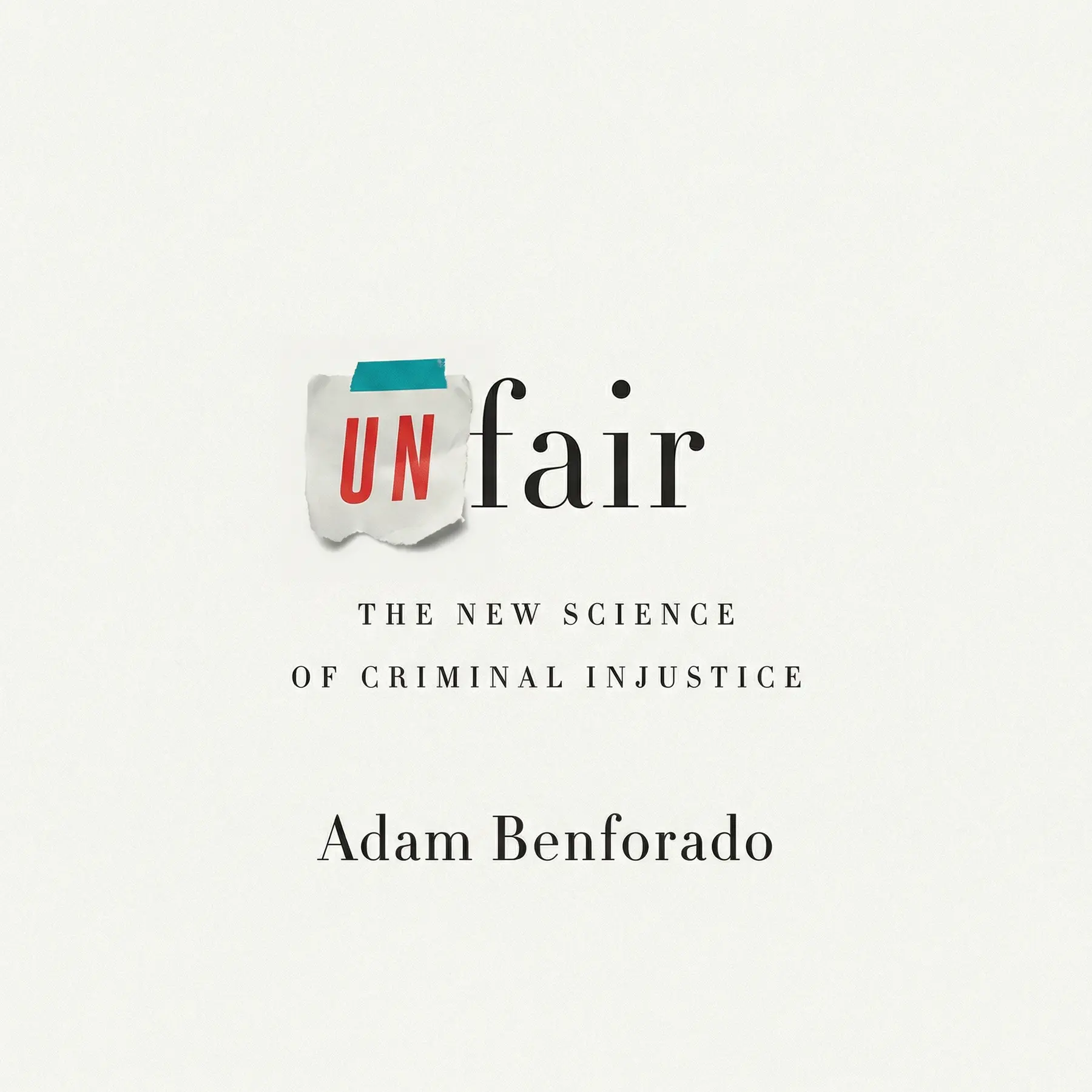
Unfair: The New Science of Criminal Justice
Unfair investigates the hidden psychological and neurological biases that undermine the American legal system. Adam Benforado reveals how subconscious errors in judgment by police, jurors, and judges lead to systemic injustice.
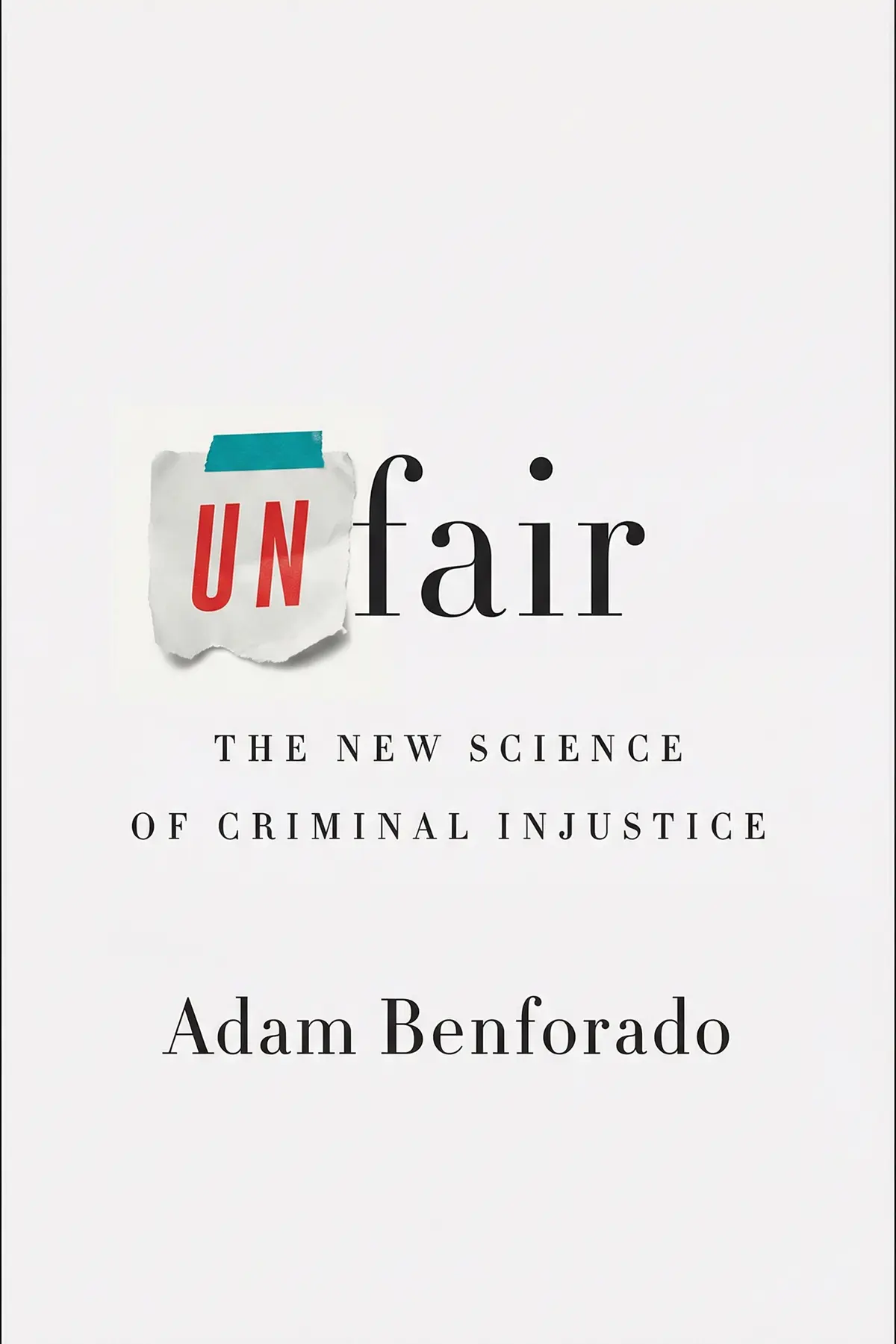
Table of Content
1. Introduction
2 min 20 sec
Imagine a man who has lived forty years as a model citizen—a dedicated teacher, a loving husband, and a respected member of his community in Virginia. Suddenly, and without any obvious warning, his behavior takes a dark, inexplicable turn. He begins harboring disturbing sexual urges and collecting illicit materials. To any outside observer, this looks like a clear-cut case of a man revealing a hidden, predatory nature. The legal system would typically look at this individual and see a criminal who made a series of terrible choices. But the story took a turn when a medical scan revealed a massive tumor pressing against his brain.
When surgeons removed that physical mass, the man’s urges vanished completely. This case forces us to confront an uncomfortable question that lies at the heart of our legal system: where does the person end and the biology begin? In the legal world, we operate on the assumption that every individual is a rational actor with full control over their impulses. We believe that when someone commits a crime, it is the result of a conscious, malicious choice. Yet, as the story of the teacher suggests, our behavior is often dictated by forces inside our skulls that we aren’t even aware of, and certainly cannot control.
In this exploration of the book Unfair, we are going to look at the deep-seated flaws in the American justice system through the lens of modern science. We often think of justice as a noble, abstract ideal, but in practice, it is administered by human beings—people whose brains are wired with cognitive shortcuts, tribal instincts, and hidden biases. From the moment a witness points a finger to the final strike of a judge’s gavel, the entire process is influenced by psychological factors that we rarely acknowledge.
Over the course of this summary, we will examine why innocent people confess to crimes they didn’t commit, how a simple lunch break can change the course of a defendant’s life, and why our current obsession with punishment might be doing more harm than good. The goal is to see the system for what it truly is: a human construct that is as fallible as the people who run it. By understanding the ‘new science’ of criminal justice, we can begin to move toward a future where the word ‘fair’ is more than just a label, but a reality.
2. The Power of Labels and Cognitive Shortcuts
2 min 21 sec
First impressions are often fast and final, leading us to categorize strangers in ways that can have life-altering consequences in a legal setting.
3. The Psychology of the False Confession
2 min 22 sec
It seems impossible that someone would admit to a crime they didn’t commit, yet the interrogation room is designed to break the human will.
4. Criminality as a Product of Biology and Context
2 min 19 sec
Our actions are not just a matter of ‘free will’; they are deeply influenced by the physical state of our brains and the situations we find ourselves in.
5. The Illusion of Objective Legal Professionals
2 min 04 sec
Lawyers and prosecutors are not immune to the psychological need to see themselves as the ‘good guys,’ even when they skirt the rules.
6. How Backgrounds and Cameras Shape Jury Perspective
2 min 02 sec
The idea of a ‘fair and impartial’ jury is complicated by the fact that no two people see the same event in exactly the same way.
7. The Untrustworthy Nature of Human Memory
2 min 03 sec
We treat eyewitness testimony as ‘the gold standard’ of evidence, yet our brains are remarkably bad at recording and recalling reality.
8. The Fallibility of Lie Detection and Expert Witnessing
2 min 09 sec
The ‘experts’ we rely on to find the truth are often just as prone to error as everyone else, regardless of their fancy equipment.
9. The Hidden Factors Behind Judicial Decisions
1 min 59 sec
Justice isn’t just about the law; it’s also about what time the judge ate lunch and their personal life history.
10. Vengeance Versus Reason in Sentencing
1 min 57 sec
Our desire for retribution often overrides our goal of public safety, leading to a system that punishes based on emotion rather than evidence.
11. The Failure of Incarceration and the Path to Reform
2 min 16 sec
Current methods like solitary confinement are not just ineffective—they are a form of torture that makes society less safe.
12. Conclusion
2 min 16 sec
In the end, the message of Unfair is a call to intellectual and moral humility. We have spent centuries building a legal system on the foundation of ‘common sense’—the idea that we know a lie when we hear it, that our memories are solid, and that we are the masters of our own fates. But science has shown us that this foundation is made of sand. Our brains are magnificent, but they are also deeply flawed, biased, and easily manipulated by the environment.
Continuing to ignore these flaws isn’t just a scientific error; it’s a moral one. Every time an innocent person is locked away because of a mistaken identification, or a judge hands down a harsher sentence because they haven’t eaten, the promise of equal justice is broken. We can no longer pretend that the ‘human element’ in our courts is always a force for good. Sometimes, the most ‘human’ thing we can do is recognize our limitations and build systems that protect us from ourselves.
This doesn’t mean we should abandon the idea of justice. On the contrary, it means we should pursue it with even more vigor, using the tools of psychology and neuroscience to sharpen our vision. We can implement virtual trials to strip away physical bias, record every police interaction to prevent coercion, and replace retribution with rehabilitation. These aren’t just ‘soft’ ideas; they are evidence-based solutions for a safer and more honest society.
As you move forward, try to be more aware of how your own mind works. One simple piece of advice from the research is to pay attention to how information is framed. If you want to encourage a more nuanced, fair perspective, try using percentages rather than raw numbers. If you say ’20 out of 100 people like this man will commit a crime,’ it sounds much more threatening than saying ‘there is a 20% probability of recidivism.’ The first phrasing triggers our ‘fear’ response, while the second encourages our ‘analytical’ brain to take over. This tiny shift in language is a reminder of how easily we are swayed. By staying vigilant and demanding a system based on facts rather than instincts, we can finally move toward a justice system that is truly fair for everyone.
About this book
What is this book about?
The scales of justice are intended to be balanced and blind, yet the reality of the courtroom is far more messy and human. Unfair pulls back the curtain on the criminal justice system to show that many of our foundational assumptions about guilt, innocence, and fairness are based on a misunderstanding of how the human brain actually works. From the way police conduct interrogations to the manner in which judges hand down sentences, the system is riddled with cognitive shortcuts and evolutionary baggage that can lead to devastating errors. Through a blend of legal analysis and psychological research, the book offers a startling promise: if we can confront the flaws in our own biology, we can begin to build a system that is truly just. It challenges readers to move beyond a desire for retribution and toward an evidence-based approach to reform. By exploring the science of memory, the mechanics of bias, and the impact of our environment on behavior, it provides a roadmap for a more humane and accurate legal future.
Book Information
About the Author
Adam Benforado
Adam Benforado is an associate professor of law at Drexel University. His professional background includes serving as a clerk on the United States Court of Appeals and practicing as an attorney at the firm Jenner & Block. A prolific writer on the intersection of law and the mind, his scholarly work and essays have been featured in major publications such as The New York Times, The Washington Post, The Philadelphia Inquirer, and The Emory Law Journal.
Ratings & Reviews
Ratings at a glance
What people think
Listeners find the material engrossing and expertly crafted, noting its deep investigation and sharp analysis of the legal process. They appreciate the intellectually stimulating approach, with one listener highlighting the vivid inclusion of psychological principles and another calling attention to the specific remedies proposed for reform. However, reactions are varied concerning the work's trustworthiness, and listeners share a deep sense of unease regarding the systemic biases found within the courts.
Top reviews
Kenji
Wow. This book completely shattered my faith in the "objectivity" of our legal system. Benforado uses psychological research to show how easily our brains are tricked into unfair judgments, specifically highlighting how things like a suspect's facial features or even the camera angle of a confession can sway a jury. The story about the man whose criminal behavior was linked to a brain tumor was particularly haunting and made me rethink everything I thought I knew about "free will" and culpability. It’s a dense read but the conversational tone keeps it from feeling like a dry textbook. Every citizen should read this before they get called for jury duty.
Show moreSau
Ever wonder why our courtrooms still function like they did in the Middle Ages? This book explores the psychological shortcuts—like "narrow bracketing"—that lead to devastating results for innocent people. Not gonna lie, the section on false confessions was a tough read because it proves how easily an interrogation can break a perfectly healthy mind. I loved the big-picture thinking here, especially the ideas about using technology to minimize human error during lineups. It’s an essential, thought-provoking critique that manages to offer hope through actionable solutions rather than just listing grievances.
Show moreJeeranan
Finally got around to reading this and it is a complete game changer for anyone interested in social justice. The way the author connects physical environments to behavior—like how the presence of trees can change a person's perception of safety—is just brilliant. He doesn't just complain; he offers real, concrete suggestions for rectification that seem so logical you wonder why we aren't already doing them. The analysis of the plea-bargain system was especially enlightening, showing how it essentially bullies people into giving up their right to a trial. This isn't just a book about law; it's a book about the flaws of being human.
Show moreKamol
As someone who works in social services, I’ve seen the "revolving door" of prison firsthand, but this book gave me the scientific framework to understand it. Benforado’s look at how brain damage and environmental factors influence criminality is groundbreaking stuff that challenges our obsession with retribution. Personally, I found the discussion of "virtual trials" to be the most intriguing part of the book, even if it feels like science fiction right now. It is a fascinating, well-written journey through the mind of the investigator, the juror, and the prisoner alike. Highly recommended for anyone who wants a more humane justice system.
Show moreOak
After hearing so much about the systemic issues in the US, I found "Unfair" to be an eye-opening deep dive into the why behind it all. The author, a law professor, focuses heavily on "System 1" versus "System 2" thinking, explaining how we jump to conclusions without even realizing it. I appreciated the concrete suggestions for reform, like virtual trials to eliminate physical appearance bias, though some ideas felt a bit too futuristic for our current political climate. My only real gripe is the lack of specific endnotes for his claims. It is frustrating to see a bibliography at the end of a chapter without knowing which study supports which specific fact.
Show moreUdom
Picking this up as a legal professional was a humbling experience that forced me to confront my own hidden prejudices. Benforado’s critique of the adversarial system is sharp, especially regarding the corruption of witness memory and the predatory nature of plea bargaining for the poor. The data on how holding a gun or wearing a mask changes human perception was fascinating, even if it was a bit frightening to consider the implications for daily policing. While the writing is clear and the arguments are persuasive, the "introductory fluff" at the start of some chapters felt a little unnecessary. Still, it provides a much-needed scientific lens on a system that often relies on gut feelings.
Show moreIsabella
The chapter on memory was absolutely chilling and changed the way I view eyewitness testimony forever. We like to think of our brains as video cameras, but Benforado proves they are more like a game of telephone, easily influenced by a detective's body language or a suggestive question. I was impressed by the breadth of the research, covering everything from the "disgust" response in judges to the impact of solitary confinement on the brain. It is a well-written indictment of our current processes. I do wish there was more focus on how to implement these changes in a system that is so resistant to reform.
Show moreLucas
Benforado makes a compelling case for reform by blending hard science with vivid storytelling about the failures of our courts. I was particularly struck by the data showing that most people can't actually detect lies through body language, even though our entire jury system is based on that assumption. Frankly, the book is a bit of a downer because it shows how deep these biases run, but the final chapters on reform are genuinely inspiring. It's not a perfect book—the lack of specific footnotes is a valid criticism—but the insights into human psychology are too important to ignore. It really makes you question everything you see on TV crime dramas.
Show moreSaovapa
Not what I expected, though the research is clearly there in the background. While I found the insights into judicial bias and the "physiognomy" of defendants fascinating, the book felt more like an overview than a truly deep academic dive. To be fair, the writing style is very accessible for the general public, but for someone wanting to verify specific data points, the sourcing is a mess. It is basically a list of books at the end of each section, which makes it hard to use as a reference for debate. It’s a good starting point for learning about criminal injustice, but it lacks the rigorous authority I was hoping for.
Show moreAna
Truth is, I found this incredibly frustrating despite the important subject matter. Benforado makes massive, sweeping claims about the legal system being "medieval," yet he fails to provide direct citations for his most startling facts within the text itself. As a reader, I shouldn't have to go on a scavenger hunt through a massive bibliography to find out where he got his numbers on traumatic brain injuries among prisoners. The storytelling also felt a bit disjointed, with some chapters starting with rambling anecdotes that didn't quite land for me. It is an interesting topic, but the execution felt sloppy for a law professor.
Show moreReaders also enjoyed

A Biography of Loneliness: The History of an Emotion
Fay Bound Alberti
59 Seconds: Change Your Life in Under a Minute
Richard Wiseman
A Force for Good: The Dalai Lama's Vision for Our World
Daniel Goleman


A Room of One’s Own
Virginia Woolf
AUDIO SUMMARY AVAILABLE
Listen to Unfair in 15 minutes
Get the key ideas from Unfair by Adam Benforado, plus 5,000+ more titles in English and Thai.
- 5,000+ titles
- Listen as much as you want
- 7-day free trial
- Cancel anytime







