

16 min 32 sec
Unwell Women: Misdiagnosis and Myth in a Man-Made World
Unwell Women explores the systemic history of medical bias against women. From ancient myths to modern misdiagnoses, it reveals how patriarchal structures have historically ignored, pathologized, and mistreated the female body.
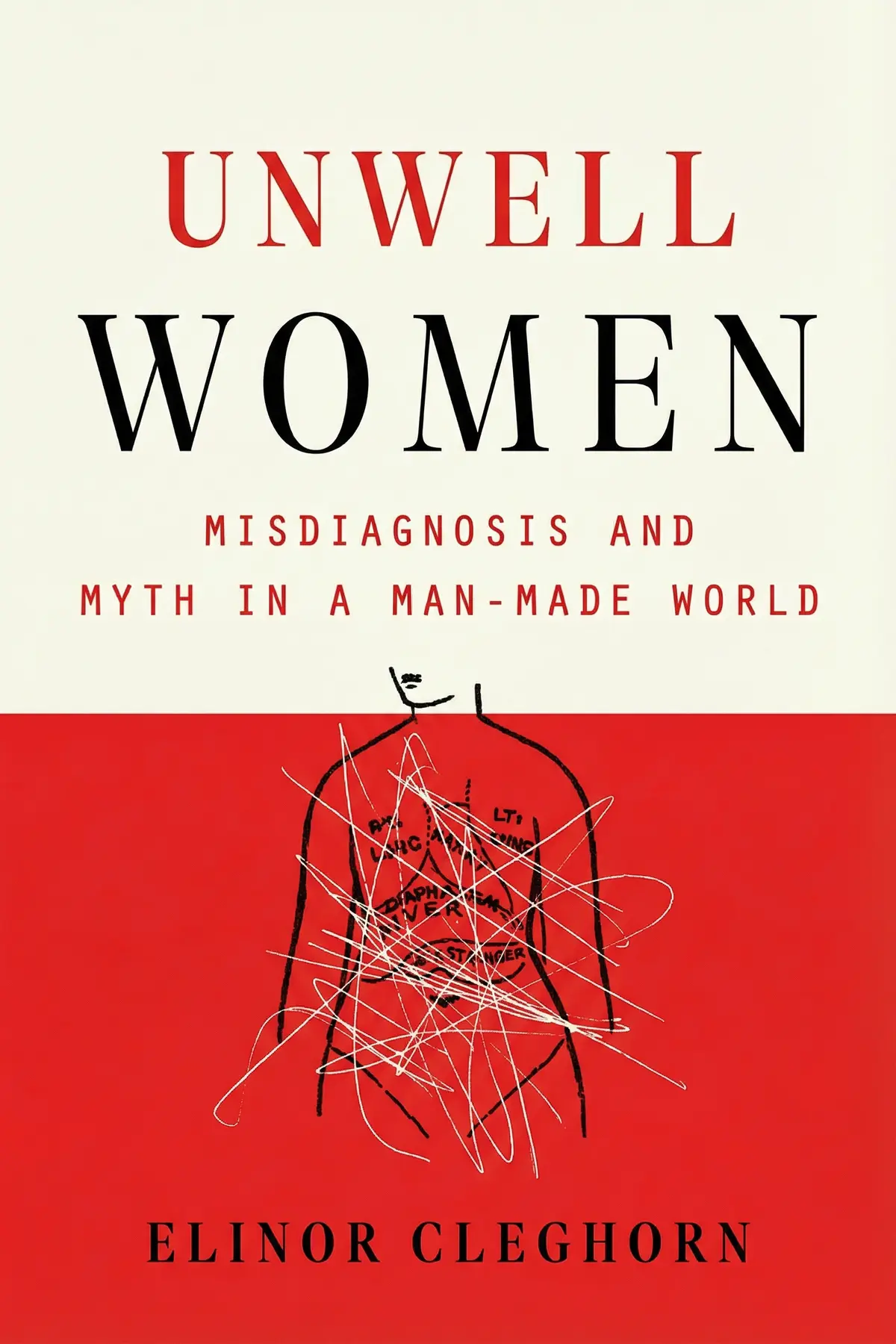
Table of Content
1. Introduction
1 min 52 sec
When we step into a doctor’s office today, we expect to be met with objective science and evidence-based care. However, beneath the sterile surfaces of modern medicine lies a long and deeply troubled history. For thousands of years, the medical understanding of the female body has been filtered through a lens of social expectation, moral judgment, and systemic bias. We often think of progress as a straight line, but in the realm of women’s health, the journey has been a constant struggle against a male-centric standard that views women not as a distinct biological reality, but as a deviation from the masculine norm.
In this exploration of the history of medicine, we are going to look at the powerful throughline that connects ancient Greece to the modern examination room. We will see how cultural myths became medical ‘facts’ and how those facts were used to control and pathologize women’s lives. The core of this story is not just about a lack of knowledge, but about a persistent refusal to listen to women’s lived experiences. From the ‘wandering womb’ to the modern diagnosis of chronic conditions, the medical establishment has a history of substituting social control for actual healing.
As we walk through these historical snapshots, notice how frequently women’s pain was moralized or dismissed as emotional instability. Notice how race and class played a pivotal role in who was deemed worthy of care and who was expected to suffer in silence. This isn’t just a history lesson; it’s an essential look at the foundations of our healthcare system, helping us understand why women today still face significant hurdles in getting their symptoms taken seriously. By uncovering these myths, we can begin to see the path toward a future where a woman’s word is as vital a diagnostic tool as any lab test.
2. The Ancient Myth of the Wandering Womb
2 min 24 sec
Ancient physicians believed the uterus could physically travel through the body, causing chaos and illness if it wasn’t kept busy through constant childbearing.
3. The Racial and Social Stratification of Pain
2 min 11 sec
Medical history reveals a disturbing double standard where the pain of some women was seen as evidence of fragility, while the pain of others was ignored entirely.
4. The Speculum and the Policing of Sexuality
2 min 10 sec
The introduction of new medical tools was often met with moral panic, as doctors feared that examining women would lead to dangerous sexual enlightenment.
5. The Complicated Legacy of Birth Control
2 min 04 sec
The fight for reproductive freedom was a heroic struggle for autonomy, but it was also marred by the dark influences of eugenics and class bias.
6. Challenging the Inevitability of Female Weakness
2 min 12 sec
Pioneering researchers began to use data to prove that things like debilitating period pain were often caused by social factors—like corsets—rather than biology.
7. The Pharmaceutical Fix for Social Discontent
2 min 11 sec
In the mid-20th century, doctors began prescribing tranquilizers to treat the ‘anxiety’ caused by restrictive gender roles, masking deeper health issues in the process.
8. Conclusion
1 min 28 sec
The history detailed in Unwell Women is a powerful reminder that medicine does not exist in a vacuum. It is a product of its time, shaped by the same prejudices and social hierarchies that govern the rest of our world. From the wandering womb to the over-prescription of tranquilizers, we see a recurring pattern where women’s bodies are treated as mysteries to be solved or problems to be managed, rather than as sources of authority on their own health. The dismissal of pain, the racial disparities in care, and the pathologizing of natural functions have created a system where many women still feel unheard and underserved.
However, this history also contains the stories of those who fought back—pioneering physicians like Trota, researchers like Clelia Duel Mosher, and activists like Margaret Sanger. Their work shows us that change is possible when we lead with data and listen to lived experience. The most important lesson here is the necessity of self-advocacy and the demand for a more inclusive, empathetic medical model. Understanding the origins of these biases is the first step toward dismantling them. As we move forward, the goal must be a healthcare system that views a woman’s testimony as a fundamental part of the diagnostic process, ensuring that ‘unwell’ is no longer a label of dismissal, but a starting point for genuine healing.
About this book
What is this book about?
For centuries, the medical community has treated the male body as the default, leaving women’s health to be defined by myth, morality, and misunderstanding. Unwell Women traces this troubling evolution, beginning with the ancient Greek notion of the wandering womb and continuing through the Victorian era’s obsession with hysteria. It examines how social roles—rather than biological facts—dictated medical treatments, often leading to the dismissal of genuine suffering. This summary delves into the specific historical moments that shaped these biases, including the racialized treatment of pain and the pharmaceutical industry's role in medicating social discontent. You will learn how pioneering researchers fought against these prejudices and why many of these systemic issues persist in modern clinics today. The promise of this exploration is a clearer understanding of the historical roots of medical gaslighting and a call for a healthcare system that truly listens to and validates the voices of women.
Book Information
About the Author
Elinor Cleghorn
Elinor Cleghorn is a British feminist cultural historian and author. She earned her PhD in humanities and cultural studies at the London Consortium (Birkbeck). Her academic and professional path took a significant turn toward medical history and gender studies following her personal struggle with a long-delayed lupus diagnosis. This experience with medical bias inspired her to research the history of how women have been treated by the medical establishment. Her debut book, Unwell Women, became an international bestseller and has positioned her as a prominent voice in the global conversation regarding gender disparities in healthcare.
Ratings & Reviews
Ratings at a glance
What people think
Listeners appreciate the high quality of information provided, and one listener highlights it as an extremely complete survey of the history of medicine. Its readability also earns praise, with listeners calling it an amazing read.
Top reviews
Bae
This book is an incredibly thorough survey of how the medical establishment has failed women from the Greek era to the present day. Cleghorn manages to weave a narrative that is both scholarly and deeply personal, especially when she touches on her own diagnosis with lupus. It’s a dense read, sure, but the information quality is top-notch and it really opens your eyes to why women’s pain is so often dismissed as psychological. I was particularly struck by the sections on hysteria and how ancient myths still color modern diagnoses. It’s a frustrating journey, but an essential one for anyone interested in medical history or feminism.
Show moreMonthon
After hearing so much about this on social media, I finally dove in, and wow, it did not disappoint. The way Cleghorn tracks the concept of the 'wandering womb' into the modern-day dismissal of chronic pain is masterful. As someone who has struggled with autoimmune issues, the chapter on the author’s own lupus journey felt like a gut punch of recognition. It’s an amazing read that balances the systemic with the personal. My only minor gripe is that it can be quite dense, but the historical context she provides for how we view women's bodies is invaluable. Every medical professional should be required to read the sections on racial disparities in healthcare.
Show moreRungtip
As a woman who has spent years begging doctors to take my chronic pain seriously, this book felt like a vindication. Cleghorn exposes the centuries of myth-making that have led to women's pain being seen as emotional rather than biological. The section on the post-war tranquilizing of housewives was particularly haunting. Look, it’s a long read and the list of names can be overwhelming, but the central message is too important to ignore. It’s a thorough journey that doesn’t shy away from the horrors of the past. It’s about time someone spoke up about how the medical community continues to gaslight 'unwell women.'
Show morePakinee
The chapter on the 'wandering womb' is enough to make anyone’s blood boil. Cleghorn’s 'Unwell Women' is an extremely complete survey that feels both timely and timeless. She does an excellent job of showing how the lack of women in clinical trials wasn't just 'lazy research,' but a systemic bias rooted in ancient stereotypes. The prose is engaging and clear, making complex medical history easy to digest. Personally, I found the intersectional approach—highlighting how much worse these issues are for women of color—to be the book's strongest point. It’s a scholarly, emotional, and absolutely necessary addition to the feminist canon.
Show moreSue
Picked this up after finishing 'Invisible Women' and found it to be a perfect, if harrowing, companion piece. Cleghorn’s writing is accessible yet detailed, taking us through the dark history of medical experiments on Black women and the torture of suffragettes. Truth is, it’s a difficult book to get through because it fuels a very specific kind of rage. However, I did feel that the 20th-century section was a bit rushed compared to the ancient history. I would have loved more discussion on fatphobia in medicine or the mismanagement of thyroid conditions. Still, it’s a powerful testament to the fact that for centuries, women have been viewed as little more than 'wombs on legs.'
Show moreJiraporn
Wow, this was a lot to take in. Cleghorn does a fantastic job of illustrating how women's ailments have been pathologized since the time of Hippocrates. I learned so much about the origins of the word 'hysteria' and why we need to stop using it. The book is well-written and serves as a vital reminder of the injustices women have faced, particularly marginalized groups. I did feel it was a bit unfocused at times, trying to be both a memoir and a comprehensive history. Occasionally, the 'man doctor bad' sentiment felt a bit repetitive, even if I largely agreed with her points. It’s a solid 4-star read that will definitely spark some conversation.
Show moreChan
Finally got around to reading this and it’s a real eye-opener. The book highlights the legitimate disparity in how medical professionals treat men versus women, specifically regarding analgesic pain medication. It’s infuriating to realize how much of modern medicine is built on the assumption that women are 'too biologically erratic' for consistent research. While the historical sections are fascinating, I found the modern-day analysis a bit thin. I wanted more about the struggle to get diagnosed today beyond just the author’s experience. That said, the readability is high for such a heavy subject, and the information is vital.
Show moreThawee
Ever wonder why it takes so long for women to get an endometriosis or autoimmune diagnosis? While this book provides some answers, I found the execution to be a bit of a slog. To be fair, the research is extensive, but the narrative often feels like a repetitive 'parade of names' that makes it easy to get lost. I was hoping for more focus on modern clinical bias, but instead, the middle section spent a huge amount of time on birth control and abortion. These are important topics, obviously, but they felt slightly disconnected from the 'unwell' theme the title promised. It’s a decent introductory text, but seasoned readers might find it a bit surface-level.
Show moreSudarat
Frankly, I really wanted to love this, but it felt like two different books fighting for space. One part is a fascinating history of gynecology, and the other is a personal memoir about living with lupus. Both are good, but they don't always mesh perfectly. The book spends a lot of time on reproductive rights, which is great, but then skips over massive issues like how weight is used to dismiss women's health concerns. It felt a bit Eurocentric at times too. I appreciate the effort, and it’s a good starting point for the topic, but I think a more focused approach would have been more effective.
Show moreNaomi
Not what I expected at all. I went in hoping for a rigorous, research-heavy analysis of medical disparity, but what I got felt more like an inflammatory polemic. The author seems to have a 'men are evil' bias that clouds the historical context, often ignoring the general incompetence of early medicine that affected everyone. Frankly, the reliance on second-hand sources—quoting a quote rather than original works—is a major red flag for any non-fiction book. When she isn't making far-fetched claims about the Christian church, she’s being incredibly repetitive. If you want a balanced view of medical history, look elsewhere; this feels more like an echo chamber than a scholarly work.
Show moreReaders also enjoyed


Afropean: Notes From Black Europe
Johny Pitts

A History of Iran: Empire of the Mind
Michael Axworthy

A History of the World in 6 Glasses
Tom Standage
All About Love: New Visions
bell hooks

A Long Way Gone: Memoirs of a Boy Soldier
Ishmael Beah

AUDIO SUMMARY AVAILABLE
Listen to Unwell Women in 15 minutes
Get the key ideas from Unwell Women by Elinor Cleghorn, plus 5,000+ more titles in English and Thai.
- 5,000+ titles
- Listen as much as you want
- 7-day free trial
- Cancel anytime







