
22 min
Us vs. Them: The Failure of Globalism
By Ian Bremmer
Ian Bremmer explores the deep fractures caused by globalism, examining how economic inequality and cultural anxiety have sparked a worldwide populist uprising, demanding a new social contract for a changing era.
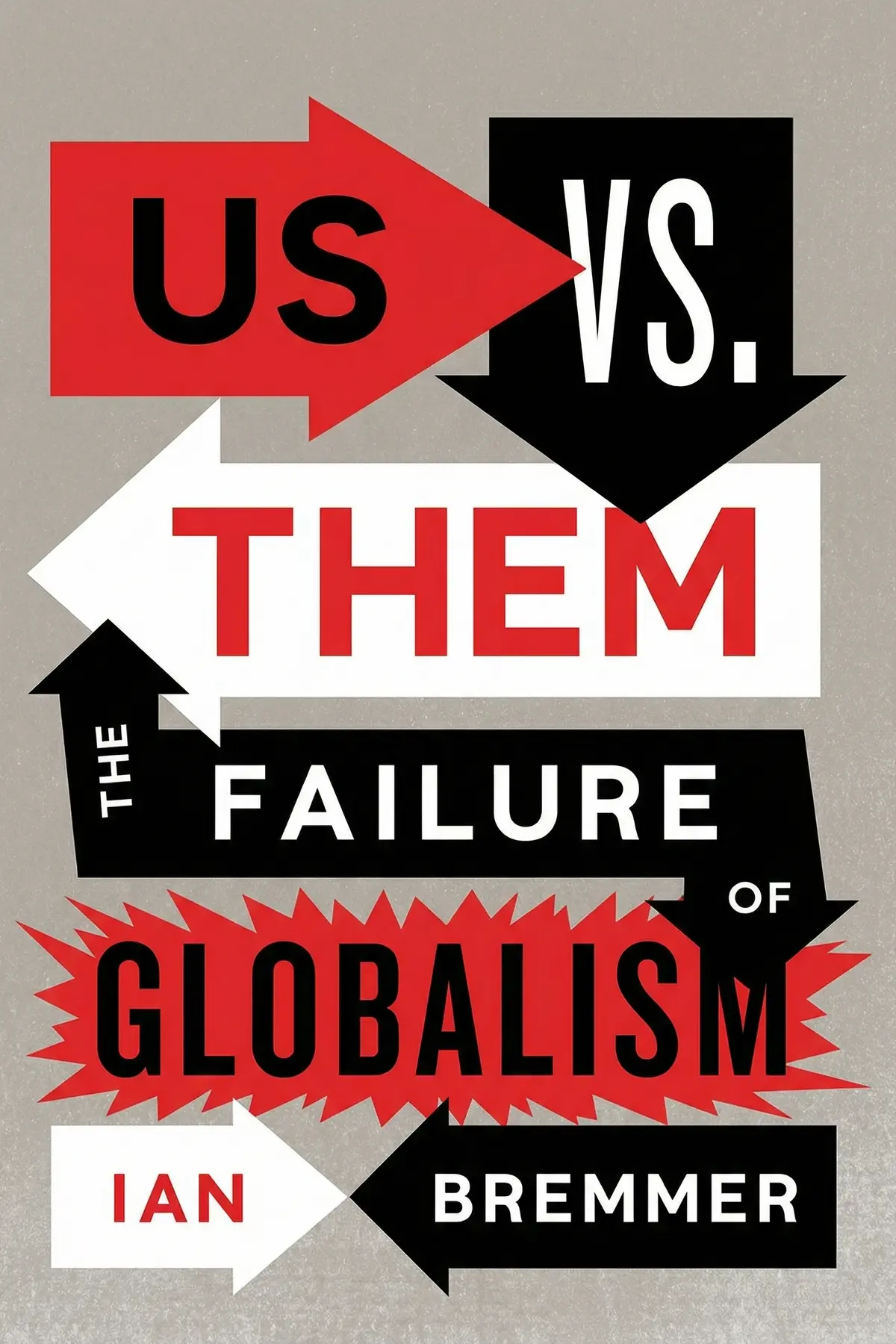
Table of Content
1. Introduction
2 min 15 sec
Think back to the closing years of the twentieth century. There was a palpable sense of optimism across the globe. With the fall of the Berlin Wall and the expansion of the internet, world leaders and economists championed a concept known as globalism. The idea was simple but profound: by allowing goods, people, and ideas to move freely across borders, we would enter an era of unprecedented prosperity. For a while, it seemed like this vision was coming true. Trade flourished, emerging markets grew, and the world felt smaller and more connected than ever before.
However, if you look at the headlines today, that early optimism feels like a distant memory. Instead of a harmonious global village, we find ourselves in a world characterized by deep-seated anger and sharp divisions. From the rise of populism in the United States and Europe to the simmering frustrations in developing nations, the dream of a unified global order is fraying at the edges. What went wrong? Why are so many people turning against the very systems that were supposed to guarantee their future?
This is the central mystery we are exploring today. We are witnessing the failure of globalism to deliver on its promises to everyone. While the wealthy and the highly educated have thrived in this new landscape, millions of others feel like they have been discarded. They feel like their jobs have been shipped overseas, their cultures are being diluted, and their voices are being ignored by a distant elite class.
In this journey, we will dissect the ‘Us vs. Them’ mentality that is currently reshaping our political and social reality. We’ll look at the economic engines that powered globalism and identify who the winners and losers truly are. We’ll examine the cultural anxieties that drive voters toward populist leaders and explore how the next wave of technological innovation—robotics and artificial intelligence—threatens to widen the gap even further. Finally, we will look at how governments are responding by building new walls, and why a more sustainable path forward requires a complete reimagining of the relationship between the state and the citizen. This is a story about the challenges of our time, but also about the search for a more inclusive way to live in an interconnected world.
2. The Economic Divide of Globalization
2 min 19 sec
Discover how the drive for global efficiency created a stark contrast between those who prospered and those left behind in a changing workforce.
3. Cultural Anxiety and the Rise of Identity Politics
2 min 22 sec
Explore how the rapid movement of people across borders has sparked a defensive surge in national identity and cultural preservation.
4. Frustration in Emerging Markets
2 min 18 sec
Go beyond the West to see how developing nations are grappling with the toxic side effects of rapid industrialization and unmet expectations.
5. The Widening Chasm of Inequality
2 min 24 sec
Analyze the shocking statistics of wealth concentration and how the gap between the elite and the average citizen fuels social unrest.
6. The Looming Threat of Automation
2 min 05 sec
Step into the future of work and understand why the rise of robots may be a far greater threat to social stability than international trade.
7. Vulnerability in the Developing World
2 min 06 sec
Learn why the robotic revolution poses an even greater risk to emerging economies that lack the resources to adapt to sudden job losses.
8. The Return of Physical and Digital Walls
2 min 10 sec
See how nations are retreating from global openness by erecting barriers to trade, migration, and the free flow of information.
9. Forgiving a New Social Contract
2 min 10 sec
Explore the innovative solutions that could bridge the divide, from lifelong learning to reimagining the very nature of government support.
10. Conclusion
1 min 51 sec
As we wrap up our exploration of Ian Bremmer’s insights, the overarching message is clear: the current wave of global instability is not an accident. It is the predictable result of a global system that prioritized efficiency and growth over social stability and equity. The ‘Us vs. Them’ mentality that we see in our politics today is a cry for help from those who feel that the modern world has no place for them.
We have seen how economic displacement, cultural anxiety, and the looming threat of automation have converged to create a perfect storm of resentment. We have seen how inequality is tearing at the fabric of our societies, and how governments are increasingly tempted to retreat behind walls. But we have also seen that there is another way. By reimagining the social contract—focusing on lifelong education, fairer taxation, and a more robust safety net—we can begin to bridge the divides that define our era.
The real danger is not that globalism has failed, but that we will fail to adapt to its consequences. If we continue to ignore the frustrations of the ‘losers’ of globalism, the anger will only grow, and the walls will only get higher. However, if we take these concerns seriously and work to create a more inclusive future, we can move beyond the ‘Us vs. Them’ dynamic.
The path forward requires us to stop looking for scapegoats and start looking for solutions. It requires a recognition that in an interconnected world, the security of the elite is ultimately dependent on the well-being of the many. As you reflect on these ideas, ask yourself: how can we build a world where everyone has a stake in the future? The answer to that question will determine whether the twenty-first century is remembered for its divisions or for its ability to overcome them.
About this book
What is this book about?
Us vs. Them delves into the unintended consequences of our interconnected world. For years, the promise of globalism suggested that open borders, free trade, and the digital revolution would lift all boats. However, the reality has been far more complicated. While globalism created immense wealth and efficiency, it also left millions of people behind, leading to a profound sense of resentment against the perceived elites. In this summary, we explore the rise of populist movements across the United States, Europe, and emerging markets. We examine how the loss of manufacturing jobs, the rapid pace of immigration, and the looming threat of automation are creating a world defined by divisions rather than unity. The book promises to explain the root causes of today's political volatility and offers a roadmap for how governments can rebuild trust with their citizens. By understanding the 'Us vs. Them' mentality, we can begin to see how to bridge the gap and prepare for a future where technology and global shifts don't just benefit the few, but provide security and opportunity for the many.
Book Information
About the Author
Ian Bremmer
Ian Bremmer is a prominent figure in the field of global affairs and political risk. He is the founder and president of Eurasia Group, a leading consultancy that helps businesses and governments navigate international political challenges. In addition to his consulting work, Bremmer is a weekly columnist for Time magazine and a prolific author. He has written ten books, including the acclaimed bestseller, The End of the Free Market: Who Wins the War Between States and Corporations?
Ratings & Reviews
Ratings at a glance
What people think
Listeners find the work insightful, with one review highlighting its superb examination of modern global affairs. Furthermore, the prose is well-organized and succinct, and listeners value the book's evidence-based style and strong thematic material. The title also gains praise for its readability, as one listener mentions it is especially helpful for grasping current events. On the other hand, the tempo draws varied opinions, including one listener who describes it as too negative for their taste.
Top reviews
Akira
Ian Bremmer has a knack for taking complex geopolitical shifts and distilling them into something that doesn't require a PhD to understand. This book is a punchy, factual look at the erosion of the global order. I particularly enjoyed the sections on 'globalism' as an ideology of the elite and how it has backfired. He doesn't pull any punches when describing the failures of both the left and the right in addressing the needs of the working class. The book is short, but it’s packed with insights that feel very relevant to the current political climate. Even if you don't agree with all his solutions, you have to admit his analysis of the problem is spot on. It’s one of the few books I’ve read lately that actually tries to bridge the partisan divide rather than widen it. A must-read for anyone interested in international relations.
Show moreEnd
This book offers a sobering look at how the globalist elite have essentially ignored the growing resentment in the heartlands of the world. Bremmer argues that globalization has enriched a few while leaving the working class to rot, and frankly, it's hard to disagree with his data points. The focus on how automation will further exacerbate this 'us vs. them' mentality is particularly chilling because he suggests the gig economy isn't just a phase—it’s the new, precarious reality. While I appreciated the global scope, covering countries from Turkey to Venezuela, I wish he had spent more time on the corpocracy and how big money influences these shifts. It’s a quick read, maybe a bit too concise in parts, but the message is clear. If we don’t redefine the social contract soon, the walls are only going to get higher and thicker. It’s a solid read for anyone trying to make sense of why the world feels so fractured right now.
Show moreSangduan
After hearing Bremmer on a few podcasts, I decided to dive into the full text to see if his 'Us vs. Them' framework actually holds water. It does. This is an incredibly readable and factual account of how the 'globalists' failed to see the storm coming. I loved how he didn't just focus on the US; the sections on Brazil’s political scandals and the success of social programs in Scandinavia were eye-opening. The writing is punchy and gets straight to the point without getting bogged down in academic jargon. Some might find it too negative, but I found the realism refreshing. It's a wake-up call. The book argues that the wall-building we see isn't just physical; it's cultural and digital too. It really helped me connect the dots between automation, income inequality, and the rise of identity politics.
Show moreHugo
The chapter on China's massive investment in AI and their aging population was the most enlightening part of the whole experience. Most Western analysts just scream about the trade deficit, but Bremmer looks at the structural issues that make China's 'success' so fragile. He points out that while they've lifted millions out of poverty, the looming threat of automation could erase those gains overnight. It’s a nuanced take that you don’t often see in the mainstream media. My only gripe is that the book is quite short—I finished it in a single afternoon. Because it’s so concise, some of the complex issues in places like Indonesia or Turkey get boiled down to just a few paragraphs. However, as an 'executive summary' of the world's current headaches, it's top-notch. It’s factual, well-structured, and provides a lot of food for thought regarding the future of the working class.
Show moreBam
Finally finished this and I appreciate how Bremmer doesn't just blame one person for the current state of global politics. He makes a compelling case that 'Us vs. Them' created the leaders we have today, not the other way around. The book explores how the 'them'—the politicians, bankers, and media elites—have lost the trust of the 'us'—the people who feel lied to. I found the discussion on 'cyber weapons' being available to everyone particularly terrifying. It adds a whole new layer to the security argument that I hadn't considered. The prose is clear and the chapters move quickly, making it a great pick for a plane ride or a weekend read. It’s not a perfect book, and it can feel a bit repetitive when he goes through different countries, but the central thesis is powerful. Definitely gave me a new perspective on the news.
Show moreGoy
Look, I’ve enjoyed Bremmer’s work in the past, and while some say this is a bit light, I think the brevity is its strength. He connects the dots between the 'youth bulge' in developing nations and the rise of populism in the West in a way that feels fresh. His argument for a 'caring economy' where we pay teachers and home health aides more is actually quite pragmatic when you consider how many manufacturing jobs are never coming back. Personally, I would have liked more data on the specific impacts of the TPP, but the overall framework is solid. It’s a logically organized, clear-eyed view of a world in transition. It's a bit pessimistic, sure, but the reality of 670,000 lost manufacturing jobs due to robots is a hard truth we have to face. Worth the read for the perspective shift alone.
Show moreFord
Picked this up expecting a deep dive but ended up feeling like I was reading a collection of old headlines. While Bremmer is undoubtedly a smart guy, this specific work felt a bit like a rush job to stay relevant in the post-2016 political landscape. He touches on massive topics like UBI and the displacement of manufacturing jobs in the US, but the truth is, he just moves on without much depth. The analysis of Brexit and the TPP felt more like an executive summary for a busy CEO than a scholarly investigation. It’s well-structured and very readable, but it lacks the 'novel idea' that made his earlier books like The J-Curve so compelling. It's a decent enough primer if you haven't been following the news, but for everyone else, it’s mostly stuff you already know. I expected a bit more intellectual meat on the bones.
Show moreSumalee
Ever wonder why populist movements are suddenly sweeping through every major democracy at the exact same time? Bremmer attempts to answer this by looking at the losers of globalization, specifically those whose lives have been upended by trade deals and the rise of the machines. The book is strongest when it explains the economic anxiety driving voters toward 'tough-talking' leaders. However, the solutions he proposes—like lifelong education and a stronger social safety net—felt a bit like a standard progressive wishlist. Is it realistic to think governments will suddenly become this competent? I’m not so sure. The pacing is a bit uneven, and at times it feels like he’s just listing grievances rather than providing a path forward. Still, it’s a decent primer for understanding the current geopolitical climate, even if it doesn't quite blow your mind.
Show moreFrida
To be fair, the diagnostic part of this book is incredible, even if the prescriptions feel a bit like socialist idealism. Bremmer is a master at explaining why we are in this mess—the failure of the social contract, the gutting of the middle class, and the arrogance of the globalist elite. But when he starts talking about the 'caring economy' and government-funded retraining as the cure-all, I started to lose interest. It feels a bit naive to think that a government that can’t even fix its own bridges will suddenly manage a transition to a post-automation world. The tone is also quite gloomy, which might put some readers off. That said, the statistics he provides on opioid deaths and the decline of manufacturing are staggering. It’s a good book for starting a conversation, but it doesn't necessarily provide the answers I was looking for.
Show moreSue
Wow. This was a massive disappointment. If you have functioning eyes and a subscription to any major newspaper, you've already read this book. It’s a collection of platitudes disguised as 'deep analysis.' Bremmer basically spends a hundred pages telling us that people are angry because they lost their jobs to China and robots. No kidding! I was looking for a deeper sociological or economic study, but instead, I got a series of brief quips and recycled talking points. He treats 'globalism' and 'capitalism' like they're characters in a play rather than complex systems with nuance. There’s almost no original research here, just a repackaging of the 'common knowledge' of the coastal elite. It honestly felt like a cash grab. Save your money and just read a few Wikipedia entries on populism instead. It’s a shallow look at a very deep problem.
Show moreReaders also enjoyed
21 Lessons for the 21st Century
Yuval Noah Harari

A Different Kind of Power: A Memoir
Jacinda Ardern

Age of Anger: A History of the Present
Pankaj Mishra
A Higher Loyalty: Truth, Lies and Leadership
James Comey
Age of Propaganda: The Everyday Use and Abuse of Persuasion
Anthony Pratkanis


A Promised Land
Barack Obama

A River in Darkness: One Man’s Escape from North Korea
Masaji Ishikawa
AUDIO SUMMARY AVAILABLE
Listen to Us vs. Them in 15 minutes
Get the key ideas from Us vs. Them by Ian Bremmer, plus 5,000+ more titles in English and Thai.
- 5,000+ titles
- Listen as much as you want
- 7-day free trial
- Cancel anytime







