
Us vs. Them: The Failure of Globalism
Ian Bremmer
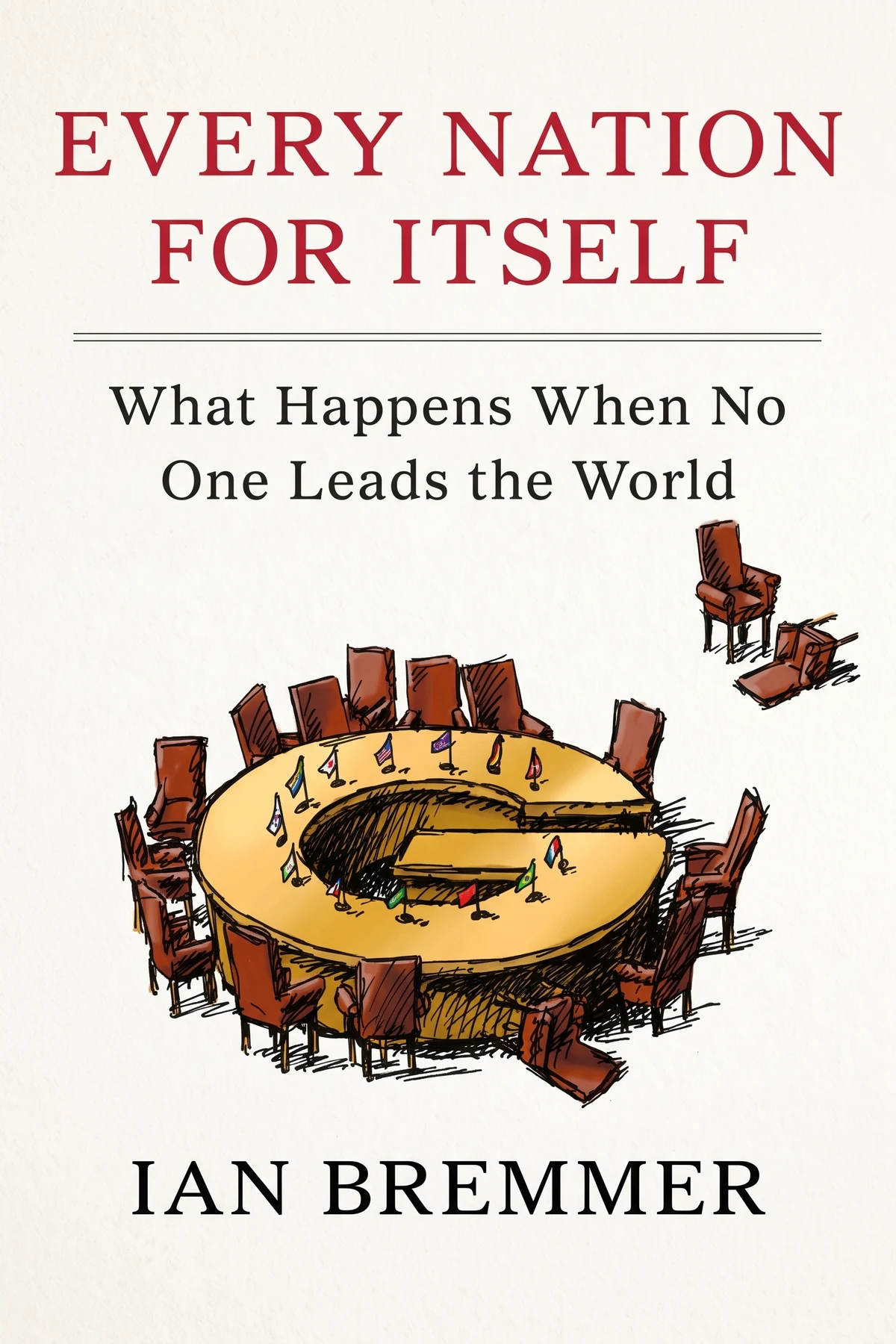
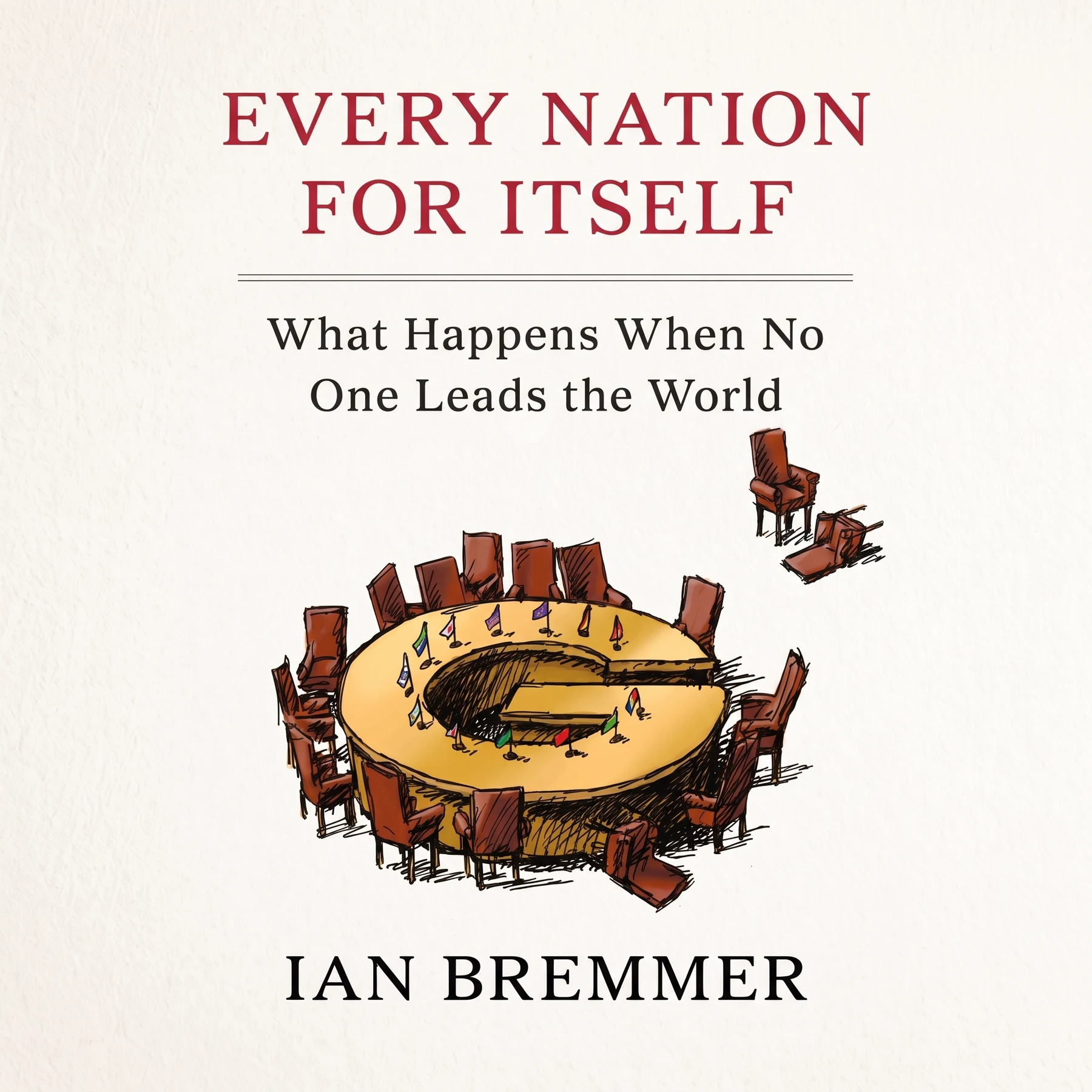
Every Nation For Itself examines the transition from a world of established global leadership to a leaderless G-Zero landscape, exploring the risks, the winners, and the potential future scenarios of geopolitics.
1 min 28 sec
Imagine, if you will, a physical environment where gravity has simply vanished. Without that invisible force to ground us, everything and everyone would be left floating, drifting without direction or a unifying pull. In the world of international politics, we are currently experiencing a similar phenomenon. We have entered a state of ‘zero gravity’ in global leadership, a period Ian Bremmer describes as the G-Zero world. In this landscape, no single nation—not even the United States—and no collective body, such as the G7 or the G20, possesses the necessary influence or the political appetite to lead the international community.
For decades, we relied on a predictable structure of power, but that structure has eroded. We are now in a transition period where the old rules no longer apply, and new ones have yet to be written. This isn’t just an academic theory; it is a shift that affects the food on your table, the stability of your job, and the safety of the digital networks you use every day. As we navigate this leaderless era, we see nations becoming increasingly focused on their own internal struggles, leaving global problems to fester. This summary will guide you through the mechanics of this power vacuum, identifying who stands to gain, who is most at risk, and what kind of world might eventually emerge from the shadows of G-Zero. By understanding the forces driving nations to look inward, we can better anticipate the shifts that will define the coming decades of human history.
2 min 38 sec
Why are the world’s most powerful nations suddenly reluctant to lead? Discover how internal economic struggles and social demands are forcing governments to prioritize the home front over the world stage.
2 min 27 sec
In a world without a leader, global issues like climate change and food security become dangerous flashpoints. Learn how the lack of cooperation leads to a destructive cycle of protectionism.
2 min 20 sec
As traditional alliances fray, a new type of nation is rising to the top. Explore why flexibility is more valuable than loyalty in a leaderless international system.
2 min 08 sec
Will the world’s two biggest economies find a way to work together? Examine the potential for a ‘G2’ or a ‘G20’ and what it would take for global cooperation to return.
2 min 27 sec
What if the great powers fail to see eye-to-eye? Explore the darker possibilities of a new Cold War or a world fragmented into competing regional blocks.
1 min 14 sec
The transition we are witnessing today is one of the most significant shifts in modern history. The G-Zero world isn’t just a political catchphrase; it is a description of a period of profound uncertainty where the old anchors of global stability have come loose. As we have explored, the retreat of nations into domestic concerns is a natural reaction to economic and social pressure, but it leaves the international community without a pilot. Whether we are looking at the rise of pivot states who navigate this vacuum with agility, or the looming threats of food protectionism and climate paralysis, the message is clear: the cost of a leaderless world is high.
However, G-Zero is a bridge, not a final destination. The vacuum will eventually be filled, whether through a new duopoly of the US and China, a functional concert of nations, or a world carved into regional blocks. The challenge for individuals, businesses, and governments alike is to stay flexible. In an era where loyalties are shifting and the rules are in flux, the most valuable asset is the ability to adapt. By recognizing the forces at play in this leaderless landscape, we can better prepare for the new world order that will inevitably emerge from the current drift. The gravity of global leadership will return; the only question is which direction it will pull us in.
The global political landscape has shifted. We have moved away from an era where a single superpower or a cohesive group of nations set the agenda for the rest of the world. In this new reality, which author Ian Bremmer terms G-Zero, no country has the combination of political will and economic leverage to drive international cooperation. This vacuum creates a world of high risk, where issues like climate change, trade protectionism, and security are left without a global manager. This summary explores why nations are retreating into domestic concerns and how this lack of leadership impacts everything from food prices to diplomatic trust. It identifies the 'pivot states' that are positioned to thrive in this instability and outlines four distinct paths the world might take as it eventually moves beyond this leaderless transition. Readers will gain a framework for understanding current geopolitical volatility and what the next era of global power might look like.
Ian Bremmer is a prominent political risk consultant and the president of the Eurasia Group, which is recognized as a leading global political risk consulting and research firm. His expertise lies in identifying and analyzing the intersection of politics and global markets. Bremmer has authored several influential works, including The End of the Free Market and The J Curve.
Ian Bremmer
Listeners find the work to be insightful, especially valuing the in-depth examination of contemporary trends. They describe it as a fascinating and excellent listen.
Finally got around to this one, and the concept of a G-Zero world feels more relevant today than ever before. Truth is, Bremmer has a gift for taking dense geopolitical trends and turning them into a narrative that is both interesting and easy to follow. I particularly enjoyed how he outlined the potential winners and losers in a world where flexibility is the ultimate currency. His analysis of how firms and governments must adapt to a leaderless environment is a wake-up call for anyone stuck in a 20th-century mindset. The book is concise, broad in its coverage, and provides a fantastic introductory guide to the shift in global power. It’s rare to find a policy book that is this engaging without being overly dry or academic. Highly recommended for anyone who wants a clear-eyed look at the future of our global order.
Show moreAs someone who follows foreign policy but doesn't have time for 800-page academic tomes, I found this remarkably accessible. Not gonna lie, I was worried it would be another dry lecture on the UN, but Bremmer keeps things moving. He captures the shift from the G7 to a world where every nation is out for itself with great clarity. The section on how countries like Brazil and Kazakhstan are positioning themselves to pivot between the US and China was eye-opening. It is a great and interesting read that helps connect the dots between economic shifts and political instability. Even the parts that feel a little dated now still provide a lot of relevant historical information that makes the current global situation easier to grasp. This is definitely a must-read for anyone with an interest in where the world is headed.
Show moreIan Bremmer’s 'Every Nation for Itself' offers a compelling framework for understanding the messy state of global politics. The central concept of the 'G-Zero' world—a landscape where no single power or alliance provides global leadership—feels incredibly relevant as we watch traditional institutions struggle to address modern crises. Personally, I found his breakdown of 'pivot states' like Vietnam and Indonesia to be the most insightful part of the text, as it explains why certain middle powers are thriving by playing both sides. The writing is punchy and accessible for a general audience, though a bit more data to back up the sweeping trends would have been appreciated. It’s a great read for anyone trying to make sense of why international cooperation seems to be failing. While some of the specific examples from 2012 haven't aged perfectly, the broader logic of a leaderless world remains a very powerful lens for analysis.
Show moreEver wonder what happens when the traditional world powers simply stop cooperating? Bremmer answers this by painting a vivid picture of a world in 'tumultuous transition' where the IMF and World Bank are sliding into irrelevance. In my experience, most political science books are a chore to get through, but this one was surprisingly fast-paced and full of interesting anecdotes. I appreciated the specific scenarios he mapped out regarding flashpoints like a North Korean collapse or cyber warfare between the US and China. Even though the book was written a decade ago, many of the 'hypothetical' tensions he mentions are exactly what we are seeing in the news today. It’s not a perfect crystal ball, and some of the talk about 'shadow states' feels a bit thin, but it provides a very useful structure for discussing current events with friends.
Show moreThe highlight of the book for me was definitely the discussion on 'pivot states' and the necessity of maintaining strategic options. Gotta say, Bremmer’s lesson that 'winners have good options, losers don’t' is a simple but profound way to look at modern diplomacy. He deftly recounts how the proliferation of nuclear weapons and the rise of the 'Asian tigers' have reduced American primacy. The book is a bit light on footnotes, and I noticed he sometimes uses obscure sources for major GDP data, which is a bit strange. However, the overall thesis that we are entering a leaderless age is hard to argue with. It’s an insightful analysis of current trends that manages to stay interesting throughout. If you want to understand why climate change and terrorism are so hard to solve right now, this book gives you a very clear explanation.
Show moreWhile some of the 2012-era specificities regarding North Korea or Iran feel a bit dated, the underlying thesis holds up surprisingly well. In the end, the 'G-Zero' world Bremmer predicted—one defined by regional blocks and a lack of coordination on global threats—is exactly where we've landed. He provides an excellent overview of the possible scenarios for what comes after this vacuum of leadership. The book does have a bit of a pro-US bias toward the end, but he’s realistic about the fact that America can no longer dictate the global agenda. I found the writing to be very clear, though the lack of subject headers within chapters made it a bit of a struggle to get through at times. Overall, it’s a solid 4-star book that offers a lot of food for thought for the politically curious.
Show moreThe core takeaway here is that in a leaderless world, the winners are those with the best options and the greatest ability to adapt. Essentially, Bremmer argues that the world has moved beyond the point where the G7 or G20 can actually get anything done. I found his analysis of the relationships between diverse subjects—like Russian energy dependence and EU sanctions—to be very well-handled. It’s an insightful book that doesn't get mired in details that are better left to specialists, keeping it snappy for the general audience. While I wish there were fewer anecdotes and more hard data, the logic of the 'G-Zero' is hard to deny. It's a great read if you want a broad overview of how international politics is being reshaped by the lack of a global policeman.
Show moreBremmer is undeniably a gifted communicator, but this feels like the 'pop-science' version of international relations theory. Look, the 'G-Zero' concept is a great way to describe our current lack of global leadership, but 195 pages is a bit much to explain a concept that could have been a long magazine article. The book is filled with clever jargon like 'pivot states' and 'American second acts,' but it lacks the rigorous data or references to respected scholars that I was expecting. It relies heavily on newspaper clippings and general trends rather than deep-dive research. That said, it’s a decent starting point for a casual reader or an undergraduate student. It's well-written and well-informed enough to reward a quick read, but don't expect it to change your worldview if you already follow global affairs closely.
Show moreI really wanted to like this, but reading it several years after publication highlights just how precarious geopolitical predictions can be. To be fair, Bremmer is a smart guy, but this book relies way too much on guesswork regarding what 'might' happen in China or North Korea. It often reads like a light overview for someone who has never picked up a newspaper, full of oversimplifications and hand-waving about complex regional dynamics. The 'G-Zero' label is repeated so frequently it starts to feel like a marketing slogan rather than a rigorously defended academic thesis. If you are moderately well-read in international relations, you won't find much new here besides a few catchy phrases. It's essentially pop-science for the Davos set, offering trivial truths while ignoring the deeper historical nuances that explain why the U.S. wasn't always the all-powerful hegemon he portrays it as in the past.
Show moreThis book struck me as incredibly biased, dripping with a sense of American exceptionalism that undermines its supposed objectivity. Frankly, the analysis is quite shallow; Bremmer frequently makes massive accusations—like claiming Iran is hiding nuclear weapons—without citing any evidence beyond 'general assumptions.' He spends more time trying to make his 'G-Zero' branding stick than he does providing a nuanced look at the actual motivations of emerging powers. The writing style is jumpy, hopping from one country to the next without much depth, making it feel like a collection of blog posts rather than a coherent book. By the time I reached the end, I felt like I had learned more about the author's personal commitment to free-market doctrines than about the actual complexities of international relations. If you're looking for an objective, data-driven study of foreign policy, look elsewhere.
Show more
Miles Taylor
Tracy Rosenthal
Jessica Valenti
Yanis Varoufakis
Yuval Noah Harari
Jacinda Ardern
AUDIO SUMMARY AVAILABLE
Get the key ideas from Every Nation For Itself by Ian Bremmer, plus 5,000+ more titles in English and Thai.







