
21 min 43 sec
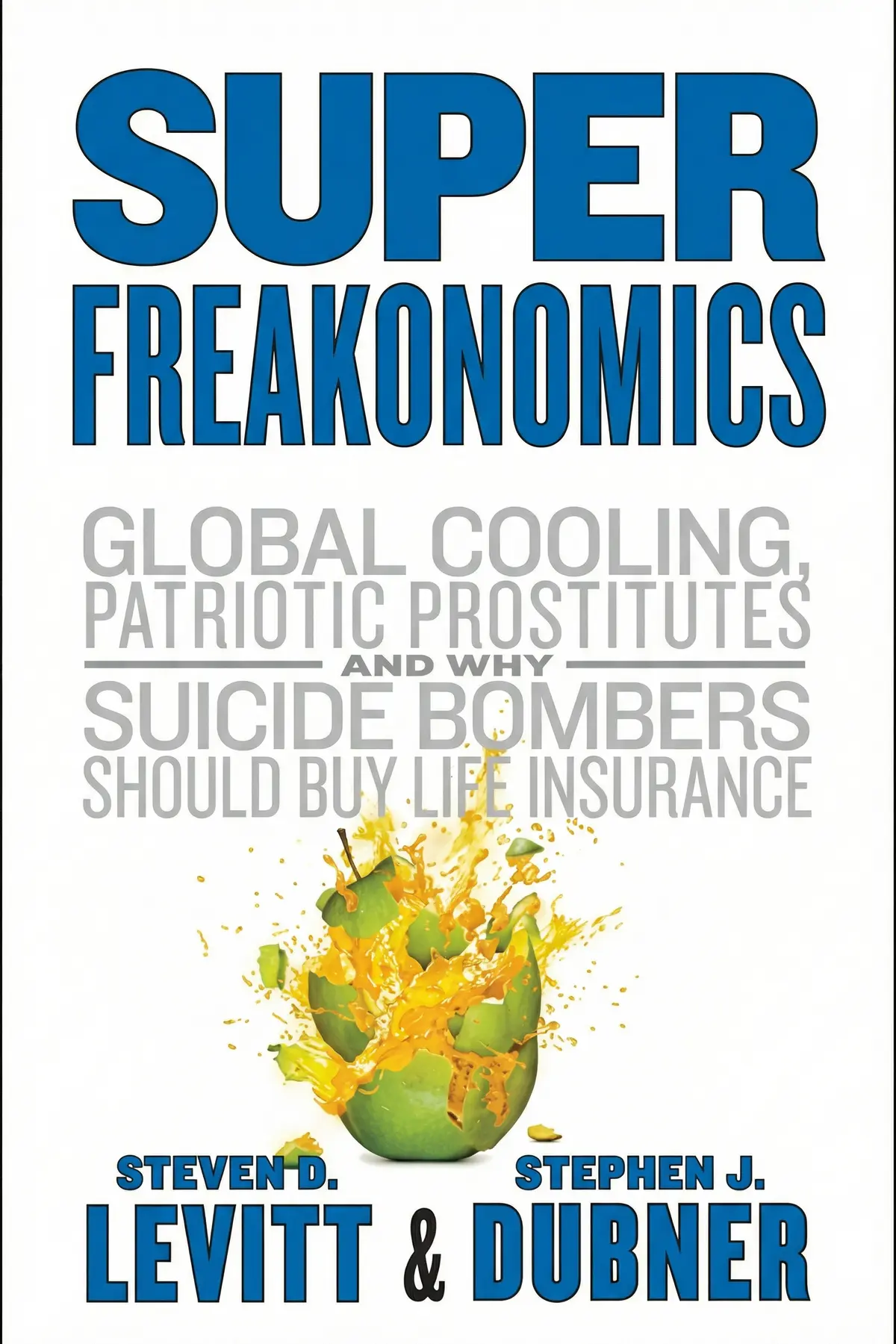
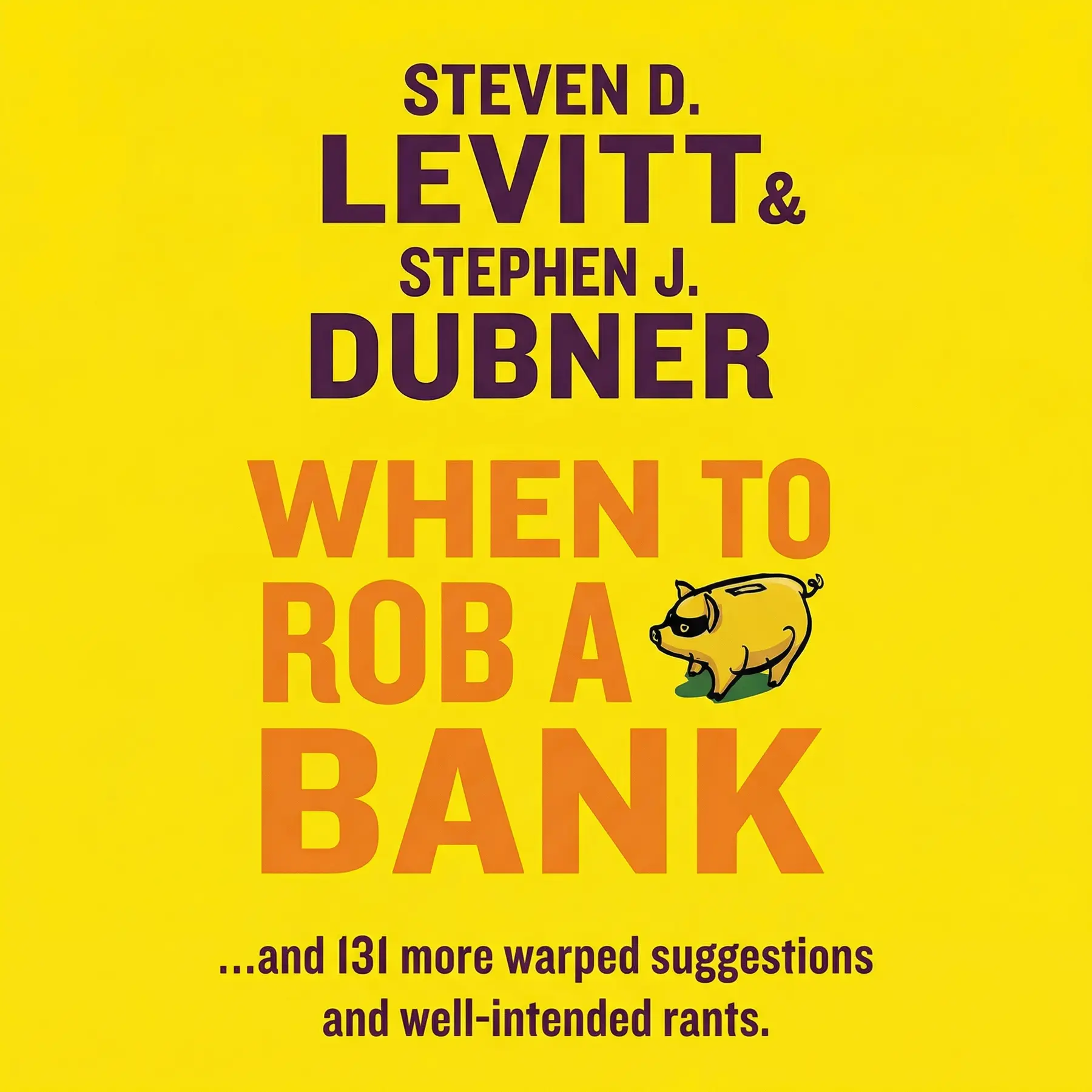
When to Rob a Bank: ...and 131 more warped suggestions and well-intended rants.
Explore the hidden incentives and statistical quirks of everyday life. From the dangers of horseback riding to the economics of baby names, this collection reveals the strange logic governing our world.
Table of Content
1. Introduction
1 min 51 sec
Have you ever wondered why the world seems so disorganized, yet follows patterns that only a data scientist could love? We often think of economics as a dry subject involving spreadsheets, stock tickers, and complicated interest rates. But what if economics was actually the secret language of everything? What if it could explain why your neighbor chose a specific name for their child, or why you’re actually safer on a motorcycle than on the back of a horse?
In this exploration of the unconventional, we are stepping into the minds of Steven D. Levitt and Stephen J. Dubner. After the massive success of their work in Freakonomics, they spent years collecting the oddities of the human experience through their blog and reader interactions. They realized that the world is full of ‘freakish’ facts that defy our intuition but make perfect sense when you look at the incentives involved.
Throughout this summary, we are going to look at the ‘warped’ suggestions and ‘well-intended rants’ that define their perspective. We will investigate the strange relationship between names and criminality, the bizarre reality of how things are priced, and why our fears are often directed at the wrong targets. We’ll even touch on the ‘economics of sex’ and the counterintuitive ways we try to save the planet.
The throughline here is simple: if you want to understand the world, you have to stop looking at what people say they do and start looking at what the data says they actually do. By the end of this journey, you’ll see the economy not as a financial system, but as a framework for understanding the delightful, confusing, and often hilarious behavior of the human race. Prepare to have your common sense challenged and your curiosity piqued as we dive into the hidden side of everything.
2. The Statistical Power of a Name
2 min 25 sec
Could a middle name predict a person’s likelihood of ending up in a police report? Discover how cultural trends and coincidences shape the weight of our identities.
3. The Illogical World of Pricing
2 min 27 sec
Why does a three-wing meal cost more per wing than a two-wing meal? Uncover the messy reality of how businesses and governments set prices.
4. Why Our Fears are Often Misplaced
2 min 22 sec
Are you more afraid of a stranger on a plane or the person sitting across from you at dinner? Explore why we misjudge risk so poorly.
5. The Surprising Logic of Lying
2 min 17 sec
Why would someone lie to make themselves seem poorer, only to then lie to make themselves seem wealthier? Discover the intersection of pride and profit.
6. The Environmental Counter-Intuition
2 min 14 sec
Could walking be worse for the planet than driving? Learn why our ‘green’ instincts often lead us in the wrong direction.
7. Nonsense in Crime and Punishment
2 min 11 sec
How do you catch a criminal? Sometimes, the best way is to simply ask them. Explore the psychological quirks of law enforcement.
8. The Hidden Markets of Human Intimacy
2 min 22 sec
Should we tax sex like we tax pollution? Re-evaluate personal relationships through the cold, hard lens of economic theory.
9. Seeing the World Through the Economic Lens
2 min 15 sec
Why do we feel okay about getting a paycheck but weird about bribing a student? Learn to spot the economic patterns in everything around you.
10. Conclusion
1 min 19 sec
As we wrap up this journey through the warped and wonderful world of Levitt and Dubner, the most important lesson to take away is one of curiosity. We’ve seen that the world doesn’t always work the way the textbooks say it should. People lie for pride, price things by accident, and fear the wrong animals. But beneath all that apparent chaos is a hidden logic.
When we stop relying on ‘common sense’—which is often just a collection of unexamined biases—and start looking at the actual data, we gain a superpower. We can see through the hype of environmental fads, understand the true risks of our hobbies, and even rethink how we motivate our children. The world is a laboratory of incentives, and every person you meet is a data point in a much larger story about human nature.
The next time you see a price that doesn’t make sense, a name that’s trending on social media, or a news report that makes you afraid, take a breath. Ask yourself: What is the incentive here? What does the data actually say? By adopting this ‘freakonomics’ mindset, you aren’t just learning about economics; you’re learning how to see the world for what it truly is, rather than what it appears to be. Stay curious, stay skeptical, and never stop looking for the hidden side of everything.
About this book
What is this book about?
When to Rob a Bank is an exploration into the fringes of economic thinking. Written by the minds behind Freakonomics, it compiles years of observations on human behavior, societal anomalies, and the unintended consequences of policy. It challenges readers to look past conventional wisdom and see the underlying data that shapes everything from crime rates to environmental impact. The book promises to sharpen your analytical lens, helping you identify why people lie, why prices fluctuate in nonsensical ways, and how simple incentives can solve complex problems. By diving into topics like the 'Wayne' middle name phenomenon or the hidden carbon footprint of walking, the authors demonstrate that the world is much weirder—and more logically consistent—than it appears on the surface.
Book Information
About the Author
Steven D. Levitt
Steven D. Levitt is a Professor of Economics at the University of Chicago. He was awarded the John Bates Clark medal in 2004 for being the most influential American economist under the age of forty. In 2006, Time magazine recognized him as one of the 100 People Who Shape Our World. Stephen J. Dubner is an award-winning author and former writer for The New York Times Magazine, best known for his collaborative work with Levitt.
Ratings & Reviews
Ratings at a glance
What people think
Listeners find the material amusing and easy to digest, offering excellent perspectives that ignite curiosity. They appreciate the format as a series of blog posts and find the comedy compelling, with one listener noting it serves as a good follow-up to earlier titles. The work gets varied reviews concerning its speed and substance, as some listeners think it's genius while others observe it is less detailed than previous publications.
Top reviews
Cameron
This is exactly the kind of intellectual chaos I've come to expect from Levitt and Dubner. I love the way they think! The book is insightful, entertaining, and incredibly easy to read because of its blog-style format. They take mundane things and flip them on their head using data and humor. Whether they are talking about the TSA's 'security theater' or the economics of prostitution, they keep you engaged. I've been a fan since the first book, and I honestly think this is a great follow-up for anyone who wants to spark their curiosity without committing to a 400-page heavy academic text. It’s a fun, rapid-fire journey through the world of 'rogue' economics. Highly recommend if you want to see the world through a slightly different lens!
Show moreTakeshi
Finally got around to this 'chaos-organized' collection and I couldn't be happier with it. The authors are brilliant at finding the hidden side of everything. Even though it's a collection of blog posts, the insights into human behavior and the bizarre incentives of our world are just as sharp as ever. I particularly enjoyed the section on the environment and the surprising considerations on what is actually 'green.' It's a fun, fast-paced read that doesn't take itself too seriously. If you're looking for something that makes you say 'I never thought of it that way' every five minutes, this is it. It’s been a great start to my reading year, and I love the humor they inject into every topic. Don't listen to the haters—it's supposed to be a buffet of ideas, not a five-course meal!
Show moreLucia
Think of this as the 'Greatest Hits' of the Freakonomics blog, even if some of the tracks are just weird B-sides. I was prepared to be disappointed after their last book, but I actually found this quite refreshing in its brevity. They’ve culled the best bits so you don’t have to dig through years of archives. You get everything from debates on how to tip a beggar to the logic behind why shrimp consumption has exploded. Sure, they are definitely 'gun-blind' and some of the sports sections on American football are a bit of a slog if you aren't a fan, but the rest is gold. It’s an easy read that challenges the way you look at everyday transactions. Some of it is just theoretical musing, but it’s fun to see how an economist’s brain works when they aren't trying to write a formal thesis. Definitely worth a look for casual fans.
Show morePrapaiwan
As someone who follows the blog, I knew what I was getting into, but having it all bound together is surprisingly handy. The chapter on home field advantage in soccer was a standout for me. To be fair, I never realized that it’s actually about the fans influencing the referees rather than the players! That kind of counter-intuitive insight is why I keep coming back to these guys. The book is organized in a chaotic but functional way, making it perfect for a quick commute or a lunch break read. I did find the sections on gang membership and the 'job' incentives for criminals to be particularly thought-provoking. It’s not as deep as the original Freakonomics, but it’s entertaining and easy to digest. They aren't afraid to take unpopular stances, which is a breath of fresh air in today's intellectual climate.
Show moreWillow
Ever wonder if economists just sit around and think of ways to be as provocative as possible? This book is a semi-random scattering of points of view that are mostly just questions without real answers. I listened to the audiobook, and while the content is fun in a superficial way, the narration was a struggle. One of the authors—I won't say which—has a voice so soft and lacking in enthusiasm that it felt like he didn't even want to be there. Some of the ideas, like the 'sex tax,' border on the completely absurd. Are they serious? It's hard to tell. However, if you like short, anecdotal evidence that challenges popular opinions on things like 'buying local' or growing your own food, you might find some enjoyment here. It’s a decent 'bathroom book' where you can read a few pages and then walk away without feeling like you missed a narrative arc.
Show moreLily
After devouring the first three books in record time, this one felt like hitting a speed bump. It took me ten days to get through, which is double my usual pace for a Levitt and Dubner project. The main issue is the randomness. It’s literally just a dump of blog entries, and the core concept of 'people respond to incentives' doesn't always materialize. In the earlier books, they made dull things like crack dealing or school testing fascinating through deep social experiments. Here, we just get life observations that feel more like a personal diary. I’m still a loyal fan and I love Dubner’s voice on the audio, but Levitt’s narration is honestly a bit difficult to follow because he doesn't enunciate. It’s an okay filler while waiting for their next 'real' book, but definitely not their best work. It lacks the polish and the 'wow' factor that I’ve grown to expect.
Show moreOmar
Look, I love a good 'rogue' perspective, but this felt more like a collection of half-baked shower thoughts than actual economic theory. The percentage of interesting content compared to filler is about 10% at best, so I decided to DNF at the halfway point. Their essay on the UK National Health Service was particularly painful to read because it betrayed a complete ignorance of how the system actually functions compared to US private care. They use the example of Singapore’s Prime Minister raising his own salary to $3.2 million as a 'success' of incentives, failing to mention it's an authoritarian democracy where dissent is barely tolerated. It's just patchy. If you are an economist, you’ll likely appreciate the irony of me deciding my time is too valuable to waste on the remaining 200 pages. There are far more rewarding books out there that don't rely on such facetious, ill-researched topics.
Show morePim
Is it just me, or are these entries getting thinner with every new release? I made it to page 150 before realizing that the 'big picture' was never going to materialize. Each blog post is so devoid of meaningful substance that the book isn't even the sum of its parts; it’s just a pile of tiny, uninteresting scraps. Even the guest posts, like the one about watching The Wire with drug dealers, felt gratuitous and added nothing to my understanding of the world. The authors seem to think that being provocative is the same thing as being insightful. It isn't. Truth is, if they had any truly great ideas recently, they clearly saved them for a real book instead of this scattershot collection. I’m moving on to something with more meat on the bones.
Show moreArnav
Stop what you're doing and consider if you actually want your blood pressure to spike today before opening this. I had to put it down after only fifty pages because the sheer insanity of the suggestions made my eye twitch. The authors, who I usually respect, suggest that America should adopt a system where people literally pay for extra votes in elections. It is absolutely irresponsible to throw out ideas that ignore the reality of human existence just because the 'data' might look interesting on a spreadsheet. They try to justify it by saying rich people already influence things, but that doesn't make a pay-to-play democracy a sound proposal. From shutting down LaGuardia because of a random pilot’s tip to claiming tenure only exists to protect 'bad teachers,' the lack of actual research is staggering. It feels like these writers have stopped living on planet Earth and started treating human lives as nothing more than a stream of numbers. I can’t listen to this nonsense anymore.
Show moreAubrey
Frankly, this felt like a blatant cash grab from the publisher, and I am deeply disappointed. I’ve enjoyed their previous work, but this is just a blog highlight reel that lacks any of the analytical depth that made the original books so compelling. It's like having a conversation with an intelligent friend who is far too drunk to finish a thought. One minute they are talking about 'anti-God' books without understanding the basic motivation of secular readers, and the next they are giving a Buzzfeed-style list of reasons to like the Pittsburgh Steelers. Even the title is a total bait and switch; they never actually give a satisfying answer to the question of when to rob a bank, other than a brief mention of morning vs. afternoon stats. If you’ve already read their blog, there is zero reason to buy this. It is a collection of pedestrian theories and rapid-fire snippets that go nowhere.
Show moreReaders also enjoyed
1929: Inside the Greatest Crash in Wall Street History--and How It
Andrew Ross Sorkin
23 Things They Don’t Tell You About Capitalism
Ha-Joon Chang
A Little History of Economics
Niall Kishtainy
A Splendid Exchange: How Trade Shaped the World
William J. Bernstein

Adults in The Room: My Battle With Europe’s Deep Establishment
Yanis Varoufakis
AUDIO SUMMARY AVAILABLE
Listen to When to Rob a Bank in 15 minutes
Get the key ideas from When to Rob a Bank by Steven D. Levitt, plus 5,000+ more titles in English and Thai.
- 5,000+ titles
- Listen as much as you want
- 7-day free trial
- Cancel anytime







