
20 min 11 sec
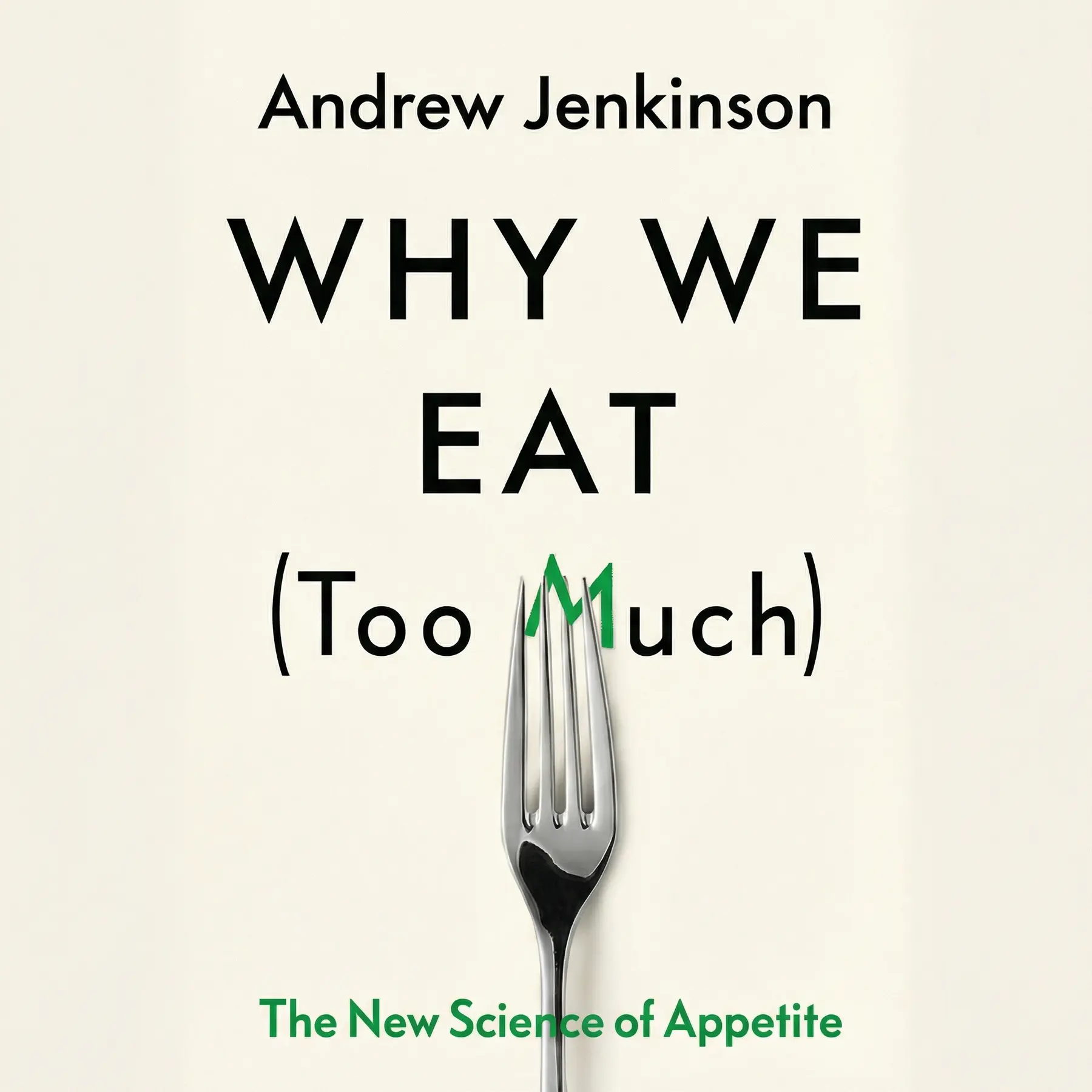
Why We Eat (Too Much): The New Science of Appetite
A deep dive into the evolutionary and biological mechanisms that govern human weight. This summary reveals why traditional dieting fails and how our modern food environment hijacks our natural metabolic signals.
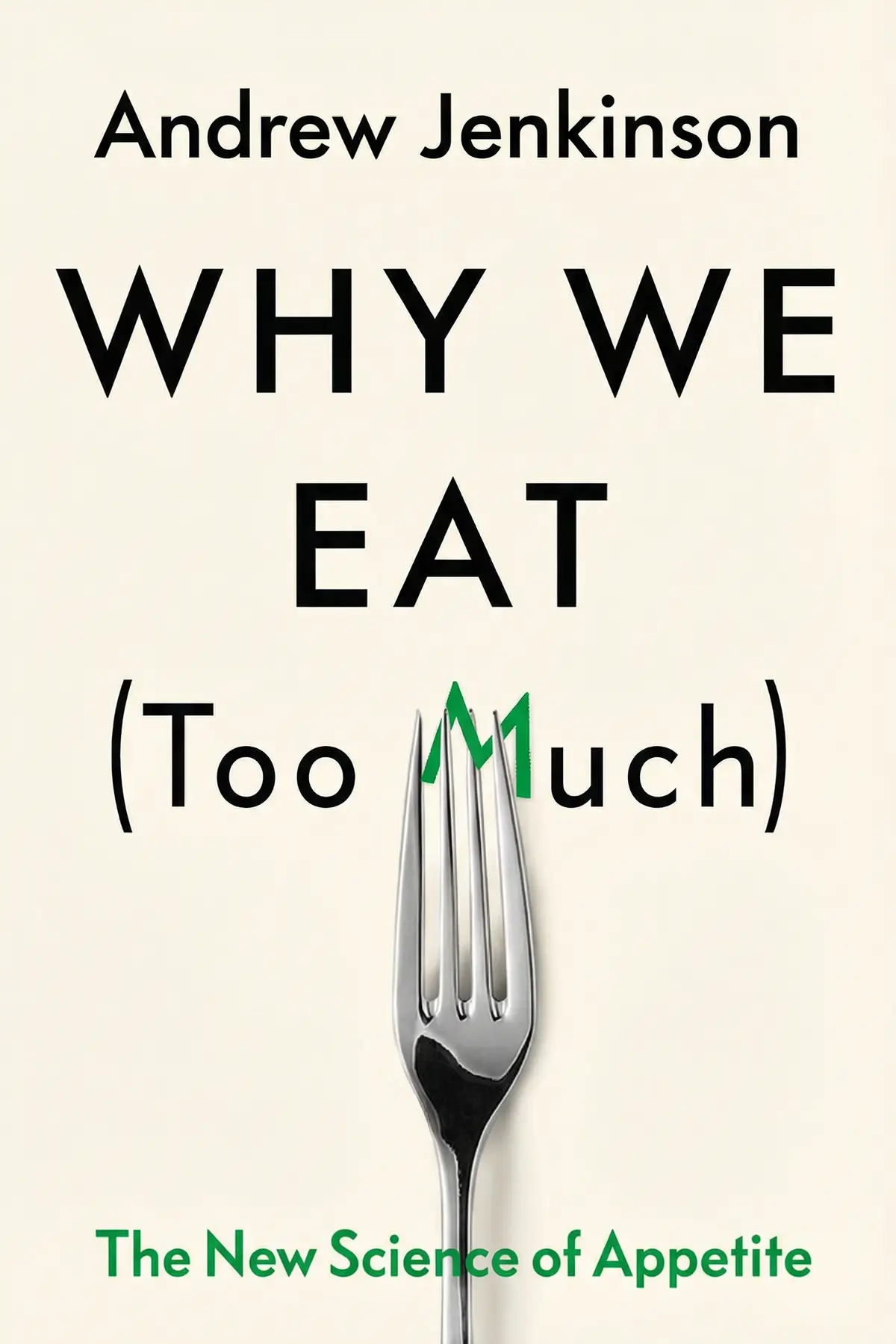
Table of Content
1. Introduction
2 min 01 sec
Everywhere we look, we are bombarded with advice on how to lose weight. One expert tells us to cut out all carbohydrates, while another insists that animal products are the root of all evil. We see advertisements for miracle pills, intense workout regimens, and apps that track every single morsel of food we consume. But despite all this information and the billions of dollars spent on the weight loss industry, global obesity rates continue to climb. Why is there such a massive disconnect between our efforts and our results?
The problem, as surgeon Andrew Jenkinson points out, is that most of this advice is built on a fundamental misunderstanding of how the human body actually works. We’ve been told that weight management is a simple matter of willpower and math—just eat less and move more. But if it were that simple, wouldn’t more people be successful in the long run? The reality is that the vast majority of dieters regain the weight they lose, often ending up heavier than when they started. This isn’t because they are lazy or lack discipline; it’s because they are fighting against four billion years of biological evolution.
In this summary, we are going to peel back the layers of noise and look at the underlying science of metabolism and appetite. We’ll go back to the very beginning of life on Earth to see how our cells first learned to generate energy. We’ll explore how our ancestors traded gut size for brainpower and how the discovery of fire changed our biology forever. More importantly, we’ll look at the sophisticated internal feedback loops that manage our weight and see how our modern food environment has effectively broken those systems. By the end, you’ll have a much clearer picture of why your body reacts to food the way it does, and why understanding your biology is the first step toward true health. This is the story of energy, survival, and the hidden messengers that tell us when to eat and when to stop.
2. The Ancient Origins of Cellular Energy
2 min 20 sec
Discover how a billion-year-old partnership between primitive cells paved the way for all complex life and created the foundations of our metabolism.
3. The Trade-off Between Brains and Guts
2 min 16 sec
Explore the evolutionary gamble that allowed humans to develop massive, energy-hungry brains by sacrificing the size of our digestive systems.
4. How Fire and Cooking Rewired Human Biology
2 min 03 sec
Learn how the invention of the kitchen acted as a form of external digestion, fueling our evolution and changing our dietary needs forever.
5. The Body's Internal Management Systems
1 min 57 sec
Understand the concept of negative feedback and how your body uses sophisticated sensors to maintain a stable internal environment.
6. The Surprising Response to Overeating
1 min 41 sec
Witness the results of clinical studies that show how the body actively fights against weight gain by ramping up its metabolic engine.
7. Why Diets Trigger a Survival Shutdown
1 min 59 sec
Discover the biological reason why cutting calories often leads to a sluggish metabolism and eventual weight regain.
8. The Hormonal Master of the Weight Thermostat
1 min 51 sec
Meet leptin, the crucial messenger that links your fat cells to your brain and determines your internal weight ‘set point.’
9. How Modern Food Sabotages Our Biology
2 min 06 sec
Examine the role of sugar and industrial oils in disrupting our natural weight-control signals and driving the obesity epidemic.
10. Conclusion
1 min 57 sec
The journey through the science of appetite brings us to a powerful realization: our weight is not a simple tally of calories, but the result of a complex biological conversation. We’ve seen how our history as a species is defined by the quest for energy—from the ancient mitochondria that power our cells to the discovery of fire that allowed our brains to grow. We’ve explored the sophisticated feedback loops that use hormones like leptin to act as an internal thermostat, and we’ve looked at the heartbreaking reality of how those systems fight back when we try to starve ourselves thin.
The most important takeaway is that your body is on your side. It isn’t trying to make you gain weight to spite you; it’s trying to protect you from what it perceives as a threat to your survival. The obesity epidemic isn’t a crisis of willpower; it’s a crisis of information. When we feed ourselves processed sugars and industrial oils, we are giving our bodies the wrong data, which in turn breaks our internal sensors.
To move forward, we must stop fighting our biology and start working with it. This means moving away from the ‘semi-starvation’ of traditional dieting and focusing on the quality of the food we consume. By choosing whole, natural foods that our ancestors would recognize, we can begin to lower our insulin levels and restore our sensitivity to leptin. We can fix the ‘clogged’ communication lines in our metabolism.
Weight loss shouldn’t be a battle against yourself. It should be an act of restoration—returning your body to its natural state of balance. By understanding the ancient science of why we eat, you gain the power to change how you eat, not through force, but through clarity and respect for the incredible biological machine that keeps you alive. The path to a healthier weight isn’t found in a calorie-counting app; it’s found in honoring the signals your body was always meant to follow.
About this book
What is this book about?
Have you ever wondered why, despite our best efforts and endless calorie-counting apps, the scale often refuses to budge—or worse, moves in the wrong direction? Why We Eat (Too Much) provides a comprehensive look at the internal systems that truly dictate our body size. Surgeon Andrew Jenkinson moves beyond the simplistic 'calories in, calories out' model to explain the complex interplay of genetics, history, and hormones. The book promises a paradigm shift in how we view weight loss and health. By exploring our ancient origins and the way our cells produce energy, Jenkinson illustrates that our bodies are not broken; they are actually highly efficient survival machines doing exactly what they were designed to do. However, our modern world—filled with processed sugars and industrial oils—is sending these machines the wrong signals. Readers will learn about the history of the obesity epidemic, the biological reality of metabolism, and why our internal 'set point' is so difficult to change through sheer willpower alone. This is an essential guide for anyone looking to understand the real science of appetite.
Book Information
About the Author
Andrew Jenkinson
Andrew Jenkinson is a consultant surgeon with a special interest in advanced laparoscopic or “keyhole” surgery. He is based in London, where he practices his trade as a gastrointestinal surgeon at University College Hospital in Bloomsbury.
Ratings & Reviews
Ratings at a glance
What people think
Listeners find the book highly educational, and one listener highlights how clearly it details bodily mechanisms. Feedback regarding the weight loss components is mixed among listeners.
Top reviews
Isabelle
This book is a total game-changer for anyone tired of the endless 'eat less, move more' mantra. Jenkinson manages to explain the complex interplay of hormones like leptin and ghrelin without making you feel like you're sitting in a dry biology lecture. Personally, the concept of the 'set-point' was a revelation. It explains why our bodies fight so hard to maintain a certain weight regardless of willpower. While the author does have a bit of a thing for offal and animal fats, his argument against the modern food environment—specifically the damage done by sugar and industrial seed oils—is incredibly compelling. The writing is punchy, and the metaphors help simplify the heavy science of metabology. It really shifted my perspective on obesity from a moral failing to a biological signaling issue.
Show moreAria
Picked this up after a recommendation and was floored by the depth of the metabolic science. The book successfully dismantles the 'calorie is a calorie' myth by showing how different nutrients actually communicate with our brains. Jenkinson's focus on 'Shit Life Syndrome'—the idea that stress, poor sleep, and a toxic food environment drive weight gain—is a refreshing take. I especially liked the sections on the Minnesota Starvation Experiment; it really clarifies why restrictive dieting leads to long-term metabolic damage. The prose is lively, though a bit repetitive in the middle sections. Regardless, the advice to cut out wheat and vegetable oils while embracing natural fats feels sustainable. It’s not a 'diet' book so much as an owner's manual for the human body.
Show moreValentina
Finally, a book that looks at obesity as a biological dysfunction rather than a character flaw! Jenkinson’s breakdown of the feedback loops between the gut and the brain is masterful. He explains why we feel hungry even when we have plenty of stored energy, blaming the hormonal 'noise' created by modern manufacturing. The way he describes insulin's role in fat storage helped me understand why my previous attempts at weight loss failed. It’s a very persuasive argument that focuses on food quality over quantity. Some might find the science heavy, but I appreciated that he didn't talk down to the reader. It’s an empowering read that puts the power back in the consumer's hands by exposing the tricks of the food industry.
Show moreSophia
Wow. I never thought I'd find a book about nutrition that I couldn't put down, but here we are. Jenkinson’s writing is engaging, and he uses brilliant metaphors to explain how our metabolism adapts to different environments. The 'thermostat' analogy for our body weight is perfect. He doesn't just tell you what to eat; he tells you *why* your body reacts the way it does to sugar and wheat. I’ve read a lot of health books, but this is the first one that made me realize why counting calories is a losing game. It’s a compassionate, evidence-based look at why we are facing an obesity epidemic. Highly recommended for anyone who is tired of the yo-yo dieting cycle.
Show moreEye
After hearing so much conflicting advice over the years, Jenkinson’s breakdown of ghrelin and leptin felt like a lightbulb moment. This isn't your typical beach-body diet book; it's a deep dive into evolutionary biology and modern endocrinology. The author makes a very strong case for returning to ancestral eating patterns—more saturated fats and less processed junk. I loved the practical tips on rebalancing omega ratios, even if I’m not quite ready to start eating heart and liver for breakfast. The tone is mostly encouraging, though he doesn't pull any punches when criticizing the government's outdated nutritional guidelines. It’s a bit long in places, but the information is too important to skip. This should be required reading for anyone in the healthcare industry.
Show morePichaya
As someone who has struggled with weight for years, I found Jenkinson's explanation of the set-point theory incredibly liberating. He treats obesity with a level of compassion rarely seen in medical literature, acknowledging that 'willpower' isn't the magic bullet we’ve been told it is. The breakdown of how processed foods mess up our internal signals is fascinating, particularly the section on the omega-3 to omega-6 ratio. To be fair, I did find some of his historical anecdotes a bit dodgy—like the claim about Victorian women wanting blackened teeth as a status symbol. That felt a few centuries off! However, the core nutritional advice is solid. If you can get past some of the slightly cringey analogies, there’s a wealth of life-changing information here about how our environment triggers our genes.
Show moreKae
Not what I expected from a weight loss book, but it’s probably the most scientific one I’ve read lately. The author is a bariatric surgeon, and his expertise shines through when he discusses the causal chains of biology. I was particularly struck by the argument regarding walnuts and the omega ratios—it’s detailed enough to satisfy a science nerd but explained well enough for a layman. My only real gripe is that he’s very dismissive of plant-based diets and seems to have a vendetta against grains that isn't always fully backed by broader research. He also makes some weird claims about the Venus of Willendorf that felt like a reach. Still, the core message about ultra-processed food is undeniable. It’s a dense read but worth the effort for the metabolic insights alone.
Show moreErn
Frankly, I was skeptical about a surgeon telling me to eat more butter, but the logic here holds up surprisingly well. The book does a fantastic job of explaining how our modern diet of refined carbs and seed oils has essentially 'broken' our internal thermostats. I found the advice on mindful eating and managing cortisol through sleep and breathing very practical. However, the author’s obsession with the diet of the Inuit and Maasai felt a bit one-dimensional. Those are extreme environments, and it's hard to translate that directly to a modern urban lifestyle. I also wish there was more nuance regarding different types of grains rather than just a blanket ban on everything. That said, I've implemented some of the changes and already feel less 'food-obsessed' than I did on low-fat diets.
Show moreSuthida
Ever wonder why every diet works for two months and then fails spectacularly? Jenkinson answers that question with a deep dive into metabolism, but I finished the book with very mixed feelings. On one hand, the science behind insulin and glucose spikes is brilliant and easy to follow. On the other hand, the author’s tone can be quite condescending toward people who can't afford his recommended lifestyle. Not everyone can spend their weekends sourcing grass-fed beef and fresh offal from a local butcher. There’s a certain level of privilege required to follow his 'simple' advice, and he glosses over the reality of food deserts and poverty. It's a great scientific resource, but the social commentary felt out of touch and occasionally mean-spirited toward the very people he claims to be helping.
Show moreEli
The section on human evolution and history really undermined the author's credibility for me. Jenkinson claims humans descended from chimpanzees, which is a basic biological error; we share a common ancestor, but we aren't 'descended' from them. This kind of sloppiness makes me question the rest of his scientific claims. He also presents the Venus of Willendorf as a literal representation of a real person rather than a symbolic fertility goddess. Beyond the historical errors, the writing is often arrogant. He presents his theories as absolute facts while ignoring any evidence that contradicts his pro-meat, anti-grain stance. While the chapters on hormones are interesting, there are much better, more rigorously edited books on this topic—like Nadja Hermann’s work—that don't rely on oversimplified evolutionary myths to make a point.
Show moreReaders also enjoyed
AUDIO SUMMARY AVAILABLE
Listen to Why We Eat (Too Much) in 15 minutes
Get the key ideas from Why We Eat (Too Much) by Andrew Jenkinson, plus 5,000+ more titles in English and Thai.
- 5,000+ titles
- Listen as much as you want
- 7-day free trial
- Cancel anytime







