


A Biography of Loneliness: The History of an Emotion
Fay Bound Alberti
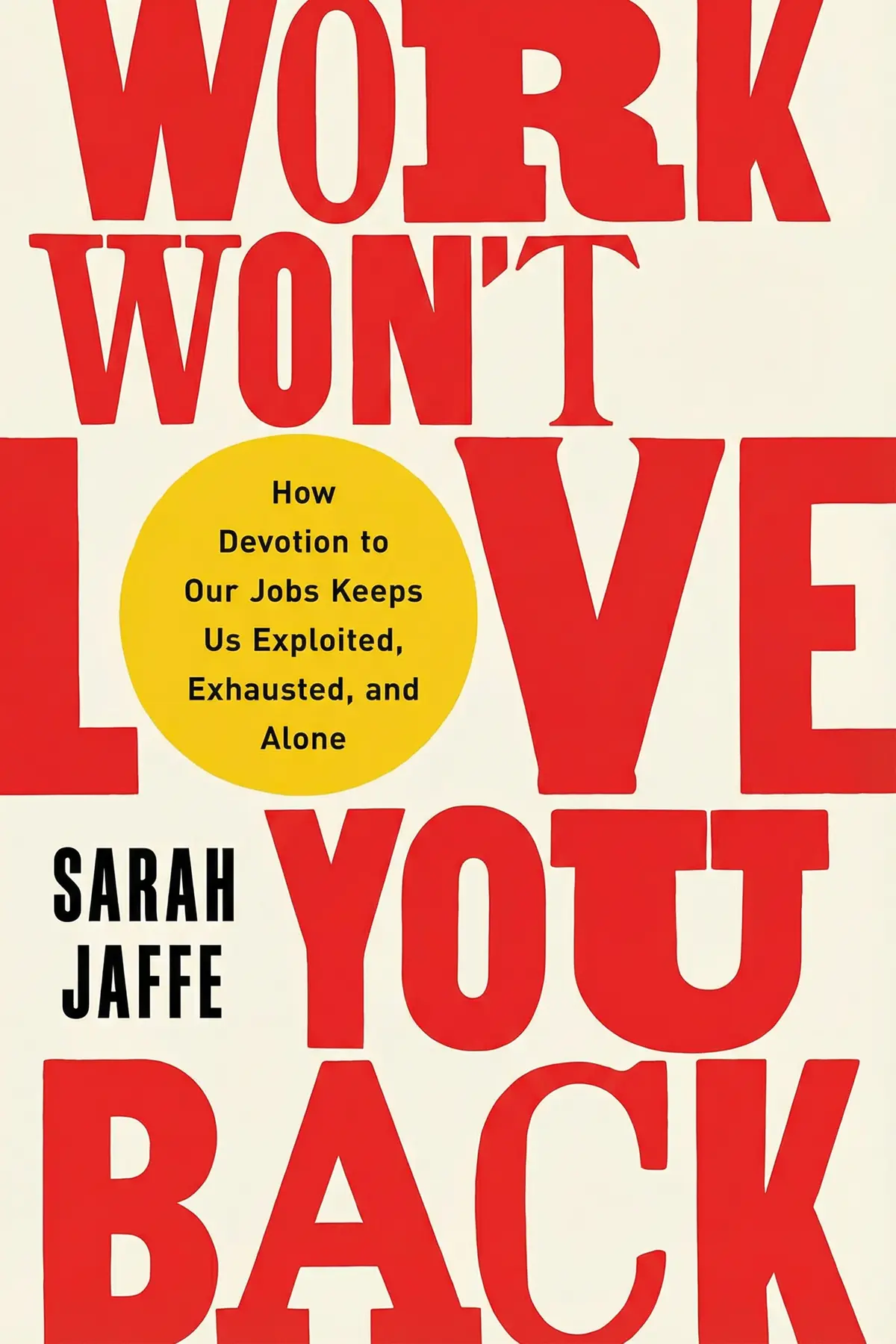
Work Won't Love You Back explores how the modern demand for passion in the workplace leads to exploitation. Sarah Jaffe challenges the myth that work should be our primary source of fulfillment.
1 min 48 sec
We have all heard the familiar refrain suggesting that if we simply find a career fueled by passion, the very concept of labor will vanish from our lives. It is a sentiment echoed in graduation speeches, career blogs, and the curated feeds of social media influencers. This idea—that work should be a source of deep, personal fulfillment and emotional joy—has become the defining work ethic of our time. We are told to find what we love, and then give it everything we have. But what if this pursuit of professional passion is actually making us more miserable?
In this exploration, we delve into the work of labor journalist Sarah Jaffe, who argues that the mandate to ‘love what you do’ is one of the most effective tools of modern exploitation. This isn’t just about being cynical toward a job; it is about understanding how our emotional investment is being used against us. When we view our jobs as an extension of our identity or a labor of love, we become far more willing to accept lower pay, longer hours, and a lack of boundaries. We start to see our exhaustion as a badge of honor and our exploitation as a necessary sacrifice for a higher calling.
Over the course of this summary, we will look at how the nature of work has shifted from a transactional arrangement for stability into an emotional demand for devotion. We will see how historical shifts in the global economy paved the way for this new reality and how certain sectors of the workforce—particularly those involving care and creativity—are hit the hardest. Most importantly, we will explore why it is essential to decouple our sense of self-worth from our productivity and how we can begin to reclaim the parts of our lives that work has slowly begun to consume. It is time to realize that no matter how much heart you put into your job, your work will never love you back.
2 min 04 sec
Discover how the expectation for emotional devotion in the workplace replaced the simple transactional nature of a paycheck and why this shift is a relatively new phenomenon.
2 min 09 sec
Uncover the political and economic forces that dismantled worker protections and paved the way for a more precarious and demanding modern job market.
2 min 04 sec
Examine how sexist stereotypes about women’s natural nurturing abilities are used to justify low wages and high emotional demands in care-based professions.
2 min 00 sec
Learn why the world of creative and artistic work is ripe for exploitation, as the ‘pleasure’ of the task is often treated as a substitute for fair pay.
1 min 59 sec
Understand the psychological tactics used by modern companies to make exploitation feel like a personal choice through the language of passion and mission.
2 min 01 sec
Dismantle the dangerous idea that your company is a family and see why this comparison is used to obscure power imbalances and silence dissent.
1 min 58 sec
See how the demands of modern work erode our real-life relationships and turn our limited social time into another form of transactional management.
1 min 51 sec
Explore the ways workers are fighting back against exploitation and why collective action is the only path toward a more balanced and humane way of living.
1 min 43 sec
As we wrap up this exploration of Sarah Jaffe’s critique of modern work culture, the central message is clear: your job is not your friend, it is not your family, and it is certainly not a person capable of loving you back. The ‘labor of love’ is a powerful myth that has been used to convince us that our exploitation is actually a form of self-fulfillment. By internalizing this ethic, we have allowed our work to seep into every corner of our lives, draining our energy and eroding our most precious relationships. But as we have seen, this is not an inevitable state of affairs; it is the result of specific economic and political choices made over the last several decades.
To break free, we must first change how we talk about work. We need to strip away the romanticized language of ‘passion’ and ‘calling’ and see labor for what it is: an exchange of time and skill for the resources we need to survive. There is no shame in working for a paycheck, and there is no glory in burning yourself out for a company that would replace you in a heartbeat. By setting firm boundaries and refusing to perform enthusiasm for the sake of our employers, we take the first step toward reclaiming our lives.
But individual resistance is only the beginning. True change requires collective action. Whether it is through joining a union, supporting policies like a shorter work week, or simply showing up for your community outside of office hours, we must work together to build a society that values people over profits. The throughline of this journey is the realization that our time is our own. When we stop giving our hearts to our jobs, we finally have the space to give them to the people and causes that truly matter. It is time to work to live, not live to work.
Have you ever been told that if you follow your passion, you will never truly work a day in your life? This book takes a sharp, critical look at that ubiquitous piece of advice, revealing it to be a trap that benefits employers while leaving workers exhausted and underpaid. Sarah Jaffe traces the history of labor from the industrial era to the modern service economy, showing how the expectation of emotional devotion has replaced the fair exchange of labor for security. The book promises to dismantle the toxic idea that we owe our jobs our hearts and souls. By examining various sectors—from care work and teaching to the tech industry and the arts—Jaffe illustrates how the 'labor of love' ethic is used to justify stagnant wages and the erosion of the boundary between our personal and professional lives. Ultimately, it offers a vision for a future where we prioritize our relationships and well-being over the bottom line of our employers.
Sarah Jaffe is an independent journalist who specializes in labor and the modern workplace. Her work has appeared in the New York Times, the Guardian, the Washington Post, the Atlantic, the Nation, and the New Republic. She is a reporting fellow at the Type Media Center, a non-profit media organization for progressive journalism, and the author of Necessary Trouble: Americans in Revolt.
Listeners find this book to be a powerful and thoroughly investigated examination of today's work culture, even if some feel the structure is sometimes disjointed and leans more toward history than actionable tips. Many value the perceptive analysis of different sectors, pointing out how the idea of a "labor of love" can result in widespread exploitation and exhaustion. Furthermore, they appreciate how the author weaves together individual narratives with a fervent critique of neoliberalism. They also note the writing provides significant validation for those facing career burnout, with one listener emphasizing that it effectively "dismantles the myth" that work should be a primary source of fulfillment.
Sarah Jaffe has written a manifesto that everyone needs to read. She completely dismantles the toxic idea that we should be grateful to work ourselves to the bone just because we "love" what we do. The historical deep-dives into different sectors, from teaching to the arts, show how this "labor of love" narrative is just a clever tool for exploitation. To be fair, it’s a dense read and leans heavily into Marxist theory, which might turn some people off. However, her arguments about how neoliberalism has commodified our very identities are incredibly sharp. It’s not a self-help book, but it offers a kind of collective clarity that is much more valuable than typical career advice. We need more than just "self-care" to fix this mess. This is about power, history, and reclaiming our time from a system that views human passion as just another resource to be extracted.
Show moreWow, this was a punch to the gut in the best way possible. As a former "star student" who entered the creative arts thinking passion would pay the bills, I felt deeply seen by these pages. Jaffe’s critique of how we’ve been groomed to accept low pay for "meaningful" work is scathing and necessary. She uses personal stories from interns and retail workers to ground the heavy theory. It’s a depressing read at times, sure. But there’s something validating about realizing your exhaustion isn't a personal failing; it’s a systemic feature. The chapter on the "family" vibe in corporate offices was particularly spot-on. They use your emotions to keep you working late without extra pay. Don’t fall for the trap. Your job is an exchange of labor for money, nothing more, and this book proves why that boundary is sacred.
Show moreFinally got around to reading this, and it’s a necessary critique of modern work culture that feels more relevant every day. Jaffe successfully dismantles the myth that a job should be our primary source of fulfillment or identity. The section on the tech industry was especially eye-opening for me, showing how the promise of "changing the world" is used to justify 80-hour weeks and total social isolation. My only minor gripe is that it relies heavily on secondary sources rather than original journalistic investigation in some parts. Still, the synthesis of ideas is impressive. It makes you realize that the "lifestyle" your job offers is often just a gilded cage. A very well-documented, persuasive, and ultimately hopeful call for a world where we love people, not our productivity metrics. Truly a must-read for the burnt-out generation.
Show moreAfter hearing so many people talk about "quiet quitting" and the "Great Resignation," I wanted to understand the roots of our collective burnout. Sarah Jaffe provides those answers in spades. This book is a brilliant, multifaceted look at how the "labor of love" has become a trap for the modern worker. From the world of professional sports to the halls of academia, the stories are heartbreaking but necessary. She makes a compelling case for why we need to decouple our self-worth from our output. I finished this feeling angry, but also strangely empowered to set better boundaries. It’s a long journey through history and political theory, but the conclusion ties it all together beautifully. We deserve a life that belongs to us, not our employers. Stop loving a job that will never love you back.
Show moreEver wonder why you feel like a failure for being exhausted after a forty-hour week? Jaffe explains it perfectly by tracing how the "vocation" myth traps us. I especially appreciated the section on nonprofits. It’s wild how these organizations are often funded by the very exploitation they claim to fight against. The truth is, your job doesn't have a soul and it won't care if you burn out. While the book can feel a bit repetitive when she moves from one industry to the next, the core message remains powerful. It's a call for solidarity over individual striving. It’s time we stop seeing our coworkers as competition and start seeing them as allies in a broken system. Some chapters were definitely stronger than others, but the overall impact is undeniable for anyone feeling the weight of modern employment.
Show morePicked this up during a particularly bad week at my retail job and it was exactly the validation I needed. For years, I’ve been told that "service with a smile" is just part of the job, but Jaffe shows how that emotional labor is just another way we're exploited for profit. The book is pro-worker and pro-union through and through. It doesn't sugarcoat how grim things are. I loved the way she connected the struggles of academic researchers with those of domestic workers. We’re all being squeezed by the same neoliberal machine. It’s a passionate, intense, and often angry book. If you’re tired of being told to just "lean in" or "find your passion," read this instead. It’s about fighting back, not fitting in. A bit long in the middle, but the conclusion is worth it.
Show moreThe chapter on tech alone is worth the price of admission. Jaffe explores how work has colonized our personal lives and our very identities through the lens of "passion." We’ve become so used to "networking" and "personal branding" that we’ve forgotten how to just exist as human beings. This book is a loud, clear rejection of that entire mindset. It’s refreshing to read someone who isn't afraid to name capitalism as the root problem rather than just blaming bad bosses. The prose is sharp, though the sentence lengths vary wildly which keeps you engaged. It’s not a light read by any means, and the focus on history over practical advice might annoy some. But if you’re feeling lonely and burned out, this book will explain exactly why. It’s not you, it’s the system.
Show moreThe research here is undeniable, but the structure felt fragmented and a bit formulaic. Each chapter follows a similar pattern: a personal anecdote from a specific industry, a massive history lesson starting from the dawn of time, and then a brief wrap-up that doesn't always connect the dots. After a few chapters, it starts to feel a bit like beating a dead horse. I also found it frustrating that racism and gender were often treated as additions to the main narrative—the “for women it was X, for women of color it was Y” structure felt a bit dated. That being said, Jaffe is a brilliant writer when she’s focused on the present. Her analysis of how "love" has been weaponized by employers is the book's strongest point. It’s an important contribution to labor literature, even if it’s a bit of a slog.
Show moreLook, I agree with the core message, but the delivery is a bit too academic for what the cover promises. I was hoping for something more along the lines of a journalistic exposé or a guide to navigating the modern workplace. Instead, it feels like a deep-dive into labor history that sometimes loses the thread of its own argument among the fragments of different industries. The author is clearly passionate, but she spends so much time on the deep history of each sector that the modern-day impact gets buried. I did appreciate the final chapter, though. It offers a glimmer of hope that isn't just "join a union" but a broader vision of human connection. It’s a solid 3-star read for me. Good ideas, but the execution was a bit dry and drawn-out for my taste.
Show moreNot what I expected based on the title and cover. I was looking for practical advice on how to find a better work-life balance, but this is more of a historical and sociological analysis. The author goes into these long-winded histories of labor movements that felt better suited for a graduate textbook. Frankly, the mentions of Ancient Greece felt out of place and unnecessary for a book ostensibly about modern neoliberalism. It’s well-researched, but the organization is all over the place. One minute we're talking about bougie interns, and the next we're diving into decades-old union struggles in Japan. If you want a dry history of the Western Left, this is for you. If you want to know how to actually improve your life at work, you'll probably leave feeling more frustrated than when you started.
Show moreFay Bound Alberti

Daniel Goleman


Virginia Woolf
Tracy Rosenthal
Jessica Valenti



Johny Pitts
AUDIO SUMMARY AVAILABLE
Get the key ideas from Work Won’t Love You Back by Sarah Jaffe, plus 5,000+ more titles in English and Thai.







