
17 min 13 sec
Wuhan Diary: Dispatches from a Quarantined City
By Fang Fang
A courageous, day-by-day chronicle of the COVID-19 lockdown in Wuhan. Acclaimed author Fang Fang captures the fear, the resilience, and the struggle for truth during the pandemic's earliest epicenter.
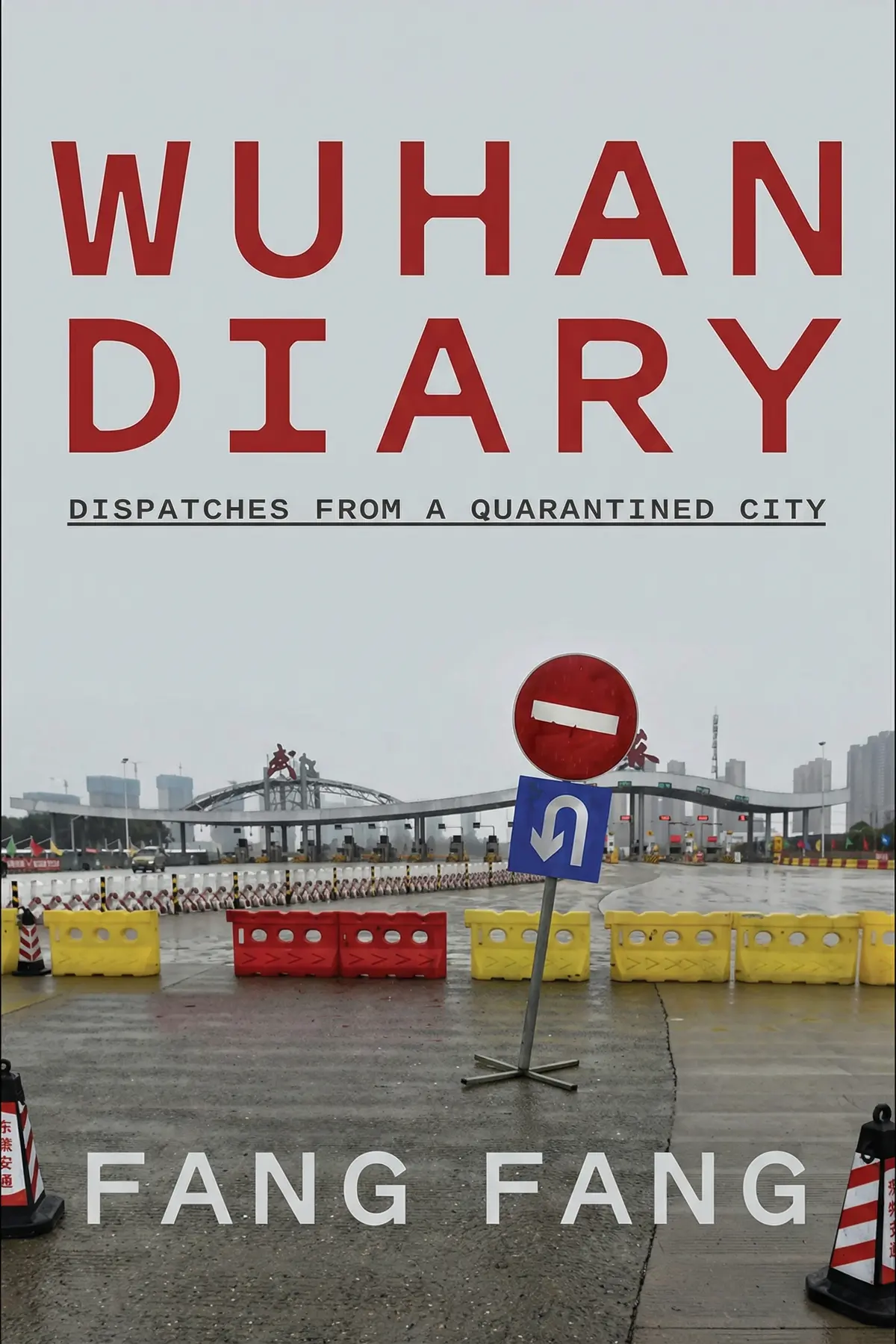
Table of Content
1. Introduction
1 min 38 sec
In the final days of 2019, the city of Wuhan was a thriving metropolis, a hub of culture and industry in China’s Hubei Province. But beneath the surface of the bustling New Year preparations, a quiet and terrifying shadow was beginning to stretch across the streets. What started as whispers about a new illness at a local seafood market would soon evolve into a global catastrophe that changed the world forever.
At the center of this burgeoning storm was Fang Fang, one of the city’s most respected and courageous writers. When the city was suddenly plunged into a total lockdown on January 23, 2020, she found herself isolated in her apartment with only her aging dog for company. Rather than retreating into silence, she chose to speak. She began a daily digital diary on social media, chronicling the lived reality of 11 million people trapped in the world’s first COVID-19 epicenter.
This isn’t just a collection of facts or statistics; it is a deeply personal narrative that captures the emotional arc of a city in crisis. Through her eyes, we see the initial disbelief, the heartbreaking loss of life, the failures of leadership, and the incredible, quiet heroism of ordinary citizens. Fang Fang’s diary became a window for the world and a mirror for her neighbors, reflecting the fear of the unknown and the enduring strength of the human spirit. In the pages that follow, we will walk through those 76 days of isolation, exploring the throughline of her journey: the vital importance of truth and memory when faced with the overwhelming pressure of a public health disaster and political suppression.
2. The High Price of Silence and Early Missteps
2 min 06 sec
Discover how a few words of official reassurance paved the way for a massive outbreak and why a festive city was blindsided by a sudden, total lockdown.
3. A City Paralyzed by Fear and a System in Collapse
1 min 55 sec
Follow the harrowing first weeks of the quarantine as the medical system buckled under the weight of an invisible enemy and citizens faced impossible choices.
4. The Rise of Grassroots Resilience and Digital Solidarity
2 min 03 sec
Witness the shift from despair to action as a community learns to lean on one another through screens and across balconies to survive the isolation.
5. The Search for Accountability Amidst a Rogue Threat
2 min 06 sec
Explore the growing demand for answers as the true, unpredictable nature of the virus became clear and the public mourned a fallen hero.
6. Defending the Truth Against Censors and Trolls
2 min 09 sec
Step into the digital battlefield where Fang Fang faced organized attacks and state censorship to keep the memory of the lockdown alive.
7. The Shadow of Secondary Disasters and Long-Term Trauma
1 min 59 sec
Go beyond the medical statistics to understand the economic and psychological wreckage left in the wake of a prolonged metropolitan shutdown.
8. A Bitter Reopening and the Lessons of Interconnectedness
1 min 54 sec
Reflect on the emotional moment the gates of Wuhan finally opened and the global takeaways from 76 days of isolation.
9. Conclusion
1 min 23 sec
Wuhan Diary stands as a monumental piece of witness literature. It is the story of a city that was sacrificed to buy the rest of the world time—time that was often squandered. Through the eyes of Fang Fang, we see that the true measure of a society is not found in its grand statistics or its political slogans, but in how it handles a crisis at the ground level.
The throughline of this summary has been the tension between the institutional desire for a polished narrative and the raw, messy reality of human experience. Fang Fang chose the latter, risking her reputation and her safety to provide a voice for the voiceless. Her diary teaches us that resilience is not just about ‘soldiering on’; it is about the courage to ask why things went wrong and the compassion to help our neighbors when the systems around us fail.
As we look back on the events in Wuhan, the lesson remains clear: information is as vital as medicine. In a world that is more connected than ever, the silence of one city can lead to the suffering of the entire planet. By honoring the memories recorded in these pages, we commit ourselves to a future where truth and transparency are held as our most effective defenses against any shadow that might rise again.
About this book
What is this book about?
Wuhan Diary provides an unparalleled, intimate look at the 76-day quarantine that shut down one of China’s major industrial hubs at the start of 2020. As the coronavirus began to spread, celebrated local writer Fang Fang began documenting her daily life, her observations of her neighbors, and her growing concerns regarding the official response to the crisis. The book moves beyond mere reporting to offer a profound reflection on the human spirit under pressure. It details the transition from initial confusion and government-led complacency to a state of total isolation, where 11 million people were forced to find new ways to survive and connect. Fang Fang’s digital diary became a lightning rod for controversy, drawing both massive support from citizens seeking the truth and fierce backlash from state-aligned critics. Ultimately, the work serves as both a historical record of a global turning point and a powerful testament to the necessity of individual voice in the face of institutional silence.
Book Information
About the Author
Fang Fang
Fang Fang is a preeminent figure in contemporary Chinese literature. Born in 1955, she spent her formative years navigating the complexities of the Cultural Revolution, an experience that deeply influenced her critical perspective on society. A long-term resident of Wuhan, she has authored nearly 100 books, spanning novels, short stories, and essays. Her literary excellence has been recognized with the Lu Xun Literary Prize and the Chinese Literature and Communications Prize for Outstanding Writer.
Ratings & Reviews
Ratings at a glance
What people think
Listeners find that this work offers a remarkably educational perspective on the pandemic, with one review emphasizing its thorough depiction of the lockdown in Wuhan. Furthermore, the prose is highly regarded, and listeners value the straightforward yet empathetic storytelling that portrays the communal spirit and altruism experienced during the emergency. Additionally, the volume earns praise for its sincere tone and precise idiomatic translation, with one listener observing that it functions as a first-hand account of ground zero.
Top reviews
Tun
Finally got around to reading this, and it is a searingly honest account of what it was like at ground zero during the initial outbreak. Fang Fang captures the sense of community and the quiet selflessness of ordinary citizens while the rest of the world was still looking the other way. The translation by Michael Barry is excellent, keeping the direct yet compassionate tone intact without losing those specific cultural nuances. Look, it is not a polished novel with a traditional plot; it is a raw, real-time chronicle of survival and government oversight. She writes with such dignity even when facing immense pressure from her detractors. Some readers might find the daily entries repetitive, but that is the reality of quarantine life. It serves as a vital time capsule for future generations to understand the fear and the courage that defined early 2020.
Show moreSarawut
After hearing so much controversy about Fang Fang, I expected a political manifesto, but what I found was a compassionate narrative about community resilience. The way she describes neighbors helping each other and the frantic search for masks feels very human and grounded. Michael Barry’s translation is remarkably fluid, capturing the unique Chinese humor that often gets lost in more academic texts. While there are some unverified anecdotes that might make skeptics wary, the emotional truth of the situation is undeniable. She holds leaders accountable for the critical delay that allowed the virus to seep out, and that courage is palpable throughout the diary. It is a bit long-winded in the middle sections, but the urgency of the account keeps you turning the pages. This is an important piece of living history that deserves a spot on your shelf.
Show moreAroha
The chapter on the early days of confusion really struck a chord with me because it mirrors the delay we saw in other parts of the world. It is striking to compare her late January entries with what happened in the West months later. Questions like "where do I get masks?" and "why are prices so high?" are universal themes that transcend borders. Personally, I think the book's value lies in its honesty about the initial chaos and the government's attempt to save face. It isn't a perfect book—it could have been twice as good at half the length—but it captures the atmosphere of Wuhan better than any news report. She manages to balance the macro politics of the situation with the micro struggles of a woman just trying to care for her aging dog while the world changes outside.
Show moreDen
Wow, the sheer weight of these sixty days is captured with such dignity that it is hard to ignore the human cost mentioned in every entry. Fang Fang writes bold sentences that rally against the minimization of the virus. I was particularly moved by her descriptions of the medical workers and the community spirit that emerged despite the strict isolation rules. The translation is excellent, making the text feel accessible to a Western audience without stripping away its authentic roots. My only gripe is that it can feel a bit like a watched pot—waiting for developments that we already know the outcome of. Nevertheless, her call for accountability is scorching and provides a much-needed counter-narrative to the official reports. It is a solid account of a global tragedy that shows the power of a single voice.
Show moreDao
As someone who follows global health, seeing how the "saving face" culture impacted the initial response was the most enlightening part of this diary. Fang Fang isn't afraid to curse out those who deserve it, and her bluntness is refreshing. The book documents the shift from initial denial to full-scale mobilization with impressive detail. I appreciate how she highlights the selflessness of the volunteers while also critiquing the inferior managers who rose to the top during the crisis. The translation feels right, capturing the simple humor and directness of her style. It does get a bit repetitive, and the mentions of her online trolls can be a distraction, but the overall message of solidarity is powerful. It is a direct, ground-zero perspective that feels essential for understanding the chaos of 2020.
Show moreNikolai
Picked this up during my own lockdown and found the day-by-day progression incredibly relatable, even if the entries get a bit repetitive after a while. The truth is, actual quarantine is boring and monotonous, so the book reflects that reality perfectly. I enjoyed her musings on the "ultra-leftists" and the way she fought back against the deletion of her posts. However, I was left wanting more detail about her personal family life. We hear about her dog and her grocery runs, but the emotional interiority of her loved ones is often sidelined by her arguments with online trolls. Despite that, the book is informative regarding the logistical nightmare of a city-wide lockdown. It is a three-star read for me—historically significant for its honesty, but occasionally a slog to get through due to the daily format.
Show morePannipa
To be fair, the prose is quite crisp and the translation captures those specific Chinese idioms better than I anticipated. I went into this expecting a dry account, but Fang Fang has a very distinct voice that is both weary and resilient. She isn't necessarily anti-government, but she is fiercely pro-truth, which makes for a tense reading experience given the censorship context. The repetition of her daily routine—checking temperatures and worrying about food supplies—perfectly mirrors the anxiety we all felt later on. I did find the sections where she defends herself against "thugs" a bit exhausting to read in one sitting. It probably worked much better as a daily blog post than a continuous book. Still, it is a fascinating look at the dynamics of a society under extreme pressure and the selfless community spirit that emerged.
Show morePranee
Not what I expected in terms of depth, as the author focuses heavily on her own internet battles with critics rather than the broader suffering of the city. I found the narrative teetered awkwardly between being a historical document and a defensive diary. While I appreciate the courage it took to post these daily, the constant "I heard from a friend" stories felt a bit thin at times. To be fair, she is a literary figure, not a scientist, so her perspective is naturally biased toward her own social circle. It is an interesting time capsule, but it lacks the scientific rigor I was looking for. The politics seem to dominate the later half of the book, which might be frustrating for readers looking for a more personal or human-centric story about the victims of the pandemic.
Show moreJune
Ever wonder how a single voice can cause such a massive stir in a country of billions? This book provides the answer through its raw look at life under lockdown. Fang Fang’s diary is a mix of gossip, grief, and grit. While some of the rumors she mentions are questionable, the atmosphere of fear she describes feels very authentic to those of us who lived through 2020. It is not an easy read, not because of the prose, but because it is a bit of a slog through daily mundane activities. I would have preferred more about her family and less about the "ultra-leftist" drama that takes up so much space in the latter half. In my experience, this works best as a historical artifact rather than a literary masterpiece. It is informative but definitely has its share of dead space.
Show moreDiego
This book feels more like a collection of unverified social media whispers than a definitive historical record. I was excited to get a perspective from inside Wuhan, but the constant reliance on phrases like "a doctor friend told me" or "a journalist messaged me" makes much of it feel like hearsay. Frankly, when some of these rumors were debunked—like the nurse who supposedly died but was actually just ill—it cast a significant shadow over the rest of the entries. It is an interesting cultural artifact regarding how panic spreads through social media, but I wouldn't call it rigorous journalism. There is a lot of dead space where the author simply complains about internet trolls. To be honest, I preferred the scientific reports coming out of the Lancet for a clearer, less politicized picture of the actual situation. It is a polarizing read that leans heavily on gossip juice rather than verified facts.
Show moreReaders also enjoyed
Age of Anger: A History of the Present
Pankaj Mishra
A Promised Land
Barack Obama
Age of Propaganda: The Everyday Use and Abuse of Persuasion
Anthony Pratkanis
A River in Darkness: One Man’s Escape from North Korea
Masaji Ishikawa
A Spy Among Friends: Philby and the Great Betrayal
Ben Macintyre
21 Lessons for the 21st Century
Yuval Noah Harari
AUDIO SUMMARY AVAILABLE
Listen to Wuhan Diary in 15 minutes
Get the key ideas from Wuhan Diary by Fang Fang, plus 5,000+ more titles in English and Thai.
- 5,000+ titles
- Listen as much as you want
- 7-day free trial
- Cancel anytime







