
18 min 44 sec
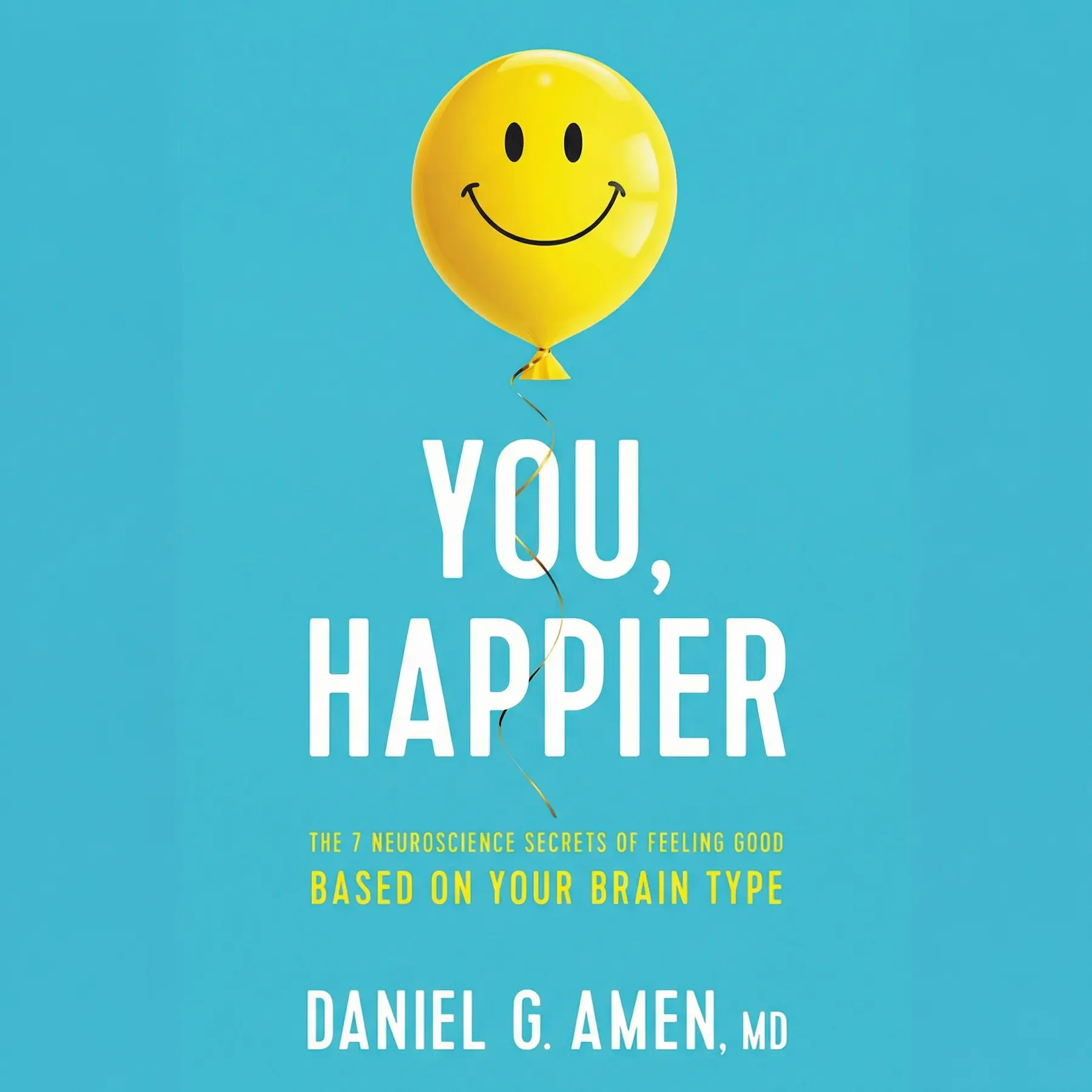
You, Happier: The 7 Neuroscience Secrets of Feeling Good Based on Your Brain Type
Dr. Daniel G. Amen explores how unique biological brain types influence personal happiness. Learn to optimize your specific neural patterns through targeted diet, mindset training, and lifestyle habits to achieve lasting well-being.
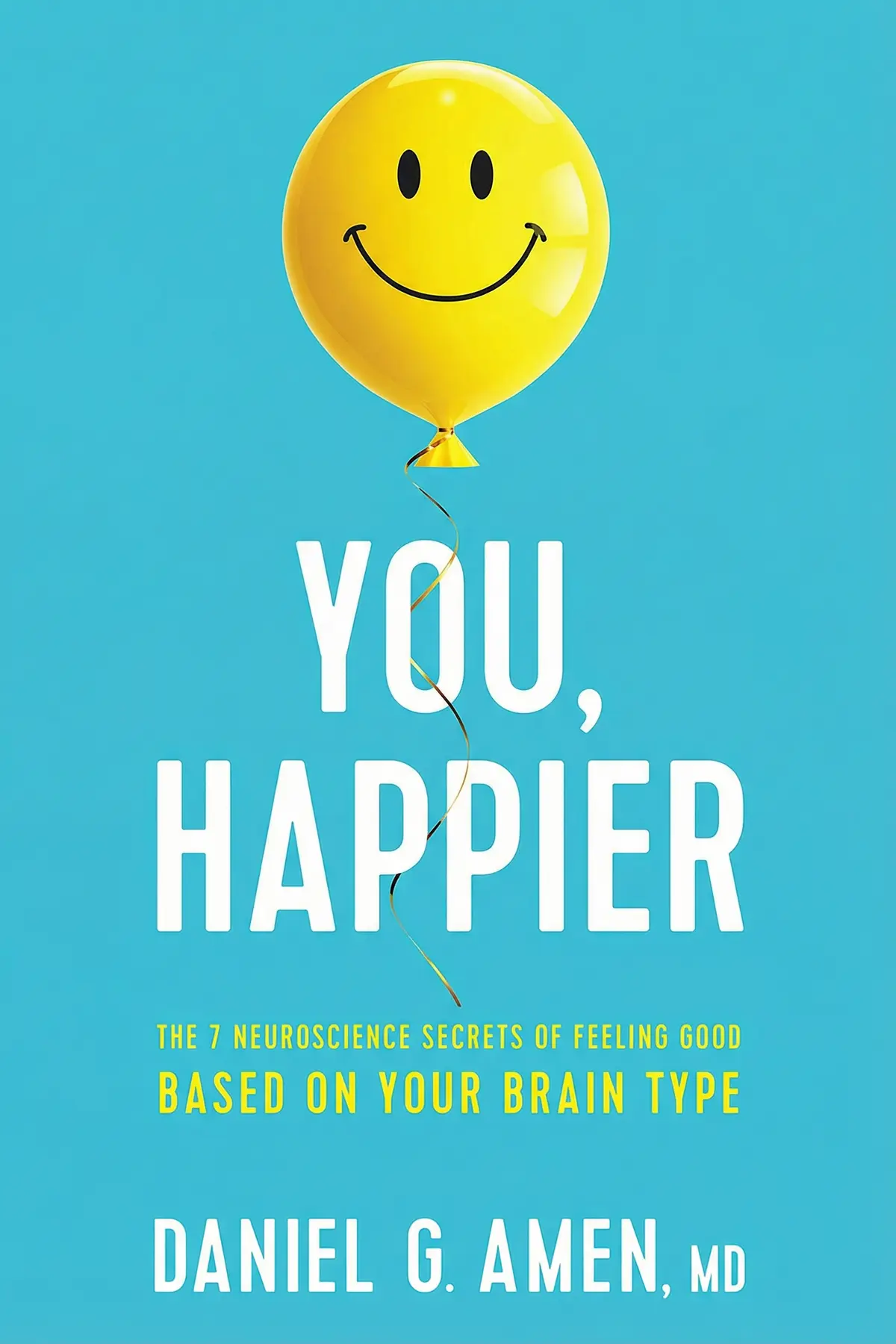
Table of Content
1. Introduction
1 min 48 sec
In the mid-1980s, a psychiatrist named Dr. Daniel G. Amen found himself increasingly dissatisfied with the way mental health was being handled. He noticed a striking contrast between his field and every other branch of medicine. If you had a heart problem, a doctor would look at your heart. If you had a broken bone, they would take an X-ray. Yet, in psychiatry, doctors were essentially forced to guess what was happening inside the brain based solely on a patient’s symptoms. This realization led him on a journey to actually look at the organ he was treating, utilizing advanced technologies like SPECT imaging to map brain activity.
What he discovered fundamentally changed his understanding of human emotion. He found that there isn’t just one way to have a healthy brain, nor is there one single pattern for conditions like depression or anxiety. Instead, he identified diverse brain types that dictate how we perceive the world, how we react to stress, and what ultimately makes us feel happy. This means that a happiness strategy that works for one person might be completely ineffective—or even detrimental—for another.
This summary explores the idea that happiness is a brain function that can be optimized. By understanding the seven neuroscience secrets to feeling good, you can move away from generic advice and toward a personalized plan for emotional health. We will look at how to identify your specific brain type, how to feed your mind the right nutrients, and how to train your thoughts to support a more resilient and joyful life. The throughline here is simple but profound: when your brain works right, you work right. Let’s dive into how you can start working with your biology rather than against it to build a happier version of yourself.
2. The Five Main Brain Archetypes
3 min 13 sec
Happiness isn’t a generic experience; it’s a reflection of your physical brain. Discover the five distinct brain types and how they dictate your reactions, your social tendencies, and your emotional baselines.
3. Tailoring Your Happiness Strategy
2 min 47 sec
Once you identify your brain type, you can stop guessing and start hacking your neurochemistry. Learn why some people need spicy food for joy while others require strict routine to thrive.
4. Feeding the Hungry Mind
2 min 49 sec
Your brain is the most energy-hungry organ in your body, and what you eat directly impacts your mood. Find out which specific diets and nutrients support your unique neurological profile.
5. Mastering Internal Narratives
2 min 21 sec
Positive thinking is more than just a cliché—it’s a skill that requires training. Explore practical psychological techniques to distance yourself from negative thoughts and focus on life’s micro-moments of joy.
6. The Social Architecture of Joy
2 min 20 sec
Relationships are the strongest predictor of long-term happiness, yet they often feel out of our control. Discover how to take radical responsibility for your own mood to transform your connections.
7. Living with Intentional Purpose
2 min 09 sec
True fulfillment comes from aligning your daily actions with your deepest values. Learn how to create a personal life roadmap that guides your biological, psychological, social, and spiritual health.
8. Conclusion
1 min 17 sec
The journey to a happier life isn’t about a sudden transformation or a miraculous discovery. It is about the steady, intentional application of neuroscience to your daily habits. By now, it should be clear that happiness is a biological state that you have the power to influence. Whether you identify as Balanced, Spontaneous, Persistent, Sensitive, or Cautious, your brain provides the blueprint for your emotional well-being. When you nourish that brain with the right foods, support its neurochemistry with targeted activities, and train your mind to focus on the positive, you create a foundation for resilience.
As we’ve explored, this process also extends outward into your relationships and upward into your sense of purpose. By taking responsibility for your own mood and aligning your actions with your deepest values through tools like the One Page Miracle, you move beyond the search for fleeting pleasure and toward a state of lasting fulfillment. The most important takeaway is that you are not stuck with the brain you have today. You can change your brain, and in doing so, you can change your life. Start today by identifying your type and making one small, neuro-targeted choice that brings you closer to the joy you deserve.
About this book
What is this book about?
Happiness is frequently viewed as a mysterious or elusive emotional state, yet neuroscience suggests it is fundamentally a reflection of physical brain health. In this summary, we explore the groundbreaking work of psychiatrist Daniel G. Amen, who argues that there is no universal path to feeling good. Instead, our sense of joy is deeply tied to our specific brain type—whether we are balanced, spontaneous, persistent, sensitive, or cautious. By identifying your unique neurological profile, you can implement tailored strategies to balance your neurochemistry. The book provides a practical roadmap for improving your mood, strengthening your relationships, and discovering a deeper sense of purpose. It moves beyond generic self-help by grounding its advice in functional brain imaging and biological reality. Listeners will discover how to nourish their brains for maximum focus, train their minds to silence negative internal chatter, and build the social connections necessary for a truly flourishing life.
Book Information
About the Author
Daniel G. Amen
Daniel G. Amen, MD, is a prominent psychiatrist, brain health advocate, and the founder of Amen Clinics. His organization manages the world’s largest database of behavioral brain scans, including over 200,000 SPECT scans and 10,000 QEEGs. Dr. Amen is a twelve-time New York Times best-selling author whose notable works include Change Your Brain, Change Your Life and The End of Mental Illness.
Ratings & Reviews
Ratings at a glance
What people think
Listeners find the book informative and straightforward, offering techniques to boost brain wellness and foster enduring joy. They also value the practical nature of the advice, with one listener remarking that it contains many concrete tips. Additionally, the guide helps listeners comprehend their internal brain processes, and one listener mentions it delivers a formula for healthy aging. Nevertheless, the perceived value for the price produces mixed reactions among listeners.
Top reviews
Eleanor
This book completely changed how I view my afternoon slumps and general mood swings. Dr. Amen has a way of making complex neurological concepts feel accessible to the average person without being condescending or overly clinical. I found the breakdown of the five primary brain types—especially the 'Persistent' and 'Sensitive' categories—to be a total revelation for my own self-awareness. The tangible tips for diet and exercise tailored to your specific scan type provide a formula for healthy aging that I haven't seen in other wellness books. While some people might find the supplement talk a bit much, I think the 'Biology of Happiness' section is grounded in solid logic. It is rare to find a guide that bridges the gap between physical brain health and emotional fulfillment so seamlessly. If you are looking for a practical approach to feeling better, this is a wealth of information.
Show morePita
Finally got around to reading this after seeing Dr. Amen on PBS, and I am genuinely impressed by the depth of the 'Happy Connections' chapter. The way he explains the seven secrets of feeling good based on your specific brain type—whether you are 'Balanced' or 'Cautious'—makes so much sense. I have already started implementing some of the 'happiness prescriptions,' and I feel more energized than I have in years. The book provides a clear formula for healthy aging by focusing on the physical health of the brain as the foundation for everything else. Truth is, many of us ignore our brain health until something goes wrong, but this book offers a proactive way to live better. I especially loved the section on 'Happy Nutraceuticals' because it gave me a starting point for supplements that actually align with my needs. It is an empowering and informative read that I’ll be recommending to my whole family.
Show moreSkylar
After hearing about SPECT scans for years, I appreciated finally getting a clear explanation of how brain patterns influence our daily moods in this book. Dr. Amen’s 'Seven Neuroscience Secrets' provide a fantastic roadmap for anyone feeling stuck in a rut. I loved the focus on the 'Spontaneous' brain type, as it helped me understand my own impulsivity and how to manage it through better nutrition. The book is packed with practical strategies to improve brain health and cultivate lasting happiness through small, daily changes. It isn't just about feeling better today; it’s about a long-term formula for healthy aging and cognitive longevity. The case studies and anecdotes are relatable and help illustrate how these brain types manifest in real-world relationships. I found it to be a very hopeful and encouraging read that puts the power of change back into the reader's hands. Simply brilliant.
Show moreSam
As someone who has struggled with focus for years, Dr. Amen’s breakdown of the neuroscience of brain types was a major lightbulb moment for me. I appreciated how he moves beyond standard psychology to look at the actual biology of how we process joy and stress. The chapters on 'Happy Connections' helped me realize that my partner and I simply have different brain patterns, which stopped me from taking our communication differences so personally. Not gonna lie, the recommendations for things like St. John’s Wort and various probiotics can get expensive quickly. But the core message about treating your brain like an organ that needs physical care is vital. The writing style is engaging and the anecdotes kept me turning the pages even during the more technical sections. It is a solid resource for anyone wanting a more scientific take on the pursuit of happiness.
Show moreTar
The concept of 'Automatic Negative Thoughts' isn't necessarily new, but the way it's framed here within the five primary brain types feels much more actionable. Dr. Amen provides a lot of tangible tips that go beyond the typical 'just think positive' advice found in most self-help fluff. I found the 'Biology of Happiness' section particularly enlightening, as it explains how certain foods can either fuel or fog your brain function. My only real gripe is the relentless promotion of his own products and the 30-Day Happiness Challenge. It feels a bit tacky for a medical professional to include so many testimonials for his own paid programs. That being said, the actual strategies for improving social connections and spiritual health are very well-written. It is a comprehensive guide that covers everything from neurotransmitters to value-based living. Definitely worth a read if you can ignore the constant upselling.
Show moreNina
I have been following Dr. Amen’s work for a while, and this latest installment is a great summary of his core philosophies. The book is broken down into five parts, covering everything from biology to spirituality, which makes it feel very holistic. I specifically appreciated the 'Social Connections' chapter; the idea of a 'brain-based blueprint' for relationships is actually quite helpful for navigating conflict. While I agree with other reviewers that the self-promotion of his clinics is a bit heavy-handed, the actual advice on ANTs and mindset is top-tier. To be fair, you don't have to buy his specific supplements to benefit from the dietary advice he provides. The writing is clear, the tone is optimistic, and the strategies are easy to implement. It is a useful resource for anyone who wants to understand why their brain works the way it does. It definitely helped me feel more in control of my own happiness.
Show moreWyatt
Ever wonder why some self-help books feel like a late-night infomercial? Look, there is definitely some gold in these pages if you are willing to dig through the heavy marketing for the Amen Clinics. The concept of brain-based happiness is fascinating, and I liked learning about how my 'Spontaneous' brain type influences my relationships. However, the constant plugging of his own brand of 'nutraceuticals' and the $49 Happiness Challenge started to wear thin after the third chapter. To be fair, the psychological advice regarding 'disciplining your mind' is solid, even if the nutritional section feels a bit like a sales pitch for a multi-vitamin. It is an interesting read that offers a decent brain-based blueprint, but keep your wallet tucked away while you go through it. Some of the conservative undertones and the Dennis Prager quotes felt a bit out of place for a science-heavy book.
Show morePruet
Picked this up because I was curious about the neuroscience angle, but I have mixed feelings now that I’ve finished it. On one hand, the information about how different brain patterns (like 'Persistent' vs. 'Spontaneous') affect our mood is very insightful and easy to understand. On the other hand, the book feels like it’s trying to sell me a lifestyle that costs thousands of dollars in scans and supplements. Also, the inclusion of certain political figures and religious quotes was a bit jarring and made the 'science' feel a little less objective. In my experience, the psychological tools for mindset were the most helpful part, especially the exercises for focusing on 'true and noble things.' It’s a decent book with some valid strategies to improve brain health, but it requires a lot of filtering to get to the actual meat. Take the medical claims with a grain of salt.
Show moreRiley
The truth is, this book is a bit of a mixed bag for me. I really liked the breakdown of the 11 combination brain types and found the 'happiness prescription' for my specific type to be quite accurate. However, the tone can be a bit 'Pollyanna-positive' at times, which might be frustrating for someone dealing with serious trauma. There were some odd moments, too, like the advice regarding baby powder as an aphrodisiac—that was definitely a 'raised eyebrow' moment for me. Additionally, the cost of following all the supplement recommendations would be astronomical. It feels like a long-format advertisement for his brand, which undermines his credibility as a psychiatrist just a little bit. Still, the core message about the biology of happiness is important and worth considering. It’s an informative read, but I’d recommend checking it out from the library rather than buying into all the extras.
Show moreSirirat
Not what I expected from a supposed neuroscience text, and frankly, I found it quite problematic. Right from the start, the author cites Dennis Prager and frames happiness as a 'moral obligation,' which feels incredibly dismissive to anyone actually dealing with clinical depression. The book is heavily saturated with Christian and conservative undertones that felt more like a sermon than a medical consultation. Furthermore, it functions as a long-format advertisement for SPECT scans and expensive supplements that many experts say lack diagnostic validity for psychiatry. I also noticed some fat-phobic sentiment throughout the nutritional advice that could be very harmful to readers with a history of eating disorders. While the sections on 'Automatic Negative Thoughts' (ANTs) were okay, you can find that same information in any basic CBT workbook without the $3,000 price tag for a brain scan. This felt less like a doctor's advice and more like a high-pressure sales tactic.
Show moreReaders also enjoyed
Abundance: The Inner Path to Wealth
Deepak Chopra

Alcoholics Anonymous
Alcoholics Anonymous World Services

A Liberated Mind: How to Pivot Toward What Matters
Steven C. Hayes
59 Seconds: Change Your Life in Under a Minute
Richard Wiseman
AUDIO SUMMARY AVAILABLE
Listen to You, Happier in 15 minutes
Get the key ideas from You, Happier by Daniel G. Amen, plus 5,000+ more titles in English and Thai.
- 5,000+ titles
- Listen as much as you want
- 7-day free trial
- Cancel anytime







