
20 min 49 sec
Aware: The Science and Practice of Presence
Explore the revolutionary Wheel of Awareness, a practice developed by Dr. Daniel Siegel to enhance mental clarity, physical health, and emotional connection through the transformative power of mindful presence and integrated consciousness.
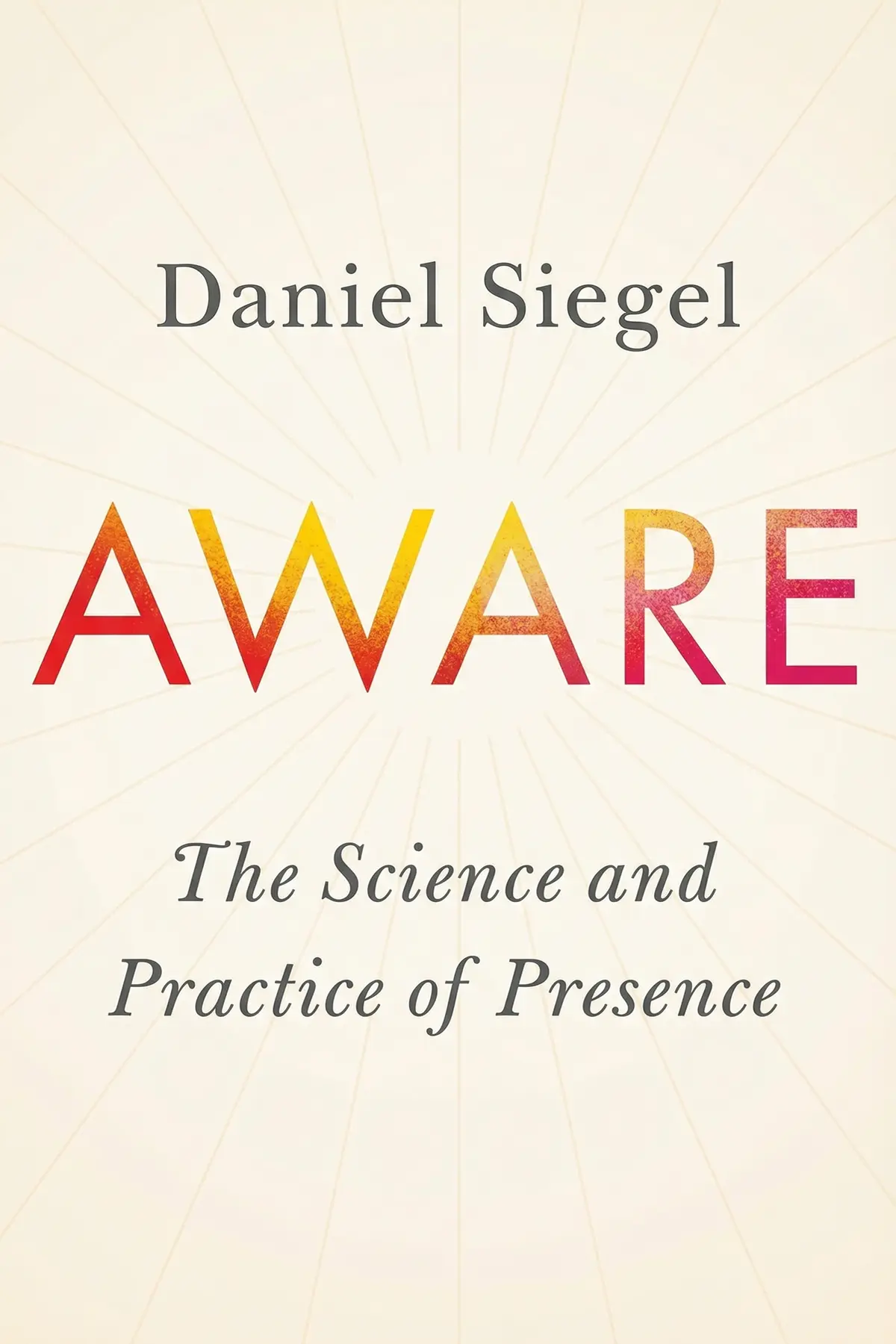
Table of Content
1. Introduction
1 min 55 sec
In our modern era, the human mind is under a constant state of siege. We are surrounded by a relentless stream of notifications, work obligations, and the digital pull of social media. Even in our quiet moments, we often find ourselves trapped in the past, dwelling on mistakes, or projecting into the future with anxiety. Most of us spend the majority of our waking hours on autopilot, moving through routines without ever truly inhabiting the present moment. This fragmented state of being is more than just an inconvenience; it is a significant drain on our mental and physical health.
But what if there was a systematic way to reclaim your focus and, in doing so, actually improve the biological functions of your body? This is the core invitation of Aware. Through the lens of neuroscience and clinical psychiatry, we can begin to see that awareness is not a vague concept but a skill that can be sharpened with precision. Dr. Daniel Siegel introduces a transformative model called the Wheel of Awareness. This model helps us visualize our consciousness as a hub—a place of stillness and clarity—from which we can direct our attention to various aspects of our experience, from our physical sensations to our interconnectedness with others.
In this summary, we will explore how shifting from a state of distraction to a state of presence can have miraculous effects. We will look at how meditation acts as a form of internal medicine, slowing the aging process at a cellular level and strengthening the heart. We will also dive into the three cognitive pillars that support a mindful life: focused attention, open awareness, and kind intention. By the end of this journey, you will understand how to map your own awareness, differentiate between draining empathy and energizing compassion, and even use mindfulness to break the cycles of craving and addiction. Let’s begin by uncovering the surprising biological benefits that happen when we simply decide to pay attention.
2. The Biological Fountain of Youth in Meditation
2 min 31 sec
Discover how the simple act of training your mind can actually repair your DNA and strengthen your immune system from the inside out.
3. The Three Pillars of Mind-Training
2 min 22 sec
Unpack the three essential cognitive skills that form the foundation of a resilient and fully present human mind.
4. Escaping the Autopilot of Non-Focal Attention
1 min 58 sec
Are you truly living your life, or just going through the motions? Learn the difference between focal and non-focal awareness.
5. Mapping the Terrain of Awareness
2 min 16 sec
Follow a structured guide to exploring the four distinct ways we perceive the world and our inner selves.
6. The Power of Compassion over Empathy
1 min 56 sec
While they sound similar, one can lead to burnout while the other leads to health. Learn why compassion is the ultimate goal.
7. The Intelligence of the Whole Body
2 min 01 sec
Is your brain really the boss? Explore the fascinating reality that your ‘mind’ actually extends throughout your entire body.
8. Taming the Default Mode of Self-Obsession
1 min 58 sec
Your brain is hardwired to worry about what others think of you. Learn how meditation can break this cycle of anxiety.
9. Breaking the Chains of Addiction through Awareness
2 min 02 sec
Addiction thrives on the illusion of ‘need.’ Discover how mindfulness creates the space to choose freedom over craving.
10. Conclusion
1 min 50 sec
In concluding our exploration of Aware, it becomes clear that the practice of presence is far more than a relaxation technique. It is a fundamental rewiring of our relationship with ourselves, our bodies, and the world. By using the Wheel of Awareness as a guide, we can move from the chaotic, reactive ‘rim’ of our lives back to the stable, peaceful ‘hub’ of our consciousness. This journey doesn’t just make us feel more centered; it has profound implications for our physical health, from the cellular level of our DNA to the complex neural networks of our heart and gut.
We have seen how the three pillars of mind-training—focus, awareness, and kindness—provide the strength we need to navigate the distractions of the digital age. We’ve learned to distinguish between the draining weight of empathy and the energizing power of compassionate action. We’ve also discovered that the mind is not confined to our skulls, but is an embodied process that we can learn to listen to and harmonize through dedicated practice.
As you move forward, remember the importance of cultivating joy. While the study of the mind can be serious, the practice itself should be infused with lightness. Compassion is not just about sharing suffering; it’s about sharing laughter and delight. As the Dalai Lama famously suggests, joy is a necessary counterweight to the difficulties of the world.
Your actionable takeaway is this: today, find one moment to step out of autopilot. Use your focal attention to notice something beautiful or to send a kind thought to a stranger. Practice returning to your ‘hub’ whenever you feel the pull of distraction or the weight of a craving. By making awareness a daily habit, you are not just improving your day; you are investing in a healthier, longer, and more connected life. The wheel is in your hands; it’s time to start turning it with intention.
About this book
What is this book about?
In a world dominated by digital distractions and chronic stress, many of us live our lives on autopilot, disconnected from our bodies and the people around us. Aware introduces a practical framework known as the Wheel of Awareness to help individuals reclaim their focus and improve their overall well-being. By distinguishing between the 'hub' of consciousness and the 'rim' of our experiences, this approach allows for a more regulated and resilient mind. The book promises a comprehensive look at how meditation isn't just a spiritual exercise but a biological necessity. It details the science of how presence can repair chromosomes, lower blood pressure, and even rewire the brain's reward systems to combat addiction. By mastering the three pillars of mind-training—focused attention, open awareness, and kind intention—readers can move toward a life of deeper compassion and physical vitality.
Book Information
About the Author
Daniel Siegel
Daniel J. Siegel is a prominent psychiatrist based at the David Geffen School of Medicine in California. A leading expert in the fields of mindfulness and meditation, he has dedicated his career to understanding the intersection of human relationships and biological processes. He is the acclaimed author of several influential works, including Mindsight and Parenting from the Inside Out.
Ratings & Reviews
Ratings at a glance
What people think
Listeners feel the book is well worth its price and appreciate the practical methods for meditation, with one listener noting it can transform lives if fully absorbed. Moreover, the information quality receives high marks, with one listener highlighting the fact-based approach that includes the latest neuroscience. However, listeners disagree on the writing style; some find it well-written, whereas others view it as overly technical. The work also draws mixed reviews regarding readability, with some finding it easy to understand and others finding it hard to follow from the start.
Top reviews
Arthit
Finally got around to Siegel’s "Aware" and it’s genuinely life-altering if you have the patience for it. This isn't your standard "sit and breathe" guide; it’s a deep dive into how our minds can actually restructure our biology. I was fascinated by the discussion on telomerase and how focused attention can essentially slow down the aging process at a cellular level. To be fair, the prose gets thick with academic jargon, especially when he starts blending quantum mechanics with mindfulness. However, the Wheel of Awareness tool is practical enough to implement immediately once you cut through the dense theory. If you want a fact-based approach that connects the dots between neuroscience and presence, this is well worth the price. It’s a rare book that manages to be both a clinical resource and a spiritual roadmap.
Show moreBrahim
Ever wonder how your mind can actually change the physical health of your body? This book provides a rigorous, scientific answer that is nothing short of revolutionary. Siegel’s research into how the Wheel practice affects brainwaves is fascinating, showing that we can consciously create a more integrated state of being. Personally, I found the section on empathy and altruistic love to be the most moving part of the entire work. It’s not just about sitting in silence; it’s about building a larger "container" for our experiences to handle the suffering of others without burning out. While some might find it a bit technical, the information quality is top-notch and provides a solid foundation for anyone serious about mental health.
Show moreJan
Daniel Siegel has a way of making complex brain science feel deeply personal and relevant to everyday life. This book is a gift for anyone who wants to understand how to cultivate presence and emotional resilience in the face of stress. I especially loved the visual of the Wheel; it makes it so much easier to categorize mental activities and return to a state of balance. Gotta say, seeing the measurable biological benefits—like improved cholesterol and heart function—convinced me to finally stick to a daily practice. It’s a dense read, but every chapter contains some nugget of wisdom that makes you rethink how you view your own consciousness. Highly recommended for those who want the "hard science" behind the "soft" world of meditation.
Show morePranee
As someone who appreciates the intersection of science and spirituality, I found this to be an incredibly insightful read. Siegel explains neuroplasticity in a way that makes you realize you truly have the power to rewire your brain for better health. The concept that "where attention goes, neural firing flows" is such a powerful takeaway for anyone struggling with anxiety or trauma. I gotta say, the middle section on quantum theory and probability distribution was a bit of a slog and required a second read to really grasp. But the practical benefits—like improved immune function and emotional resilience—make the effort worthwhile. It’s an essential text for the modern world, though I’d recommend it for those who already have some background in mindfulness.
Show moreNiphon
Picked this up after hearing a lot about the Mindsight Institute, and I think it’s a solid addition to the mindfulness genre. The book is backed by serious studies and patient testimonies, which makes the claims about curing trauma and depression feel grounded in reality. Siegel does a great job explaining the "Hub" of the wheel as a place of pure awareness that exists regardless of our mental activity. Not gonna lie, some parts are hard to follow from the beginning, especially when he dives into the mathematics of probability. However, the audio guides available on his website are a perfect companion to the text. It’s a bit of an "upgrade" book for those who have already read the basics and want to know the "why" behind the practice.
Show moreArnav
Honestly, the depth of research in this volume is impressive, even if the pacing is a bit slow. Dr. Siegel connects the dots between the mind and the body with a level of precision you don't usually see in mainstream meditation books. I especially appreciated the breakdown of how neural integration facilitates adaptive behavior and self-regulation. In my experience, the chapters on the visual of the 'Hub' help ground the more abstract scientific concepts. It is certainly a heavier read than his earlier titles, but for a person who wants the actual data to back up their spiritual practice, it is indispensable. I would recommend the physical copy over the audio, as you will likely want to take notes on the complex diagrams.
Show moreDarawan
Truth is, I have mixed feelings about "Aware." On one hand, the science-based approach to meditation is refreshing and helps validate why these practices actually work for the brain. The "Wheel of Awareness" is a helpful visual for expanding consciousness beyond just the five senses. On the other hand, the book is incredibly heavy on the theory side, which makes the readability suffer significantly. Look, I’m interested in neuroscience, but do we really need 400 pages to explain a meditation technique? I felt like the same points were being hammered home repeatedly without adding much new value after the first hundred pages. It’s a good reference for the library, but not something I’d want to read cover-to-cover again.
Show moreSupaporn
In my experience, this is a book of two halves: brilliant insights buried under a mountain of repetitive academic filler. There is definitely a life-changing tool here in the Wheel of Awareness, and the focus on integration is a game-changer for understanding mental health. But frankly, the writing style is so clunky in places that it’s hard to stay motivated. I appreciated the facts about epigenetics and telomerase, yet I found myself skimming the excessive research details just to get to the "how-to" parts. It’s a high-quality information source, but it lacks the readability of some of Siegel’s other works. If you’re willing to put in the work, you’ll get a lot out of it, but don’t expect an easy weekend read.
Show moreSuvannee
The audiobook version is impossibly boring to listen to, making it hard to stay engaged for more than ten minutes at a time. I was looking for a straightforward how-to on meditation, but instead, I found myself drowning in excessive details about research protocols and brain regions. Frankly, it feels like it was written more for academics than for someone looking to reduce daily stress. I’ve practiced yoga and centering prayer for years, yet I still found the "Wheel of Awareness" descriptions overly complicated. It might be a better experience as a physical book where you can skim the dryer, more technical chapters to find the actual practice instructions. Unless you have a PhD in neuroscience, you might find the 400 pages of data a bit much.
Show moreWatcharee
A major disappointment considering how much I enjoyed Siegel’s previous work on the whole-brain child. I preordered this with high hopes, but what I encountered was an extraordinary amount of unnecessary detail that lacked clear clinical application. To be fair, the author is clearly brilliant, but the writing style is so dense and repetitive that it becomes a chore to finish. I ended up skipping most of the middle chapters just to find the actual meditation steps, which turned out to be less revolutionary than the marketing suggested. If you’re a beginner, look for something more accessible like Jon Kabat-Zinn. This felt more like a textbook than a guide for personal growth, and I simply couldn't get into the flow of it.
Show more
Readers also enjoyed
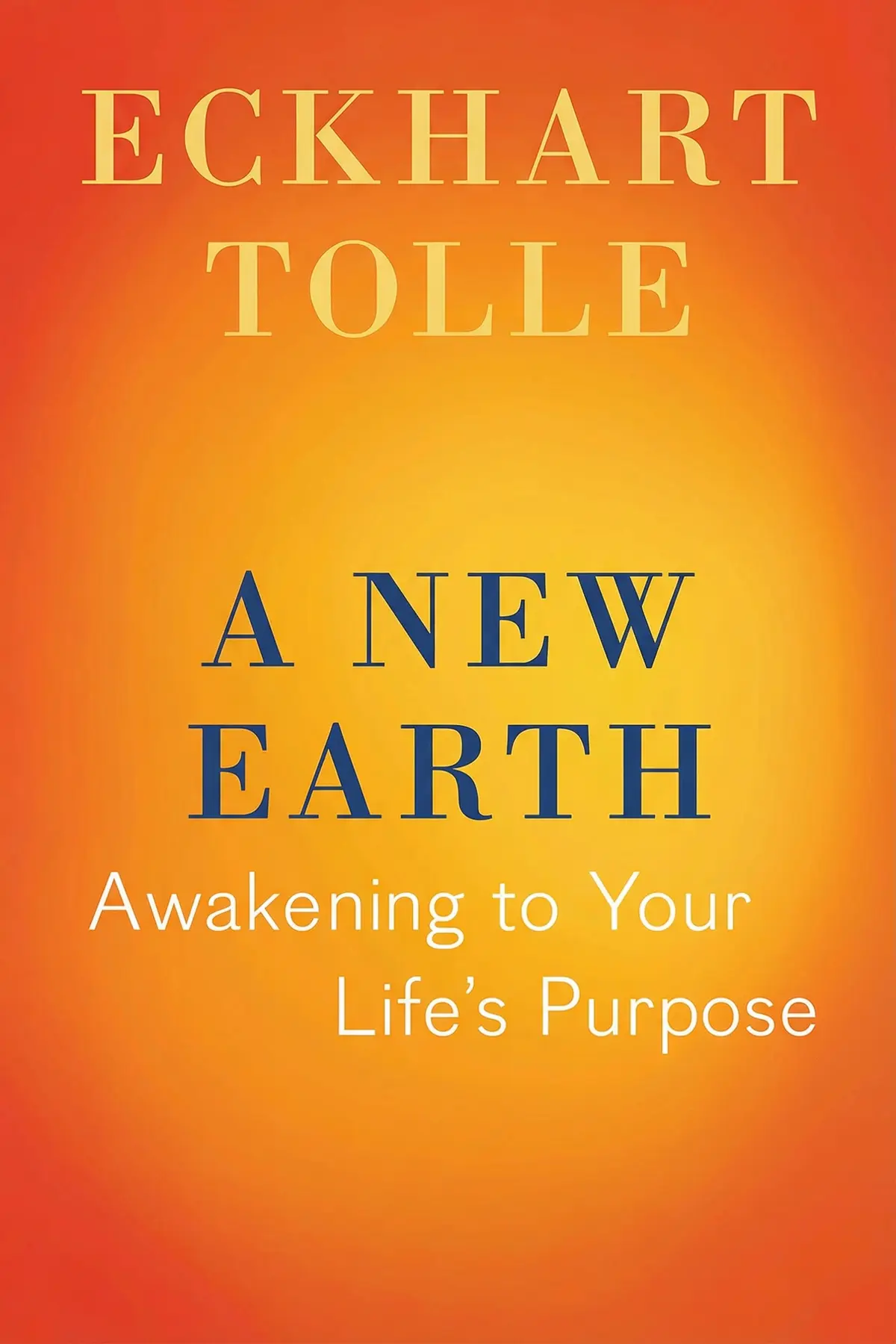
A New Earth: Awakening to Your Life’s Purpose
Eckhart Tolle
Aflame: Learning from Silence
Pico Iyer
Be Here Now
Ram Dass
AUDIO SUMMARY AVAILABLE
Listen to Aware in 15 minutes
Get the key ideas from Aware by Daniel Siegel, plus 5,000+ more titles in English and Thai.
- 5,000+ titles
- Listen as much as you want
- 7-day free trial
- Cancel anytime







