Aware: The Science and Practice of Presence
Daniel Siegel
Discover how to nurture a receptive, curious mindset in children using the latest brain science. Learn practical strategies to build emotional resilience, empathy, and insight for lifelong success and well-being.
2 min 02 sec
Every parent has likely experienced those moments of frustration when it feels like a child’s personality is simply set in stone. We often fall back on old clichés about apples not falling far from trees, or the idea that we are destined to pass down our own emotional baggage to the next generation. It is easy to feel pessimistic, as if our children’s temperaments and our own parenting habits are rigid and unchangeable. However, modern science offers a much more encouraging perspective on human development. The field of psychology has moved past the gloom of the past, revealing that our brains are far more adaptable than we ever dared to imagine.
This adaptability is known as neuroplasticity, a concept that sits at the heart of the work by Daniel J. Siegel and Tina Payne Bryson. In their approach, they challenge the idea that biology is destiny. Instead, they demonstrate that we can actively shape the architecture of the brain through our experiences and the way we respond to the world. By understanding how the brain functions, parents can guide their children toward a state of mind that is open, curious, and resilient. This state is what they call the Yes Brain.
A child operating from a Yes Brain is one who can face adversity without shutting down. They are receptive to new ideas, capable of managing their emotions, and ready to engage with others empathetically. This is in stark contrast to the No Brain, a state of reactivity and defense that keeps us stuck in fear and rigid thinking. Over the course of this summary, we will explore the four foundational pillars that support a Yes Brain: balance, resilience, insight, and empathy. We will look at how these traits are not just abstract concepts but physical realities that can be strengthened through practice. By shifting our focus from simply managing behavior to nurturing the underlying brain state, we can help our children build a foundation for a truly meaningful and successful life.
2 min 42 sec
Discover the fundamental difference between a defensive brain state and an open one, and how choosing ‘yes’ over ‘no’ can reshape your child’s emotional landscape.
2 min 30 sec
Explore the biological roots of behavior and how neuroplasticity allows us to strengthen the parts of the brain responsible for emotional regulation and empathy.
2 min 30 sec
Learn a simple, visual way to help children understand their emotions and regain self-control by categorizing their feelings into color-coded zones.
2 min 20 sec
Explore why ‘protecting’ children from every setback can actually hinder their growth, and learn how to foster the ability to bounce back from adversity.
2 min 26 sec
Discover how to teach children to look inward and understand their own mental processes, leading to better self-regulation and fewer emotional explosions.
2 min 21 sec
Learn how to move children from natural self-centeredness toward a deep, genuine concern for others through modeling and emotional vocabulary.
2 min 13 sec
Discover why ‘doing nothing’ is actually one of the most productive things a child can do for their brain development and long-term success.
1 min 37 sec
The journey toward cultivating a Yes Brain is not about achieving perfection as a parent or raising a child who never makes a mistake. In fact, such a goal would contradict the very essence of what Daniel Siegel and Tina Payne Bryson are teaching. The Yes Brain is about progress, not perfection. It is a commitment to a process of gradual growth, where both parent and child learn to move from states of reactivity and fear toward states of receptivity and connection.
By focusing on the four pillars—balance, resilience, insight, and empathy—you provide your child with a sturdy internal compass. You give them the tools to understand their emotions, the strength to bounce back from failure, the wisdom to look inward, and the heart to care for others. These are the qualities that lead to a truly successful and meaningful life, far beyond what any test score or trophy could represent.
Remember that every difficult moment with your child is actually an opportunity for brain-building. When you meet a tantrum with empathy instead of anger, or when you encourage a hesitant child to take a small risk, you are literally changing their brain for the better. This approach requires patience and a willingness to look past immediate behavior to the underlying brain state. But the reward is profound: a child who says ‘yes’ to the world, who greets challenges with curiosity, and who has the internal resilience to thrive no matter what life throws their way. Start small, be consistent, and watch as your child’s natural potential begins to flourish in the light of an open and receptive mind.
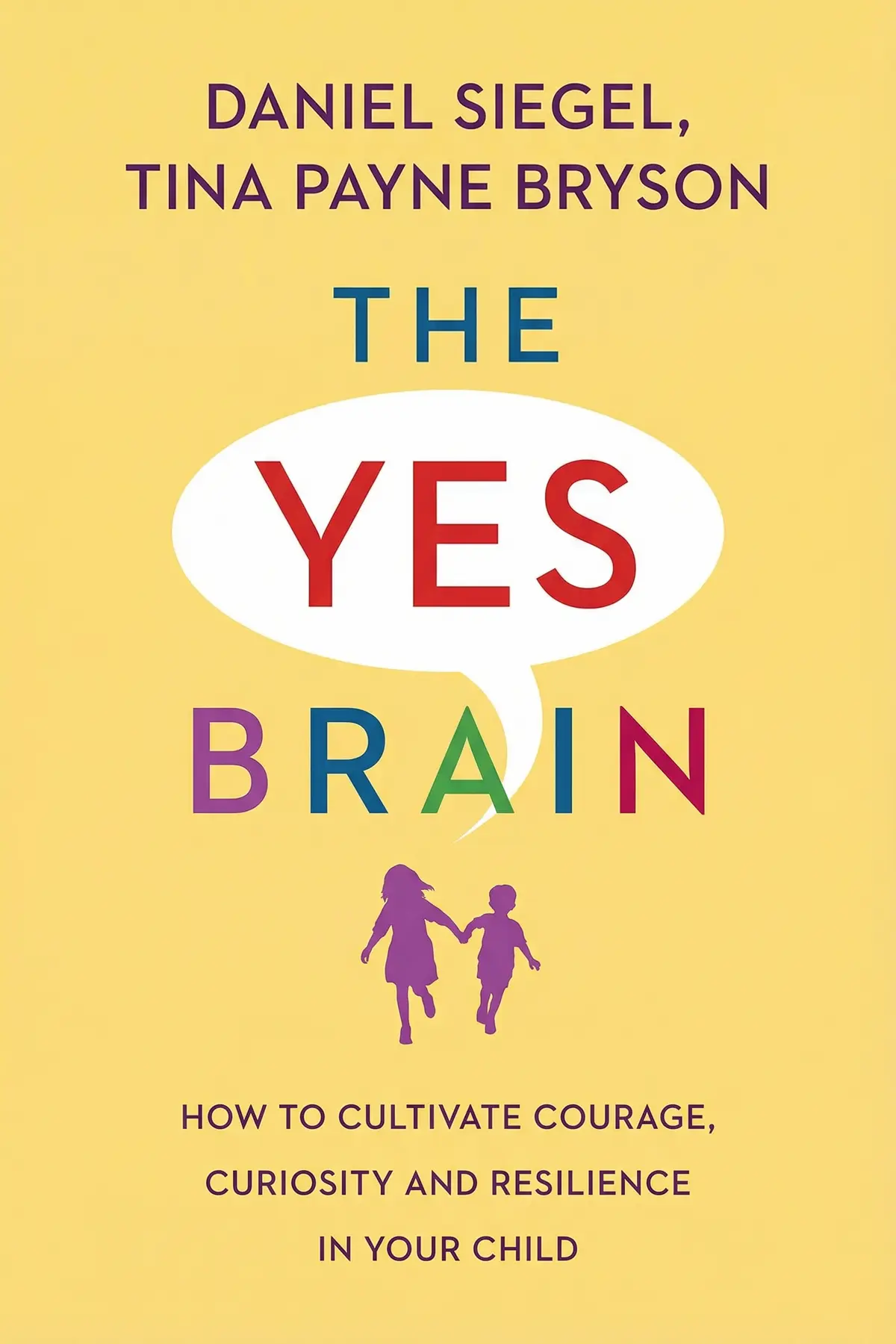
The Yes Brain explores the transformative power of shifting a child's mindset from a state of reactivity to one of receptivity. Based on the principles of neuroplasticity and interpersonal neurobiology, the book provides parents with a roadmap to help their children navigate life's challenges with courage and balance. By focusing on the four pillars of balance, resilience, insight, and empathy, the authors provide actionable techniques to strengthen the brain's executive functions. This guide moves beyond traditional discipline, offering a compassionate approach to emotional regulation and social connection that empowers children to thrive in an unpredictable world.
Daniel J. Siegel is a clinical psychiatrist at the UCLA School of Medicine and the founder of the Mindful Awareness Research Center. Tina Payne Bryson is a clinical social worker specializing in pediatric and adolescent psychotherapy as well as the founder of the Center for Connection in California. Together, they have authored numerous New York Times bestsellers, including The Whole-Brain Child and No-Drama Discipline.
Listeners consider this parenting guide an essential read, providing valuable perspectives on children's neurological growth alongside actionable advice. The material is thoroughly researched with intriguing scientific details, and listeners value the compassionate tone and the way it helps solidify the bond between parents and their kids.
Finally got around to reading this after hearing so much about the Siegel and Bryson duo, and it definitely delivers on the hype for practical parenting. The concept of the Green Zone has completely shifted how we handle tantrums in our house because it moves the focus from discipline to regulation. Honestly, understanding that a child's brain is still under construction helps me stay calm when things get chaotic. It’s written in such an accessible way that you don’t need a PhD to grasp the neurological concepts. Some might say it’s simple, but I think that’s the beauty of it for busy parents who just need strategies that actually work. Truth is, the emphasis on building resilience rather than just shutting down No Brain behavior is a game-changer for long-term development.
Show moreWow. This book should be handed out at the hospital the moment you leave with a newborn because it changes the way you view your child’s struggle. Instead of seeing a difficult kid, Siegel and Bryson help you see a child who lacks the skills to stay balanced in high-pressure moments. The focus on empathy isn't just fluffy talk; it's presented as a vital cognitive tool that we can actively teach through our own modeling. I’ve noticed a significant drop in power struggles since I started implementing the Yes Brain approach. Not gonna lie, it takes a lot of work on the parent's part to change your own reactions first, but the results are undeniable.
Show moreThis book is an absolute must-read for anyone who feels like they are constantly at war with their children's moods. The authors provide a roadmap for moving from a defensive No Brain state to a curious, open Yes Brain state that fosters real learning. I loved the Green Zone vocabulary because it gives me and my kids a common language to talk about big feelings without shame. It’s rare to find a book that is both deeply empathetic and grounded in the mechanics of brain development. Truthfully, it has made me a more patient parent because I now understand that my kid isn't trying to be bad—they are just overwhelmed.
Show morePicked this up on a whim and I am so glad I did because it has revolutionized our dinner table conversations. By teaching my kids about their upstairs and downstairs brains, they have started to take ownership of their own emotional regulation. The specific strategies for building resilience—like allowing kids to face manageable challenges—are so vital in today’s over-protected world. It’s a fascinating look at how we can literally rewire our children’s brains for success and happiness. If you want to raise kids who are emotionally intelligent and capable of handling life's ups and downs, you need this on your shelf. It’s a quick, high-impact read for any parent.
Show moreAs someone who has already devoured The Whole-Brain Child, I was worried this might be a bit redundant, yet it manages to carve out its own space by focusing on the Yes Brain mindset. The breakdown of balance, resilience, insight, and empathy provides a solid framework for fostering a growth-oriented child. While it does rehash some familiar themes, the specific examples of molding brain plasticity through daily interactions were incredibly enlightening. I did find a few sections a bit repetitive, but the core message about staying connected during emotional storms is worth the read. To be fair, the authors have a knack for making complex science feel like a conversation with a wise friend.
Show moreThe chapter on resilience was quite helpful, even if I found myself frustrated by the lack of direct citations for some of the more significant scientific claims. For a book that touts itself as evidence-based, I expected more than just the authors' word on how these neurological shifts occur. It feels like a high-level summary rather than a rigorous dive into child psychology. Look, the advice is generally sound and the Red Zone analogies are useful for explaining emotions to kids. While I wanted more substance, the practical nature of the Yes Brain tools makes it a valuable addition to any parent's toolkit. It’s an easy read that focuses more on application than theory.
Show moreAfter hearing a podcast interview with the authors, I decided to grab a copy to help with my middle child’s frequent meltdowns. The distinction between the Yes Brain and the No Brain is a powerful tool for recognizing when a child is physically incapable of listening. I appreciate how they break down brain plasticity into digestible chunks, making the idea of molding a child’s mind feel attainable rather than intimidating. In my experience, the practical tips on building Insight were the highlight, specifically the part about being a spectator to your own emotions. It’s a 4-star read only because it feels a little dragged out in the middle sections, but the core message is vital.
Show moreEver wonder why your kid suddenly flips a switch and becomes completely unreachable? This book answers that question by diving into the neurological roots of reactivity versus receptivity. The sections on cultivating Balance were particularly resonant for me, as they offer concrete ways to help kids expand their Window of Tolerance. I think the writing style is very approachable, though it occasionally veers into being a bit too self-help for my taste. Still, the underlying message of strengthening the parent-child bond through understanding is something every family could benefit from. It’s a solid resource for anyone wanting to move away from punitive discipline toward something more compassionate and effective.
Show morePersonally, I think the Yes Brain concept is fantastic, though I struggled slightly with the way the authors present their methods as the only right way to parent. The tone can feel a bit directive at times, telling you exactly what to say and do in every scenario, which isn't always realistic in the heat of the moment. While the focus on empathy and insight is great, I wish there was more acknowledgment of how hard this is to implement during a busy week. The ideas are definitely useful for building a positive mindset and a stronger relationship with your kids. It’s a good supplement, even if it feels a little polished for the messy reality of daily life.
Show moreNot what I expected at all, especially considering the high praise these authors usually receive from the parenting community. Frankly, this entire book could have been a 15-page PDF or a single long-form article without losing any of the actual new information. It felt incredibly oversimplified, almost to the point of being patronizing to parents who are already familiar with basic child development. While the Green Zone concept is a nice visual, it doesn't justify 200+ pages of repetitive anecdotes and how-to lists. If you are looking for deep scientific insight, you'll be disappointed by the lack of data and the overly casual tone. Just stick with their first book; it’s much more substantial.
Show moreAUDIO SUMMARY AVAILABLE
Get the key ideas from The Yes Brain by Daniel Siegel, plus 5,000+ more titles in English and Thai.