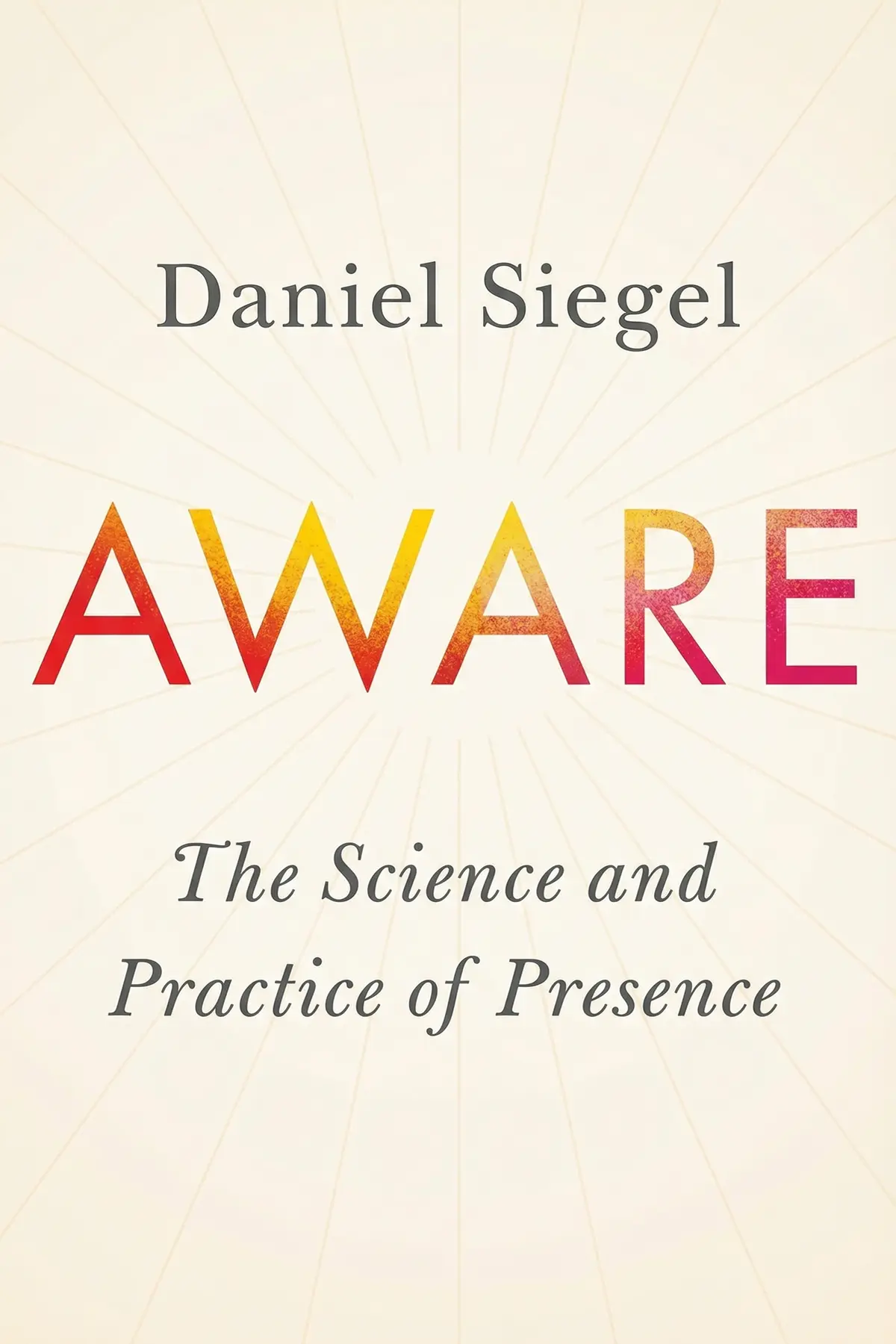
Aware: The Science and Practice of Presence
Daniel Siegel
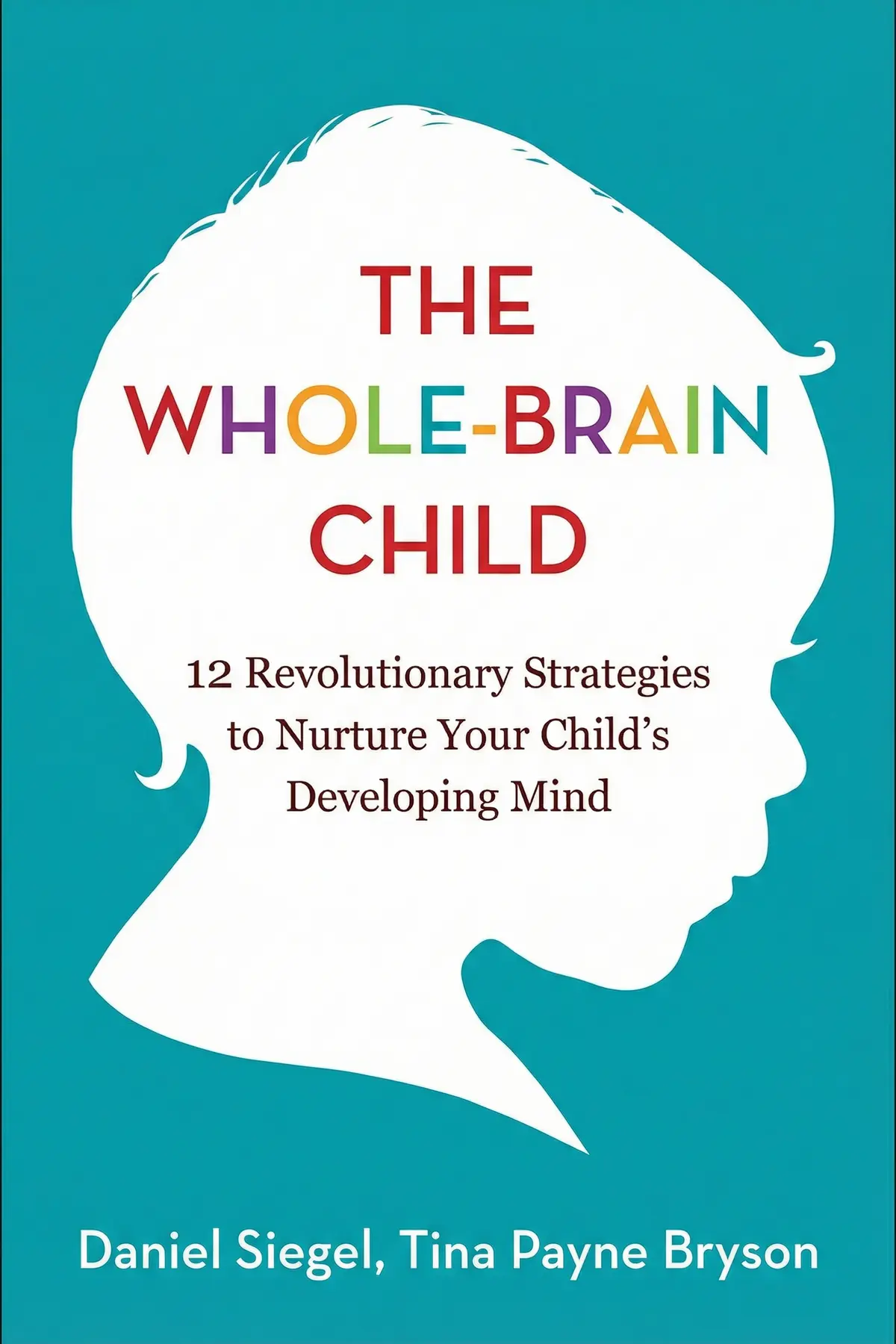
The Whole-Brain Child explores how understanding basic neuroscience can transform parenting. By integrating different parts of a child’s brain, parents can turn everyday struggles into opportunities for growth and emotional intelligence.
1 min 37 sec
Every parent has been there: the moment in the grocery store where a toddler collapses in a heap over a specific brand of cereal, or the evening where a school-aged child suddenly bursts into tears over a minor homework assignment. In those moments, it feels like your only goal is to survive the next ten minutes without losing your cool. But what if these high-stress moments were actually the most important building blocks for your child’s future?
In the book we are exploring today, The Whole-Brain Child, authors Daniel Siegel and Tina Payne Bryson argue that the key to better parenting isn’t found in stricter discipline or more elaborate reward charts, but in understanding the biology of the developing brain. Most of the time, when kids are acting out or feeling overwhelmed, it’s because their brains are literally out of sync. Different regions—the logical side, the emotional side, the impulsive side—are not communicating effectively.
This summary will walk you through the essential concept of integration. We’ll look at how you can help your child bridge the gap between their emotional right brain and their logical left brain, and how you can connect their primitive survival instincts with their higher-order thinking skills. By the end, you’ll see how these neurological connections don’t just solve the problem of the moment; they actually rewire the child’s brain for long-term emotional health and resilience. We are moving away from just managing behavior and toward nurturing a whole, integrated person. Let’s dive into how the brain works and how you can start using this knowledge today.
2 min 35 sec
When a child is overwhelmed by a flood of feelings, logic is often the last thing they can access. Discover how to bridge the gap between their emotional right brain and logical left brain.
2 min 29 sec
The brain isn’t just split left to right; it’s also built like a two-story house. Learn why a child’s ‘upstairs’ brain is often under construction and how to handle it.
2 min 28 sec
Implicit memories can drive a child’s behavior without them even knowing it. Learn how to shine a light on these hidden influences to heal fear and anxiety.
2 min 26 sec
Help your child realize they are more than just their current feelings. Discover a powerful tool to help them focus and find their inner calm.
2 min 30 sec
Human beings are hardwired for connection. Learn how to foster empathy and social skills by integrating the ‘Me’ with the ‘We.’
1 min 44 sec
As we reach the end of our journey through The Whole-Brain Child, the most important takeaway is that parenting is not a series of isolated incidents, but a continuous process of building a brain. Every time you help your child ‘Name it to Tame it’ or encourage them to use their ‘upstairs’ brain to solve a problem, you are physically shaping the architecture of their mind. You are helping them build the connections that will allow them to be resilient, empathetic, and self-aware for the rest of their lives.
Remember that this isn’t about being a ‘perfect’ parent. In fact, some of the best opportunities for growth happen when things go wrong. When you lose your cool or your child has a massive breakdown, those are the moments when integration is most needed. By applying the strategies we’ve discussed—connecting before redirecting, moving the body to clear the mind, and using the Wheel of Awareness—you move from simply surviving the day to helping your child truly thrive.
Integration is a lifelong journey. By understanding the biology of your child’s brain, you gain a new level of patience and insight. You realize that their ‘bad’ behavior is often just a sign of a brain that is temporarily out of balance. Your role is to be the steadying hand that helps them bring those different parts back together. As you move forward, keep the ‘hub’ of the wheel in mind. Stay centered, stay connected, and keep building that staircase to the upstairs brain. The work you do today in these small, messy moments of childhood is the foundation for the healthy, whole-brain adult your child will eventually become. Use these tools not just to manage your child, but to truly know them and grow with them.
The Whole-Brain Child offers a revolutionary approach to child-rearing by focusing on the physical development of a child’s brain. Authors Daniel Siegel and Tina Payne Bryson explain that many common parenting challenges arise because a child’s brain is still under construction, often operating in a state of imbalance between logic and emotion or instinct and reason. The book provides twelve specific strategies designed to help parents foster 'integration,' which is the process of linking different parts of the brain so they work together harmoniously. By teaching children how their minds work, parents can help them navigate intense emotions, process difficult memories, and develop empathy. The ultimate promise of the book is to move parents beyond mere survival mode—just getting through the day—and into a 'thrive' mindset where every tantrum or argument becomes a chance to build a more resilient and self-aware human being.
Dr. Daniel J. Siegel is a clinical professor of psychiatry at the UCLA School of Medicine and the founding co-director of the Mindful Awareness Research Center. He also leads the Mindsight Institute, which focuses on the intersection of human relationships and biological processes. He has authored multiple best-sellers regarding the mind and brain development. Dr. Tina Payne Bryson is a psychotherapist and the Founder/Executive Director of the Center for Connection in California. She serves as the Child Development Specialist at Saint Mark’s School and works alongside Dr. Siegel at the Mindsight Institute. Together, they have co-authored several influential works on parenting and child psychology.
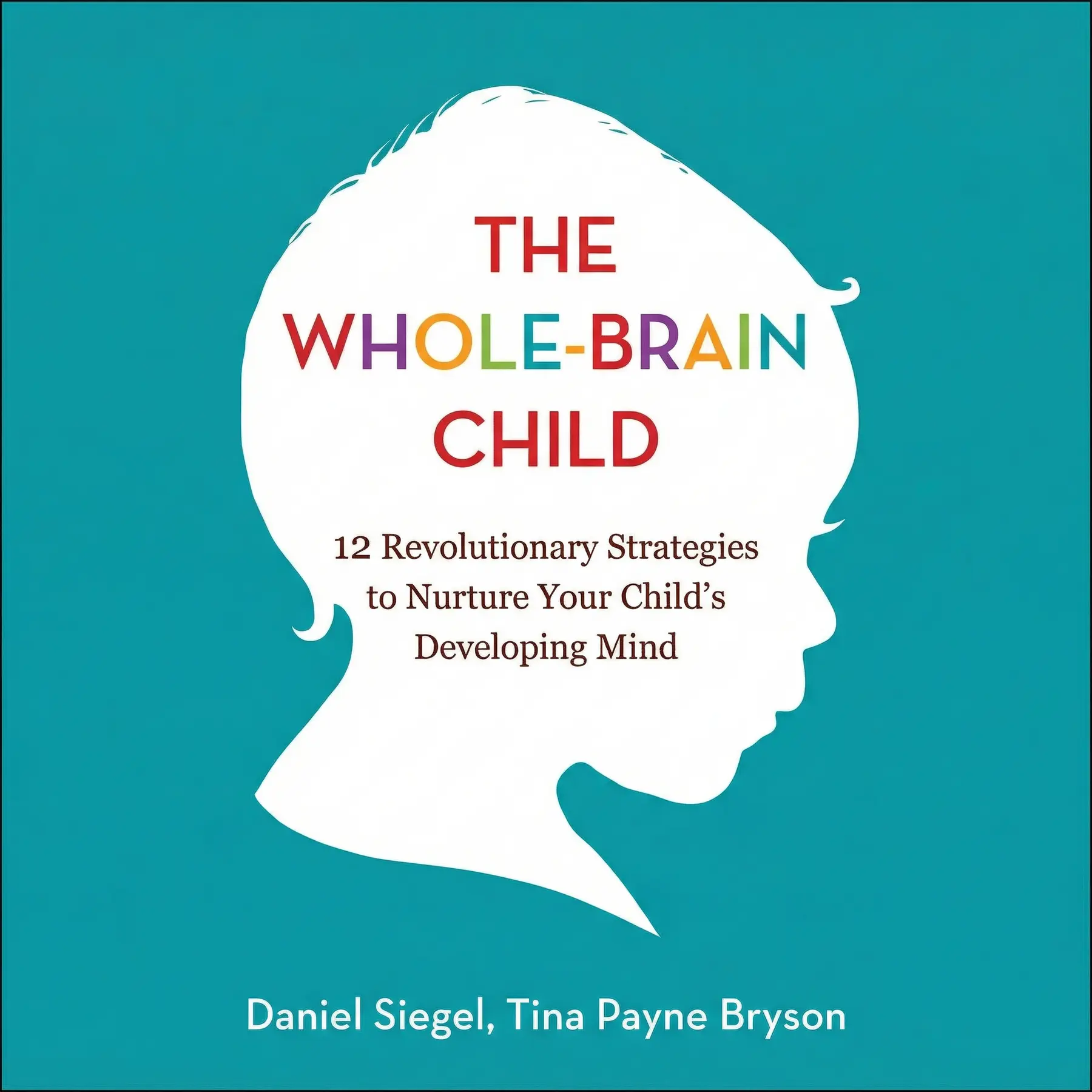
Listeners find this work highly accessible and educational, offering useful advice backed by solid research. They appreciate how it explores neurological growth and clarifies child psychology, as one listener points out it turns complicated brain science into understandable terms. Listeners describe the guide as uncomplicated and simple to track, featuring realistic and relevant techniques that are easy to use. They prize the emphasis on emotional awareness, turning the pursuit of mental wellness into a collective family effort.
Picked this up after a particularly rough week of toddler tantrums, and it was exactly the lifeline I needed. The authors do a brilliant job of breaking down the concept of 'neuro-integration' without making you feel like you’re sitting through a dry college lecture. I particularly appreciated the 'Name it to Tame it' strategy for dealing with big emotions; it’s a simple shift, but it really helped my daughter process her fear after a minor bike accident. The illustrations are a great touch too, making it easy to explain these complex brain functions to a young child. While some critics say the science is oversimplified, for a busy parent, that’s actually a huge plus. It’s practical, it’s empathetic, and it provides a clear roadmap for those moments when your kid is 'flipping their lid.' Definitely a must-read for anyone raising small humans.
Show moreEver wonder why your child suddenly loses their mind over the 'wrong' color plate? This book explains the biological 'why' behind those irrational moments in a way that actually fosters compassion rather than frustration. I've found that using the 'Connect and Redirect' method has significantly lowered the temperature in our house during transitions. The truth is, most parenting books tell you what to do, but this one explains what is happening inside the child's head, which makes the interventions much easier to remember. I especially enjoyed the sections on 'SIFTing' through sensations and images to help kids gain control over their anxiety. It’s a very readable, encouraging guide that doesn't just focus on obedience, but on the actual health of the parent-child relationship. We’ve started treating emotional health as a family project thanks to this.
Show moreFinally got around to finishing this, and the 'Ages and Stages' chart at the back is worth the price of admission alone. It helps you tailor the twelve strategies to whatever developmental phase your kid is currently in, which is vital because a three-year-old and a nine-year-old are totally different creatures. The authors’ focus on integrating implicit and explicit memories through storytelling was a 'lightbulb' moment for me. We’ve started using the 'Remote of the Mind' technique to help our son talk through scary experiences, and it’s been incredibly empowering for him. In my experience, most discipline books focus on punishment, but this focuses on teaching. It’s an easy, engaging read that avoids overly clinical jargon while still feeling deeply informed by research. I’ve already recommended it to several friends in my playgroup.
Show moreThe chapter on 'mindsight' and the 'Hub' really changed how I view my own reactions, let alone my daughter’s behavior. As a therapist, I’m usually pretty skeptical of 'pop' parenting books, but Siegel and Bryson have created something truly special here. They manage to make complex neurological processes like memory integration and horizontal/vertical brain balance feel intuitive. I love that they encourage parents to share this knowledge with their kids; giving a child the vocabulary to understand their own brain is a gift that lasts a lifetime. The 'refrigerator sheets' provide a great summary of the twelve strategies, making it easy to refresh your memory during a hectic morning. It’s a compassionate, science-backed guide that shifts the focus from 'fixing' a child to connecting with them. I can’t recommend it highly enough.
Show moreAs a first-time parent, I often feel like I’m drowning in conflicting advice, but Siegel and Bryson offer a grounded, evidence-based approach that feels sustainable. The metaphor of the 'upstairs' and 'downstairs' brain is a total game-changer for understanding why logic just doesn't work during a full-blown meltdown. To be fair, the book can be a bit repetitive at times, and I felt like they could have condensed some of the middle chapters without losing the core message. However, the 'refrigerator sheets' at the end are incredibly helpful for quick reference when you’re in the thick of a stressful situation. I also loved the focus on 'mindsight' and teaching kids to understand their own internal landscape. It’s not just about managing behavior; it’s about building emotional intelligence for the long haul. A solid four stars for making neuroscience accessible to the average mom.
Show moreThis book is a masterclass in translating high-level neuroscience into something a sleep-deprived parent can actually use at 2:00 AM. The authors write with a very accessible tone, though I’ll admit it occasionally veers into being a bit condescending, as if they assume the reader has never encountered basic psychology before. Still, the 'Engage, Don’t Enrage' concept is pure gold. Instead of triggering a child’s reactive downstairs brain with a 'because I said so,' they teach you how to appeal to their higher-order thinking. I noticed an immediate difference in how my six-year-old responded when I started asking questions instead of barked orders. It’s a bit long-winded in places, and the hand-drawn cartoons were a bit hard to see on my e-reader, but the core strategies are effective. It’s a very practical addition to any parenting library.
Show moreAfter hearing so much hype, I found the strategies remarkably similar to the classics like 'How to Talk So Your Kids Will Listen.' If you’ve read that, the 'Name it to Tame it' section will feel very familiar. However, the added layer of brain science provides a compelling 'why' that the older books lack. I appreciated the distinction between 'upstairs' and 'downstairs' tantrums—knowing when to hold a boundary and when to offer a hug is a distinction I’ve struggled with in the past. My only real gripe is that the book seems geared toward 'typical' kids; as a parent of a child with significant trauma history, some of the narrative techniques felt a bit oversimplified for our specific needs. Still, for the average family, this is an excellent tool for increasing cooperation and reducing daily friction.
Show moreLook, parenting books are usually a chore to get through, but this one felt incredibly accessible and actually held my interest. The authors don't just lecture; they provide real-world anecdotes that feel relatable rather than performative. I especially liked the 'Connect Through Conflict' section which teaches kids how to argue with a 'We' in mind—that’s a skill some adults still haven't mastered! While some of the brain science might be simplified for a general audience, the practical application is where this book shines. It gives you a specific script for those moments when you’re tempted to just yell. It’s not a magic wand, and the results aren’t always instant, but it has definitely helped me stay calmer during my son's outbursts. A very helpful, human approach to discipline.
Show moreNot what I expected given the glowing recommendations I’ve seen all over social media. Frankly, I found the constant focus on the left-brain/right-brain dichotomy to be a bit dated, as modern neuroscience has largely moved past those rigid categories. The authors use a lot of branded language like 'mindsight' which felt a bit like they were trying too hard to sell a specific platform. That said, I did find the 'Move it or Lose it' strategy useful for breaking a child out of a physical funk. I think if you’ve already read 'How to Talk So Kids Will Listen,' you might find a lot of this redundant. It’s a decent introductory text, but for someone looking for deep, cutting-edge psychological insights, it felt a bit like 'pop psych' fluff. It’s a quick read, but I wish there were more diverse real-world examples.
Show moreWow, talk about a mixed bag. On one hand, the 'Wheel of Awareness' is a fantastic tool for helping kids realize they are more than just their fleeting feelings. On the other hand, the writing style felt incredibly repetitive, and I felt like I was being talked down to at several points. It’s as if the authors didn't trust the reader to get the concept the first three times they explained it. Also, the hand-drawn cartoons were more distracting than helpful for me. To be fair, the 'HALT' acronym (Hungry, Angry, Lonely, Tired) is a great reminder to check the basics before over-analyzing a situation. There is definitely some useful stuff here, but you have to wade through a lot of fluff and 'branded' terminology to get to the practical bits. It's okay, but not the revolution it claims to be.
Show moreAUDIO SUMMARY AVAILABLE
Get the key ideas from The Whole-Brain Child by Daniel Siegel, plus 5,000+ more titles in English and Thai.