AI 2041: Ten Visions for Our Future
Kai-Fu Lee
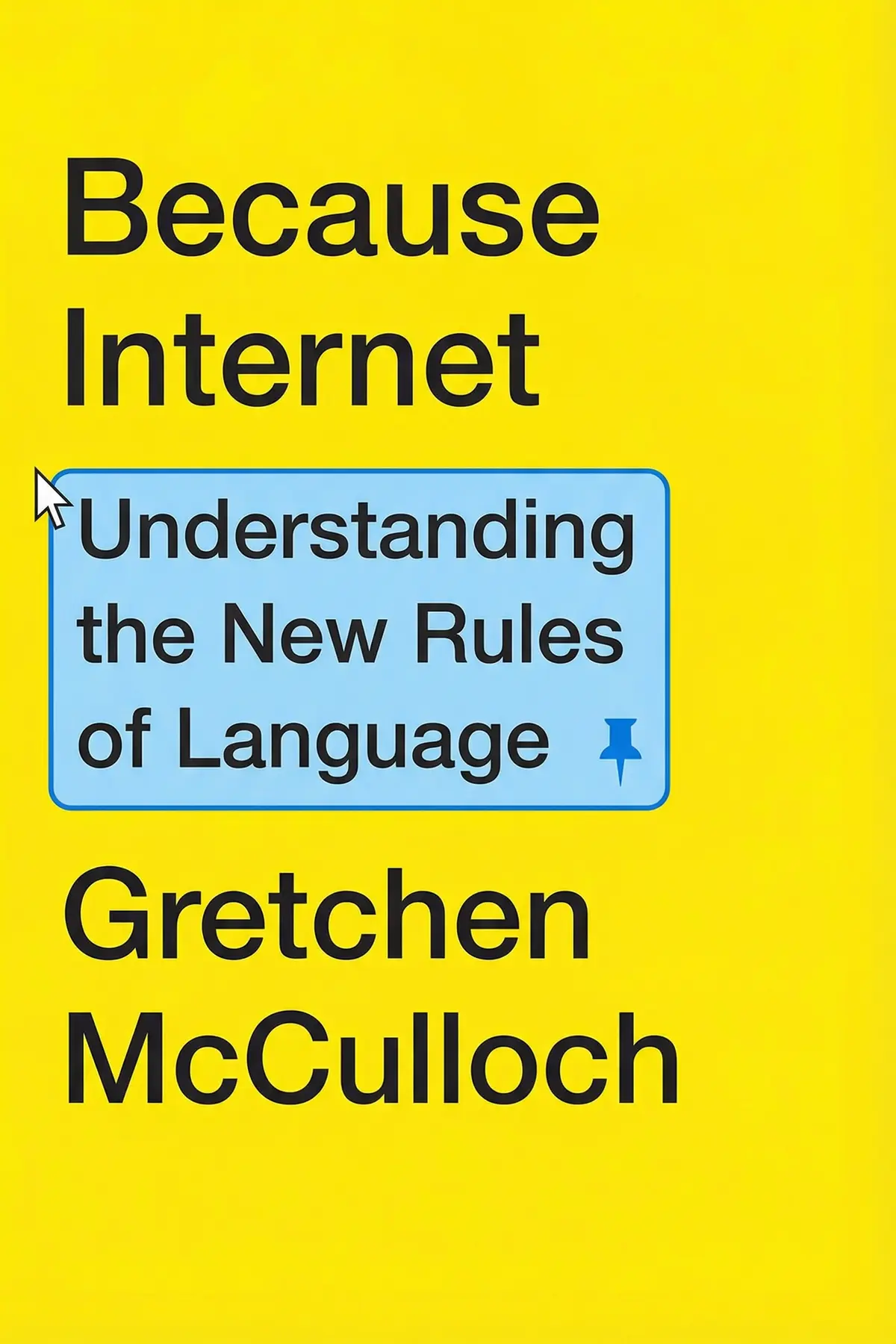
Explore the fascinating evolution of digital communication. Gretchen McCulloch reveals how the internet hasn't just changed what we say, but has fundamentally restructured the rules of language, punctuation, and human connection.
1 min 53 sec
Think about the way you speak and write for a moment. Most of us imagine that language is a static thing—a set of rules we learned in school that stays fixed throughout our lives. But in reality, language is much more like a living, breathing structure. If you think of a language as a house, it’s a house that is constantly being renovated. One generation might add a porch; the next might knock down a wall or update the kitchen. Over centuries, these small, incremental changes add up until the house looks nothing like the original blueprints.
We see this clearly when we look at history. If you pick up a play by William Shakespeare from four centuries ago, you can probably follow the plot, though some of the phrasing feels like a puzzle. But if you go back six centuries to Geoffrey Chaucer’s time, the English of the Canterbury Tales is so different it practically requires a specialized degree to translate. Historically, this kind of transformation took hundreds of years. But something has shifted recently. If you look at the way we communicate now versus just twenty years ago, the changes are staggering. The timeline has collapsed. We aren’t waiting centuries for language to evolve; it’s happening in months and years.
Why is this happening? To put it simply: because internet. The digital world has created a massive, global laboratory for language. It has given us tools to communicate that our ancestors could never have imagined, and in doing so, it has forced us to invent new rules for spelling, grammar, and even how we express emotion. In this summary, we’re going to explore this digital linguistic frontier. We’ll look at why a simple period at the end of a text can feel like a slap in the face, how the groups we hang out with online dictate the slang we use, and why the way we write today is closer to the way we speak than ever before. We are living through a linguistic revolution, and understanding its new rules is the key to navigating the modern world.
2 min 52 sec
Discover how the transition from expensive print to free digital platforms turned everyday people into writers, creating a new era of unedited, conversational prose.
2 min 52 sec
Explore how the ‘weak ties’ of the internet act as bridges for new ideas, allowing slang and grammar shifts to spread faster than ever before.
2 min 49 sec
Learn about the five distinct groups of internet users and how the time you first logged on shapes the way you communicate today.
2 min 37 sec
Understand the hidden logic of online punctuation, from the ‘aggressive’ period to the rise of ‘sarcasm tildes.’
2 min 00 sec
Learn why emoji aren’t just silly pictures, but a vital replacement for physical gestures in our digital interactions.
2 min 35 sec
Discover how social media platforms have become the modern equivalent of the neighborhood pub, shaping our social and political lives.
2 min 16 sec
Explore the history of memes and how they function as inside jokes that reinforce community identity through creative language play.
1 min 25 sec
As we’ve seen, the internet hasn’t just added a few new words to our vocabulary; it has fundamentally altered the way we relate to language itself. We are living in an era where the distinction between speaking and writing has blurred, creating a new form of conversational prose that is fast, creative, and deeply human. We’ve learned that the ‘rules’ of the internet—from the emotional weight of a period to the context provided by an emoji—are not random. They are ingenious solutions to the challenges of communicating across a digital divide.
The takeaway is clear: don’t be afraid of the changes you see in language today. When you see a new slang term or a strange use of punctuation, don’t view it as the ‘death of English.’ Instead, see it as a sign of life. Language is a tool, and humans are incredibly good at adapting their tools to fit their needs. The internet has given us a global stage to practice this adaptation every single day.
So, the next time you hesitate before putting a period at the end of a text, or you spend a few seconds looking for just the right emoji, remember that you are participating in a grand linguistic tradition. You are a builder in that house of language we mentioned at the beginning. You are helping to renovate it for the digital age. Embrace the flexibility, the playfulness, and the connection that this new era offers. After all, we communicate the way we do for a reason—because internet.
For decades, formal writing dominated our world, governed by strict rules and gatekeepers. But the rise of digital platforms has sparked a linguistic revolution, moving writing from the realm of the elite into the hands of the masses. This book examines the 'why' behind our modern habits, from the hidden meaning of a single period to the complex social functions of memes. You will discover how different generations—from 'Old Internet' pioneers to 'Post-Internet' natives—navigate the digital landscape. It provides a deep dive into the creative ways we’ve replaced physical body language with symbols like emoji and unconventional punctuation. By the end, you’ll see the internet not as a place where language goes to die, but as a vibrant, living laboratory where the future of human interaction is being built in real-time.
Gretchen McCulloch is an author, journalist, and linguist who specializes in the intersection of digital culture and language. She is the mind behind the Resident Linguist column for Wired and manages the popular blog All Things Linguistic. Additionally, she co-produces the podcast Lingthusiasm. Because Internet is her debut book.
Listeners describe the book as both intriguing and educational, and one review highlights the way it employs online examples to explain ideas in linguistics. Furthermore, the prose is quite approachable, as one listener points out that the material is crafted for easy comprehension by a general audience. They also enjoy how readable and entertaining the content is. On the other hand, there are complaints regarding app performance, with multiple listeners reporting crashes on the iOS Kindle app and MacBook Pro.
Ever wonder why your mom uses ellipses differently than you do? This book is a deep dive into the sociology of internet language that makes those awkward digital interactions finally make sense. I particularly loved the breakdown of "Full Internet People" versus "Semi-Internet People," which perfectly categorized everyone in my family. McCulloch writes with a contagious enthusiasm that makes even the most obscure linguistic concepts feel accessible to someone who isn't a total nerd. While it's incredibly informative, it stays light enough to read on a weekend without feeling like a textbook. The only downside was some weird formatting on my Kindle app, but the content itself is gold.
Show moreMcCulloch has written a revolutionary piece of work that makes you feel like an insider in the world of internet linguistics. She treats things like hashtags and GIFs with the same intellectual respect that other scholars give to Shakespeare or Latin. I found the section on "vaguebooking" and "subtweeting" particularly hilarious because it perfectly captured the passive-aggressive energy of early social media. It’s an easy, readable book that manages to be academic without ever feeling dry or boring. It really makes you appreciate the way language is a living, breathing thing that evolves right under our noses every single day.
Show moreFinally got around to reading this and I’m surprised by how much I learned about things I use every day. The idea that emoji are the digital equivalent of hand gestures changed how I look at every text I send. It’s a fascinating, geeky exploration of how we’ve managed to create a written language that finally captures the nuances of speech. McCulloch’s writing is bright and energetic, making even the history of email protocols feel like a page-turner. It’s a must-read for anyone who cares about communication, even if you’re a "Semi-Internet" person who still remembers life before smartphones.
Show moreThis book is an absolute must-read for anyone who has ever felt confused by a teenager's Instagram caption or a weirdly placed tilde. It's an insightful analysis of how our "third place" online has birthed a whole new way of expressing ourselves through GIFs and intentional typos. I appreciated the mention of how parents use initials for children to keep them unsearchable, a detail that shows how deeply McCulloch has looked at our social habits. The book is incredibly readable and filled with those "aha!" moments that you'll want to share with everyone you know. It’s a brilliant celebration of human creativity in the digital age.
Show moreAs someone who still struggles to understand why a period at the end of a text feels like a declaration of war, this was eye-opening. McCulloch explains how informal writing has basically become its own language with rules that are just as complex as traditional grammar. It’s written for a general audience, so you don’t need a PhD to follow her logic regarding memes or the history of Lolcats. I did find her "Everything Is Awesome" stance on language change a little one-sided, as she rarely addresses the potential downsides of digital communication. Still, the insight into how we use the internet as a "third place" for socializing was worth the price of admission.
Show morePicked this up on a whim because I'm a bit of a language geek, and I wasn't disappointed by the level of detail here. The book looks at everything from the deliberate omission of punctuation to the way regional dialects still survive in a globalized digital world. It’s fascinating to see how the Library of Congress is now archiving things like the Urban Dictionary, proving that our "silly" internet culture actually has historical value. I’ll admit I hit a few snags with the eBook crashing on my Mac, which was frustrating given how much I wanted to finish it. If you can get past the technical glitches, it’s an amusing and deeply researched look at how we talk now.
Show moreAfter hearing Gretchen on a podcast, I knew I needed to grab a copy of this for my shelf. The distinction between formal and informal writing is something we all intuitively understand, but seeing it laid out with actual data was incredibly satisfying. I loved the discussion on how different generations adopt technology at different life stages and how that affects their specific "accent" in text. It’s a very accessible book that avoids getting bogged down in jargon, which is rare for something so deeply researched. My only minor complaint is that I wanted even more analysis on recent trends like "rAndOm CaPiTaLs" or Spongebob memes.
Show moreTruth is, I never realized how much my texting style was influenced by when I first got dial-up until I read the chapter on net-generations. This book explains the "why" behind our digital habits, like why some people find emoji annoying while others see them as essential for conveying tone. It’s an amusing read that feels very current, even if the internet moves so fast that some examples might feel dated in a few years. It’s definitely written for the layman, making it a great gift for anyone who spends too much time on Twitter or Reddit. Just be warned that the digital version has some compatibility issues on certain devices.
Show moreThe chapter on emoji functioning as physical gestures was a total lightbulb moment for me. However, I have to be frank about the audiobook experience because the pacing felt incredibly rushed, almost as if it was set to 1.5x speed by default. McCulloch is clearly brilliant and her passion for things like sarcasm tildes is obvious, but the delivery felt a bit too smug at times. I enjoyed the analysis of how "lol" has evolved from actual laughter into a marker of politeness or softened tone. It’s a solid read if you're interested in how we communicate online, but maybe stick to the physical copy to avoid the author's breakneck narration.
Show moreNot what I expected, and frankly, I struggled to get through the first half. While the premise is interesting, the author seems to think every single change in digital slang is an amazing breakthrough for humanity. There is no critical distance here; it’s more of a celebratory cheerleading session for internet culture than a balanced linguistic study. To make matters worse, the Kindle version kept crashing on my iPad, making the reading experience more of a chore than it should have been. I suppose it’s informative if you’ve never spent time on a message board, but for a "Full Internet" person, a lot of this felt like old news.
Show moreAUDIO SUMMARY AVAILABLE
Get the key ideas from Because Internet by Gretchen McCulloch, plus 5,000+ more titles in English and Thai.