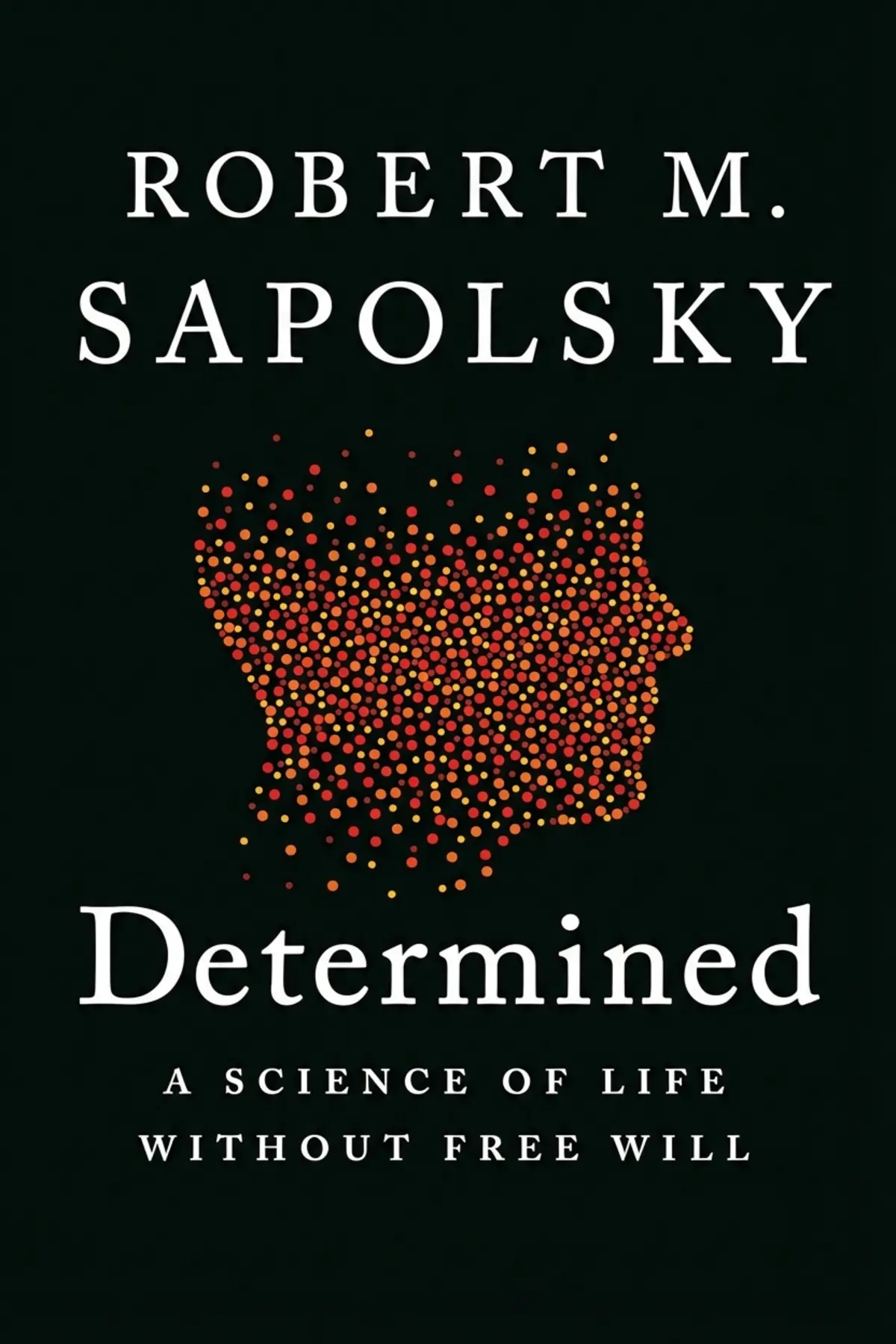
Determined: Life without Free Will
Robert M. Sapolsky
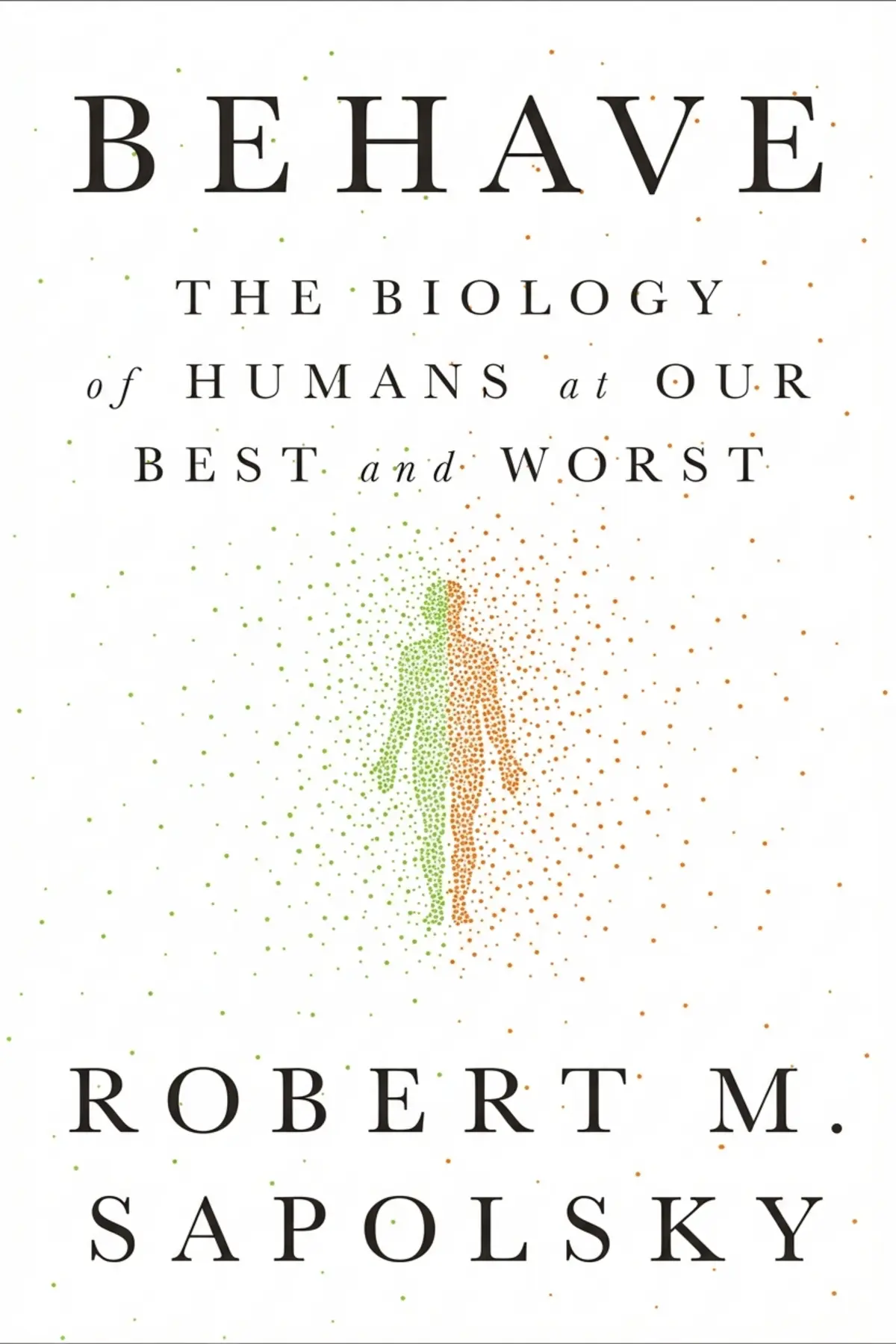
An exploration of the multifaceted origins of human behavior, examining how everything from brain chemistry and hormones to childhood development and ancestral history shapes our actions in every moment.
1 min 41 sec
Why do we do the things we do? It is a question that has plagued philosophers and scientists for centuries. When we witness an act of extreme violence or a gesture of incredible kindness, our first instinct is often to look for a single cause. We blame a person’s upbringing, their genetic makeup, or perhaps a sudden rush of emotion. But the reality of human behavior is far more complex and layered than any one of these explanations can capture on its own.
To understand the human experience, we have to look across a massive timeline. We have to consider what happened in the brain just one second before an action took place, but we also have to look at what was happening in that person’s environment minutes before, and how their hormones were fluctuating hours before. We must go back even further, looking at the structural changes that occurred during their childhood and the cultural norms that were drummed into them over decades. Finally, we have to look back thousands of years to the evolutionary and ecological forces that shaped our species as a whole.
In this exploration of Robert Sapolsky’s work, we are going to peel back these layers one by one. We will see how the brain balances fear and reason, how our physical environment subtly manipulates our perceptions, and how the ancient history of our ancestors continues to influence our modern political and social structures. By the end, you’ll have a new framework for thinking about why humans can be so remarkably cruel and yet so breathtakingly compassionate, often at the very same time. This is not just a study of biology; it is a search for the throughline that connects our physical selves to the societies we build.
2 min 14 sec
Discover why understanding human actions requires looking far beyond a single moment or a single scientific discipline.
2 min 43 sec
Your brain is waging a constant battle between lightning-fast fear and deliberate reason. Discover which side wins—and why that determines whether you act or react.
2 min 33 sec
Explore how the things we see and hear in a split second can trigger deep-seated biases without us ever realizing it.
2 min 46 sec
Think you know how testosterone and oxytocin work? The truth is far more complex than the common myths suggest.
2 min 42 sec
See how the timing of brain development and early life stress can set a neurological course for years to come.
2 min 28 sec
How your society’s focus on the individual or the group actually changes the way your neurons fire.
2 min 39 sec
Discover how the farming practices and migration patterns of the past still influence modern violence and innovation.
2 min 36 sec
Is your worldview a choice, or is it a reflection of how your brain processes fear and empathy?
2 min 31 sec
Learn why ‘feeling’ someone else’s pain might actually make you less likely to help them.
1 min 40 sec
The journey through the biology and history of human behavior leads us to a single, inescapable conclusion: we are profoundly complex. There is no ‘gene for violence’ or ‘hormone for love’ that can explain the entirety of who we are. Instead, we are the product of a massive, interconnected web of influences. From the split-second firing of a neuron to the thousand-year-old traditions of our ancestors, every action we take is shaped by forces that are often invisible to us.
Understanding this doesn’t mean we are merely biological puppets. On the contrary, by learning how our brains work, we gain the tools to steer them more effectively. We can recognize when our amygdala is pushing us toward an irrational fear and use our frontal cortex to choose a different path. We can acknowledge the biases that our culture and environment have placed within us and work consciously to overcome them. Most importantly, we can learn to distinguish between the paralyzing weight of empathy and the transformative power of compassion.
As we look at the world around us, with all its conflict and kindness, we should remember that our behavior is always a work in progress. Our brains are plastic, our cultures are evolving, and our understanding is growing. By embracing a more nuanced view of why we do what we do, we can move toward a society that is not only more informed but also more forgiving and more effective at fostering the best in all of us. The throughline of human behavior is not one of simple cause and effect, but of a grand, ongoing dialogue between our biology and our world.
Have you ever wondered what truly drives our most selfless acts or our most aggressive impulses? This summary explores the biological and environmental layers that influence how we behave, moving from the milliseconds before an action to the millennia of evolution that preceded it. By weaving together neurobiology, sociology, and history, the narrative reveals that no single factor—not genes, not culture, and not brain chemistry—works in isolation. You will learn how the brain's emotional centers and rational filters interact, how our senses subconsciously prime us for bias or connection, and how the environments of our ancestors still echo in our modern choices. This is a comprehensive look at the human condition that challenges simple explanations and offers a more compassionate understanding of our shared nature.
Robert Sapolsky is a distinguished academic holding the position of the John A. and Cynthia Fry Gunn Professor of Neurology and Neurosurgery at Stanford University. He is widely recognized for his work in science communication and has authored several highly acclaimed books, including A Primate’s Memoir and The Trouble with Testosterone.
Robert M. Sapolsky
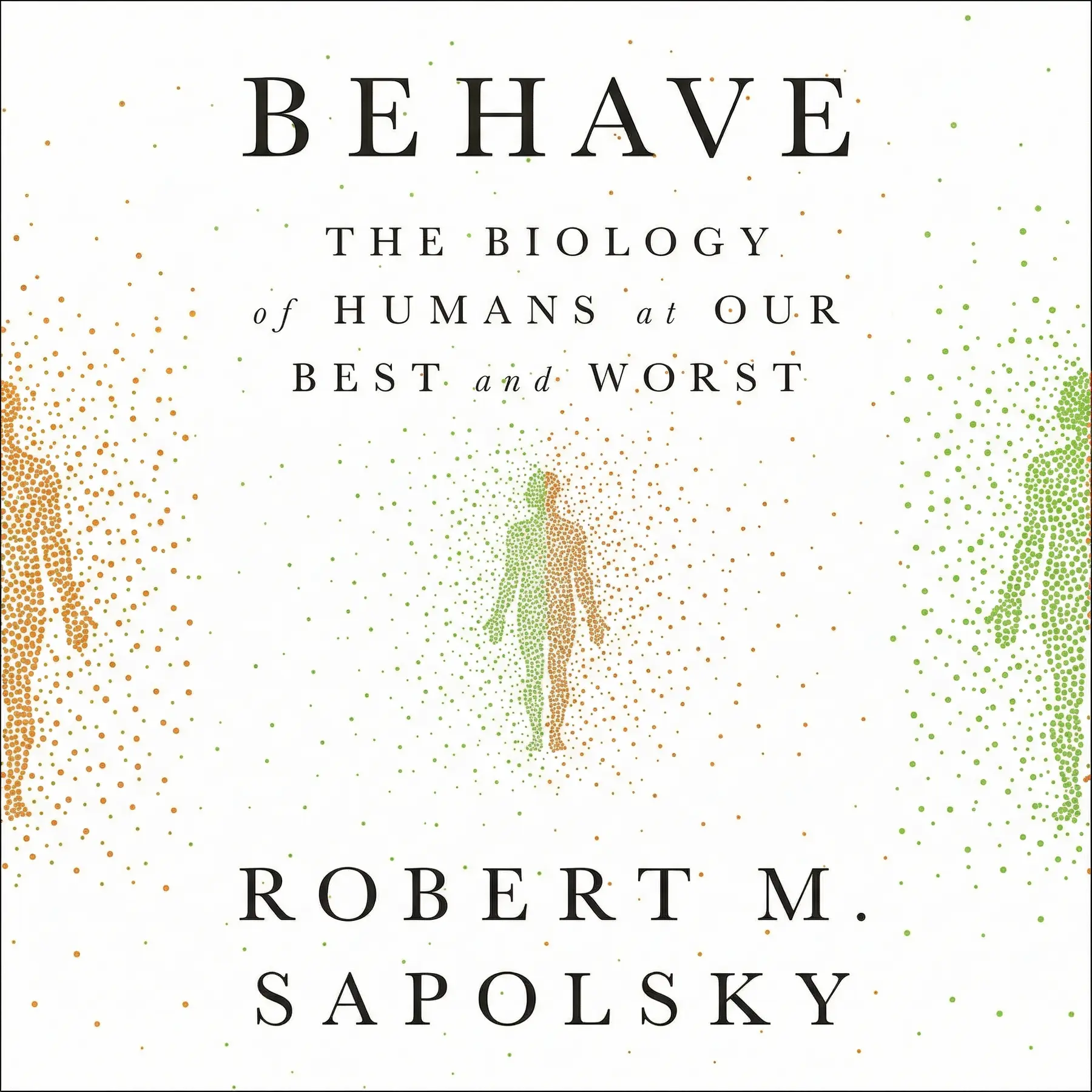
Listeners find this work captivating, with one individual noting that it reads like a novel, and they value its ability to present intricate scientific theories in an approachable way. The writing is masterfully composed, with one listener describing it as the work of an expert, while the material is detailed and comprehensive, as one review highlights how it establishes the foundation for upcoming information. Listeners also find the book witty, specifically pointing out the amusing footnotes, and regard it as an intellectual masterpiece that offers an objective look at human conduct.
This book is a massive achievement in science communication. Sapolsky manages to take us from the firing of a single neuron to the cultural evolution of entire civilizations. I loved the way he organized the chapters by time scales—seconds, minutes, and centuries. It makes a complex subject feel surprisingly intuitive and grounded. Truth is, I haven't looked at human interactions the same way since finishing the final chapter. The prose is sharp, witty, and surprisingly conversational for something that could easily have felt like a dry textbook. My only minor gripe is that it’s a total doorstopper, so be prepared for a long-term commitment. It’s absolutely worth the effort for anyone curious about why we do the things we do.
Show moreWow, what an absolute rollercoaster of a read. I never thought a 700-page book on neurobiology would make me laugh out loud, but those footnotes are gold. Sapolsky has this puckish sense of humor that balances out the heavy discussions on the amygdala and frontal cortex. Personally, I found the breakdown of 'Us vs. Them' thinking to be the most enlightening part of the whole experience. It’s a non-judgmental look at our worst impulses and our best potential as a species. Even when he gets deep into the weeds of glucocorticoids and protein synthesis, he keeps the narrative moving like a well-paced novel. It’s rare to find an expert who can translate high-level research into something so genuinely entertaining.
Show morePicked this up after seeing it recommended on several 'must-read' lists, and it lived up to the hype. The way it dismantles the idea of a 'magical' free will is both terrifying and deeply liberating. Sapolsky argues that our behaviors are just the culmination of biological processes we often can't control. Frankly, it’s a lot to wrap your head around, but the evidence he presents is incredibly compelling. He’s very careful to avoid simplistic, reductionist answers, which I really appreciated. Instead of saying 'it's all in the genes,' he shows how culture and history shape our very brains. It's a masterful distillation of decades of research that every thinking person should read.
Show moreEver wonder why humans can be so incredibly kind one moment and then totally monstrous the next? This book offers the most comprehensive answer I’ve ever found. It’s like taking a world-class university course from the comfort of your own couch. I loved how Sapolsky didn't shy away from the messy parts of our biology, like the role of testosterone in aggression or the way oxytocin only makes us nicer to 'our own' people. The writing is incredibly clear, and he has a knack for using metaphors that actually make sense. Look, it’s a huge book, but the chapters are so engaging that you barely notice the page count. It’s the kind of book that makes you feel significantly smarter by the time you reach the end.
Show moreThe Nayirah testimony example in the later chapters hit me like a ton of bricks. It perfectly illustrated how easily our empathic responses can be hijacked and manipulated for political ends. Sapolsky’s exploration of the 'biological' roots of our social failures is eye-opening and deeply sobering. He manages to explain things like PTSD and the formation of hierarchies without ever sounding cold or clinical. Instead, there's a real sense of humanity and empathy throughout the text. I found myself highlighting passages on almost every single page because there were so many 'aha!' moments. This isn't just a science book; it’s a manual for understanding the human condition in the 21st century.
Show moreFinding a scientist who can actually write this well is like finding a needle in a haystack. Sapolsky is a titan of his field, and his ability to synthesize disparate pieces of data into a narrative is unmatched. He takes these incredibly complex, abstract concepts and makes them feel personal and relevant. The way he describes the prefrontal cortex acting as the 'adult in the room' for our more primitive brain regions is just brilliant. It’s an engaging, humorous, and deeply insightful look at what makes us tick. I’ve already bought three copies to give to friends as gifts because I think everyone needs to hear this message. It is truly an intellectual masterpiece that changed the way I think about my own brain.
Show moreAs someone who usually avoids heavy science reads, I found this remarkably accessible. Sapolsky does a fantastic job of laying the groundwork early on so you aren't lost when things get more technical. To be fair, there were sections in the middle where the sheer volume of data felt a bit overwhelming. I struggled a bit with the chapters on genetics, mostly because the nuances of gene-environment interactions are just inherently dense. However, the payoff in the later chapters regarding the legal system and free will was immense. It’s an intellectual tour de force that asks uncomfortable questions about accountability and biology. I gave it four stars only because it requires a significant amount of mental energy to push through the slower middle sections.
Show moreAfter hearing Sapolsky's lectures online, I knew I had to get my hands on this physical copy. It’s essentially a more polished, comprehensive version of his Stanford course on the biology of human behavior. The interdisciplinary approach is what sets it apart; he weaves together neurology, endocrinology, and evolutionary biology into one cohesive story. I particularly enjoyed the discussion on the adolescent brain and why teenagers are so prone to impulsive decision-making. My only minor complaint is that the author’s own political biases occasionally peek through in the later sections on social structures. Regardless, the scientific explanations are top-tier and incredibly well-supported by the literature. It’s a monumental work that provides a vital framework for understanding modern society.
Show moreThe chapter on priming and social influence left me feeling a bit skeptical, to be honest. While Sapolsky is a brilliant writer, he seems to gloss over the massive replication crisis currently hitting the fields of social psychology. I kept waiting for a more critical look at some of the famous studies he cites, like the 'hungry judges' effect or the power of subtle cues. Instead, he presents them as settled science, which feels a bit misleading given the recent controversies in the academic world. Not gonna lie, this made me question some of his other conclusions in the book. It’s still a fascinating read and brilliantly organized, but I’d suggest taking some of the specific study results with a grain of salt.
Show moreFinally got around to finishing this, and while I learned a lot, it definitely has its flaws. The book is incredibly long, and there were several points where I felt the author was rambling or being a bit too glib for my taste. I also noticed that he uses some outdated studies that haven't aged well in light of recent scientific scrutiny. Truth is, I expected a bit more rigor regarding the reliability of the psychological experiments he chose to feature. That being said, his insights into the biological mechanics of the brain are second to none. It’s a decent starting point if you want to understand behavior, but I’d recommend reading it alongside other, more critical perspectives to get the full picture.
Show more

J. Craig Venter
Richard Wiseman
Carl Zimmer
Bill Bryson
AUDIO SUMMARY AVAILABLE
Get the key ideas from Behave by Robert M. Sapolsky, plus 5,000+ more titles in English and Thai.