
25 min 29 sec
Available in:English
Big Data: A Revolution That Will Transform How We Live, Work and Think
An exploration of how the massive scale of information today changes everything from business and medicine to our legal systems, while posing significant challenges to privacy and the concept of human agency.
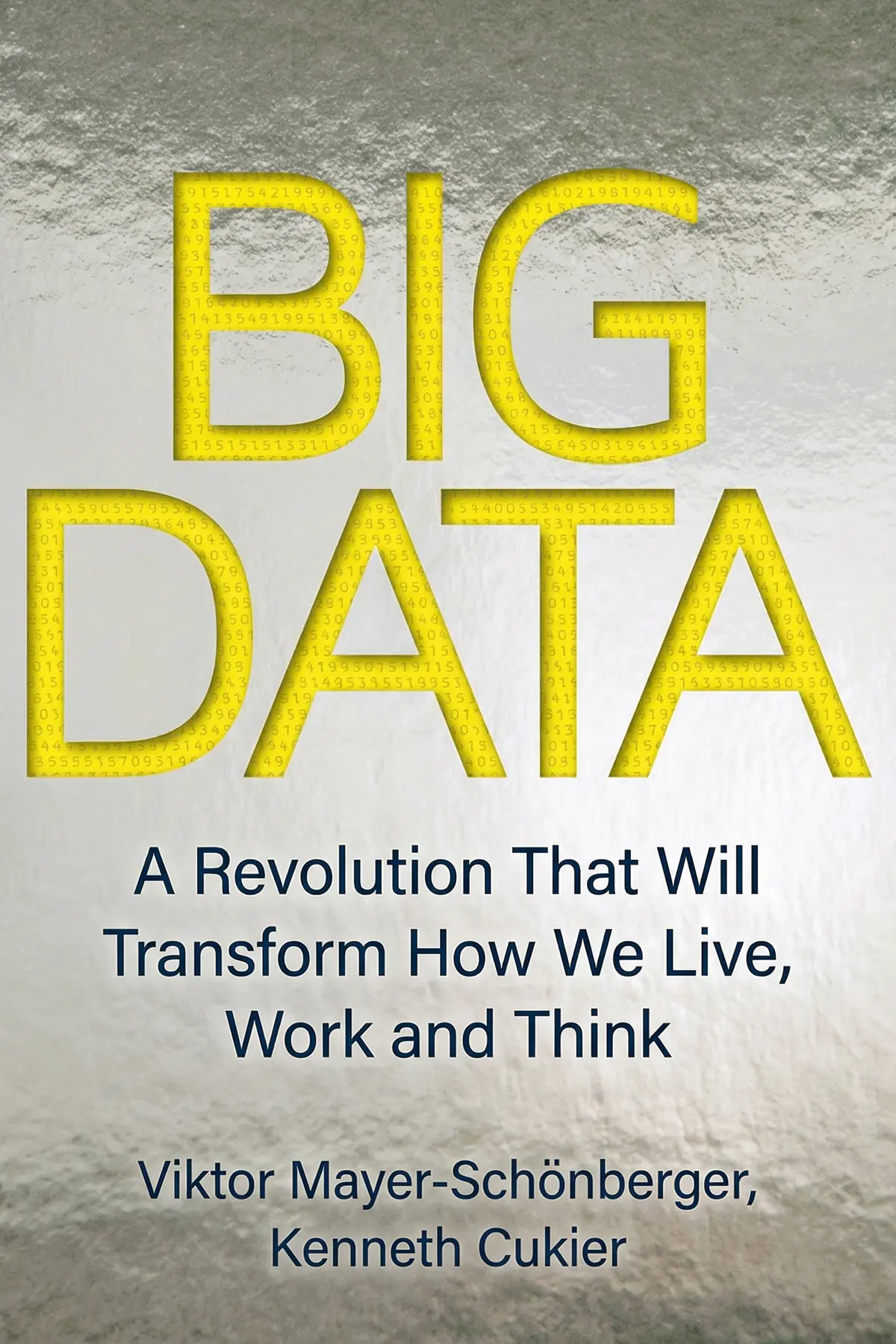
Table of Content
1. Introduction
2 min 03 sec
Imagine for a moment that you are a government official in the year 1880, tasked with counting every person in the United States. In that era, the task was so monumental that by the time the census results were finally tallied and printed eight years later, the information was already completely out of date. The world moved faster than the ink could dry. This was the limitation of the analog world: information was heavy, slow, and expensive to move. We lived in a world of scarcity, where we had to be incredibly choosy about what we recorded because storage was a luxury.
Today, we have entered a fundamentally different era. The invention of the computer, the rise of the internet, and the ubiquity of digital sensors have triggered a revolution. We are no longer limited by the speed of a pen or the cost of a filing cabinet. We have entered the age of big data. While the term might sound like just another tech buzzword, it actually represents a profound shift in how we perceive the world and solve problems. Big data isn’t just about having ‘more’ information; it’s about the unique insights that only become visible when we look at things on a massive scale.
A perfect example of this power occurred in 2009. Google engineers realized they could do something health officials couldn’t: they could track the spread of the flu in real-time. By looking at billions of search queries and finding forty-five specific terms that correlated with flu outbreaks in the past, they created a system that could predict the spread of the virus more accurately and faster than government agencies using traditional medical reports. When the H1N1 virus emerged shortly after, Google’s big data approach provided invaluable, timely information to public health workers. This is the heart of our journey today. We are going to explore how this massive scale of data allows us to see patterns we never knew existed, how it transforms our economy, and why we must be careful not to let the numbers dictate our humanity.
2. The Shift to Datafication
2 min 07 sec
Everything we do, from our physical movements to the way we sit, is being transformed into digital information that computers can process and analyze.
3. Moving Beyond Sampling
1 min 48 sec
Modern technology allows us to look at entire populations instead of small groups, providing a level of detail that was previously impossible to achieve.
4. The Value of Messy Data
2 min 07 sec
Having a massive amount of slightly inaccurate information can actually be more powerful than having a small amount of perfect data.
5. Correlation Over Causation
2 min 12 sec
Big data focuses on finding connections between variables rather than explaining exactly why those connections exist.
6. Finding Secondary Value in Data
2 min 02 sec
The most important use for a piece of information is often not the reason it was originally collected.
7. The Big Data Mindset
1 min 45 sec
Success in the new economy depends less on owning data and more on the ability to recognize where hidden value lies.
8. The Power of Combining Datasets
1 min 53 sec
When we merge different sources of information, we often find patterns that were completely invisible when the data stayed in its own silo.
9. The Art of Recycling Data Exhaust
1 min 52 sec
Companies are learning to use the ‘waste’ information we leave behind to refine their products and predict our behavior.
10. The Obsolescence of Privacy Laws
2 min 04 sec
Our current methods for protecting personal information are failing to keep up with the speed and scale of big data analysis.
11. The Threat to Free Will
1 min 52 sec
Using data to predict future crimes or behavior risks creating a society where people are punished for things they haven’t done yet.
12. The Perils of Being Data-Driven
1 min 58 sec
Relying too heavily on metrics can lead to unintended consequences, as we often end up optimizing the wrong things.
13. Conclusion
1 min 46 sec
As we have seen, big data is more than just a technological evolution; it is a fundamental shift in the human experience. It changes the way we solve problems, shifting our focus from the ‘why’ of causation to the ‘what’ of correlation. It turns the physical world into a stream of information through datafication and allows us to find immense value in the ‘exhaust’ of our digital lives. We are moving into a future where the ability to combine datasets and look at entire populations will lead to breakthroughs in medicine, economics, and city planning that were once the stuff of science fiction.
However, this revolution comes with a heavy set of responsibilities. We cannot ignore the threats to privacy and the ethical dangers of predictive algorithms that could undermine our free will. We must also be wary of the ‘McNamara fallacy’—the belief that if something cannot be measured, it isn’t important. The most successful people in this new era will be those who can harness the massive power of big data while maintaining a critical, human-centric perspective.
To put these ideas into practice, start by looking at the information around you with a creative eye. Whether you are in business, healthcare, or any other field, ask yourself: ‘What secondary value is hidden in the data I already have?’ Think about how the information you collect for one purpose might serve an entirely different group if it were combined with a different dataset. Don’t just look for the obvious answers; look for the correlations that others might miss. In this data-rich world, the most valuable treasure isn’t the information itself, but the imagination you use to unlock its hidden potential.
About this book
What is this book about?
This book examines the profound technological and philosophical shift caused by the rise of massive data-sets. For centuries, humans relied on small samples to understand the world because information was difficult to capture and store. Today, we are moving into an era where we can collect and analyze nearly everything, a process the authors call datafication. This shift allows us to move away from looking for the causes of events and instead focus on correlations—understanding what is happening rather than why. Through various examples ranging from public health to used car sales, the summary explores how recycled information and 'data exhaust' create new forms of economic value. It also warns of the potential dangers of being overly data-driven, highlighting how predictive algorithms could threaten personal privacy and free will. Ultimately, the work promises a roadmap for navigating a future where data is the most valuable resource, changing how we live, work, and perceive reality itself.
Book Information
About the Author
Viktor Mayer-Schönberger
Viktor Mayer-Schönberger is a professor specializing in Internet Governance and Regulation at Oxford University. He previously spent more than ten years on the faculty of Harvard University’s Kennedy School and is well-known for his work on the ethics of digital information, including his book Delete: The Virtue of Forgetting in the Digital Age. Kenneth Cukier is the data editor for The Economist and a prominent writer on technology and economics. His work has been featured in leading global publications such as the New York Times, the Financial Times, and Foreign Affairs.
Ratings & Reviews
Ratings at a glance
What people think
Listeners find this book offers a superb gateway to big data, utilizing numerous real-world cases that keep the narrative engaging throughout. Furthermore, the writing is skillfully executed, and listeners appreciate how it triggers deep thought regarding the massive potential of the field. However, reactions to the content are varied, with some viewing it as essential while others remark that it can become repetitive.
Top reviews
Rose
Wow. This is hands-down the most accessible entry point for anyone trying to wrap their head around how our digital world is being reshaped by massive datasets. I loved how Mayer-Schönberger and Cukier explain 'datafication'—the idea that we can turn almost any aspect of life into quantifiable information. To be fair, I went in with zero background in statistics, so the shift from 'why' to 'what' was a total revelation to me. The specific example of Matthew Maury’s ship logs really illustrates that this isn't just a modern fad but a fundamental change in human inquiry. Personally, it made me look at my Fitbit and my search history in a completely different light. It’s a visionary piece of work that actually makes you think about the future.
Show moreHom
After hearing so much buzz about this title, I’m glad it lived up to the reputation as a definitive guide. The way it explains that we don't always need to know 'why' something happens, as long as we know 'what' is happening, is brilliant. It’s a scary thought, but the authors handle the ethical implications with a lot of nuance in the final chapters. The writing is punchy and the pace is fast, making it one of the few tech books I’ve finished in a single weekend. It really opened my eyes to the 'magical' value of data that can be reused for purposes we haven't even imagined yet. A truly fascinating look at our future.
Show moreWillow
As someone who works in marketing, I found the breakdown of the Big Data value chain to be incredibly insightful for my daily strategy. The authors have a gift for taking abstract concepts and grounding them in real-world scenarios that keep the reader engaged. While some sections felt a bit padded, the core argument about embracing 'messiness' over exactitude is a game-changer for business decision-making. You don't need a math degree to follow the logic here. It does get a little repetitive toward the end, but the overall impact on my perspective was worth the time spent reading. It's a solid introduction to a complex topic.
Show moreJib
Ever wonder how Google knows about a flu outbreak before the CDC? This book explains the mechanics of those predictions with surprising clarity and poise. I was particularly struck by the notion that we are moving away from sampling toward analyzing entire populations. It’s a massive shift in how humanity processes reality. My only gripe is that the authors occasionally drift into vague, 'Lord of the Rings' style metaphors about data revealing secrets to the humble. Despite the occasional flowery language, the central thesis is robust and well-argued. It’s definitely a must-read for anyone curious about the algorithms currently running our lives behind the scenes.
Show moreKek
The chapter on the history of data collection was worth the price of admission alone. Most people think Big Data started with the internet, but the authors do a great job showing the historical lineage of these ideas. It’s a polished, well-crafted narrative that successfully demystifies a lot of the buzzwords we hear every day. Not gonna lie, I did find myself skimming through some of the later chapters because they reiterate the same points about correlation. However, the book succeeds in its primary mission: getting the reader to think about the massive potential and the inherent risks of a data-driven society. It is a thought-provoking read for the general public.
Show moreLuckana
This book provides a fantastic framework for understanding the three major shifts in our information landscape. First, the move to 'n=all.' Second, the acceptance of messiness. Third, the pivot toward correlation over causation. These are heavy concepts, but the writing style is so fluid that it never feels like a chore to get through. I did notice some repetitive phrasing, and the lack of in-text citations was a bit annoying for a non-fiction work. That said, the real-world examples are vibrant and kept me turning the pages. It’s an essential read for anyone trying to stay relevant in the modern economy. Highly recommended for beginners.
Show moreSirirat
Finally got around to reading this and I have mixed feelings. On one hand, the prose is elegant and the examples of Farecast and airline pricing are genuinely interesting to see in print. On the other hand, the constant hype about Big Data being a 'magical diamond mine' feels a bit dated and hyperbolic. The truth is that the book makes three or four very good points and then spends 200 pages repeating them in slightly different ways. It’s a decent primer if you’re new to the tech world, but industry professionals will likely find it lacking in technical depth and overly optimistic about the death of the subject-matter expert.
Show moreEye
Truth is, I expected more data and less marketing jargon from an Oxford professor. The book is well-written, but it feels like the authors are more interested in being 'messengers' of a revolution than actual critics of it. I appreciated the chapters on privacy and the potential for 'propensity' policing, yet those felt like an afterthought compared to the initial excitement. Gotta say, the lack of any mention of semantic web or information architecture makes the book feel a bit superficial for a serious study. It's a quick, breezy read for a flight, but don't expect it to serve as a textbook. It's more of a long-form essay.
Show moreCarter
Look, if you want a book that tells you Big Data is a gold mine and we’re all going to be rich off 'Algorithmists,' this is for you. If you want a critical analysis of the pitfalls of data dredging, you might be disappointed. The authors make grandiose claims about overturning centuries of established practice, which feels a bit like tech-evangelism to me. To be fair, the examples they use are quite entertaining and easy to follow. But the book is far too long for the amount of original thought it contains. It’s a classic case of an excellent magazine article stretched into a mediocre book. It’s okay, just not revolutionary.
Show moreManee
Picked this up expecting a technical deep dive into data architecture, but it felt more like a 300-page advertisement for Silicon Valley. Frankly, the authors spend way too much time recycling the same three stories about Target’s pregnancy predictions and Google’s flu trends. While the concept of 'n=all' is intriguing, they beat the dead horse of correlation versus causation until there’s nothing left but fluff. I’m giving it two stars because the writing is smooth, but the lack of actual substance regarding cloud computing or specific tools is glaring. If you’ve read a single Wired article in the last decade, you probably already know everything this book has to say. It is the definition of a book that should have been a blog post. Just far too repetitive for my taste.
Show moreReaders also enjoyed
AUDIO SUMMARY AVAILABLE
Listen to Big Data in 15 minutes
Get the key ideas from Big Data by Viktor Mayer-Schönberger, plus 5,000+ more titles in English and Thai.
- 5,000+ titles
- Listen as much as you want
- 7-day free trial
- Cancel anytime







