
The Grand Design
Stephen Hawking
Explore the final reflections of one of history’s greatest minds as he tackles the universe's most profound mysteries, from the origins of time to the future of artificial intelligence and space travel.
1 min 39 sec
Every once in a while, humanity produces a mind capable of peering into the very fabric of existence, translating the complex language of the stars into something we can all grasp. Stephen Hawking was that mind. In what would become his final gift to the world, he set out to address the inquiries that have haunted us since we first looked at the night sky. Why are we here? Is there a grand design? What does the future hold for a species as fragile as ours?
This exploration isn’t just about abstract physics or distant galaxies. It is a deeply human journey that weaves together the fundamental laws of nature with the urgent social and technological challenges of the twenty-first century. Hawking invites us to move beyond ancient mythologies and embrace a world governed by reason and observable truth. He challenges our assumptions about time, the possibility of life on other worlds, and the risks we take as we build machines that might one day surpass us.
As we walk through these ideas, you will notice a consistent throughline: the belief that the universe is not a chaotic mess of divine whims, but a sophisticated machine governed by rules. By understanding these rules, we don’t just learn about the cosmos; we learn how to survive within it. This summary will guide you through Hawking’s vision of the universe’s birth, the peculiar nature of black holes, and the roadmap for how humanity might eventually leave its home planet to find a place among the stars. Prepare to shift your perspective from the mundane details of daily life to the terrifying and beautiful magnitude of the cosmos.
3 min 03 sec
Discover why the universe functions like a grand, unbreakable machine and how scientific laws have replaced ancient myths in our search for meaning.
3 min 00 sec
Uncover the logic behind the universe’s explosive beginning and learn why asking what happened before the start of time is a question that has no meaning.
3 min 12 sec
Explore the cosmic odds of finding extraterrestrial neighbors and the reasons why we might still be waiting for our first interstellar guest.
2 min 45 sec
Delve into the clash between classical physics and quantum mechanics to see if the future is a predetermined path or a blur of possibilities.
2 min 44 sec
Take a journey to the edge of an event horizon to understand how these cosmic giants form and the surprising way they might eventually fade away.
2 min 54 sec
Identify the greatest threats to our planet’s survival and learn why the most dangerous challenges are the ones we’ve created for ourselves.
2 min 53 sec
Discover why leaving Earth is no longer a matter of curiosity but a requirement for survival, and the ambitious projects that could get us there.
2 min 47 sec
Examine the potential for artificial intelligence to revolutionize our world while considering the grave risks of creating a mind that surpasses our own.
1 min 43 sec
Stephen Hawking spent his life unraveling the mysteries of the universe, and in this final collection of thoughts, he leaves us with a vision that is both humbling and empowering. He reminds us that while we are small and accidental inhabitants of a vast cosmos, we possess the incredible ability to understand the laws that govern it. From the explosive birth of time at the Big Bang to the slow evaporation of black holes, the universe is a place of logic and beauty that we are privileged to explore.
However, this exploration comes with a heavy responsibility. We are at a unique moment in history where our technological power has outpaced our social and political maturity. The threats of climate change, nuclear war, and unregulated artificial intelligence are real and immediate. Hawking’s message is clear: we cannot afford to be complacent. We must use our intelligence to protect our home planet while simultaneously reaching for the stars. Space exploration isn’t a luxury; it’s an essential strategy for the long-term survival of our species.
As you move forward, carry with you the spirit of curiosity that defined Hawking’s life. Be critical of the technologies we create, especially artificial intelligence, and ask how they can best serve humanity as a whole. Don’t be satisfied with easy answers or ancient myths. Instead, look up at the stars and try to make sense of what you see. We are a species of explorers and thinkers, and as long as we keep asking the big questions, there is hope for our future. The universe is waiting for us, and the answers are within our reach if we only have the courage to pursue them.
This summary provides a deep dive into the core themes of the final work by one of the world's most renowned physicists. It explores the tension between scientific laws and religious belief, the mechanics of the Big Bang, and the enigmatic nature of black holes. Beyond the stars, it examines the immediate threats facing humanity on Earth, including climate change and nuclear instability, and the potential for artificial intelligence to both save and endanger our species. Listeners will gain a clearer understanding of how the universe began and where it might be heading. The summary outlines the necessity of space exploration as a survival strategy and offers a rational perspective on the existence of extraterrestrial life. Ultimately, it distills complex cosmic principles into a hopeful vision for the future, emphasizing the importance of human curiosity and the need for global cooperation in the face of unprecedented technological change.
Stephen Hawking was an English theoretical physicist and former Lucasian Professor of Mathematics at the University of Cambridge. He is generally regarded as one of the most remarkable scientists of his generation. He died in March 2018.
Stephen Hawking
Listeners describe this work as captivating and articulate, featuring clear descriptions of difficult concepts that remain accessible to the layperson. They value the stimulating material and view the book as a fitting homage to a brilliant mind, while one listener mentions how the text expands their creative thinking. Reactions are varied concerning the scientific precision, as some listeners felt let down by a perceived absence of definitive solutions.
Stephen Hawking’s final gift to the world is a masterclass in making the incredibly complex feel surprisingly intimate. It is rare to find a book that tackles the origin of the universe and the existence of God with such a lucid, approachable tone. While some might find the brevity of the chapters a bit jarring, I think it perfectly captures his wit and sense of urgency. He isn't just lecturing; he is inviting us to look up at the stars instead of down at our feet. The sections on AI and the future of humanity felt particularly pressing, almost like a fatherly warning to a species that is growing up too fast. It’s a beautiful tribute to a brilliant mind. Even if you aren't a 'science person,' the way he explains the warping of spacetime will absolutely stretch your imagination to its limits. Truly a must-read for anyone who has ever looked at the night sky and wondered 'Why?'.
Show moreWow, I didn't expect to actually understand quantum gravity by the time I finished the third chapter, but Hawking has a way of making the impossible feel logical. This book is a luminous example of how science communication should be done. He takes these massive, terrifying questions—like what happens inside a black hole—and uses metaphors that actually stick. I found myself pausing every few pages just to process the sheer scale of what he was describing. It’s a deeply emotional experience reading this, knowing it was compiled after his passing. You can feel the weight of his legacy in every sentence. The way he discusses the 'Anthropic Principle' really changed my perspective on our place in the cosmos. It’s not just a science book; it’s a plea for curiosity and a reminder that our time on this planet is both precious and precarious.
Show moreThe chapter on black holes alone is worth the price of admission. Hawking had this incredible ability to stretch your imagination until you can almost see the event horizon yourself. I love how he bridges the gap between the purely theoretical and the deeply philosophical. Is there a God? Can we predict the future? These aren't just science questions; they are the questions that define us as humans. He approaches them with a refreshing lack of dogma, relying instead on the beauty of the laws of nature. The writing is punchy, direct, and surprisingly hopeful for a man who saw so many reasons to be worried about our survival. This book is a reminder that even when things seem dark, there is always something we can do and succeed at. Simply brilliant.
Show moreA truly poignant tribute to a man who lived among the stars while being confined to a chair. This isn't just a collection of scientific facts; it's a testament to human willpower and the power of the mind. Hawking's voice is so distinct—authoritative yet humble, and always ready with a witty remark. He manages to explain things like Hawking Radiation in a way that feels like a conversation over coffee. I especially loved the final chapter on how we can shape the future. It’s a call to action for the next generation of scientists and dreamers. The book reminds us that while we are small in the grand scheme of the universe, our ability to understand it makes us significant. It’s a short read, but its impact lingers long after you close the cover.
Show moreSimply put, this book is a treasure for anyone who wants to understand the 'why' behind our existence without needing a PhD. Hawking manages to bridge the gap between hard science and human wonder perfectly. I was especially struck by the way he handles the question of God—not with malice, but with a cold, logical elegance that is hard to argue with. The book is short enough to read in a single weekend, yet heavy enough to keep you thinking for months. It manages to be both a scientific primer and a spiritual legacy. We lost a great mind, but he left us a map to follow. If you have even a passing interest in the universe, you owe it to yourself to read this final statement.
Show moreIs it possible to condense the entire universe into a couple hundred pages? Hawking certainly tries his best here, and for the most part, he succeeds in delivering a thought-provoking swan song. The writing is incredibly clear, stripping away the dense mathematical jargon that usually gatekeeps theoretical physics from the general public. I particularly enjoyed the 'Brief Answers' format because it allows you to jump between big topics like time travel and alien life without feeling overwhelmed. However, I did notice some repetition from his earlier works and lectures. If you’ve followed his career closely, some of these 'answers' might feel like a highlight reel rather than brand new insights. That said, his dry British humor shines through every page, making even the most dire warnings about climate change and nuclear war oddly engaging.
Show morePersonally, I found his warnings about 'superhumans' and genetic engineering to be the most chilling part of the entire experience. It gave me a lot to think about regarding our ethical future. Truth is, the book is at its best when Hawking is being a visionary. Most of his explanations are remarkably clear, though a few sections on m-theory and the Big Bang still made my brain melt just a little bit. My only real gripe is that some chapters feel a little unfinished, likely because they were pieced together from various notes. It doesn't always flow perfectly from one topic to the next, but the brilliance of the author usually carries it through. Definitely worth the read if you want to understand the challenges of the next century.
Show moreAfter hearing so much about Hawking's warnings on AI, I wanted to see the context for myself. He doesn't disappoint. His take on the 'intelligence explosion' is both fascinating and terrifying. He argues that we need to ensure AI goals are aligned with ours, which sounds simple but is incredibly complex in practice. Beyond the tech stuff, the book is quite well-written and serves as a great summary of his life's work. I appreciated the chapter on the 'South Pole' analogy for the Big Bang—it’s the first time that concept finally clicked for me. Some of the political commentary felt a little out of place, but I respect that he wanted to use his platform to address global issues before he left us. It's a very human book.
Show moreAs someone who struggled with science in school, I was intimidated by the thought of reading a book by the world’s most famous physicist. However, I found this to be remarkably accessible. Hawking writes for the average person, not the academic elite. He uses humor and simple analogies to explain the most complex parts of our reality. I did feel like the book was a bit 'light' in certain areas, particularly regarding the colonisation of space, where he seems to gloss over some of the massive logistical hurdles. But as a thought-provoking exercise, it's excellent. It makes you feel smarter just by reading it. It’s a fitting end to a spectacular life, and it left me feeling more curious about the world than when I started.
Show moreLook, I admire the man’s legacy, but this felt like a collection of soundbites rather than a serious scientific inquiry. I found myself asking 'How is that relevant?' more often than not during the more discursive passages. For a book titled 'Brief Answers,' the responses often skirted around the actual mechanics of the physics involved. It felt a bit too simplified, almost to the point of being patronizing to an adult reader. I wanted more substance and fewer generalizations about how we need to be 'brave and curious.' If you're looking for a deep dive into cosmology, this isn't it. It feels rushed and somewhat disjointed, which I suppose is understandable given how it was compiled, but it doesn't make for a particularly satisfying read. It’s more of a memento for fans than a rigorous exploration of the Big Questions.
Show more
J. Craig Venter
Carl Zimmer
Bill Bryson
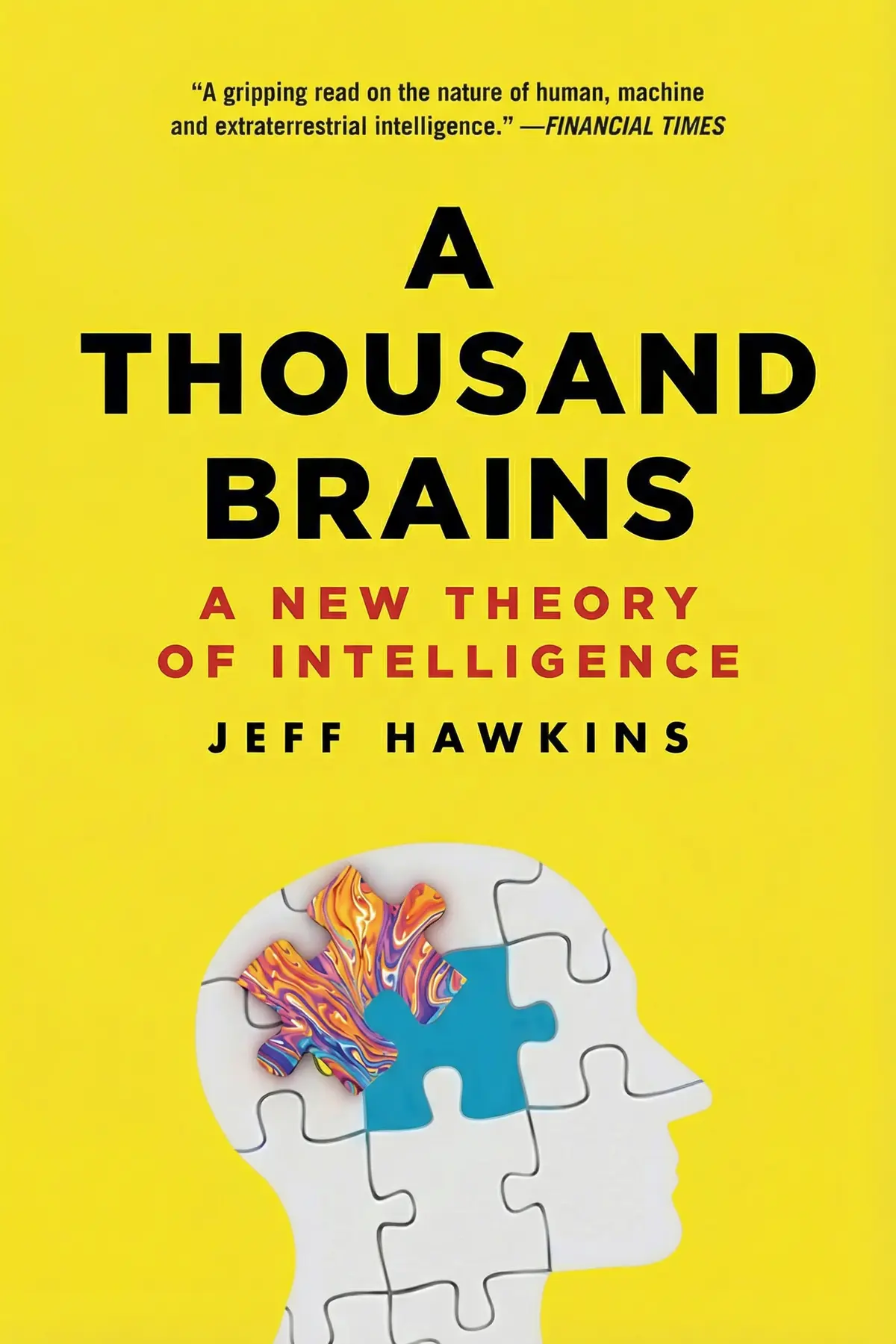
Jeff Hawkins
Lisa Kaltenegger
AUDIO SUMMARY AVAILABLE
Get the key ideas from Brief Answers to the Big Questions by Stephen Hawking, plus 5,000+ more titles in English and Thai.







