
Brief Answers to the Big Questions
Stephen Hawking
A profound exploration of how modern physics explains the universe's origins and operation without relying on supernatural creators, covering everything from quantum mechanics to the nature of reality itself.
1 min 54 sec
For as long as humans have looked up at the stars, we have been haunted by a series of profound questions. Why is there something rather than nothing? Why do we exist? Does the universe require a designer, or is it the result of self-sustaining laws? For most of human history, these inquiries were the exclusive domain of philosophy and religion. But as we move deeper into the twenty-first century, the torch has been passed to science. In this exploration of the cosmos, we are going to look at how modern physics provides the tools to unlock the deepest mysteries of our existence.
The throughline of our journey is the realization that the universe is not a chaotic playground for the whims of gods, but a structured system governed by immutable laws. We will trace the evolution of thought from the earliest days of human curiosity to the cutting-edge theories of today. We’ll see how our understanding of reality has shifted from the tangible world we see around us to the strange, counterintuitive realm of subatomic particles. We will also confront the challenging idea that what we perceive as reality might simply be one of many possible interpretations of the data our senses receive.
Throughout this discussion, we will explore the revolutionary ideas of thinkers like Einstein and Hawking, and see how they have reshaped our conception of time, space, and our place in the grand scheme of things. By the end, we will understand how the universe could have formed itself out of nothingness, and why the specific conditions that allow for human life might not be a miracle, but a statistical inevitability within a vast multiverse. This is the story of how humanity has used the scientific method to piece together the ultimate puzzle of creation, moving from myth to a grand, unified design.
2 min 27 sec
Explore the historical shift from attributing natural events to the anger of gods to discovering the underlying physical laws that govern our world.
2 min 33 sec
Delve into the provocative question of whether human choices are truly free or merely the result of biological and chemical laws.
2 min 24 sec
Consider the possibility that there is no single objective reality, only models created by our brains to interpret sensory data.
2 min 43 sec
Discover the criteria scientists use to determine if a theory is a useful representation of the world around us.
2 min 27 sec
Learn why the subatomic world defies our common sense and introduces a fundamental level of unpredictability into the universe.
2 min 18 sec
Understand how the speed of light remains constant while time and space stretch and warp around us.
2 min 22 sec
Explore the search for one master equation to rule the universe and why it might lead to the existence of countless other worlds.
2 min 31 sec
Trace the history of the cosmos back to the Big Bang and discover why our survival depends on a remarkable set of coincidences.
1 min 57 sec
As we close this exploration of the cosmos, we are left with a worldview that is vastly different from that of our ancestors. We have moved from a reality governed by the unpredictable whims of gods to one ruled by elegant, immutable physical laws. We have seen how the scientific method has allowed us to peel back the layers of existence, from the expansive movements of galaxies to the strange, probabilistic dances of subatomic particles. We’ve learned that our very perception of reality is a model built by our brains, and that time and space are not fixed stages but dynamic, warping participants in the story of the universe.
The ‘Grand Design’ described by Hawking and Mlodinow is one where the universe is self-contained. It is a system that does not require a external creator to set it in motion or to fine-tune its parameters. Instead, through the laws of physics and the vast possibilities of the multiverse, the universe can emerge spontaneously and create the conditions necessary for life. This doesn’t diminish the wonder of our existence; if anything, it enhances it. The fact that we, as biological machines, have developed the capacity to understand the very laws that created us is a remarkable achievement.
The actionable takeaway from this journey is to embrace the power of scientific inquiry and to remain skeptical of explanations that rely on the supernatural. By understanding the models we use to describe reality, we gain a clearer picture of our place in the cosmos. We are a part of a vast, complex, and beautiful design—one that we are finally beginning to decipher. As we continue to refine our theories and search for a truly unified understanding of everything, we honor the curiosity that has driven humanity from the very beginning.
The Grand Design addresses the most fundamental questions of existence: why is there a universe, and why do we exist within it? By synthesizing the latest breakthroughs in physics, the book moves beyond traditional philosophy to offer a purely scientific perspective on the cosmos. Readers are taken on a journey from the ancient belief in mythological deities to the contemporary understanding of complex physical laws. It introduces concepts like model-dependent realism, which suggests that our perception of reality is a construction of our brains, and explores M-theory as a potential unified framework for all physical phenomena. Ultimately, the book promises a clear-eyed look at how the universe could have emerged from nothingness through the inevitable consequences of scientific law.
Stephen Hawking was a globally recognized theoretical physicist and author who served as the Lucasian Professor of Mathematics at the University of Cambridge for three decades. His work on cosmology and black holes earned him numerous honors, including the Presidential Medal of Freedom. He is well-known for his best-selling books, such as A Brief History of Time. Leonard Mlodinow is a physicist at the California Institute of Technology specializing in quantum theory. He has authored several popular science books, including The Drunkard’s Walk and A Briefer History of Time, collaborating with Hawking to make complex scientific concepts accessible to a broad audience.
Stephen Hawking
Leonard Mlodinow
Leonard Mlodinow
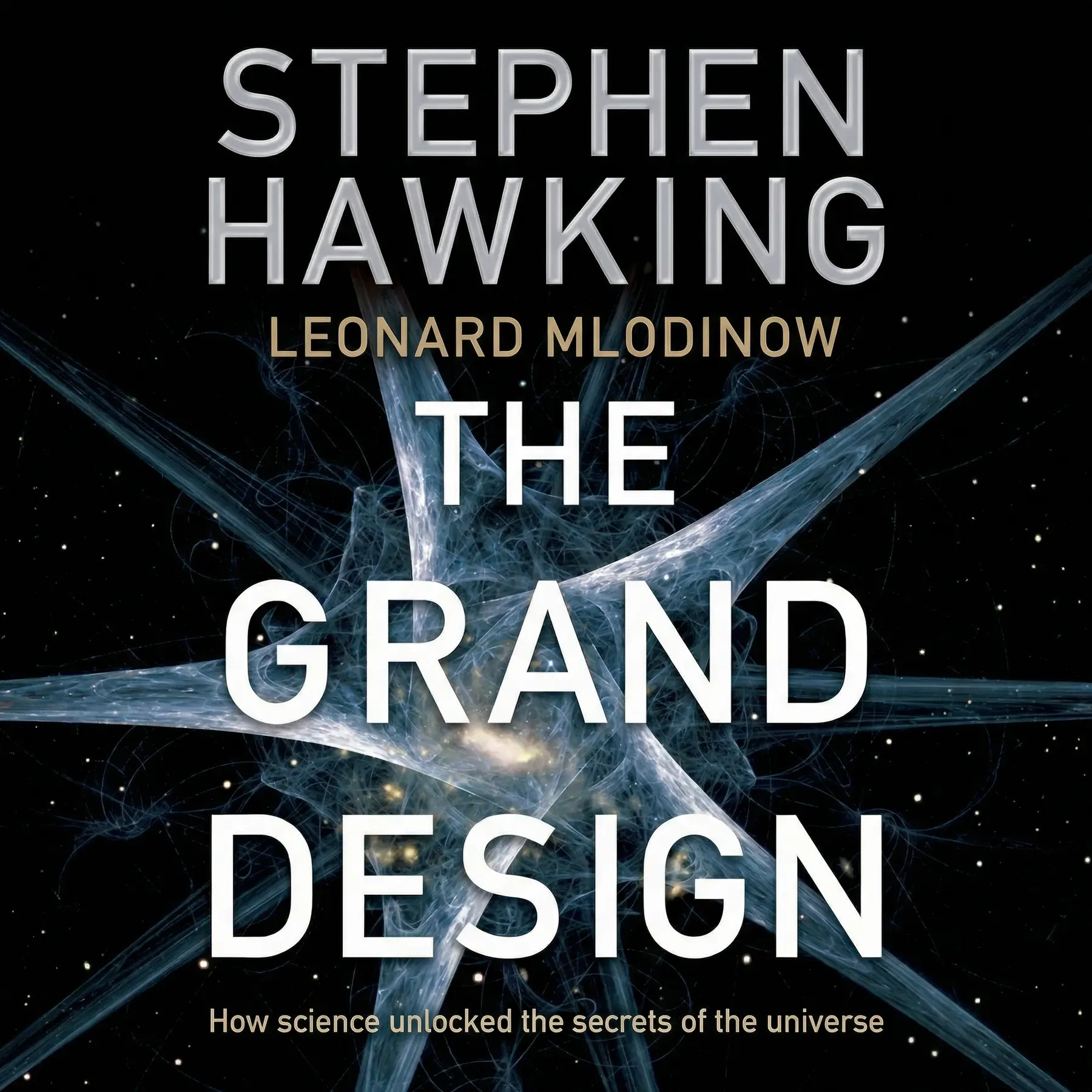
Listeners find the book accessible and expertly crafted, particularly valuing the way it clarifies intricate scientific ideas using straightforward language. They describe it as an intriguing journey into the cosmos, and one listener highlights how it shifts their perspective on reality. Listeners consider the work intellectually stimulating, with one review mentioning how it softly leads them through the necessary logic. Opinions are divided concerning the theoretical material; some value its observations on quantum physics, whereas others feel the explanations of quantum mechanics are too basic.
Walking into this expecting dense academic jargon was a mistake, as Hawking and Mlodinow have crafted something remarkably digestible for the average person. The book is filled with high-quality illustrations and glossy pages that actually help visualize the mind-bending concepts of M-theory. Truth be told, I finally understand the double-slit experiment without needing a PhD, which is a minor miracle in itself. It’s a slim volume, but it packs a heavy punch by challenging our traditional views of reality and the necessity of a creator. Some might find the "Model Dependent Realism" a bit of a stretch, but it provides a fascinating framework for how we perceive our universe. It’s essentially a guided tour through the history of physics, ending with a glimpse into the potential Theory of Everything. Even if you don't agree with the philosophical conclusions regarding God, the clarity of the writing is undeniable.
Show moreFinally got around to reading this and I have to say, the Douglas Adams reference in the first chapter set the perfect tone. Hawking isn't just trying to give us "42"; he's attempting to show us the actual mechanics behind the curtain of reality. The book is incredibly brief—under 200 pages—which makes the heavy topics like the holographic theory feel a bit rushed, but still accessible. I’ve always struggled with the idea of a multiverse, but the way they explain it through the lens of Feynman’s sum-over-histories actually made sense. It’s a beautiful book to hold, too, with great margins and font size that doesn’t make you squint. My only gripe is that it ends just as it starts getting really deep into the math. It’s a perfect entry point for science buffs, though perhaps a bit too "pop" for those already well-versed in cosmology.
Show moreIf you want a book that will make your brain itch in the best possible way, this is it. Hawking’s voice is clear, concise, and occasionally quite funny. They take on the biggest questions imaginable—why is there something rather than nothing?—and provide answers that are grounded in the latest M-theory research. The idea that our universe is just one of many, each with different laws of physics, is mind-blowing. I loved the "goldfish in a curved bowl" analogy for how we perceive reality. It’s a visual and intellectual treat that doesn't require a degree to enjoy. Even the more abstract parts about the beginning of time felt grounded in a way I could follow. It’s a pro-critical thinking manifesto that encourages us to look at the stars with curiosity rather than just faith.
Show moreScience has a way of making the miraculous seem inevitable, and that is exactly what happens in The Grand Design. Hawking and Mlodinow take us through the quantum multiverse with a steady hand, explaining how "fine-tuning" isn't necessarily proof of a designer. It’s just a result of us being in the one universe where life is possible—out of billions that aren't. This perspective shift is profound. The book is written in a very accessible style, avoiding the "ghostwriter" feel that some other celebrity scientist books have. Every page feels intentional, from the discussion of the anthropic principle to the final conclusions about the nature of existence. It’s a must-read for anyone who enjoys being challenged. You might not come away agreeing that God is irrelevant, but you will definitely understand why the authors think so.
Show moreThe way Hawking approaches the age-old conflict between religion and science in these pages is bound to ruffle some feathers, yet he does it with such calm logic that it's hard to look away. He essentially argues that the universe can create itself from nothing due to the laws of gravity, making a divine architect redundant. I found the section on the strong anthropic principle particularly enlightening, though I’ll admit the quantum mechanics chapters required a second pass. Frankly, the book feels a bit like a "Greatest Hits" of physics, but the presentation is so slick that it feels fresh. I loved the quirky anecdotes about Aristotle and the "happy" falling objects. It’s a quick read, but the implications of a multiverse where we are just one of many possible histories will stick with me for a long time. Definitely worth it for anyone curious about our origins.
Show moreLook, I’m no physicist, but this book made me feel like I could hold a conversation with one for at least five minutes. Hawking and Mlodinow have a way of stripping away the intimidating math to show the weird, wonderful reality underneath. The chapter on the double-slit experiment was a total "aha!" moment for me. It’s a short, breezy read that doesn’t overstay its welcome, which I appreciate given how dense the subject matter is. Not gonna lie, some of the multiverse stuff still feels like science fiction, but the book argues that it’s the most logical conclusion of our current models. It’s fascinating to see how our understanding has evolved from Kepler and Galileo to the complexities of string theory. It definitely makes you feel small, but in a way that’s more awe-inspiring than depressing.
Show moreThe history of human inquiry is a long, winding road, and this book does a fantastic job of mapping the milestones. Starting with the ancients and moving through the Enlightenment, Hawking shows how we’ve slowly replaced myth with measurement. I particularly enjoyed the discussion on how our brains "create" reality, like the experiment with the upside-down glasses. It’s a fascinating trip through cosmology that manages to be both educational and entertaining. The truth is, the universe is far stranger than we can imagine, and this book captures that weirdness perfectly. My only real complaint is that it glosses over some of the newer challenges to inflation theory. Regardless, it’s a well-written, beautiful book that everyone should read at least once to gain a bit of perspective on our place in the cosmos.
Show morePick this up if you want a fast-paced summary of modern physics without the headache of actual equations. It’s a slim volume, but it doesn’t lack ambition, attempting to explain the very origin of the universe. The authors argue that because there is a law like gravity, the universe can and will create itself from nothing. While the logic is compelling, it does feel a bit "pop-science" at times, prioritizing brevity over depth. The illustrations are top-notch and really help break up the text, though I found myself wishing for a bit more detail on how the 11 dimensions of M-theory actually work. Personally, I think the book succeeds more as a philosophical argument for atheism than as a pure science text. It’s provocative, beautifully designed, and definitely sparks a lot of internal debate.
Show moreWhile I appreciate the effort to bring complex physics to the masses, I found the core logic of "Model Dependent Realism" to be somewhat shaky upon closer inspection. The authors suggest that there is no picture-independent concept of reality, which feels a bit like a philosophical cop-out to avoid hard evidence for M-theory. To be fair, the writing style is engaging and the history of scientific discovery is told with great wit. However, as someone with a background in science, I felt the "no need for God" conclusion was a bit forced and ignored the nuances of theological thought. The glossy pictures are nice, but they sometimes feel like they’re filling space where more rigorous explanation should be. It’s a thought-provoking piece of work, but I’m not entirely convinced that science has made the "Grand Designer" irrelevant just yet. Still, it’s a solid overview of where modern physics stands today.
Show moreIs it just me, or does this feel a bit like a coffee table book disguised as a breakthrough scientific treatise? I wanted more meat on the bones of M-theory, but instead, I got a lot of "see the pretty picture" and very little actual derivation. The font is huge and the margins are wide, making a very short book feel even shorter. Honestly, the way they dismiss the idea of a creator feels more like a marketing gimmick than a rigorous scientific proof. They spend so much time on "Model Dependent Realism" that they forget to address the actual gaps in the Standard Model, like the issue with neutrino mass. It’s a decent enough primer if you know absolutely nothing about physics, but for anyone who has read A Brief History of Time, this feels like a step backward into oversimplification.
Show more
Lisa Kaltenegger

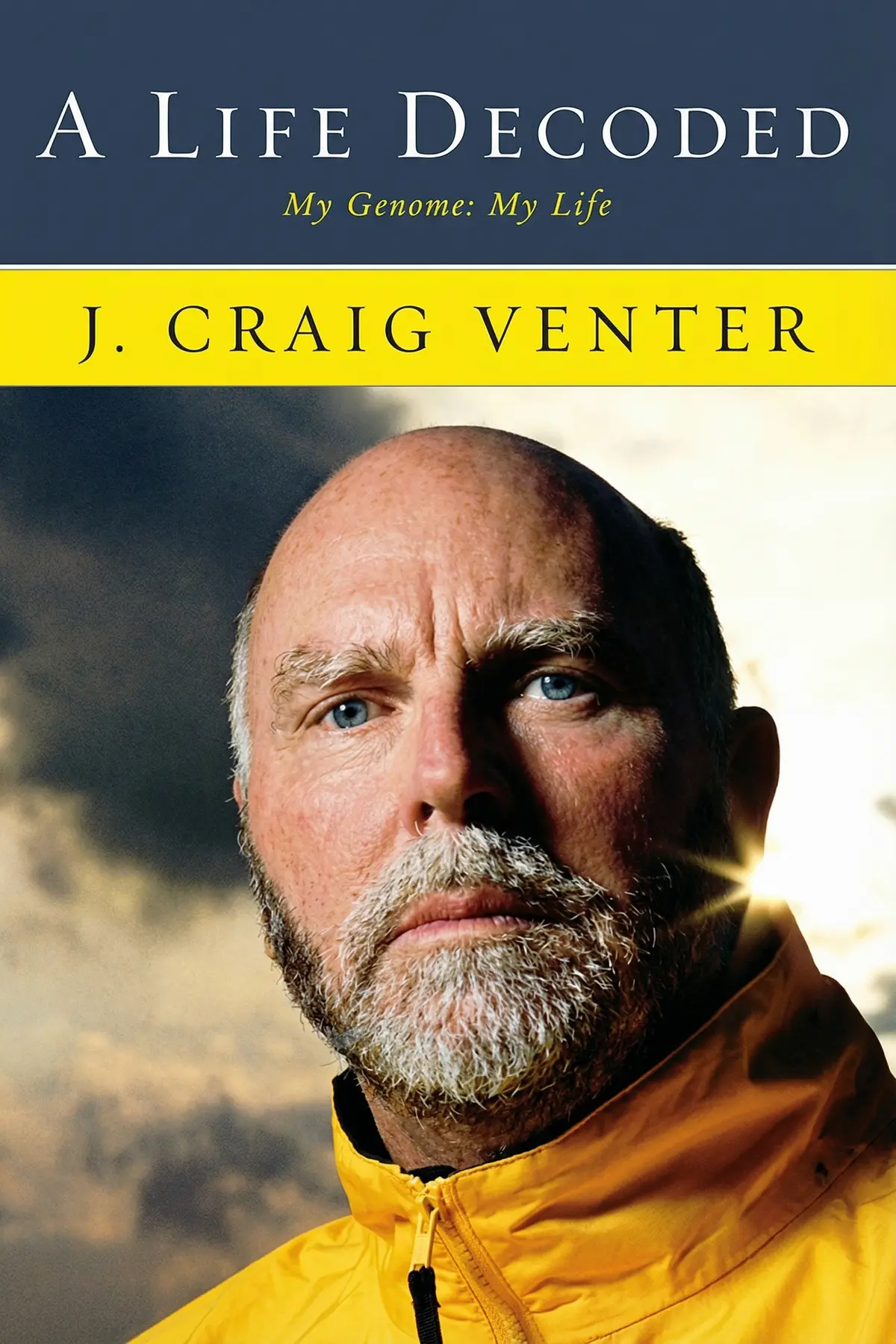
J. Craig Venter
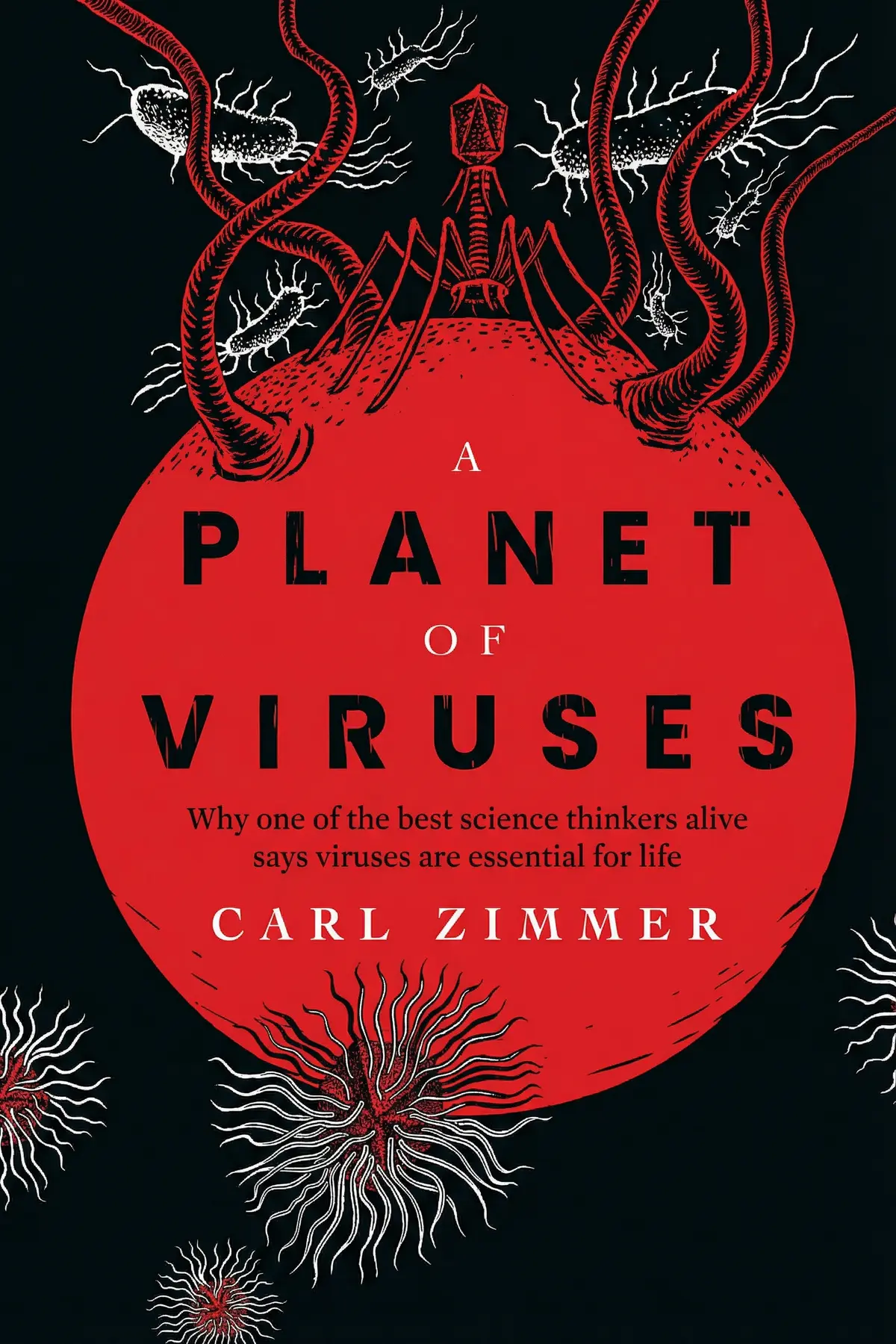
Carl Zimmer
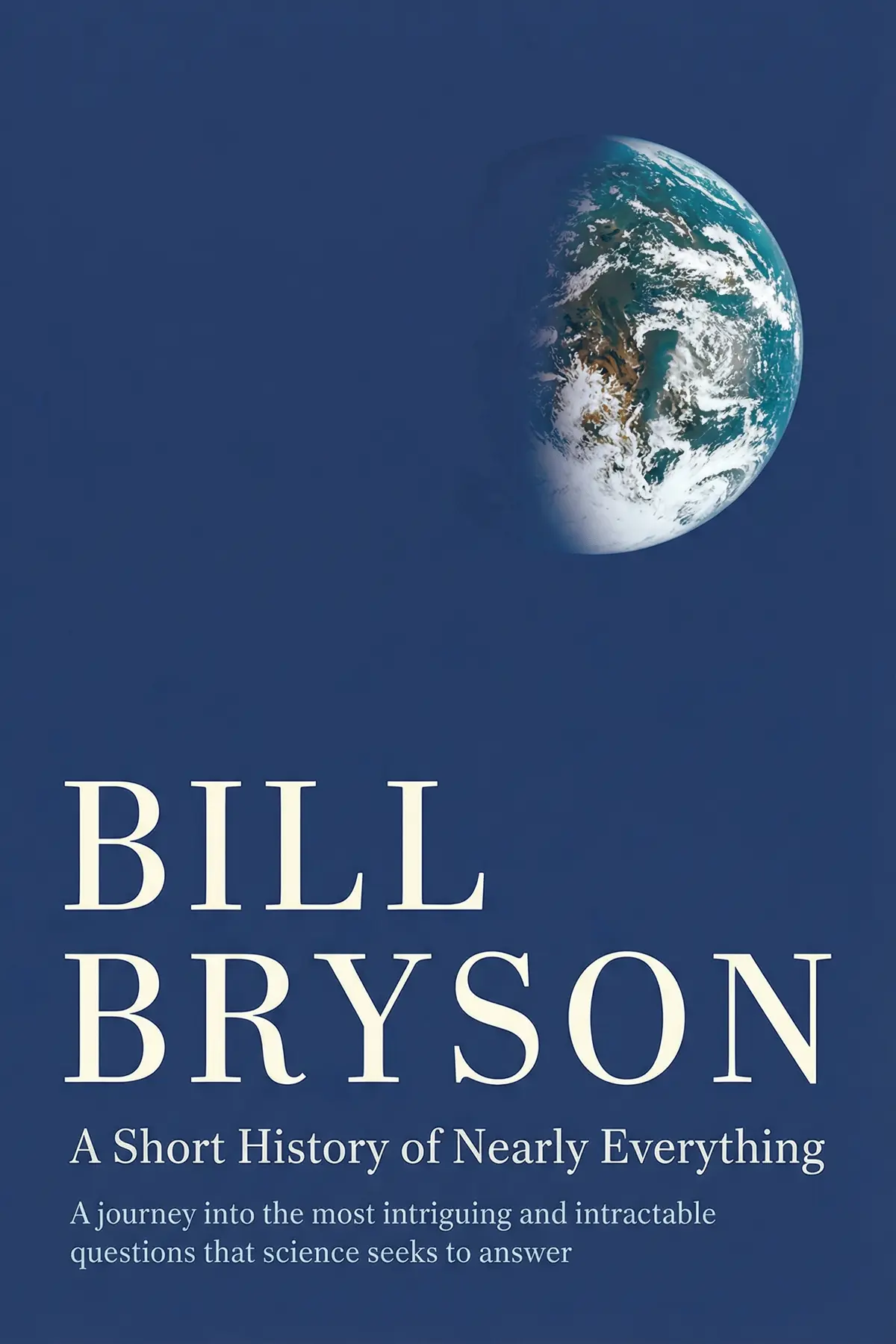
Bill Bryson
AUDIO SUMMARY AVAILABLE
Get the key ideas from The Grand Design by Stephen Hawking, plus 5,000+ more titles in English and Thai.







