

26 min 55 sec
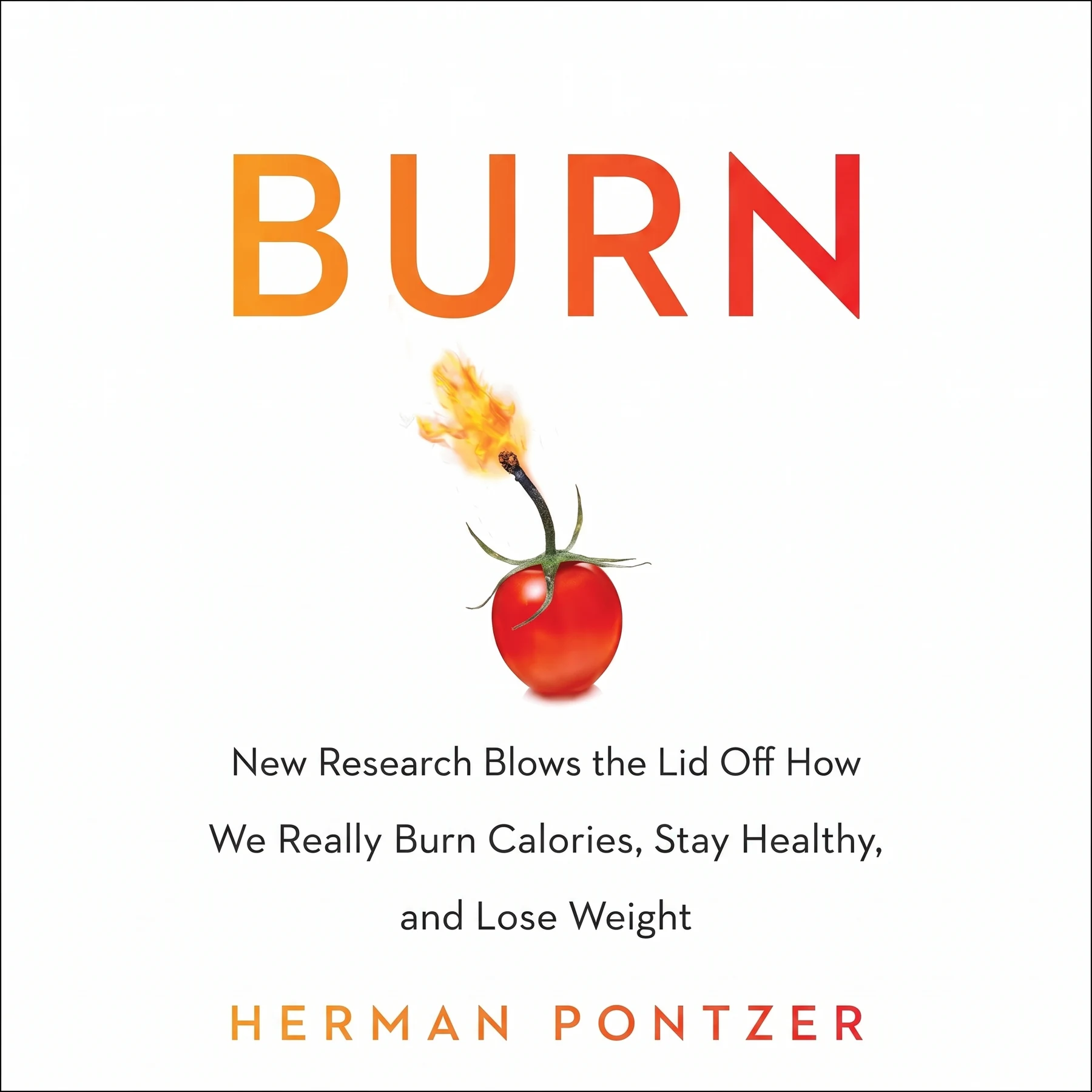
Burn: New Research Blows the Lid Off How We Really Burn Calories, Stay Healthy, and Lose Weight
Explore the surprising reality of human metabolism. Discover why physical activity doesn't necessarily lead to more calories burned and how our evolutionary history shaped our bodies to store and share energy.
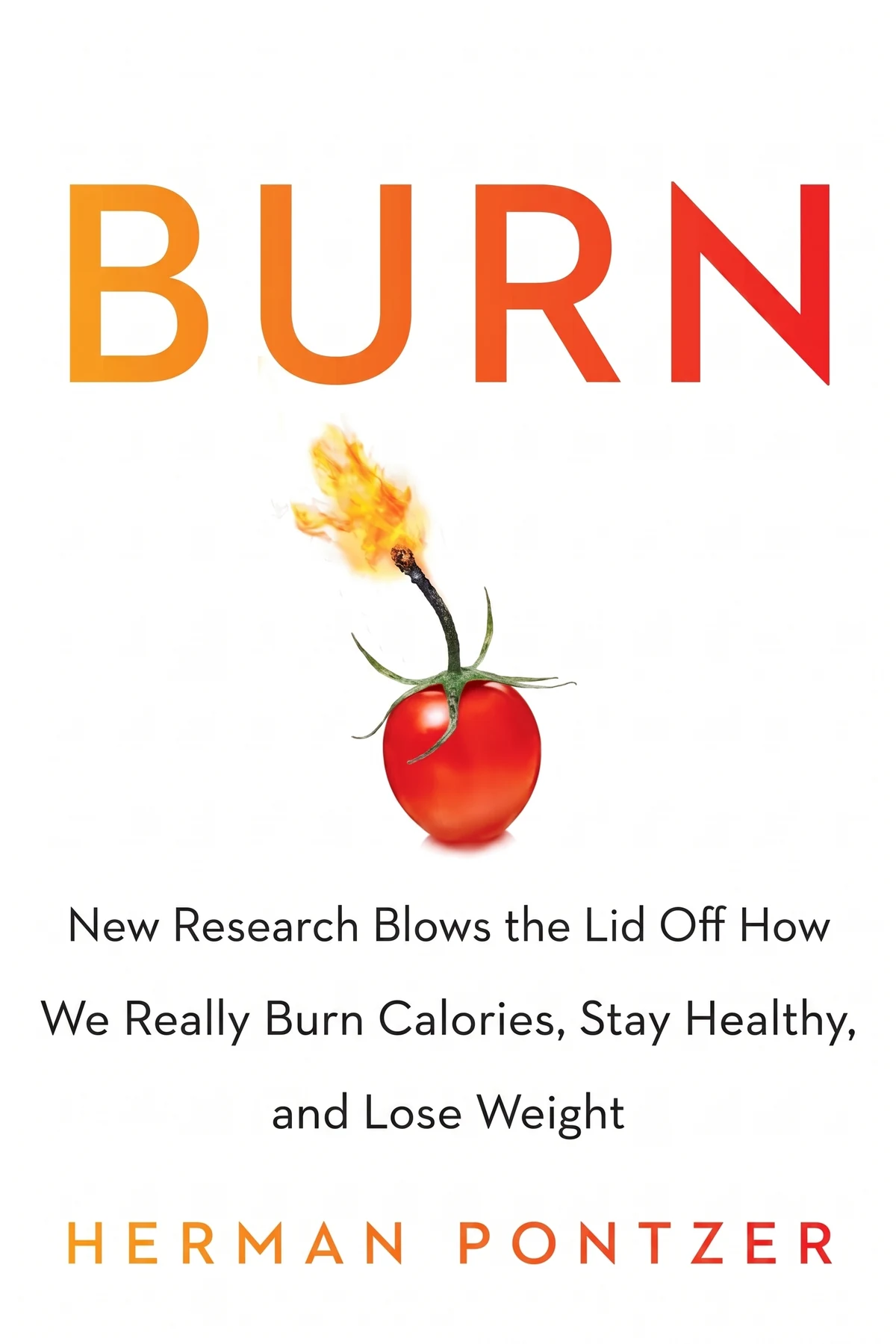
Table of Content
1. Introduction
1 min 56 sec
Every second of every day, a silent, invisible fire burns within you. It is the engine that keeps your heart beating, your thoughts racing, and your cells repairing themselves. We often speak about this engine—our metabolism—as if it’s a simple furnace that we can stoke by moving more or dampen by sitting still. We’ve been told that if we just hit the gym a little harder or take the stairs instead of the elevator, we can significantly increase the amount of energy our bodies consume. But what if that fundamental assumption is wrong? What if our bodies are much more sophisticated, and much more rigid, than we ever imagined?
In this exploration of the science of metabolism, we are going to pull back the curtain on how the human body truly manages its energy. We often view metabolism through the lens of modern weight-loss struggles, but to understand it, we actually have to look back millions of years. We have to look at the way our ancestors survived, the way our cells communicate, and the strange laws of physics that govern every living thing on Earth. This journey will take us from the laboratories of the nineteenth century to the sun-drenched savannas of Tanzania, where one of the last remaining hunter-gatherer tribes holds the key to a metabolic mystery.
Through the work of Herman Pontzer, we will see that metabolism is not just about weight—it is the currency of life itself. It is the way we transform the inanimate world into the animate, the way we fuel the most energy-hungry brains in the animal kingdom, and the reason why our species has been so remarkably successful. By the end of this journey, you’ll understand why you can’t simply outrun a bad diet, why sharing a meal was a revolutionary act in human history, and how you can work with your biology rather than against it to achieve lasting health. Let’s dive into the misunderstood science of how we burn.
2. The Biological Transformation of Matter
2 min 53 sec
Discover how your body acts as a biological machine, turning inanimate food into living tissue and energy through the intricate process of metabolism.
3. The Physics of the Human Engine
3 min 06 sec
Explore the fundamental laws of energy and work that govern your body, revealing why metabolism is essentially a measure of total biological activity.
4. Tracking the Invisible Trail of Calories
2 min 48 sec
Learn about the ingenious scientific methods used to measure energy expenditure in the real world, from metabolic chambers to the tracking of isotopes.
5. The Paradox of the Hunter-Gatherer
2 min 44 sec
Discover the shocking research involving the Hadza tribe that debunked the myth that an active lifestyle automatically leads to more calories burned.
6. The Constrained Energy Budget
2 min 58 sec
Explore the theory of constrained metabolism, which suggests the body reallocates energy from internal processes to fuel physical activity, keeping total burn constant.
7. The Evolutionary Cost of Being Human
2 min 51 sec
Analyze why humans require significantly more energy than other primates and how this metabolic ‘extravagance’ led to our unique traits, including big brains.
8. Sharing as a Metabolic Revolution
2 min 51 sec
Understand how the human practice of food sharing provided the safety net necessary for our species to evolve high-energy traits and complex societies.
9. The Simple Physics of Weight Loss
2 min 49 sec
Cut through the diet hype to understand the fundamental law of weight management: it all comes down to the balance of energy in versus energy out.
10. Conclusion
1 min 59 sec
As we conclude this journey into the hidden world of metabolism, the picture of the human body that emerges is one of incredible complexity and ancient wisdom. We’ve seen that our metabolism isn’t a simple, fluctuating number that we can easily manipulate with a few extra miles on the treadmill. Instead, it is a deeply rooted, evolutionarily constrained system designed to keep us alive in a world where food was once a hard-won prize. The ‘Hadza Paradox’ showed us that whether we are hunting in the savanna or typing in an office, our bodies are working within a surprisingly consistent energy budget.
This realization brings both a challenge and a sense of freedom. The challenge is the recognition that we cannot ‘fix’ our weight issues through exercise alone. We must confront the reality of our diet and the way modern food environments trick our ancient biology into overconsuming. Sloth isn’t the enemy; the mismatch between our high-energy evolutionary history and our current world of caloric abundance is the true culprit. However, the freedom lies in knowing that we don’t have to spend hours in the gym to ‘earn’ the right to eat. Exercise can be reclaimed as a joyful pursuit of health, strength, and longevity, rather than a grueling chore for weight management.
Ultimately, the science of metabolism teaches us that energy is the currency of existence. We are the descendants of the risk-takers and the sharers, the high-octane apes who used cooperation to fuel the most magnificent brains on the planet. By understanding the rules of our internal engine, we can make better choices for our future. We can focus on high-quality foods that respect our body’s signals, and we can keep our bodies moving to ensure our internal ‘housekeeping’ stays in peak condition. The fire within you has been burning for millions of years; the key to a healthy life is simply learning how to tend the flame.
About this book
What is this book about?
Burn offers a revolutionary look at the science of metabolism, challenging the long-held belief that exercise is the primary driver of calorie expenditure. Through groundbreaking research—including studies of the Hadza hunter-gatherers in Tanzania—Herman Pontzer reveals that the human body operates on a constrained energy budget. This book explains that while our ancestors evolved to be highly active, our total daily energy burn has remained remarkably consistent over millennia. By understanding how our bodies prioritize energy for survival, reproduction, and brain function, we gain a clearer picture of why weight loss is primarily a matter of diet rather than exercise. The promise of this work is a more effective, science-based approach to health, longevity, and weight management.
Book Information
About the Author
Herman Pontzer
Herman Pontzer is an Associate Professor of Evolutionary Anthropology at Duke University and Associate Research Professor of Global Health at the Duke Global Health Institute. His research focuses on how the human body evolved and how our metabolic health is influenced by our environment and lifestyle.
Ratings & Reviews
Ratings at a glance
What people think
Listeners find the writing accessible and clear, offering excellent scientific analysis and a stimulating look at how humans consume energy. They value the health-related guidance, with one listener highlighting the way it reconciles exercise with conscious eating, and consider it both engaging and humorous. Although the work offers a final word on weight management and well-being, some listeners feel the specific tips for dieting and shedding pounds lack practical utility.
Top reviews
Kae
As a self-proclaimed fitness junkie who spent years obsessed with calorie-tracking apps, reading this was a total ego-check. Pontzer basically shreds the 'exercise to lose weight' mantra that we’ve been spoon-fed since childhood. It turns out our bodies are way more efficient—or perhaps stubborn—than we realized, keeping our daily burn in a very tight range regardless of how many miles we run. The stories about the Hadza tribe in Tanzania were the highlight for me because they completely upend our assumptions about 'primitive' versus 'modern' metabolisms. I will admit, some of the scientific deep dives into doubly labeled water felt a bit like a college lecture I didn't sign up for. Also, he really loves mentioning his Harvard days, which got a bit old after the third time. Still, the insight that weight is managed in the kitchen while health is built in the gym is a perspective shift I desperately needed. It's a must-read if you're tired of the endless cycle of fad diets and gym burnout.
Show moreVilaiporn
Finally, someone provides a data-driven explanation for why dieting is so hard without relying on the typical 'willpower' tropes. Pontzer’s research on how our bodies compensate for exercise by dialing down other systems like the immune and reproductive functions is eye-opening. It explains so much about why we feel fatigued or get sick when we overtrain while cutting calories. I really appreciated how he dismantled the Paleo myth, showing that humans are actually evolved to be flexible eaters who thrive on carbohydrates. The prose is conversational and moves quickly, though some of the biochemical diagrams required a second look to fully grasp. My only real gripe is that the advice for actual weight loss is pretty sparse: just eat less. It’s a bit of a letdown after such a complex buildup, but I suppose the truth is often simple. This book changed how I view my daily walks and my dinner plate forever.
Show moreFon
What a refreshing take on the thermodynamics of the human body. Pontzer manages to bridge the gap between complex evolutionary anthropology and practical health implications with remarkable ease. The book’s greatest strength lies in its debunking of the 'more is more' approach to physical activity and weight management. By explaining the constrained energy model, he provides a scientific framework for understanding why weight loss plateaus are so common and inevitable. To be fair, the author’s tendency to digress into his personal field adventures in Africa can slow the pacing, but they do provide necessary context for how the data was gathered. I found his critique of the diet industry to be particularly sharp and well-founded in biological reality. Even though he can be a bit dismissive of opposing views, the sheer volume of data he presents makes his arguments very difficult to ignore. Highly recommended for anyone who values evidence over influencers.
Show moreTim
The core revelation that our bodies are hard-wired to maintain a specific energy budget is the most important health concept I’ve learned in a decade. Pontzer writes with a clarity that makes high-level biology feel accessible, even if he does take a few too many victory laps around his own accomplishments. I especially appreciated the nuanced discussion on how modern ultra-processed foods hijack our natural satiety signals. It’s not just that we are lazy; it’s that our environment is diametrically opposed to our evolutionary biology. While the digressions into climate change at the end felt a bit tacked on, they didn't ruin the overall experience for me. The book provides a much-needed reality check for anyone who thinks they can out-train a poor diet. It’s an essential read for anyone interested in the intersection of anthropology and modern health.
Show moreHenry
Ever wonder why those grueling hours on the elliptical never seem to move the scale? Pontzer answers this with a fascinating look at the 'constrained energy expenditure' model, proving that more activity doesn't equal more calories burned. The book is heavily grounded in his field research with apes and hunter-gatherer societies, offering a cross-species perspective that is often missing from nutrition books. To be fair, the middle section gets bogged down in the minutiae of cellular biology and his specific lab methodologies. While I appreciate the transparency of the research, it might be a bit dense for the average reader just looking for a diet plan. It’s important to note that this isn't really a 'how-to' guide, as the author focuses more on the 'why' than providing specific meal plans. The writing is generally accessible, though the humor can feel a bit forced at times. If you want a deep, scientific understanding of how your body uses fuel, this is arguably the most definitive resource available today.
Show moreApichat
Picked this up after hearing Pontzer on a podcast and it didn't disappoint. The idea that we can't just 'run off' a bad diet is depressing but also weirdly liberating. It means I can stop killing myself in HIIT classes and just focus on moving for the health of it. The author does get a bit technical with the 'doubly labeled water' stuff, but he explains it well enough for a non-scientist to follow. I did find the parts about our primate cousins and their energy use surprisingly engaging. Not every joke landed, and yeah, we get it, you went to Harvard, but the information is too important to ignore. If you’ve ever felt like your metabolism was 'broken,' read this and learn why your body is actually doing exactly what it was evolved to do. It’s a solid addition to the library of anyone interested in human biology.
Show moreAey
Look, the science here is top-notch, even if the author’s personality is a bit much to handle over 300 pages. I loved the chapters exploring how our bodies allocate energy to things we never think about, like cell repair and the nervous system. It makes you realize that we are more than just engines burning fuel; we are complex biological machines with very strict budgets. The truth is, I could have done without the long-winded stories about his grad school days and his specific opinions on urban planning. It felt like the book needed a more aggressive editor to keep him focused on the metabolism research. However, the core message about the 'activity paradox' is something every doctor and trainer should be aware of. It’s not a perfect book, but the central discoveries are too significant to pass up. Just be prepared to skim some of the more self-indulgent memoir bits.
Show moreBank
After spending years following every low-carb influencer on Instagram, this book felt like a bucket of cold water to the face. Pontzer doesn't care about your feelings on keto or fasting; he cares about what the isotopes in urine samples tell us about human evolution. Seeing the proof that humans have always relied on tubers and honey really put the 'Paleo' lifestyle into a new, more realistic perspective. I found the section on how elite athletes reach a metabolic ceiling to be absolutely mind-blowing. It really challenges the idea that human potential is limitless. My only real frustration was the lack of a clear 'what now?' section, but maybe that’s the point. Science gives us the facts, and we have to figure out the lifestyle ourselves. It’s an empowering read that strips away the mystery of why our bodies hold onto weight so tightly.
Show moreTak
The central thesis of this book regarding metabolic limits is groundbreaking, but the delivery left me feeling frustrated. On one hand, the evidence showing that the Hadza burn roughly the same amount of energy as sedentary Westerners is a total game-changer for evolutionary biology. On the other hand, Pontzer’s writing style is frequently distracted by personal anecdotes that feel more like a travelogue than a science book. Frankly, the constant reminders about his academic pedigree at Harvard and Penn State felt unnecessary and smug. I also found the final chapters, where he pivots into sociology and climate change, to be a bridge too far. He’s an expert in metabolism, not global policy, and those sections felt poorly researched compared to the rigorous biological data presented earlier. It’s worth reading for the core scientific insights, but you’ll have to trudge through a lot of fluff and self-congratulation to get to the good stuff.
Show moreSombat
While the data regarding the Hadza tribe is initially interesting, the book quickly devolves into a repetitive and strangely condescending narrative. Pontzer seems more interested in mocking other researchers and touting his own brilliance than providing a balanced view of human health. He dismisses years of research on macronutrient composition with a hand-wave, insisting that 'a calorie is a calorie' despite evidence of individual metabolic variation. The tone is incredibly smarmy, and the frequent 'dad jokes' peppered throughout the text made it difficult to take the science seriously. Not gonna lie, I almost DNF’d when he started lecturing the reader on climate change and societal ills in the final third. It felt like he used a science book as a Trojan horse for his personal political opinions. If you want to learn about metabolism, find a textbook or a peer-reviewed paper; this memoir-masquerading-as-science is just too bloated with ego to be truly useful.
Show moreReaders also enjoyed
A Life Decoded: My Genome: My Life
J. Craig Venter
A Planet of Viruses
Carl Zimmer
A Short History of Nearly Everything
Bill Bryson
A Thousand Brains: A New Theory of Intelligence
Jeff Hawkins
AUDIO SUMMARY AVAILABLE
Listen to Burn in 15 minutes
Get the key ideas from Burn by Herman Pontzer, plus 5,000+ more titles in English and Thai.
- 5,000+ titles
- Listen as much as you want
- 7-day free trial
- Cancel anytime







