

17 min 51 sec
Dancing in the Streets: A History of Collective Joy
A deep dive into the history of communal celebration, exploring how the human drive for collective joy has been suppressed by institutions and why it remains vital for our social well-being.
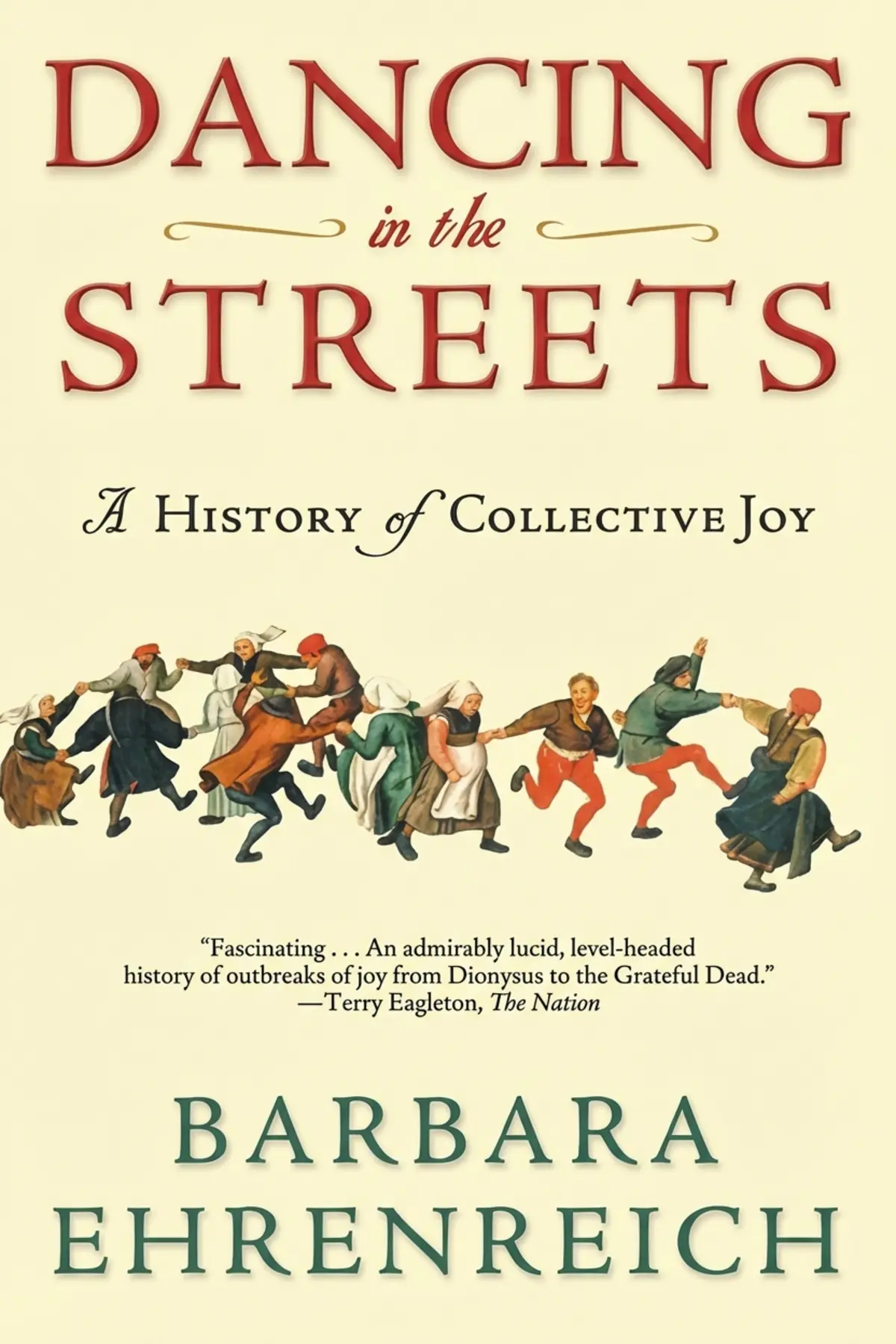
Table of Content
1. Introduction
1 min 48 sec
Imagine a stadium filled with thousands of people, all moving to the same beat, or a village square erupting in spontaneous dance during a local holiday. There is a specific kind of electricity in the air during these moments—a sense that the boundaries between individuals are dissolving into something larger. This feeling has a name: collective effervescence. It is the powerful, shared energy that arises when we come together in ritual and rhythm. Yet, if you look at modern science or history books, you will find that this vital part of the human experience is strangely missing. We have thousands of studies on the depths of human depression, but only a tiny fraction of that research looks at the heights of communal joy.
In this exploration of Dancing in the Streets, we are going to pull back the curtain on why we celebrate. We often treat festivals, parades, and dance parties as mere entertainment—frivolous extras in a serious world. But as we will see, these activities are actually written into our biological code. They have been the glue holding societies together for millennia. We will trace the path of this joy from the earliest humans who danced for survival to the ancient Greeks who sought the divine in a frenzy.
We will also look at the darker side of this history—the long, concerted effort by religious and political authorities to shut down the party. Why were world leaders and church elders so afraid of people dancing together? And what happened to our collective mental health when the music stopped? From the rowdy carnivals of the Middle Ages to the rock and roll rebellion of the twentieth century, this is a story about the struggle between the human need to belong and the institutional desire to control. By the end, you will see that collective joy isn’t just a luxury; it is a fundamental part of what it means to be human.
2. The Evolutionary Roots of Shared Movement
2 min 42 sec
Could rhythmic dancing be the secret weapon that allowed early humans to thrive? Discover how moving in unison helped our ancestors build the social bonds necessary for survival.
3. The Great Christian Shift
2 min 18 sec
Early Christianity was far more energetic than you might expect, but a shift in leadership led to a long-standing suspicion of communal dance and ecstatic rituals.
4. Carnival and the Containment of Joy
2 min 26 sec
When the church tried to ban joy, it only made the outbursts more intense. Discover the bizarre phenomenon of dance manias and the rise of the Carnival compromise.
5. The Melancholy of the Modern Self
2 min 27 sec
As communal celebrations faded, a new epidemic of sadness emerged. Learn how the shift toward individualism and industry changed our mental landscape.
6. The Perversion of the Spectacle
2 min 12 sec
Fascist regimes in the twentieth century tried to hijack the power of collective joy. See how they used the aesthetics of celebration to strip away individual freedom.
7. The Rock and Roll Rebellion
2 min 14 sec
In the 1950s, a new rhythm erupted that changed everything. Discover how rock and roll acted as a modern ‘dance mania,’ returning us to our rhythmic roots.
8. Conclusion
1 min 44 sec
The history of human celebration is a story of a long-standing tension between the heart and the hierarchy. As we have seen, the urge to move together in time, to share in a feast, and to lose ourselves in a crowd is not a frivolous distraction. It is an evolutionary legacy that once allowed our ancestors to survive and thrive. It is a biological necessity that keeps the shadows of isolation and melancholy at bay. From the prehistoric caves to the neon lights of a modern festival, the throughline remains the same: we are creatures who crave ‘collective effervescence.’
Yet, we live in a world that has largely forgotten how to celebrate. We have traded the messy, inclusive joy of the village square for the curated, expensive experiences of the stadium or the digital screen. We have been taught that self-control is more important than self-loss, and that our value is found in our productivity rather than our participation in the community. But as the history of the dance manias and the rock and roll rebellion shows us, this need for joy cannot be suppressed forever. It will always find a way to the surface.
So, what can we take away from this? Perhaps it is a permission to stop seeing communal joy as a waste of time. Whether it’s joining a local group, dancing at a wedding, or simply finding a way to move in rhythm with others, these moments are essential for our well-being. They remind us that we are part of something larger than our individual selves. In an age of increasing isolation, the most radical and healing thing we can do is to step out of our silos and back into the circle. Collective joy isn’t just about having a good time; it is about reclaiming our humanity and the vital, rhythmic bonds that connect us all.
About this book
What is this book about?
Have you ever wondered why the urge to move in rhythm with a crowd feels so powerful? This exploration of human history investigates the fundamental need for collective joy—a phenomenon where groups bond through shared dance, music, and festivities. It traces the journey of this communal impulse from prehistoric survival strategies and ancient ecstatic rituals to the controlled spectacles of modern states. The book reveals how institutional forces, from the early Christian Church to the industrial-age elite, have historically viewed these outbursts of shared joy as threats to social order. By suppressing carnivals and festivals, society may have inadvertently contributed to a rise in individual isolation and melancholy. Ultimately, the narrative highlights how the human spirit continues to seek out these experiences, whether through the frenzy of rock and roll or the resilience of cultural traditions, proving that our biological hardwiring for connection is impossible to fully erase.
Book Information
About the Author
Barbara Ehrenreich
Barbara Ehrenreich was an influential American author, journalist, and social critic, best known for her investigative work on social issues and economic inequality. Her landmark book, Nickel and Dimed, highlighted the struggles of low-wage workers and became a pivotal text in discussions on labor rights. Throughout her career, Ehrenreich authored over 20 books and numerous essays, consistently challenging societal norms and advocating for social justice.
Ratings & Reviews
Ratings at a glance
What people think
Listeners find the book both illuminating and a pleasure to read. They value the exploration of social history, with one listener noting that festivals provide an antidote to stifling propriety, while another points out their role in reinforcing group identity and togetherness.
Top reviews
Pan
As someone who has always felt a spark of magic in a crowded concert or a roaring stadium, I found this book absolutely electrifying. It provides a fascinating social history of how these moments of togetherness serve as an antidote to the stifling propriety of our daily lives. Ehrenreich is brilliant at showing how elites have always feared the 'loss of self' that happens in a dancing crowd. Her writing on the transition from pagan rituals to early Christian chants is eye-opening. The truth is, we are biologically wired for this kind of collective ecstasy. Reading this felt like finally understanding a part of my own nature that society usually tells me to suppress. A truly vital piece of cultural theory.
Show moreNatnicha
The chapter on the transition from pagan ecstasy to the 'diminished' rituals of modern Christianity is worth the price of admission alone. Ehrenreich has a gift for synthesizing vast amounts of anthropological data into a narrative that feels urgent and relevant. She correctly identifies that the crackdown on street dancing wasn't just about religion, but about social control and the needs of industrial capitalism. We’ve been trained to be quiet, productive individuals, and we’ve lost the ability to dissolve into a group. This book is a powerful reminder that our ancestors knew something about mental health that we’ve completely forgotten. It’s a history book that functions as a wake-up call. I couldn't put it down.
Show moreUbolwan
Few writers tackle the intersection of sociology and human emotion as fearlessly as Ehrenreich. This book changed the way I look at everything from church services to football games. She convincingly argues that what we call 'depression' today might often be a reaction to the absence of the communal festivities that once defined human life. The way she links the rise of the 'individual' to a sense of isolation and burden is brilliant. It’s not just a history; it’s a critique of how we live now. Though it's filled with academic speculation, the emotional core of the book is undeniable. It’s a beautiful, serious, and deeply necessary study of the human spirit.
Show morePrayoon
Ever wonder why modern life feels so desperately lonely even when we’re surrounded by people? Ehrenreich explores this by tracing the systematic destruction of communal festivities. To be fair, I expected something more lighthearted based on the title, but this is a rigorous social history. She argues that the shift from Dionysian ecstasy to the stiff propriety of the industrial age has left us hollow. While the middle chapters on European history get a bit dense, the connections she draws between the loss of dance and our current epidemic of depression are profound. It’s a compelling look at how we’ve traded collective joy for solitary consumption. Definitely a book that makes you want to go out and join a parade.
Show moreCherry
Picked this up after hearing it mentioned in a podcast and I’m glad I did. Look, the writing style is a bit more formal than her other works, but the insights are top-notch. I loved the chapters comparing modern rock stars to Dionysus and the analysis of sports fans as the last remnants of festive culture. She makes a great case that our lack of 'group dancing' is a genuine public health crisis. There are some minor criticisms to be made about how she repeats her thesis about 'ecstatic rituals' in every single chapter, but the core message is so important that I didn't mind much. It’s a smart, provocative look at the human need for connection.
Show moreWissanu
In my experience, books about social history can be hit or miss, but Ehrenreich’s 'Dancing in the Streets' is definitely a hit. She does an incredible job of showing how festivities provide a necessary break from the drudgery of work and hierarchy. I particularly enjoyed her take on how the Nazis co-opted the desire for collective ritual to create something hollow and dangerous. It's a nuanced look at crowd psychology that moves beyond the typical 'mobs are bad' narrative. My only gripe is that it can be a bit repetitive in the middle sections. However, the overarching argument that we need more 'mind-preserving' techniques of ecstasy is one I’ll be thinking about for a long time.
Show moreAhmed
Finally got around to reading this and I’m struck by how the 'History of Collective Joy' is actually a history of its destruction. The book is deeply insightful and covers a massive amount of ground, from prehistoric caves to rock concerts. Ehrenreich’s style here is more academic than Nickel and Dimed, which might put some people off, but the research is genuinely impressive. I appreciated the way she reframed 'melancholia' as a byproduct of losing our festivals. It makes so much sense. To be fair, some of the inferences from rock art felt a little speculative, but the overall thesis holds up. It’s a great source book for anyone interested in how we became so disconnected from one another.
Show moreSatit
Not what I expected, though it certainly wasn't bad. The book is heavily focused on Western history, which feels a bit narrow for a topic that should be global. I wanted more glimpses into different expressions of collective joy across cultures outside of Europe and the Mediterranean. Instead, it’s mostly a deep dive into how the Church and capitalism killed the carnival. While the research is clearly thorough and the bibliography is massive, the tone is quite somber for a book about 'joy.' It’s more of a history of what we’ve lost rather than a celebration of what we have. Interesting for history buffs, but perhaps a bit too academic for the average reader.
Show moreSomrutai
Gotta say, the first hundred pages were great, but it really started to drag after that. Ehrenreich makes her central point—that humans need collective joy and that it’s been suppressed by authorities—within the first twenty pages. Then she just repeats it through different historical lenses over and over. I found the section on melancholy in the 17th century interesting, but it felt tangentially related at best. It’s well-researched, sure, but it feels like it’s aimed more at a sociology professor than a casual reader. I was looking for something catchy and readable, like her investigative work, but this felt much more like a heavy reference text. It's okay, just be prepared for a dense read.
Show moreIsabella
This book was a major slog compared to the punchy, personal writing in Nickel and Dimed. Frankly, it felt more like an academic thesis than a trade book. Ehrenreich hammers her points home with such excessive repetition that I found myself skimming by the halfway mark. She spends way too much time on prehistoric rock art and Dionysian cults without offering any real-world advice on finding joy today. I was hoping for a celebratory read but instead got fifty pages of bibliography and a very dry lecture on the rise of Protestantism. If you’re looking for the vibrant Ehrenreich of her investigative journalism days, you won't find her here. It’s just too academic for bedside reading.
Show moreReaders also enjoyed
Alexander the Great
Philip Freeman

A History of Iran: Empire of the Mind
Michael Axworthy
A History of the World in 6 Glasses
Tom Standage

A Long Way Gone: Memoirs of a Boy Soldier
Ishmael Beah

A Splendid Exchange: How Trade Shaped the World
William J. Bernstein
AUDIO SUMMARY AVAILABLE
Listen to Dancing in the Streets in 15 minutes
Get the key ideas from Dancing in the Streets by Barbara Ehrenreich, plus 5,000+ more titles in English and Thai.
- 5,000+ titles
- Listen as much as you want
- 7-day free trial
- Cancel anytime







