
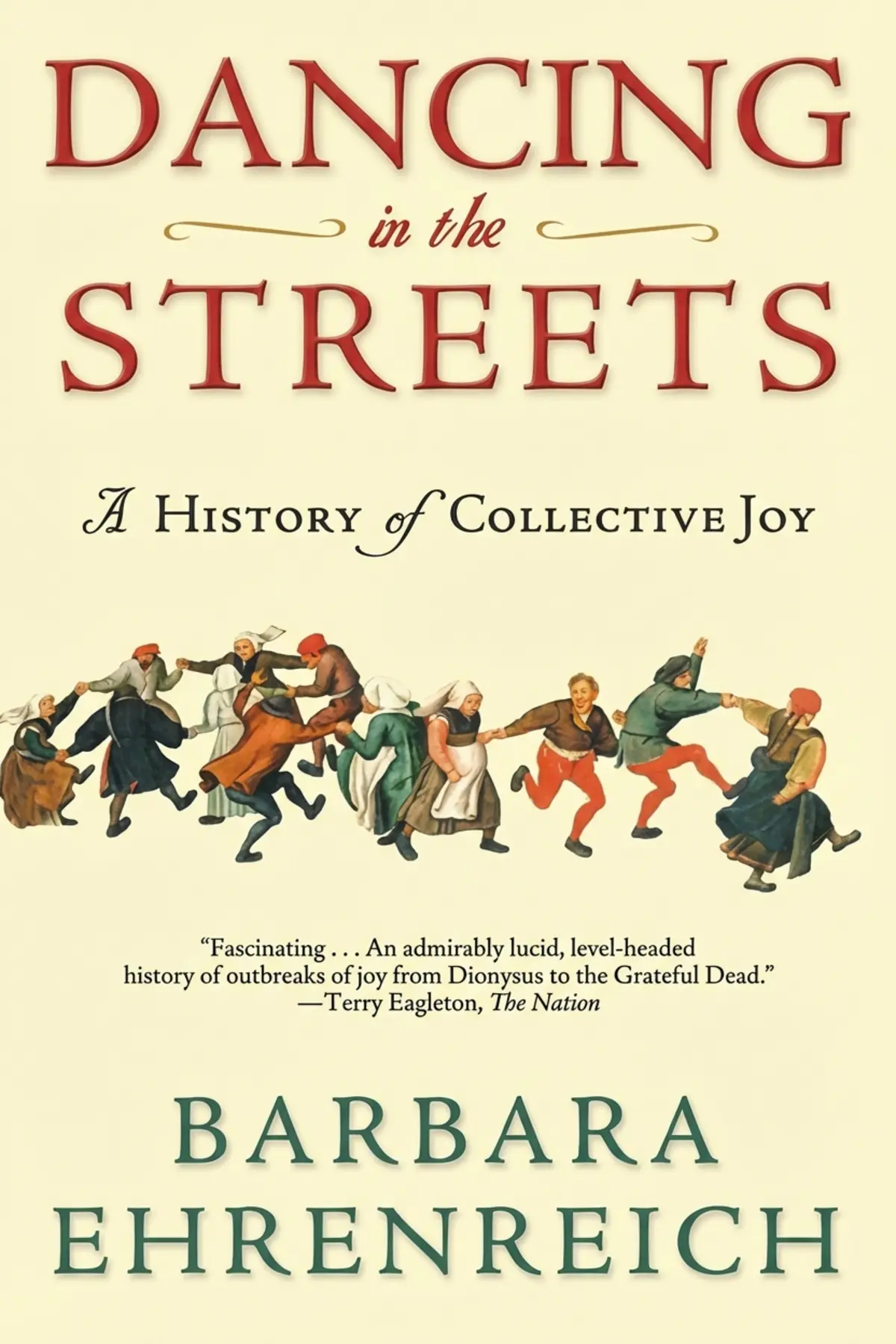
Dancing in the Streets: A History of Collective Joy
Barbara Ehrenreich
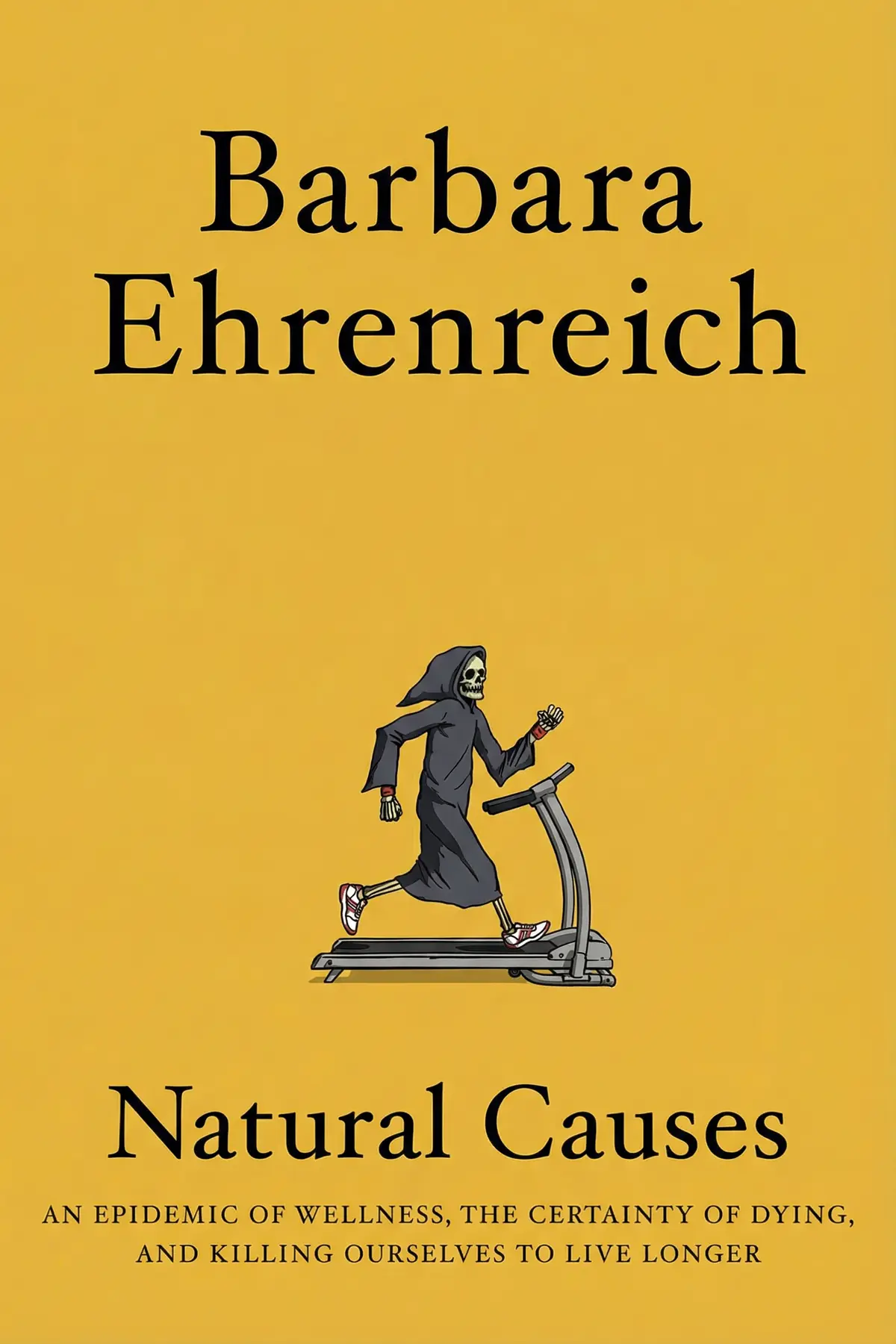
Natural Causes examines the modern obsession with longevity and health. Barbara Ehrenreich challenges the invasive nature of medical screenings and the fitness industry, urging us to prioritize quality of life over the futile quest for eternal youth.
1 min 45 sec
We live in an era that treats the human body like a high-performance machine that requires constant maintenance. From the moment we wake up, we are bombarded with a checklist of responsibilities. There are the basics, like managing our homes and our careers, but there is also the increasingly heavy burden of health management. We are told to track our steps, monitor our calories, and, perhaps most stressfully, schedule a never-ending cycle of medical examinations. We’ve been conditioned to believe that if we just try hard enough, and if we listen to every piece of medical advice, we can somehow outrun the passage of time.
But what if this frantic pursuit of longevity is actually costing us more than it’s giving back? What if the very systems meant to protect our health are actually profiting from our fear of mortality? These are the central questions explored in Barbara Ehrenreich’s thought-provoking work. She invites us to step back and look at the cultural obsession with extending life at all costs. Through her lens, we see a world where getting older has been rebranded as something we should resist or even be ashamed of.
The core message here is a radical one: instead of spending our final decades in waiting rooms and on treadmills, we might find more value in accepting the natural course of life. This isn’t a call to neglect oneself, but rather a suggestion to shift our focus from quantity to quality. By the end of this journey, you’ll understand the hidden motives behind the health-care industry, the psychological traps of the fitness world, and how to embrace the profound freedom that comes with growing older. It’s time to look past the hype and consider what it really means to live well until the very end.
2 min 07 sec
Why do doctors continue to push for invasive screenings even for the very old? Discover the economic forces that keep patients in the exam room long after the benefits have faded.
2 min 03 sec
Medical procedures aren’t always about health; sometimes they are about maintaining authority. Explore how rituals in the hospital can strip away patient autonomy.
1 min 56 sec
Billions of dollars are spent on physical exams and screenings every year, but does this actually make us live longer? The data might surprise you.
1 min 53 sec
Is your gym membership really about your heart health, or is it a status symbol in a competitive world? We look at the cultural shift toward the ‘body as a project.’
1 min 44 sec
As our bodies are subjected to more screenings, our minds are becoming more fragmented. See how technology is changing our ability to focus and face our mortality.
1 min 52 sec
What if the best part of life happens when we stop trying to live forever? Reclaim the joy of aging and the freedom of authenticity.
1 min 36 sec
As we wrap up our exploration of Barbara Ehrenreich’s insights, the throughline becomes clear: our current approach to health and aging is often driven more by cultural anxiety and industrial profit than by a genuine desire for well-being. We have been led to believe that we must constantly monitor, test, and optimize our bodies, turning the natural process of living into an arduous, lifelong project. But the data shows that many of these interventions offer diminishing returns, and the psychological cost of living in a state of perpetual medical surveillance is high.
The real takeaway here is a call for autonomy. It is about recognizing that your life belongs to you, not to the medical establishment or the fitness industry. You have the right to decide when enough is enough—to choose a walk in the park over a grueling session at the gym, or to forgo a traumatic screening in favor of a peaceful afternoon with your family. By shifting our perspective from the desperate pursuit of quantity to the conscious cultivation of quality, we can reclaim our final decades.
Ultimately, accepting our mortality isn’t an act of defeat; it is an act of liberation. It allows us to stop fighting an unwinnable war against time and start focusing on the beauty of the present moment. So, take a breath, look past the latest health headlines, and ask yourself what a good life looks like for you. The answer might not be found in a doctor’s office or a gym, but in the simple, unadorned joy of being alive, right here and right now.
In Natural Causes, Barbara Ehrenreich provides a provocative look at the ways we have medicalized and commodified the human body. As we age, society increasingly demands that we undergo constant surveillance in the form of screenings, tests, and rigid lifestyle regimens. Ehrenreich, drawing on her background in cellular immunology, questions whether these interventions actually lead to longer, happier lives or if they merely serve a multi-billion-dollar industry. The book serves as a critique of the 'successful aging' movement, which views the natural process of growing old as a failure of will. By exploring the history of medical rituals, the economic roots of the fitness craze, and the physiological realities of our cells, Ehrenreich offers a compelling argument for reclaiming our autonomy. This summary explores the promise of a life lived on one’s own terms, free from the anxiety of constant medical monitoring and the pressure to perpetually optimize our health. It’s an invitation to view death not as a defeat, but as a natural conclusion to a life well-spent.
Barbara Ehrenreich is a renowned author and social critic best known for the New York Times best-selling book Nickel and Dimed, an influential exposé of low-wage labor in America. Beyond her work as a journalist and advocate for social justice, she holds a PhD in cellular immunology, a background that informs her unique perspective on the intersection of biology, medicine, and society.
Barbara Ehrenreich
Listeners find this work to be intellectually stimulating and well-documented, showing appreciation for the author's humor and writing style. Feedback regarding readability is split; while some find it an easy listen, others characterize the experience as boring. Similarly, views on the message and its emotional depth vary, with some finding the material valuable while others feel it represents a waste of their time and money.
To be fair, you have to be in a certain headspace to appreciate Ehrenreich’s grim but liberating outlook on mortality. This isn't your typical "live to 100" self-help fluff; it’s a rigorous, often biting analysis of why we spend so much energy trying to control the uncontrollable. Her background in cellular immunology shines in the later chapters. While some reviewers found the talk of macrophages "boring," I found it illuminating. It forces you to realize that our bodies aren't perfect machines. Our own cells can betray us regardless of how much kale we eat or how many spin classes we attend. This book helped me reframe my approach to healthcare from one of fear-based compliance to informed autonomy. It’s a brave, necessary challenge to the "wellness" industry that profits from our terror of the inevitable. Truly a five-star read for those who want the uncomfortable truth.
Show moreAfter hearing Ehrenreich discuss her PhD background, I was prepared for the deep dive into cellular biology. Honestly, it’s refreshing to see someone tackle the absurdity of our current wellness obsession from a place of scientific authority. The section on how macrophages—the very cells meant to protect us—can actually aid and abet cancer was a total eye-opener. It completely undermines the idea that we can control our health through sheer force of will or expensive "superfoods." The writing is dense in the middle, but the payoff is a much more realistic understanding of our own mortality. I can see why people who wanted a light self-help book would be disappointed. This is a challenging, cynical, and ultimately grounded look at the biology of dying. It isn't perfect, and the tangents about LSD felt a bit out of left field, but the core science is solid and well-researched.
Show morePicked this up because I’m tired of being told that my morning coffee or lack of kale is going to kill me by Tuesday. Ehrenreich delivers exactly the kind of snarky, well-researched takedown of the wellness industry that I was hoping for. The way she dismantles the cult of "successful aging" is both hilarious and deeply depressing. Just my two cents, but we’ve reached a point where we treat death as a personal failure rather than a biological certainty. I didn't even mind the deep dive into the behavior of cells, though it definitely slows the pace down. Her point that our own bodies are essentially "nasty little bastards" that don't always follow the rules of healthy living is a sobering thought. It’s a bit disorganized, shifting from medical exams to cellular biology to smoking, but the voice is authentic. Definitely worth reading if you're feeling medical fatigue.
Show moreNot what I expected, especially the ending where things take a sharp turn into psychedelic therapy and the ego. I actually found the discussion on LSD and the 'meaning of the soul' surprisingly poignant given the earlier cynicism. Ehrenreich argues that we need to 'get over ourselves,' which is a tough pill for the modern, self-obsessed wellness seeker to swallow. Not gonna lie, the middle section on macrophages was a bit of a dense hurdle to clear. If you can push through the heavy science, there is a lot of dark humor and wisdom here. She manages to take a swipe at everyone from Silicon Valley 'mindfulness' bros to the medical establishment. It is a messy book, but the core message about the certainty of death is one we all need to hear. It’s provocative, unsentimental, and deeply human. I'll be thinking about this one for a long time.
Show moreFrankly, the takedown of the 'mindfulness' craze was worth the price of admission alone. Ehrenreich is at her best when she is skewering the way Silicon Valley and celebrities like Gwyneth Paltrow have commodified our peace of mind. She exposes the 'wellness epidemic' for what it is: a way to keep us obsessed with our own bodies while ignoring the larger social context of health. In my experience, the book gets a little bogged down when it starts talking about the intricacies of the cell and the history of the stethoscope. Some of those segments felt like they belonged in a different manuscript entirely. But the overall message—that we are killing ourselves to live longer—is powerful and timely. It’s a messy, passionate, and occasionally boring book that nonetheless manages to say something profound about the human condition. I’m glad I took the time to finish it despite the tangents.
Show moreNatural Causes starts out with a provocative premise about the futility of over-medicalizing our later years. Ehrenreich is undeniably sharp, and her critique of "preventative" screenings like mammograms or bone density tests for those of us already "old enough to die" feels like a breath of fresh air. However, the book loses its momentum when it wanders into dense, academic territory regarding cellular biology. Look, I appreciate that she has a PhD, but the transition from a social critique of wellness culture to a long-winded lecture on macrophages felt jarring. One moment we are talking about the "rituals of humiliation" in a doctor's office, and the next we are buried in immunology. I found the first half far more engaging than the back half. It’s an important conversation to have, even if the execution feels a bit scattered in places. It left me with more questions than answers.
Show moreThe chapter on 'Rituals of Humiliation' really struck a chord with me because it highlights the power imbalance in modern doctor-patient relationships. Personally, I have felt that exact same sense of demeaning vulnerability during routine exams that Ehrenreich describes so vividly. Her writing is sharp and her wit is as dry as ever, which makes the first half of the book a delight to read. But then we hit the science. The transition into a long, incredibly detailed discussion of macrophages and cellular treason felt like I’d accidentally swapped books mid-stream. It’s hard to stay connected to her message when the narrative is this fragmented. I wanted more about the social context of death and less about the inner workings of cells. It’s an okay read for the social commentary, but it lacks the focus of her best work. It feels a bit rushed.
Show moreAs someone who has recently hit that age where every doctor visit feels like an interrogation, I found the first half of this book incredibly validating. Ehrenreich tackles the 'wellness epidemic' with a level of skepticism that is sorely needed in a world obsessed with eternal youth. She correctly identifies how we blame the elderly for their own decline, as if they could just 'mindfulness' their way out of biology. However, the book's structure is undeniably sloppy. It feels like three different essays roughly stitched together with some leftover thoughts on LSD and the soul. While her points about the medical industry are well-taken, the long digressions on immunology make it a chore to finish for a layperson. I’m glad I read it for the perspective, but I don’t think I’d recommend it to anyone looking for a cohesive argument. It’s more of a thought-starter than a finished product.
Show moreEver wonder why an author with such a brilliant track record would suddenly pivot into a confusing lecture on immunology? I’ve admired Ehrenreich for years, but this felt like a collection of disjointed essays rather than a cohesive book. The first few chapters offer a fascinating critique of the 'medicalization' of everyday life, but then the momentum drops off a cliff. We get stuck in a massive digression about cellular behavior that belongs in a textbook, not a popular non-fiction book about aging. Truth be told, I struggled to see how the 'meaning of the soul' tied back to her initial point about mammograms. It felt like she had a word count to hit and just threw in everything she’d been thinking about lately. It’s not a total loss because her prose is always elegant, but it is certainly a slog compared to her earlier work like Nickel and Dimed.
Show moreThis book was easily the most frustrating thing I’ve picked up all year. I expected an insightful look at how society handles the inevitable process of aging, but instead, I got a hostile rant that completely lacks objectivity. Ehrenreich blatantly ignores any scientific data that doesn't fit her "medicine is a scam" narrative. Telling people to skip life-saving screenings is dangerous and irresponsible, especially coming from someone with such a large platform. She writes well enough, but the bias is so thick that the text becomes nearly unreadable. The section on smoking being a "self-soothing" act for the working class felt like a bizarre defense of a known killer. If you want a well-researched book on mortality, look elsewhere. This is just a collection of personal grievances dressed up as a scientific exposé. It was a total waste of my time and money.
Show more
Daniel Goleman


Virginia Woolf
Tracy Rosenthal
Jessica Valenti

Johny Pitts
bell hooks
AUDIO SUMMARY AVAILABLE
Get the key ideas from Natural Causes by Barbara Ehrenreich, plus 5,000+ more titles in English and Thai.







