
19 min 03 sec
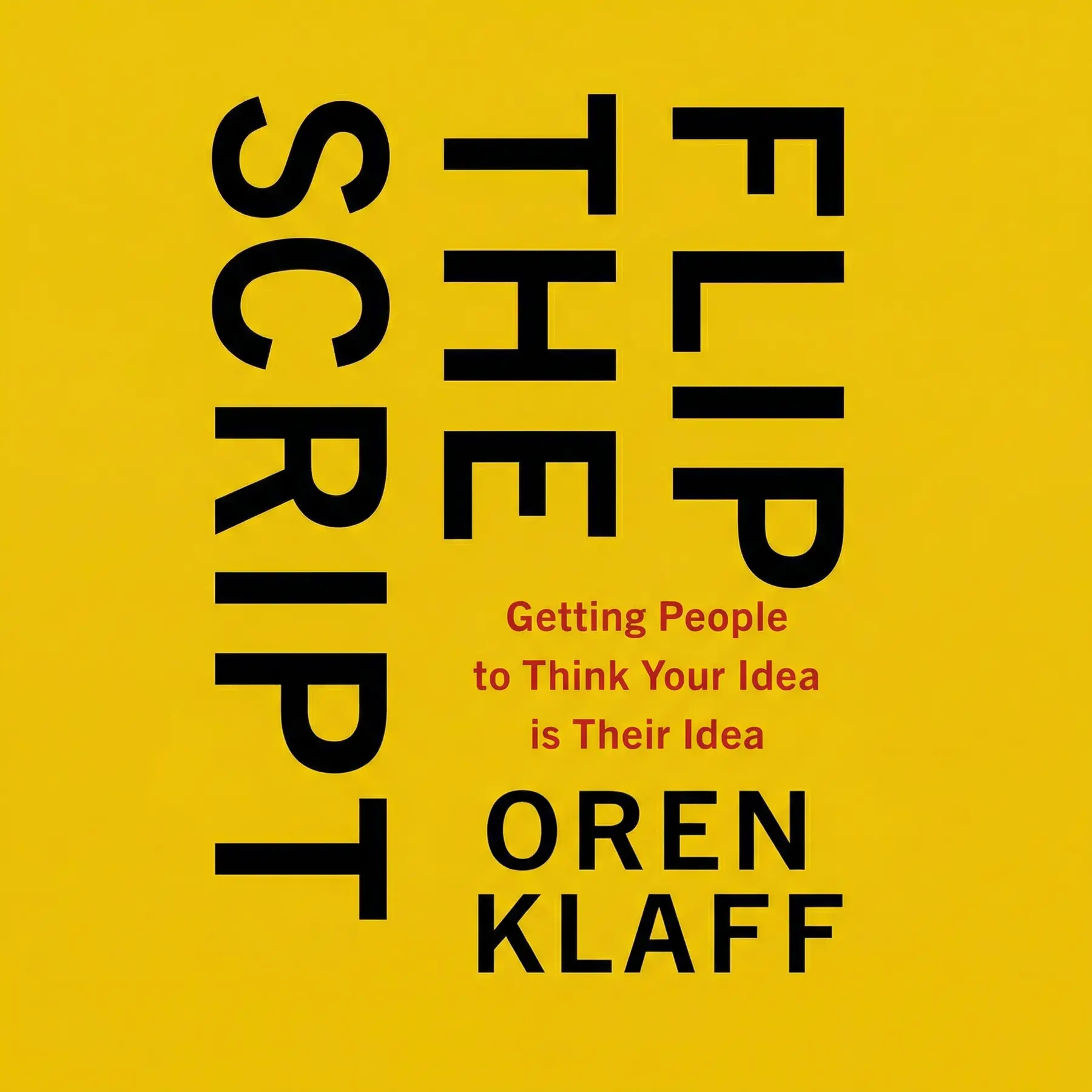
Flip The Script: Getting People to Think Your Idea Is Their Idea
By Oren Klaff
Discover how to master the art of persuasion by aligning status, establishing instant credibility, and framing revolutionary ideas as familiar essentials to convince anyone of your vision without using traditional high-pressure tactics.
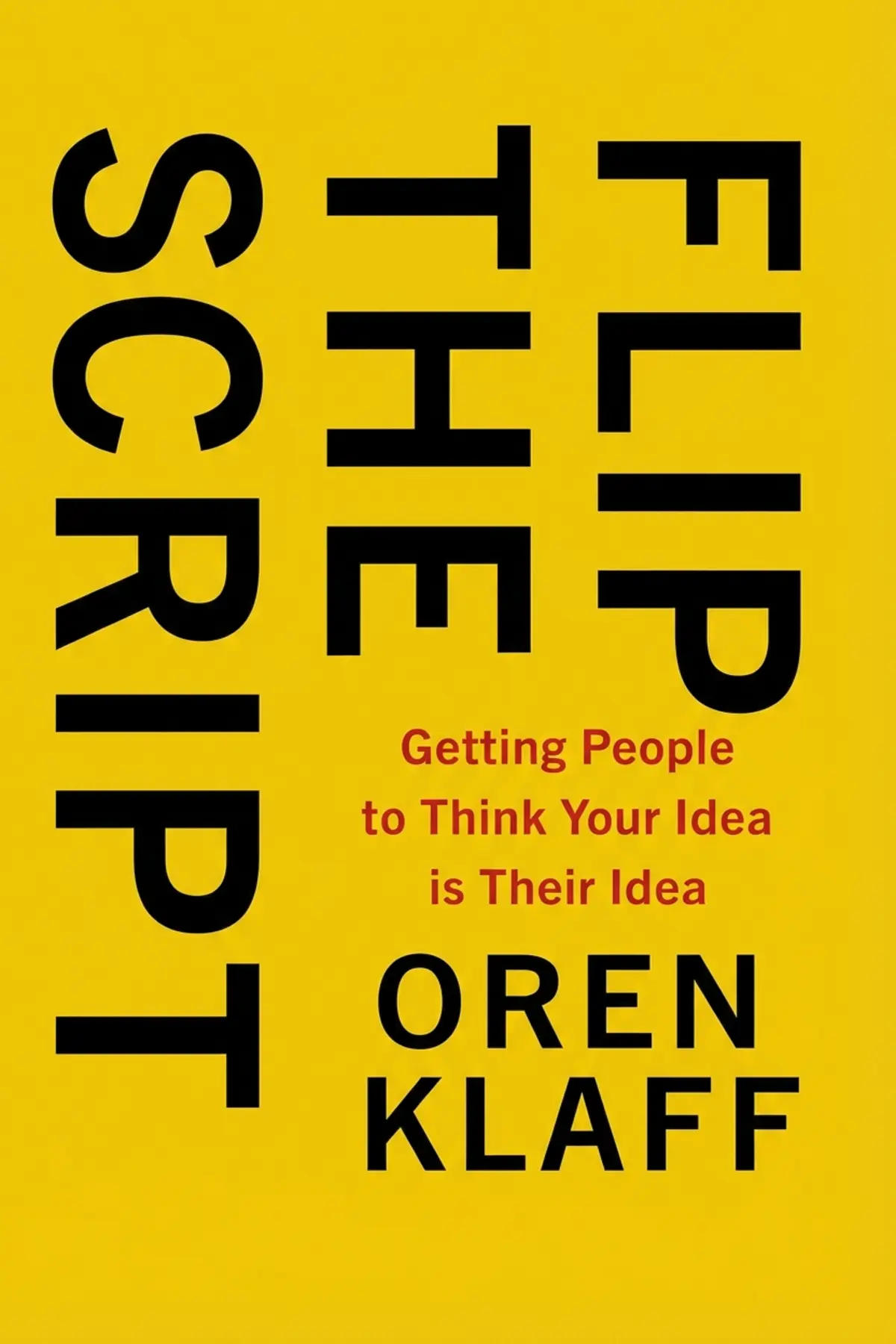
Table of Content
1. Introduction
2 min 19 sec
We have all been there: you have a brilliant idea, a transformative product, or a clear solution to a problem, but when you try to share it, you hit a wall of indifference or skepticism. In the past, the person with the most information held the power. Salespeople were the gatekeepers of knowledge, and buyers relied on them to understand what was worth purchasing. But that era is long gone. Today, the internet has turned everyone into a self-styled expert. By the time a potential client even speaks to you, they have likely done hours of research, compared prices, and read dozens of reviews. Their minds are often made up before you even open your mouth.
This shift has made traditional selling significantly harder. When everyone thinks they know as much as you do, the old-school high-pressure tactics simply don’t work. They create resistance rather than results. To succeed in this new landscape, you have to change the way you interact with your audience. You have to move beyond being a mere provider of information and become someone who reshapes the very context of the conversation.
The core philosophy we are exploring today is that people don’t want to be sold to; they want to feel like they have made a smart, autonomous decision. To achieve this, you need to ‘flip the script.’ This means guiding the other person to a point where they believe your idea was actually their idea. It involves a deep understanding of status, credibility, and the neurological pathways our brains use to process new concepts.
Throughout this summary, we will break down the mechanics of how this works. We will look at how to establish yourself as an equal in any room, regardless of who is sitting across from you. We will investigate the ‘certainty gap’—that uncomfortable space where a buyer hesitates because they aren’t sure you can deliver—and how to close it instantly. We will also explore how to frame even the most radical innovations in ways that feel safe and familiar. By the end, you will have a toolkit for navigating the complex psychology of human choice, allowing you to present your ideas not as a sales pitch, but as a natural and inevitable path forward.
2. Status Alignment
2 min 42 sec
Establish yourself as a true equal in every interaction to ensure your message is heard and respected by high-stakes decision-makers.
3. Closing the Certainty Gap
2 min 24 sec
Use a high-intensity burst of expert knowledge to eliminate doubt and prove your ability to deliver results.
4. The Three Pre-Wired Questions
2 min 31 sec
Satisfy the brain’s natural filters by answering the essential subconscious questions every buyer asks.
5. The Power of Plain Vanilla
2 min 17 sec
Bridge the gap between innovation and fear by framing your radical ideas within a familiar context.
6. The Buyer's Formula
2 min 28 sec
Guide your client’s natural skepticism by proactively identifying risks and simplifying their decision-making process.
7. Authenticity and Expert Confidence
2 min 25 sec
Reject manipulative sales personas and embrace your true expertise to build lasting trust with sophisticated audiences.
8. Conclusion
1 min 57 sec
The world of persuasion is not about winning an argument or tricking someone into a purchase; it is about the subtle art of shifting perspectives. As we have seen, the goal is to ‘flip the script’ so that the person you are talking to arrives at your conclusion on their own terms. It is a process of removing the friction that exists in modern sales and replacing it with a sense of partnership and inevitability.
Success begins with how you show up in the room. By achieving status alignment, you ensure that you are viewed as a peer whose advice is worth taking. By using flash rolls and addressing the brain’s pre-wired receptors for threat, reward, and fairness, you build a foundation of credibility that can survive even the deepest skepticism. You have learned that innovation must be balanced with the familiar, and that by proactively addressing the risks through a ‘Buyer’s Formula,’ you can lead others through their own pessimism to a place of certainty.
Perhaps the most important takeaway is the value of your own authenticity. In a marketplace full of gimmicks and high-pressure personas, true expertise and unwavering confidence stand out. When you truly believe in the value of what you are proposing, and you have the tools to communicate that value effectively, you don’t need to ‘sell’ at all. You simply guide others to the right decision.
As you move forward, remember that every interaction is an opportunity to practice these techniques. Start by looking for ways to align your status and simplify your message. Frame your next big idea as the ‘new normal’ and don’t be afraid to point out the challenges yourself. When you flip the script, you stop being a salesperson and start being a leader—someone who helps others see a better way forward.
About this book
What is this book about?
The world of sales and negotiation has undergone a fundamental shift. In an era where information is at everyone's fingertips, traditional pitching methods no longer carry the weight they once did. Flip The Script explores the psychology of modern persuasion, moving away from the aggressive 'always be closing' mentality toward a more sophisticated approach rooted in human biology and social dynamics. It provides a blueprint for making your ideas feel like the buyer's own discovery. The book promises to teach you how to bridge the certainty gap that halts most deals. You will learn how to command respect by establishing status equality, how to use 'flash rolls' to demonstrate undeniable expertise, and how to navigate the pre-wired receptors of the human brain. By understanding why people gravitate toward the familiar and how to leverage their natural skepticism, you can transform your pitch into an inevitable conclusion for your audience. Whether you are seeking investment, closing a sale, or simply trying to win an argument, these techniques offer a way to guide others to your point of view naturally and authentically.
Book Information
About the Author
Oren Klaff
Oren Klaff is one of the leading experts on sales and negotiation. As an advisor on raising capital and investment funds, his services are in demand in a wide array of industries around the world. His first book, Pitch Anything, has sold over one million copies to date.
Ratings & Reviews
Ratings at a glance
What people think
Listeners find this book amusing and engaging, offering helpful ideas and concrete techniques for creating convincing presentations. Additionally, the storytelling is top-notch, and listeners value the strategic sales and deal-making foundations. They also appreciate the communication elements, as one listener mentions how it aids in building rapport with an audience, while another notes the unique spin on conventional wisdom.
Top reviews
Wichai
Pitching often feels like a dark art, but Klaff breaks it down into a repeatable science that feels modern and relevant. I love how he acknowledges that today’s buyers are already educated and can’t be sold to in the traditional, aggressive sense. The 'status tip-off' and 'flash roll' techniques are absolute game-changers for anyone who has ever felt like they were losing control of a room. Truth is, the storytelling is so engaging that I finished the whole thing in two sittings, feeling like I was right there in the room with the Russian oligarchs. Some people might find his tone a bit bombastic, but in the world of high-stakes negotiations, that level of confidence is exactly what’s required. If you want to move beyond the old 'always be closing' mentality, this is the blueprint you've been looking for. It turns persuasion into a subtle dance rather than blunt-force trauma.
Show morePop
Wow, I didn't expect a business book to read like a high-stakes thriller, but here we are. Klaff has this incredible ability to weave complex psychological principles into stories about international deal-making that keep you turning the pages. The transition from being a 'selling' expert to a 'buying' facilitator is the exact shift the industry needs right now. I particularly found the 'Winter Is Coming' and 'Skin in the Game' pre-wired ideas to be highly practical for my own client presentations. Look, the guy is a character, and he definitely wants you to know he’s the smartest person in any room he enters. But if his methods work—and they certainly seem to—then a little bit of showboating is a small price to pay for this level of insight. This isn't just for sales reps; it’s for anyone who needs to lead a room and command respect instantly.
Show moreChatri
Ever wonder why your best pitches fall flat when the client is already over-educated? This book answers that question by flipping the entire sales process on its head. Instead of pushing information, Klaff teaches you how to guide the listener to their own conclusion, which is a much more powerful way to build trust. The chapter on 'being compelling' was a breath of fresh air because it focused on authenticity rather than just following a script. Frankly, the way he breaks down 'status' is something every professional should study, regardless of whether they are in a traditional sales role. The writing is incredibly fast-paced and the 'damage admissions' make him feel slightly more human despite the boastful tone. It’s the kind of book you’ll want to keep on your desk for quick reference before a big meeting.
Show moreManop
The chapter on 'novelty chunking' alone was worth the price of admission for me. It provided a clear framework for how to introduce new concepts without triggering the 'threat response' in a buyer's brain. Klaff is a master storyteller, even if you suspect he’s embellishing the details of his multi-million dollar deals for dramatic effect. The '2X' concept is another simple but effective tool that helps frame the value proposition in a way that feels logical rather than emotional. Truth is, I haven't enjoyed a business book this much in a long time because it feels like a peek behind the curtain of real-world power dynamics. It’s entertaining, informative, and offers a fresh perspective on why certain deals succeed while others wither away. Highly recommended for anyone who needs to influence high-level decision makers.
Show moreLiam
As a veteran in the sales game, I went into this skeptical of the 'implant the idea' premise because it sounded a bit too much like Inception. However, the logic behind 'pessimism' and introducing obstacles before the client does is brilliantly counter-intuitive. Klaff’s writing style is punchy and direct, though he does spend a significant amount of time reminding you how successful he is. The concept of 'novelty chunking' helped me reframe a complex tech proposal last week, and the client actually stayed engaged for the whole hour. Not gonna lie, some of the anecdotes feel a bit like James Bond fan-fiction with the red sports cars and high-end valets. Regardless of the bravado, the tactical advice on 'pre-wired ideas' is some of the best I’ve read in years. It’s a solid evolution from his first book, even if he barely mentions his previous STRONG framework here.
Show moreDen
Picked this up because Pitch Anything was a staple in my office, and this feels like a necessary software update for a more cynical market. The reality is that the old tricks don't work on people who have Google at their fingertips at all times. Klaff’s 'Plain Vanilla' approach to making high-stakes deals feel normal is a stroke of genius that I haven't seen elsewhere. My only gripe is that the book is quite repetitive, often circling back to the same themes of his own greatness. Personally, I think the 'flash roll' is the standout technique here, giving you a way to demonstrate mastery without sounding like a walking encyclopedia. Even with the fluff, the strategic value of the 'Buyer's Formula' makes this a must-read for modern entrepreneurs. Just be prepared for a healthy dose of alpha-male energy throughout the narrative.
Show moreSom
Look, Oren Klaff is clearly the hero of every story he tells, but that shouldn't distract from the actual gold buried in the text. The core message—that people value their own ideas more than yours—is executed through a series of tactical steps that are surprisingly easy to implement. I’ve already started using the 'status alignment' technique in my weekly meetings, and the shift in dynamic is palpable. It’s less about winning a fight and more about inviting the other person to join your side. The book does drag a bit in the middle with some questionable anecdotes that feel a little too polished to be entirely true. But if you can get past the 'James Bond' persona he projects, you’ll find a wealth of communication strategies. It’s a very easy read, perfect for an airport lounge or a long commute.
Show moreKru
After hearing several colleagues rave about the 'flash roll' technique, I finally decided to see what the fuss was about. The book is definitely an upgrade over his previous work, acknowledging that the market has become saturated with people using the same old formulas. What I appreciated most was the focus on connection and demonstrating expertise under volatile circumstances without being aggressive. Gotta say, the 'pessimism' strategy—telling the client why the deal might not work—is a brilliant way to build immediate credibility. The book isn't perfect; it’s definitely 'airport lounge' material that prioritizes style over deep academic research. But as a practical guide for persuasive speaking, it’s one of the most useful texts I’ve encountered recently. It teaches you how to be the most interesting person in the room without actually saying it out loud.
Show morePreeda
The ego in these pages is almost tangible, often overshadowing the actual sales advice Klaff is trying to dispense. While I appreciate the concept of making the buyer feel like the idea was theirs all along, the delivery is wrapped in layers of relentless self-congratulation. One minute you are learning about 'status alignment,' and the next, you’re reading a bizarrely inaccurate story about a Counter-Strike pro joining a match from a mobile phone. It’s hard to trust the methodology when the supporting anecdotes feel like they were pulled from a fictionalized, overly dramatic version of the author's life. To be fair, if you can filter out the noise and the Alfa Romeo name-dropping, the core framework is genuinely useful. The 'buyer’s formula' mentioned toward the end is probably the only part you truly need to memorize. It’s a classic case of a great twenty-page PDF trapped inside a two-hundred-fifty-page ego trip.
Show morePete
Frankly, the 'world-class sniper' anecdote nearly made me throw the book across the room because it was so obviously fabricated. When an author loses credibility on the small details, it makes you wonder if the 'multi-million dollar deals' are also a bit of a stretch. That said, I can’t deny that the underlying framework for 'flipping the script' has some merit in a professional setting. The idea of 'status tip-offs' is actually a very clever way to handle power imbalances in a boardroom. However, you have to dig through a mountain of 'how awesome am I' stories to find the three or four pages of actual utility. If you have the patience to ignore the ego, there are some decent nuggets here. Otherwise, you might be better off just finding a summary online and saving yourself several hours of eye-rolling.
Show moreReaders also enjoyed

AUDIO SUMMARY AVAILABLE
Listen to Flip The Script in 15 minutes
Get the key ideas from Flip The Script by Oren Klaff, plus 5,000+ more titles in English and Thai.
- 5,000+ titles
- Listen as much as you want
- 7-day free trial
- Cancel anytime







