
15 min 49 sec
Hold on to Your Kids: Why Parents Need to Matter More Than Peers
Explore the critical role of parental attachment in a world where peer influence often takes over. Learn how to reclaim your position as your child's primary guide to ensure they grow into resilient adults.
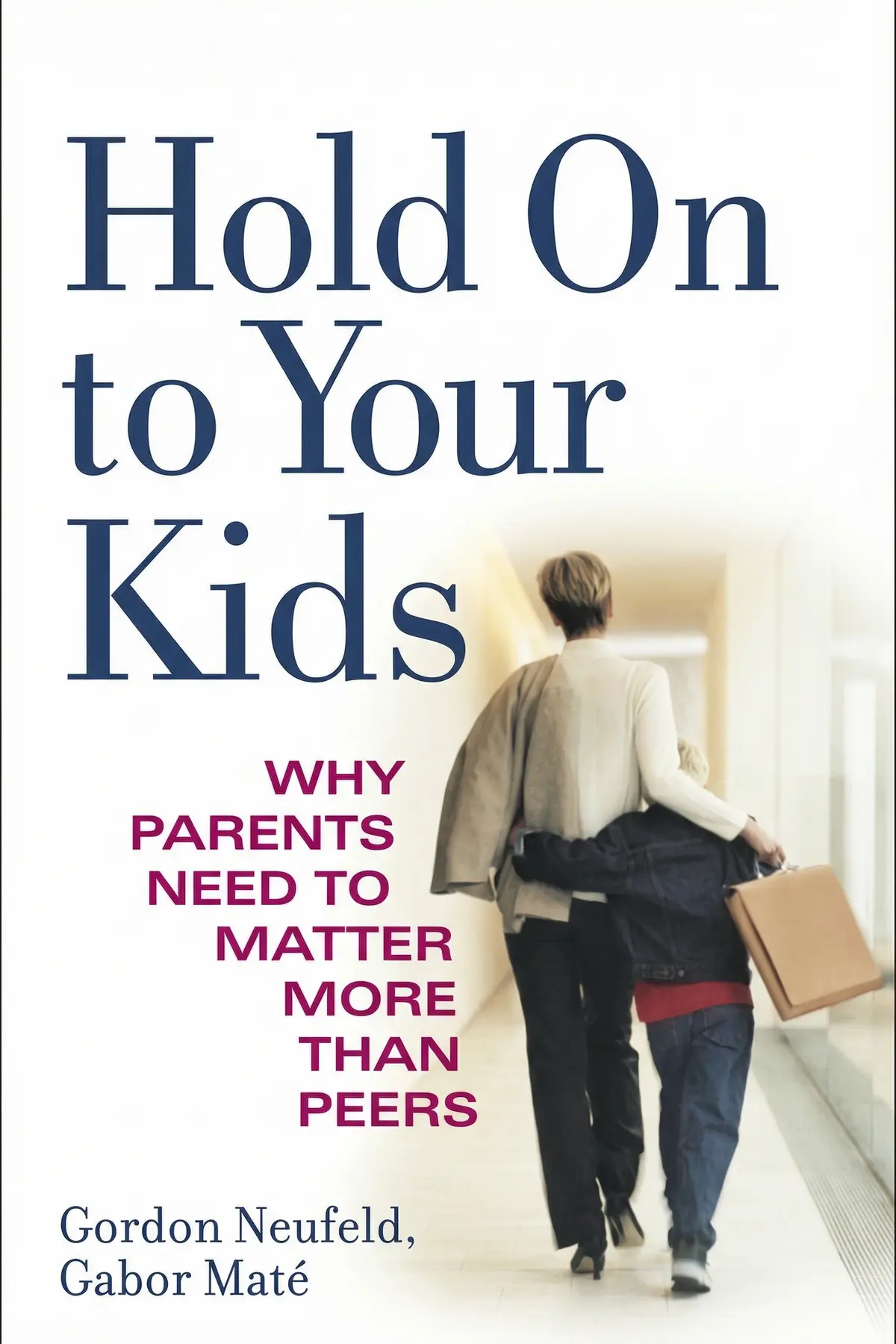
Table of Content
1. Introduction
1 min 46 sec
Parenting in the modern age can often feel like a series of endless negotiations and frustrating power struggles. Many parents find themselves wondering why their once-affectionate children have suddenly become distant, defiant, or seemingly indifferent to their guidance. It’s common to turn to the latest discipline strategies, reward systems, or therapy in an attempt to bridge the gap. Yet, despite these efforts, that feeling of disconnection persists. You might notice your child retreating into their room, prioritized by their smartphone, or more concerned with the opinions of their friends than the values of their family. This sense of being sidelined in your own child’s life is more than just a personal struggle; it is a widespread social shift that is fundamentally altering how children grow up.
The central message we are exploring today is that the modern crisis of parenting isn’t a failure of technique, but a crisis of attachment. When children lose their primary orientation toward the adults in their lives, they inevitably turn toward their peers to fill that void. This throughline—that parents must remain the primary compass for their children—is what we will unpack. We’ll look at why children are increasingly drifting toward their peer groups, the hidden dangers of this shift, and most importantly, how you can reclaim your rightful place as the most influential person in your child’s life. This isn’t about control or strictness; it’s about providing the emotional security your child needs to mature. By the end of this journey, you’ll understand that the secret to successful parenting isn’t about what you do to your child, but who you are to them. We’re going to explore how to rebuild that bond and why your presence matters now more than ever.
2. The Six Layers of Connection
2 min 30 sec
Attachment isn’t just a feeling; it’s a multi-layered process that evolves as a child grows. Understand the six distinct ways children bond with the adults who guide them.
3. The Danger of Peer Orientation
2 min 41 sec
When children look to each other for guidance, the blind lead the blind. Discover why peer groups can never provide the stability a child truly needs.
4. The Hidden Engine of Growth
2 min 28 sec
Maturation isn’t something you can force through rules and discipline. It is a biological process that only happens under the right emotional conditions.
5. Winning Back Your Child's Heart
2 min 27 sec
If you’ve lost your child to the peer group, it’s not too late. Discover the practical, heart-centered ways to rebuild the bridge and restore your influence.
6. The Myth of Peer Socialization
2 min 30 sec
We often worry that our children need to be ‘socialized’ by their peers, but true social maturity actually comes from the home, not the playground.
7. Conclusion
1 min 27 sec
In the end, the most powerful tool in your parenting arsenal isn’t a new set of rules or a better disciplinary tactic. It is the simple, profound strength of your relationship with your child. As we have explored, the challenges of modern parenting—the defiance, the distance, and the influence of the peer group—are all symptoms of a breakdown in attachment. When children lose their orientation toward the adults who love them, they become lost in a world of peers who cannot truly lead them. But by understanding the six layers of connection and recognizing the essential role you play as their compass, you can begin to turn the tide.
Your goal isn’t to prevent your child from ever having friends or to keep them shielded from the world forever. Rather, it is to ensure that they are so securely anchored in their relationship with you that they can face the world without losing their way. This means ‘collecting’ them daily, prioritizing heart-to-heart connection, and having the courage to protect the bond from the pressures of peer culture. Maturity cannot be rushed, but it will happen naturally if the environment is right. By holding on to your kids, you are giving them the greatest gift possible: the safety to grow, the freedom to be themselves, and the guidance they need to eventually become independent, resilient adults. Your influence matters more than you know, and it starts with the simple choice to make your relationship the most important thing in the room.
About this book
What is this book about?
Modern parenting often feels like an uphill battle against culture, technology, and the growing influence of peer groups. This summary of Hold on to Your Kids dives deep into the psychological necessity of the parent-child bond. It argues that children are increasingly looking to their friends for direction, a phenomenon known as peer orientation, which stunts their emotional and social development. Because children are not equipped to lead one another, this shift results in a rise in aggression, anxiety, and a lack of true maturity. By understanding the stages of attachment and the mechanics of maturation, parents can move beyond temporary discipline tactics and focus on the fundamental relationship. The promise of this approach is a return to a natural hierarchy where the parent serves as the child's compass. Through reconnecting with their children and protecting the bond from external pressures, parents can provide the security and nurturing environment required for a child to truly flourish and find their own identity. It is a guide for any caregiver looking to restore their influence and help their children navigate the complexities of growing up.
Book Information
About the Author
Gordon Neufeld
Dr. Gordon Neufeld is a distinguished clinical psychologist and a leading authority on child development, specifically focusing on the vital importance of the parent-child relationship. Gabor Maté is a renowned speaker and best-selling author who specializes in a wide range of topics, including the roots of addiction, attention deficit disorder, and the nuances of healthy child development.
Ratings & Reviews
Ratings at a glance
What people think
Listeners consider this parenting guide essential reading, labeling it a transformative resource for parents with children of all ages. Highly perceptive, the work offers numerous profound insights, and listeners value the way its challenging material encourages self-examination. They cherish the book's perspective on bonding, characterizing it as a blueprint for enduring, genuine relationships that is both sincere and significant. Opinions on the prose are varied; while some commend its lucid style, others suggest the text can be occasionally repetitive.
Top reviews
Tun
Finally got around to reading this after seeing it referenced in nearly every parenting circle I trust. Frankly, it’s a total game-changer for how I view my relationship with my eight-year-old. The authors argue that our culture has shifted in a way that forces kids to look to their peers for cues on how to act, rather than their parents. It makes so much sense when you look at the anxiety levels in modern teens. The concept of "peer orientation" was a lightbulb moment for me. While the writing can be a bit dense and repetitive at times, the core message is too important to ignore. We need to be the primary compass for our children. I’ve already started making small changes in how I greet my kids after school, focusing on that "collecting" phase they talk about. It’s a road map for building a lifelong bond that doesn't just rely on authority, but on genuine connection.
Show moreRania
Wow, Neufeld and Maté really hit the nail on the head here. Ever wonder why your sweet child turns into a different person the moment they’re around their friends? This book explains that phenomenon with such clarity that it’s almost scary. It’s not just "kids being kids"—it’s a fundamental shift in where they are getting their cues for identity. I loved the focus on "natural authority." It’s so much more sustainable than the typical "punishment and reward" systems most parenting books peddle. Honestly, this should be required reading for every teacher and coach, not just parents. It’s an eye-opening look at what kids actually need to thrive: us. Truth is, I feel much more empowered now to lead my family with confidence and heart.
Show moreKasemsan
This isn't just a parenting manual; it’s a paradigm shift for anyone raising children in the digital age. Most books focus on "behavioral management," but Maté and Neufeld go much deeper into the neurodevelopmental roots of why kids act out in the first place. The truth is, if we don't have our children's hearts, we have no real authority to lead them. I was floored by the chapter on "counterwill"—it perfectly explained why my daughter pushes back whenever I try to direct her. It’s not about rebellion; it’s about a lack of attachment. This book gave me the tools to stop fighting my kids and start inviting them back into a relationship with me. It’s heartfelt, challenging, and absolutely essential for any parent who feels like they are losing their child to the surrounding culture.
Show moreVimolwan
I'll be blunt: this book is probably the most important thing I've read since becoming a father. It completely flipped my perspective on what "independence" actually looks like in a child. We often push our kids to be social and independent far before they have a solid internal compass, and this book explains why that backfires. The authors describe how kids will simply mirror their peers if they don't have a strong adult to attach to. It explained so much about the behavioral shifts I've seen in my own community. To be fair, the organizational structure is a bit messy, and it repeats itself more than necessary. But the core truth here is undeniable. I’ve recommended it to every parent I know because it offers a path back to authentic connection in a world that is constantly trying to pull us apart.
Show moreLeah
After hearing about 'peer orientation' for years, I’m glad I finally sat down with the source text. It’s a profound look at the state of modern childhood. Gabor Maté’s influence is clear in the compassionate, trauma-informed lens applied to the parent-child bond. This book helped me see that my teen’s distance isn't a personal rejection, but a symptom of a culture that doesn't value the vertical transmission of values from one generation to the next. It’s a call to action for parents to step up and be the leaders our children are looking for. It’s not always an easy read—it’s long and sometimes heavy—but the payoff is a much deeper, more authentic connection with your family. Truly a must-read for anyone who feels like they are losing their grip on their kids.
Show moreSuthee
As a homeschooling parent, the concepts here resonated deeply with my daily experience. I’ve always felt a bit counter-cultural by keeping my kids close, and Neufeld provides the psychological scaffolding to justify that choice. The way he and Maté describe the "shyness" instinct as a protective mechanism rather than a social deficit was particularly enlightening. It’s refreshing to read a book that doesn't treat children as problems to be solved or managed, but as individuals whose primary need is secure attachment. My only gripe is that the book leans heavily on clinical observations and personal philosophy rather than hard scientific data. Not gonna lie, some of the anecdotes felt a bit cherry-picked to fit the "peer orientation is bad" narrative. Still, the underlying truth of their message is hard to deny when you see it playing out in the real world.
Show moreGai
Picked this up after seeing it recommended in several attachment groups, and I’m glad I did. It’s a very insightful look at why our kids seem so much more difficult to reach these days. The authors make a compelling case that we’ve outsourced our parenting to schools and extracurriculars, leaving a void that peers are only too happy to fill. I found the sections on "adultism" and the way we inadvertently disrespect our children’s individuality to be particularly convicting. Some parts are definitely wordy, and I agree with other reviewers that it can feel a bit repetitive. But the "nuggets" of wisdom scattered throughout are worth the effort. It really made me reflect on my own upbringing and the ways I want to do things differently for my own kids.
Show moreSara
The chapter on 'Don't Court the Competition' was a total eye-opener for me and worth the price of the book alone. It really challenged my assumptions about the necessity of early "socialization" and the pressure to get kids into group settings as soon as possible. I’ve realized that I was inadvertently pushing my son toward his peers because I thought he "needed friends," when what he actually needed was more time to mature within the safety of our family. The writing style is a bit academic and dry in places, but the logic is sound. It’s given me the confidence to be a bit more counter-cultural in my parenting choices. My only complaint is that it doesn't offer enough concrete, day-to-day "scripts" for parents, but the overarching philosophy is solid.
Show moreKom
While I appreciate the core message about attachment, the tone frequently veered into 'old man yells at cloud' territory for my taste. The authors seem to harbor a deep nostalgia for a pre-WWII era that wasn't actually all that great for many people. This "back in my day" sentimentality made it hard for me to take some of their more modern critiques seriously. Also, the book can feel quite fear-based. They paint peer groups as these toxic, soul-crushing entities that will inevitably ruin your child if you aren't vigilant every second. In my experience, healthy peer relationships are a vital part of growing up, not just a threat to be managed. That said, the advice on "bridging" separations and maintaining a connection during conflict is genuinely helpful. Take the good bits and leave the alarmist rhetoric behind.
Show moreRungtip
Not what I expected based on the high ratings. Personally, I found the authors' approach to be incredibly patronizing toward both children and parents. They treat peers like a virus and parents like victims who have no choice but to engage in psychological manipulation to "win back" their kids. Where is the respect for the child’s developing autonomy? The book implies that if your child isn't a "pleaser," your attachment is somehow broken, which is a very damaging message for parents of spirited or neurodivergent kids. Furthermore, for a book that makes such bold claims about human nature, the lack of actual scientific citations is glaring. It’s mostly just a collection of opinions and anecdotes. If you're looking for evidence-based parenting, you might want to look elsewhere. This felt more like a manifesto than a helpful guide.
Show moreFeatured in
Readers also enjoyed
AUDIO SUMMARY AVAILABLE
Listen to Hold on to Your Kids in 15 minutes
Get the key ideas from Hold on to Your Kids by Gordon Neufeld, plus 5,000+ more titles in English and Thai.
- 5,000+ titles
- Listen as much as you want
- 7-day free trial
- Cancel anytime







