
20 min 17 sec
The Myth of Normal: Trauma, Illness and Healing in a Toxic Culture
Explore how modern society’s definition of normal contributes to chronic illness and trauma. Dr. Gabor Maté reveals the deep links between our emotional lives, social pressures, and physical well-being.
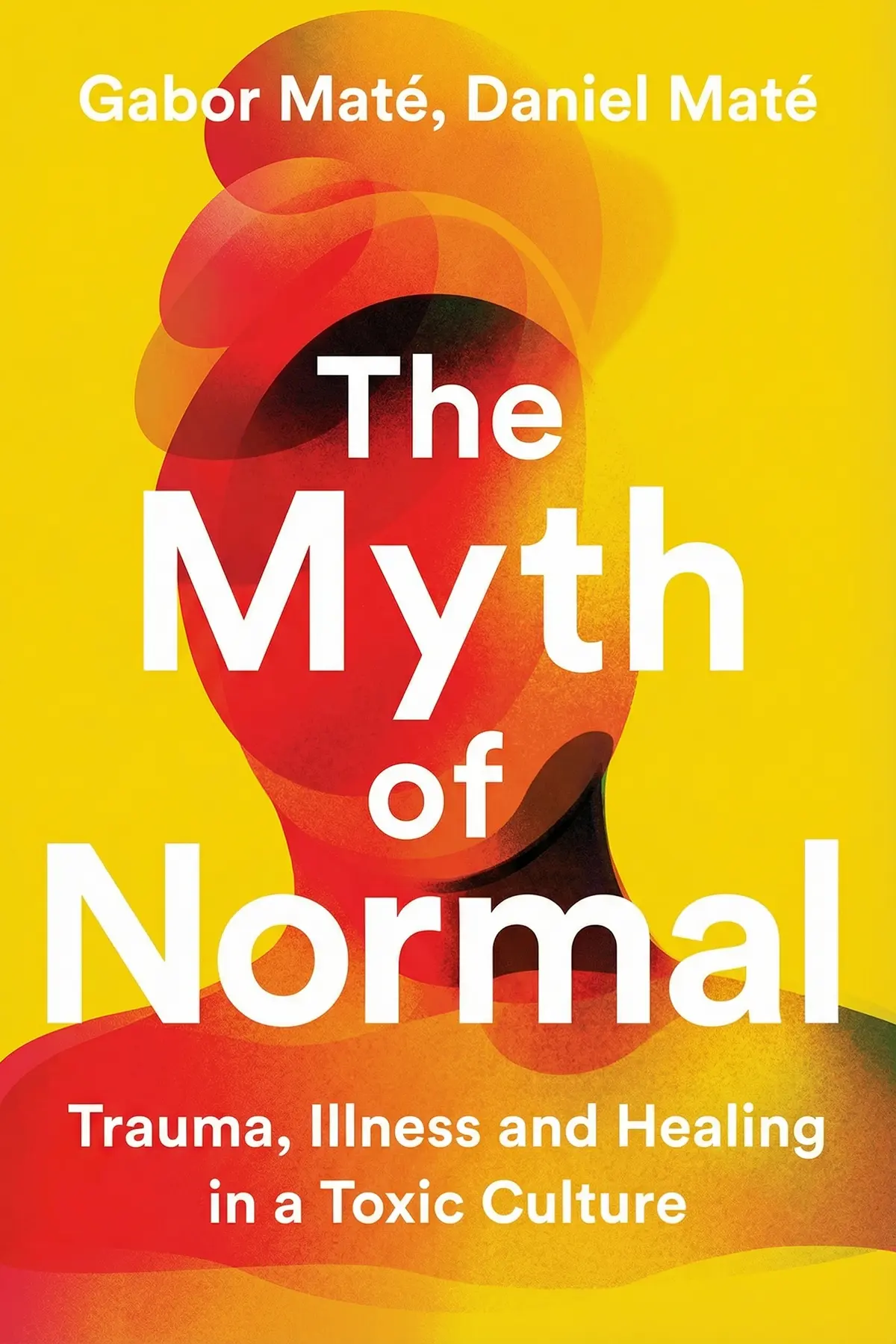
Table of Content
1. Introduction
2 min 14 sec
Imagine walking through a hospital ward in the 1990s, specifically the prestigious Cleveland Clinic. There, a group of seasoned nurses noticed something that seemed to defy traditional medical logic. They found they could predict, with startling accuracy, which patients were about to be diagnosed with ALS, a devastating neurodegenerative disease. Their secret wasn’t a sophisticated lab test or a new scanning technology. Instead, it was something much more subtle: personality. They would look at a patient and remark that she was simply ‘too nice’ to escape such a diagnosis, or conversely, that a man was perhaps not ‘nice’ enough to have the disease. To the surprise of the attending neurologists, these intuitive assessments by the nursing staff were almost always right.
This observation points toward a profound and often overlooked truth: our emotional lives and our physical health are not separate. For decades, the medical establishment has treated the body like a machine with isolated parts, ignoring the psychological and social environment in which that body exists. But as Dr. Gabor Maté argues, what we consider ‘normal’ in our modern culture is actually a breeding ground for chronic stress and trauma. We have built a society that often rewards the very traits—like the suppression of anger and the sacrifice of personal needs—that make us sick.
In this exploration, we are going to dive deep into the idea that disease is not just a random biological glitch. Instead, it is often a ‘living alarm.’ It is a signal that the way we are living is out of sync with our true nature. We will look at how the tension between our need to belong and our need to be ourselves creates a fractured internal landscape. We will see how the ‘petri dish’ of our culture—filled with economic pressure, inequality, and childhood stress—contributes to an epidemic of autoimmune disorders and mental health struggles. Most importantly, we will discover that healing isn’t just about ‘getting back to normal,’ because normal is the problem. True healing is about finding a way back to wholeness, reintegrating the parts of ourselves we’ve been forced to abandon, and learning to listen to the wisdom our bodies have been trying to share all along.
2. The High Cost of Being Too Nice
2 min 14 sec
Could your personality be a risk factor for disease? Discover how the suppression of emotions like anger can lead to a physiological breakdown.
3. The War Between Attachment and Authenticity
2 min 27 sec
We all have two fundamental needs that often pull us in opposite directions. Learn why we sacrifice our true selves to stay connected to others.
4. The Biological Blueprint of Stress
2 min 28 sec
Chronic stress isn’t just a feeling; it’s a physiological force that alters our DNA and confuses our immune system.
5. Living in a Toxic Petri Dish
2 min 22 sec
Our environment shapes us more than we realize. Explore why modern culture is a ‘petri dish’ that fails to support human flourishing.
6. The Seeds of Trauma in Early Life
2 min 20 sec
Childhood is the foundation of our health. Learn how a culture that ignores developmental needs sets the stage for lifelong illness.
7. Illness as an Adaptive Response
2 min 17 sec
What if disease isn’t a malfunction, but a meaningful response to your life story? Discover why your symptoms might be a survival strategy.
8. The Path Toward Reintegration and Healing
2 min 11 sec
Healing is more than just the absence of disease; it’s the journey toward wholeness. Explore the daily practice of Compassionate Inquiry.
9. Conclusion
1 min 44 sec
As we come to the end of this journey, it is clear that our understanding of health must undergo a radical shift. We can no longer afford to view disease as a purely biological event that occurs in a vacuum. Instead, we must recognize that we are social beings whose biology is inextricably tied to our environment. The ‘myth of normal’ is the dangerous idea that the high-stress, disconnected, and often traumatic conditions of our modern culture are actually healthy for us. They are not. They are the hidden drivers behind the epidemic of chronic illness and mental health struggles we see today.
But this realization is also where our power lies. If we can see the connection between our wounds and our wellness, we can begin to take the steps necessary to heal. Healing is not a destination where we are finally ‘fixed’; it is a continuous process of returning to ourselves. It requires the courage to look at our past, the honesty to acknowledge our suppressed emotions, and the compassion to forgive ourselves for the survival strategies we had to adopt.
As you move forward, remember that your body is always speaking to you. It carries the wisdom of your entire life story, and its symptoms are often the only way it can ask for what it truly needs. By practicing Compassionate Inquiry and prioritizing your authenticity, you are doing more than just managing your health—you are reclaiming your life. You are moving away from a toxic normality and toward a genuine wholeness that can sustain you, even in a challenging world. The path to healing is open to everyone, and it begins with the simple, revolutionary act of listening to yourself.
About this book
What is this book about?
The Myth of Normal challenges the conventional medical view that treats disease as an isolated biological event. Instead, it argues that our health is inextricably linked to the toxic stress and trauma embedded in our culture. By examining the lives of patients and the author’s own experiences, the book illustrates how the conflict between our need for connection and our need for authenticity can lead to a fractured self and physical illness. This summary provides a comprehensive look at how systemic issues like economic insecurity, racial bias, and childhood developmental neglect create a landscape of chronic stress. It offers a path toward healing through Compassionate Inquiry and the reintegration of our authentic selves. The promise of the book is a shift from viewing illness as a misfortune to seeing it as a meaningful alarm—a call to address the wounds that society often ignores.
Book Information
About the Author
Gabor Maté
Dr. Gabor Maté is a Canadian physician with over four decades of clinical experience. He is widely recognized for his specialized work in treating addiction in Vancouver's Downtown Eastside. Maté is the author of four best-selling books, including In the Realm of Hungry Ghosts and Hold On to Your Kids. Daniel Maté, his son and co-author, is an award-winning lyricist and composer based in Brooklyn. This book represents their first literary collaboration.
Ratings & Reviews
Ratings at a glance
What people think
Listeners describe the work as profound, extensively researched, and highly empathetic in its exploration of trauma. They value the way it broadens the scope of recovery and acts as an essential instrument for addressing childhood wounds. Listeners see the content as vital and significant, with one listener specifically recommending it as mandatory reading for medical professionals. Although many find the prose accessible, others point out that it is not a simple read.
Top reviews
Oat
Maté has a way of peeling back the layers of our collective societal malaise that feels both clinical and deeply spiritual. I found the section on the 'biopsychosocial' model particularly compelling because it rejects the reductionist view that our bodies are just malfunctioning machines. Instead, he argues that our illnesses are often protests against a culture that prioritizes profit over human connection and authenticity. To be fair, it’s a long read, and the density of the research can be taxing, but the payoff is a profound sense of self-compassion. I felt less like a collection of symptoms and more like a human being shaped by a complex, often toxic, environment. It’s an essential text for anyone trying to understand why we are collectively so unwell.
Show moreMind
As a nurse, this should be mandatory reading for every practitioner in the medical field. We are so often trained to see the 'broken part' and prescribe a chemical fix without ever asking about the patient’s history or social environment. Maté challenges this 'old science' materialism by showing how early childhood trauma and chronic stress literally manifest in our biology and immune systems. The writing style is dense but accessible, blending rigorous data with heart-wrenching stories of human suffering and resilience. Truth is, we can’t keep treating people in a vacuum when our society itself is making them sick. This book provides a much-needed roadmap for a more holistic, trauma-informed approach to healthcare that we desperately need right now.
Show moreSun
Finally got around to this 500-page beast, and I can say the emotional weight of it is even heavier than the physical book. I was particularly moved by the discussion on addiction as a coping mechanism rather than a moral failing or a simple genetic glitch. Maté writes with such deep compassion for those of us who have spent years blaming ourselves for our 'defects.' By examining how society fails to provide the necessary attachment and security for children, he shifts the focus from individual shame to collective responsibility. The chapters on 'the body says no' were particularly relevant to my own experience with autoimmune issues. Not gonna lie, it’s not an easy read, but it’s probably the most important book I’ve read this decade.
Show moreSophia
Wow, this is an absolute powerhouse of a book that challenges the very definition of what we call 'healthy' today. It expands the concept of healing far beyond the doctor’s office, looking at everything from the way we birth our children to the way we structure our economy. I found the insights into how we sacrifice 'authenticity' for 'attachment' to be particularly profound and life-altering for my own self-reflection. Maté doesn't just point out the problems; he offers a vision of what a truly healthy society could look like if we prioritized human needs over profit. Frankly, it’s a demanding read that requires you to sit with some uncomfortable truths about your own life and society. If you're ready to do the work, this book is an invaluable tool for transformation.
Show moreJirapat
Picked this up during a particularly stressful period of my life and found Maté's insights on trauma-informed healing to be life-changing. He has this incredible ability to make you feel seen and understood, even when he’s discussing the most painful parts of the human experience. The way he breaks down the 'myth of normal' helped me realize that my struggles aren't just my own, but are part of a wider cultural pattern. I especially appreciated the deep dive into the work of other researchers, which makes the book feel like a masterclass in modern psychology. It’s a thick volume and certainly not a 'light' read, but the clarity it brings to your own history is worth every minute. This is a compassionate guide for anyone seeking to reclaim their health from a world that often demands we ignore our pain.
Show moreJan
The synthesis of biopsychosocial medicine presented here is nothing short of revolutionary for the average reader. Gabor and Daniel Maté have created a work that is both a scathing critique of capitalism and a gentle invitation to heal. I was fascinated by the exploration of how our social ties—or lack thereof—directly influence our physical longevity and mental well-being. The book does a fantastic job of illustrating how 'normal' is often just a code word for 'conforming to a sick society.' Gotta say, it’s a dense journey that requires patience, but it provides a framework for understanding human suffering that is much more satisfying than anything else I’ve found. It’s a profound, thoroughly researched, and deeply human book that I’ll be recommending to everyone I know.
Show moreNan
The connection between our capitalist environment and chronic illness is something I hadn't fully articulated before picking this up. It’s a sobering look at how our 'normal' ways of living—constant productivity, isolation, and suppression of emotion—are actually deeply abnormal for our species. Maté’s comparison of modern stress to the 'freeze' response in infants was eye-opening and helped me understand my own patterns of anxiety. Look, I did find some of the political detours a bit rambling, and the sheer volume of information can feel overwhelming at times. However, the core message about reconnecting with our authentic selves is powerful enough to overlook the occasional lack of focus. It's a heavy journey, but one that offers a genuine path toward healing from the inside out.
Show moreTalia
Ever wonder why we treat symptoms in isolation while ignoring the toxic culture we are forced to swim in daily? This book dives deep into that question, arguing that our current medical paradigm is fundamentally flawed because it ignores the social and emotional context of our lives. I loved the 'new science' perspective on epigenetics and how our environment triggers gene expression, though the writing can be a bit dense. Maté’s critique of the meritocratic hierarchy and the stress it places on the individual is sharp and timely. Personally, I found the middle section on parenting a bit triggering, as it hits close to home for anyone who grew up in a high-stress household. It’s a lot to digest, but it’s a necessary challenge to the status quo of modern wellness.
Show moreThanakorn
While I appreciate the effort to bridge the gap between mind and body, the author's stance on neurodivergence felt outdated. I struggled with his insistence on framing ADHD primarily as a response to early trauma rather than a biological reality. In my experience, this can lead back to the very 'parent-blaming' that Maté claims to avoid, even if his intentions are clearly rooted in compassion. The book is undeniably thorough and contains some brilliant insights on the 'toxic culture' of modern life, but it also feels incredibly jumbled and overlong. There were moments where the science felt a bit 'woo' and anecdotal, particularly when discussing spontaneous remissions. It’s a thought-provoking read, but I’d suggest taking some of the more extreme claims with a grain of salt.
Show morePornpimon
Frankly, I found the anecdotal evidence regarding spontaneous cancer remission to be borderline dangerous and pseudoscientific. While I agree that stress impacts health, Maté frequently crosses the line from established science into speculative territory that feels more like faith healing. The book is also an absolute mess structurally, jumping from political manifestos to psychological case studies without much of a cohesive thread. I found the sections on psilocybin and shamans to be especially distracting and out of place in a book that claims to be a scientific critique. To be fair, there are a few good points about the social determinants of health, but they are buried under 500 pages of rambling anecdotes and questionable conclusions. I really wanted to like this, but it felt more like a philosophy book pretending to be medicine.
Show moreReaders also enjoyed
A Liberated Mind: How to Pivot Toward What Matters
Steven C. Hayes
ADHD an A-Z: Figuring It Out Step by Step
Leanne Maskell
AUDIO SUMMARY AVAILABLE
Listen to The Myth of Normal in 15 minutes
Get the key ideas from The Myth of Normal by Gabor Maté, plus 5,000+ more titles in English and Thai.
- 5,000+ titles
- Listen as much as you want
- 7-day free trial
- Cancel anytime







