The 33 Strategies of War
Robert Greene
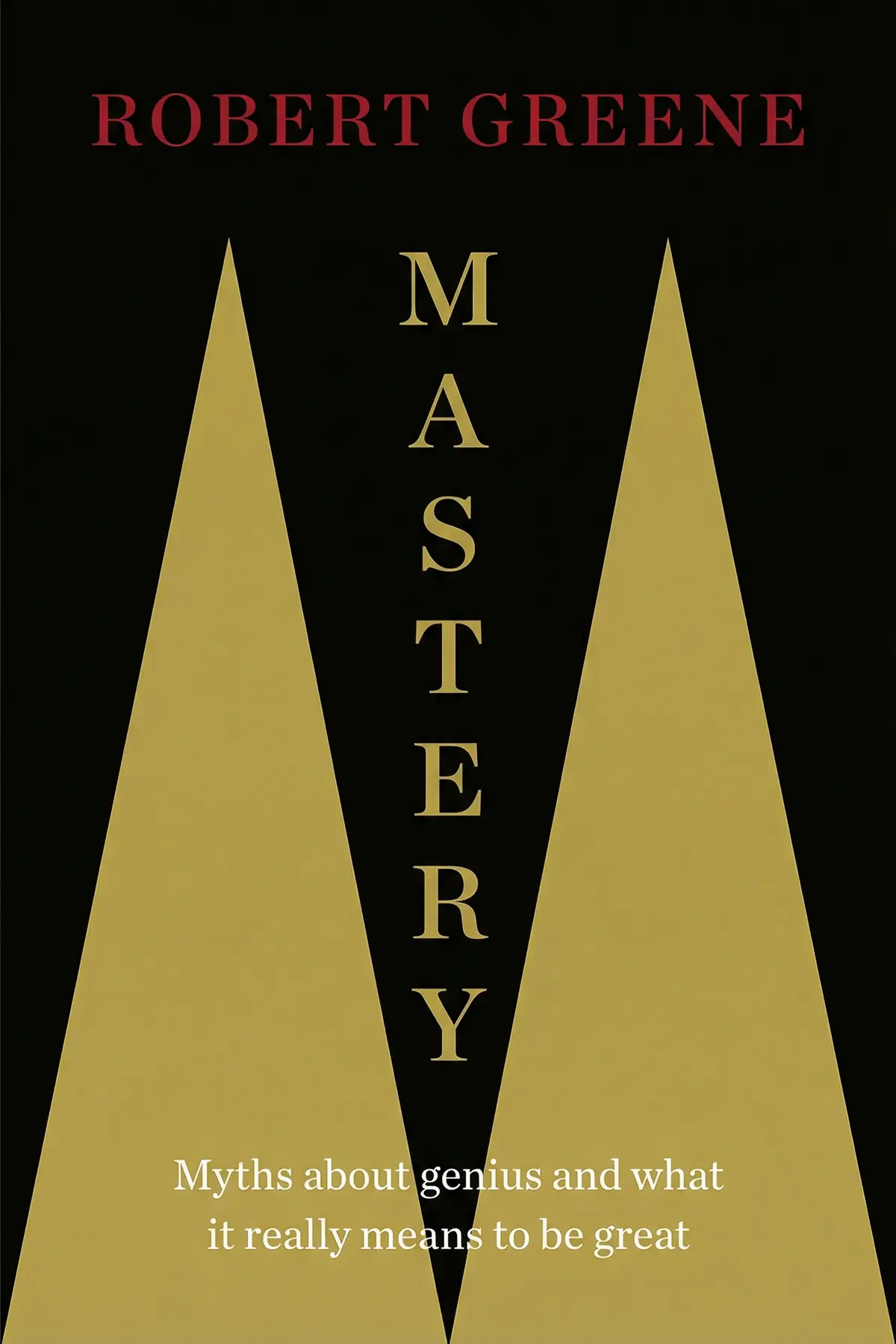
Mastery dispels the myth of the natural-born genius, revealing that greatness is the result of a specific process involving apprenticeship, mentorship, and creative rebellion accessible to anyone willing to follow the path.
2 min 10 sec
When we look at the breathtaking work of a master—whether it’s a symphony by Mozart, a revolutionary theory by Einstein, or a painting by Da Vinci—we often fall into a common trap. We assume these individuals were simply born different. We tell ourselves they possessed a spark of divine genius or a high IQ that placed them on a different plane of existence from the rest of us. This perspective is comforting because it gives us an excuse for our own lack of progress. If greatness is an accident of birth, then we aren’t responsible for not achieving it.
However, this narrative of the ‘natural-born genius’ is a myth. The reality is far more empowering and, perhaps, more demanding. Mastery is not an innate gift; it is the result of a rigorous, repeatable process. It is a destination reached by following a specific path—a path that has been blazed by every great figure in human history. Research actually supports this: there is no direct correlation between early childhood brilliance and later adult achievement. In many cases, those who struggle in traditional academic settings eventually far outstrip their more ‘gifted’ peers because they develop the grit and focus required for true mastery.
Consider the contrast between Charles Darwin and his cousin, Sir Francis Galton. Galton was the quintessential child prodigy with a staggering IQ. Darwin, conversely, was viewed as a fairly ordinary boy with no signs of exceptional intellect. Yet, it was Darwin’s name that changed history. He didn’t rely on raw brainpower; he followed a path of intense observation and dedication.
In this exploration, we are going to walk through the stages of that path. We will see how to identify your unique calling, how to navigate the crucial phase of apprenticeship, why a mentor is your most valuable asset, and how to eventually break the rules to create something entirely your own. Mastery is not a mystery reserved for the elite; it is a craft that can be learned by anyone willing to commit to the journey. Let’s begin by looking at the very first step: finding the thing you were meant to do.
2 min 19 sec
Discover how to identify your life’s work by looking inward at your primal interests rather than bowing to social pressure and the need to fit in with others.
2 min 08 sec
Learn why the early years of your career should be dedicated to gaining practical knowledge and skills rather than chasing high salaries or prestigious titles.
2 min 06 sec
Find out how a mentor can drastically reduce the time it takes to reach the top by providing direct feedback and helping you avoid common pitfalls.
2 min 11 sec
Explore the necessity of breaking away from established rules and embracing a childlike sense of wonder to achieve true innovation in your work.
2 min 10 sec
Understand how to train your brain to make unexpected connections and solve problems by avoiding the trap of narrow, habitual thinking.
2 min 24 sec
Discover the final stage of mastery where your skills become so ingrained that you can act with the effortless instinct of an animal.
1 min 51 sec
As we have seen, mastery is not a destination for the chosen few, but a journey available to anyone who is willing to commit to its stages. It begins with the courage to listen to your inner voice—that primal signal that tells you what you were born to do. It continues through the humility of the apprenticeship, where you prioritize knowledge over ego and money. It is accelerated by the guidance of a mentor and eventually defined by your willingness to break the rules and think for yourself.
The path to mastery is essentially a path of self-discovery. By dedicating yourself to a craft, you aren’t just becoming better at a job; you are becoming a more complete version of yourself. You are shedding the social masks and the mental habits that hold you back. You are training your brain to see connections and your body to act with instinctive precision.
If there is one final takeaway, it is this: do not be discouraged by the time it takes. The years of practice and the moments of frustration are not obstacles to the path; they are the path. Every great master you admire once stood exactly where you are today—uncertain, unskilled, but driven by a spark of curiosity. The only difference is that they didn’t stop. They followed the steps. They stayed the course.
So, look inward and find that interest that you’ve perhaps been suppressing. Find a way to immerse yourself in it. Seek out those who have gone before you and learn everything they have to teach. Then, when you are ready, step out on your own. Mastery is within your reach, provided you have the patience to pursue it. The world is waiting for the unique contribution that only you, with your specific combination of DNA and experience, can provide. Now is the time to begin your apprenticeship.
This summary explores the transformative journey toward becoming a master in any chosen field. It challenges the conventional wisdom that high IQ or innate talent are the primary drivers of success, instead arguing that mastery is a learned discipline. By examining the lives of historical figures like Leonardo da Vinci and Charles Darwin, alongside modern success stories, the text outlines a clear trajectory for personal and professional excellence. The promise of this exploration is a roadmap for the individual. It begins with identifying a unique inner calling, moves through the rigors of an apprenticeship where learning is prioritized over financial gain, and explains the vital role of a mentor in compressing the learning curve. Finally, it details how to transition into a creative-active phase where rules are broken and mind and body work in total unison. This is a guide for anyone looking to unlock their highest potential through patience and practice.
Robert Greene holds a degree in classical studies and has a diverse professional background, having worked in over eighty different roles. He is a renowned author specializing in strategy, power, and human behavior. His notable works include bestsellers like The 48 Laws of Power, The 33 Strategies of War, and The Art of Seduction. Additionally, he collaborated with rapper 50 Cent on The 50th Law, further cementing his reputation as a leading thinker on the dynamics of influence and mastery.
Robert Greene
Robert Greene
Robert Greene
Robert Greene
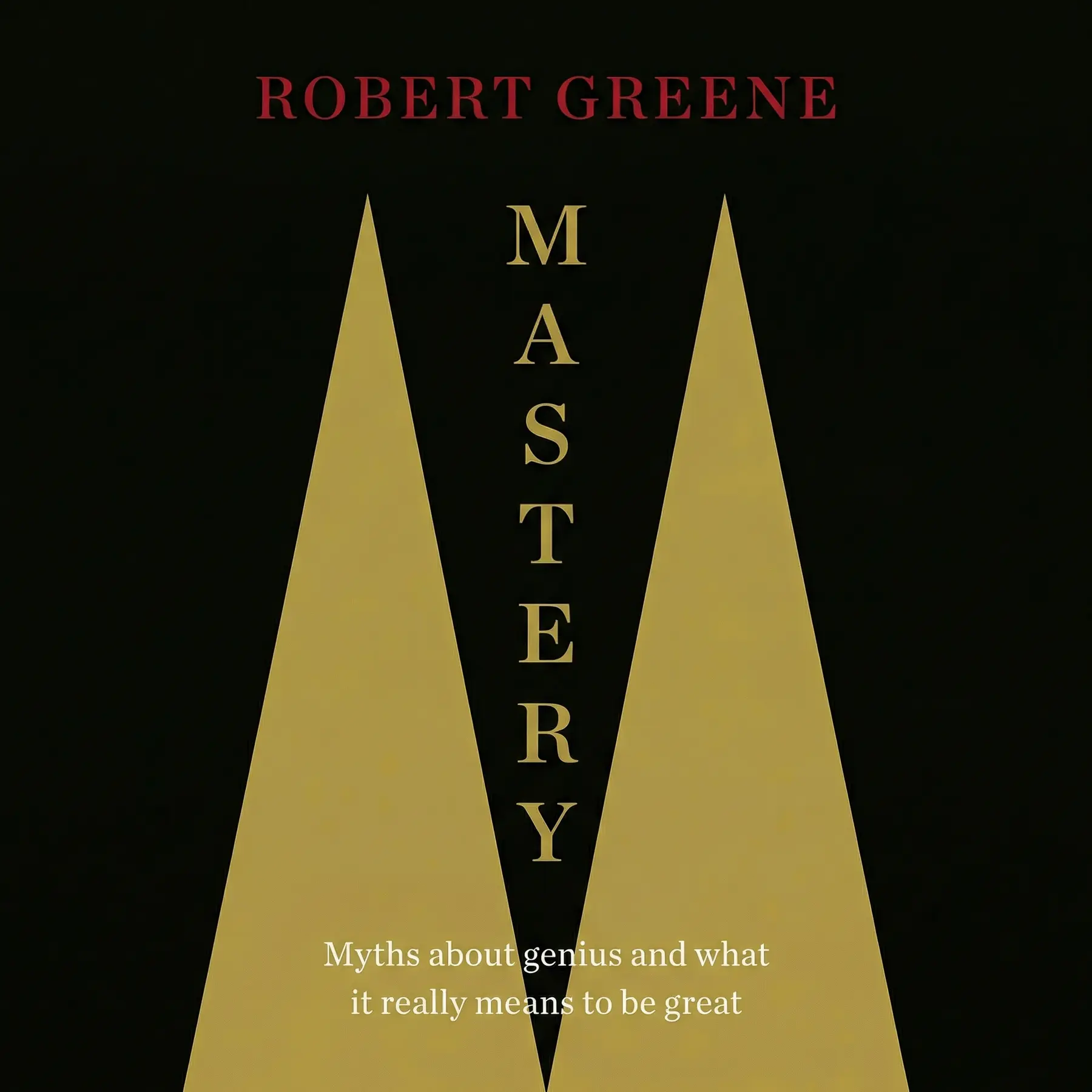
Listeners find this work to be a significant and enlightening experience, packed with insights and valuable knowledge for the everyday person. Furthermore, the prose is approachable and expertly crafted, making it a premier guide for anyone exploring the concept of mastery. They value the engaging historical accounts and captivating anecdotes woven into the narrative. However, the depth of detail sparks varied reactions; while some find it absorbing, others mention that it can feel somewhat imprecise.
Robert Greene has a reputation for being somewhat Machiavellian, but this feels like his most human work yet. Instead of manipulation, he focuses on the internal fire that drives people like Da Vinci and Michael Faraday to reach the pinnacle of their fields. The writing is accessible and filled with wisdom that feels applicable to anyone, regardless of their current career stage. I found the section on finding your 'Life’s Task' to be deeply eye-opening because it forces you to look back at your childhood interests for clues. While it’s true the book can be a bit long-winded at times, the stories are so compelling that you don't really mind the extra detail. This is a significant resource for anyone feeling stuck in a rut.
Show moreAfter hearing so many people rave about the 'Life's Task' concept, I finally dived into this hefty volume. Frankly, it lived up to the hype and provided a much-needed roadmap for my own professional journey. Greene deconstructs the path to genius into actionable steps, from apprenticeship to the final synthesis of intuition and reason. The case studies on contemporary masters like Temple Grandin were particularly fascinating and grounded the more historical anecdotes in modern reality. Some might find the level of detail overwhelming, but I think it adds a layer of depth that most self-help books lack. It is a brilliant, exhaustive study on what it truly takes to be the best in your field.
Show moreThe chapter on social intelligence alone is worth the price of admission for this book. Greene masterfully explains why being a technical genius isn't enough if you cannot navigate the shark-infested waters of human envy and office politics. I appreciated how he moved away from the chilling tone of 'The 48 Laws of Power' to something more constructive and altruistic. Each historical profile is expertly woven into the larger argument about how we can all tap into our latent potential. It's a long read, but the prose is so fluid and the stories so entertaining that the pages fly by. Personally, I think this should be mandatory reading for every college graduate entering the workforce.
Show moreThis is an absolute powerhouse of a book that deconstructs the concept of genius into something attainable for the average person. I was struck by how Greene describes the apprenticeship phase as a time of 'radical observation' rather than just mindless labor. His writing style is authoritative and engaging, making complex psychological transitions feel easy to understand. Not gonna lie, I was skeptical about the length at first, but the sheer volume of wisdom contained here is staggering. By the time I reached the final chapters on the 'Universal Child,' I felt a genuine shift in how I view my own career. It is easily one of the most important books I’ve read this decade.
Show moreWhat I appreciated most was the inclusion of modern figures like Freddie Roach alongside the typical historical giants. It shows that the path to mastery is still very much alive and relevant in our technological age. Greene’s focus on the 'social' side of mastery was a real eye-opener for me, as I usually ignore the politics of my field. The way he describes the 'zone' of mastery feels very authentic and mirrors the experiences of many top-tier athletes and artists. The layout of the table of contents is also brilliant, acting as a mini-summary of the entire philosophy. This is a book I will definitely be returning to for years to come.
Show moreGotta say, I was skeptical about the 10,000-hour rule being rehashed yet again, but Greene adds so much nuance to the idea. He emphasizes the quality of that time, insisting that you must be fully engaged and constantly pushing your boundaries. The book is excellently written and manages to be both an intellectual history and a practical self-improvement guide. I especially loved the section on 'The Creative-Active' phase, which provides great strategies for avoiding stagnation. Though it's a bit of a commitment to finish, the wisdom gained is well worth the time investment. It’s a beautiful, comprehensive look at what makes humans capable of greatness.
Show moreEver wonder why some people just seem to 'get' their craft while others struggle for decades? Greene argues that mastery isn't a gift of birth but a result of a specific, rigorous process. While I enjoyed the deep dives into the lives of Einstein and Keats, the book does meander quite a bit in the middle sections. Some of the evolutionary history he tries to link to human mastery felt like a bit of a stretch to me. However, the overarching message about the importance of a mentor is spot on and very well-argued. It’s an excellent resource for those who have the patience to sit through some of the author's more long-winded speculations.
Show morePicked this up on a whim and was surprised by how much it challenged my existing views on talent. I’ve always believed that you’re either born with it or you aren’t, but Greene makes a very compelling case for the power of focus. The stories about Marie Curie and her obsessive lab work were particularly inspiring to me. My only real gripe is that the tone can be a bit apodictic, as if the author's observations are absolute laws of nature. If you can get past that, there is an incredible amount of practical advice on how to structure your life. It's an excellently written manual for anyone who is serious about their craft.
Show moreTo be fair, the research here feels like a bit of a double-edged sword. On one hand, the biographies are incredibly detailed and provide great insight into the work habits of the world's most successful people. On the other hand, the book is so repetitive that it starts to feel like the author is trying to hit a word count. He uses the same 'Understand:...' and 'Think of it this way:...' transitions over and over until they lose their impact. I found the modern interviews with figures like Santiago Calatrava much more interesting than the rehashed stories of Benjamin Franklin. It's a decent read, but it could have been 200 pages shorter without losing any of the actual substance.
Show moreIs it just me, or is this book basically just a collection of historical fan-fiction? Greene takes figures like Darwin or Mozart and projects these elaborate internal monologues onto them that he couldn't possibly know for certain. He doubles down on the 10,000-hour rule, which has already been debated to death by more rigorous sociologists. The structure is also frustratingly repetitive; he starts a story, pauses for a lesson, then circles back to the same person three chapters later. Truth is, I found much of the advice to be vague inspirational jibberish disguised as deep historical analysis. If you want something practical on the mechanics of skill acquisition, you are better off reading 'Talent is Over-rated'.
Show more
William B. Irvine
Andrew D. Thompson
Deepak Chopra
Robin Ryan
Richard Wiseman
AUDIO SUMMARY AVAILABLE
Get the key ideas from Mastery by Robert Greene, plus 5,000+ more titles in English and Thai.