
20 min 46 sec
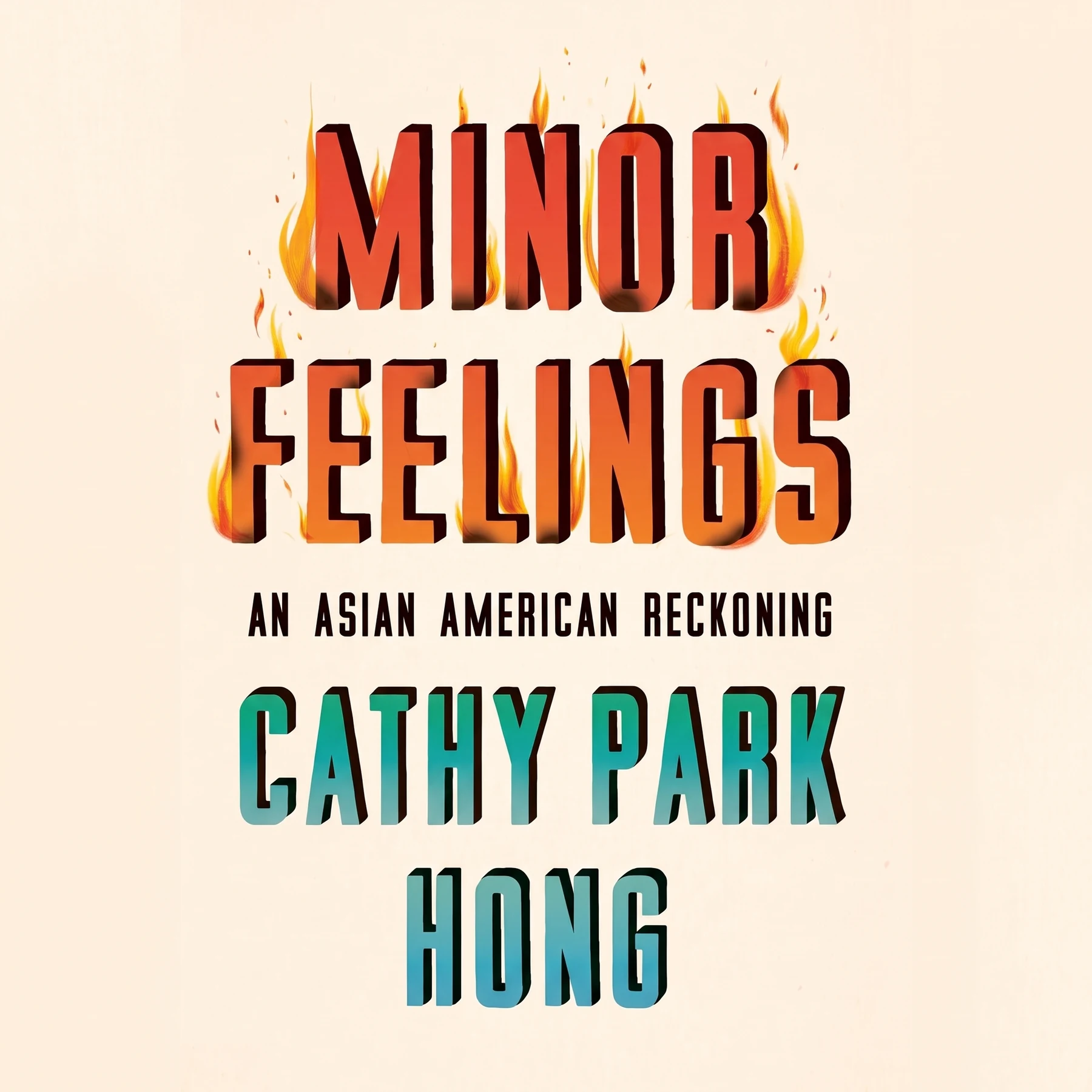
Minor Feelings: An Asian American Reckoning
A profound exploration of Asian American identity, challenging the model minority myth through personal narrative and historical analysis to uncover the complex reality of race, shame, and belonging in contemporary America.
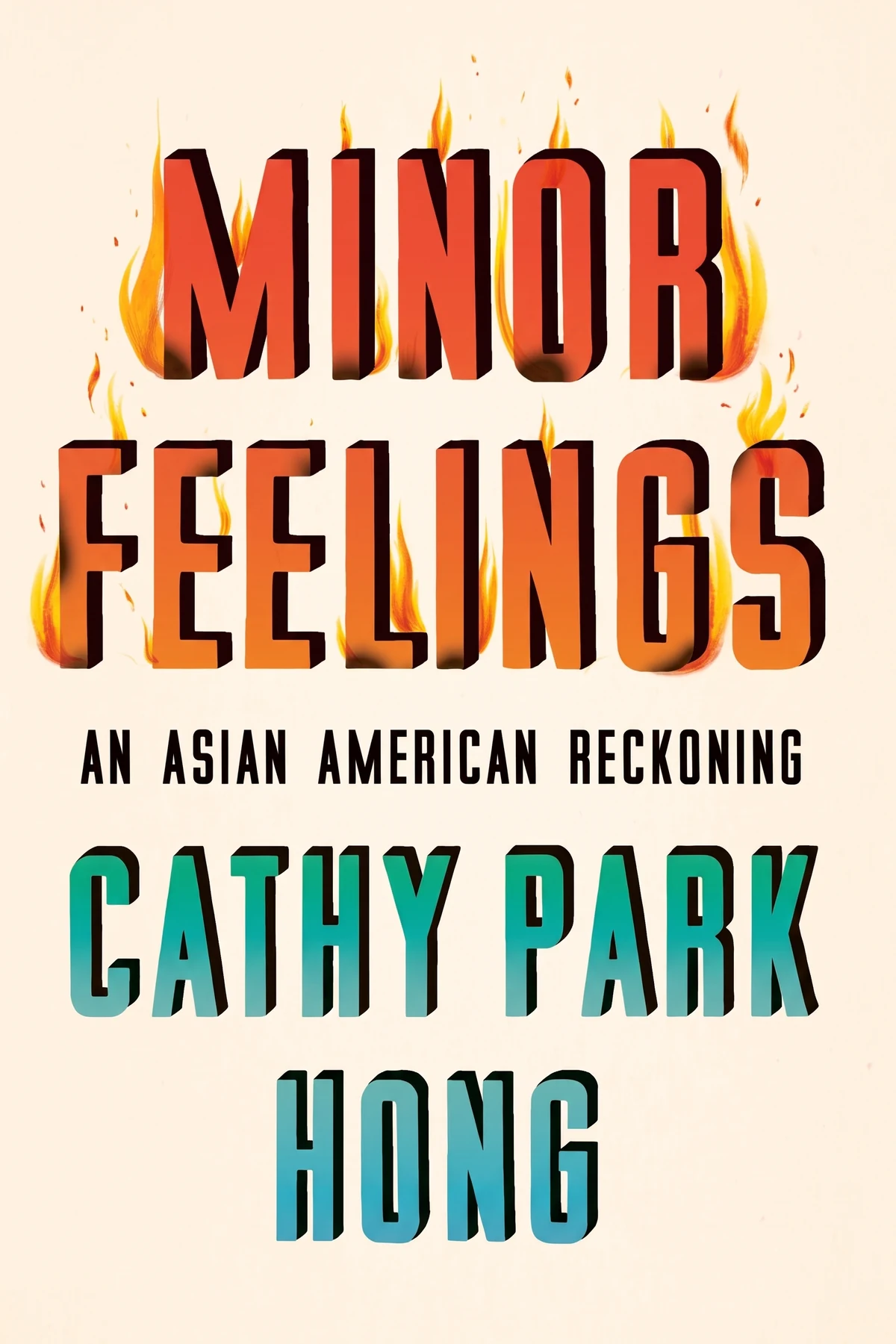
Table of Content
1. Introduction
2 min 01 sec
What happens when you look into a mirror and the reflection you see doesn’t match the story the world is telling about you? For many Asian Americans, this is a daily reality—a constant negotiation between a public image of quiet success and an internal world of complex, often painful emotions. We often hear about the model minority, a term that suggests Asian immigrants are a shining example of hard work and assimilation. But beneath that polished surface lies a much more complicated truth, one filled with historical trauma, cultural erasure, and a lingering sense of being an outsider in one’s own country.
In this exploration of Cathy Park Hong’s work, we are going to peel back the layers of these assumptions. Hong, a Korean American poet, offers a raw and deeply personal reckoning with what she calls the Asian condition. This isn’t just a list of grievances; it’s a profound analysis of how race colors every interaction, every memory, and every creative act. We’ll look at the psychological toll of being ignored by a society that often views race through a strictly Black and white lens, and we’ll discover why the seemingly harmless labels we use for immigrants can actually be deeply damaging.
Throughline here is one of reclamation—reclaiming history, reclaiming language, and reclaiming the right to feel. As we move through these ideas, notice how the personal stories of one family reflect the larger geopolitical movements of the last century. We are going to dive into the friction of being neither Black nor white, the radical influence of stand-up comedy on self-perception, and the way the English language itself can become a site of resistance. By the end of this journey, you’ll have a new perspective on what it means to belong and the hidden costs of the American dream.
2. The Purgatory of Identity
2 min 56 sec
Discover why the Asian American experience often feels like an invisible middle ground, caught between being ignored and being misunderstood by a society that lacks a clear category for them.
3. The Power of Minor Feelings
2 min 53 sec
Unpack the concept of minor feelings and learn how racialized dissonance creates a unique form of psychological friction in everyday American life.
4. Challenging the Myth of Childhood Innocence
2 min 41 sec
Explore how the traditional American narrative of childhood innocence often fails to account for the shame and historical trauma experienced by immigrant families.
5. Language as a Tool of Resistance
2 min 46 sec
See how ‘bad English’ and the creative use of language can become a powerful way for Asian Americans to reclaim their identity and challenge dominant cultural norms.
6. The Violence of Invisibility: The Case of Theresa Cha
2 min 43 sec
Examine the tragic story of artist Theresa Hak Kyung Cha and what the silence surrounding her death reveals about societal attitudes toward Asian women.
7. The Price of Conditional Acceptance
2 min 53 sec
Understand the radical history of the ‘Asian American’ label and the ongoing struggle against being treated as a model minority in exchange for true belonging.
8. Conclusion
1 min 53 sec
As we wrap up this exploration of the Asian American condition, it’s clear that the journey toward self-understanding is both deeply personal and intensely political. We’ve seen how the purgatorial state of being neither Black nor white can lead to a sense of invisibility and internalized shame. We’ve looked at the concept of minor feelings—those persistent, racialized dissonances that remind us that our reality is often at odds with the stories told by the dominant culture. And we’ve examined the heavy price of the model minority myth, which offers only a conditional form of acceptance in exchange for silence and assimilation.
Cathy Park Hong’s work serves as a powerful reminder that history is not just something that happened in the past; it lives on in our families, our language, and our very bodies. From the displacement caused by war to the mockery faced on a suburban street, these experiences shape who we are. But there is also hope in the act of naming these feelings. By embracing ‘bad English,’ by reclaiming the radical history of the term Asian American, and by honoring the lives of those who have been forgotten, we can begin to dismantle the structures that keep us in limbo.
The final takeaway is this: belonging is not something you earn through silence or achievement. It is something you claim by speaking your truth, even when it’s uncomfortable. It’s about recognizing that your feelings, no matter how ‘minor’ they may seem, are a valid and vital part of your identity. As you move forward, consider the stories you’ve been told about yourself and others. Challenge the easy categories and the quiet assumptions. By doing so, you contribute to a more honest and inclusive narrative—one where every reflection in the mirror is finally, fully seen.
About this book
What is this book about?
What does it truly mean to navigate the American landscape as an Asian person? This summary explores the profound and often uncomfortable truths behind the Asian American experience, moving far beyond the simplistic stereotypes of success and invisibility. It delves into the concept of minor feelings—the dissonant, racialized emotions that arise when the reality of your lived experience is constantly denied by the dominant culture. Through a series of interconnected reflections, we examine the historical weight of US intervention in Asia and how it continues to shape the lives of immigrants today. The narrative unpacks the precarious position of being caught between racial binaries, the struggle to claim a voice through a language that often feels foreign, and the radical act of female friendship. By the end, you will gain a deeper understanding of why the term Asian American was once a revolutionary call to action and how reclaiming that history is essential for dismantling the ingrained prejudices that still define the immigrant condition.
Book Information
About the Author
Cathy Park Hong
Cathy Park Hong, whose family is from Korea, is a highly acclaimed writer and educator. She has published three books of poetry and has been recognized with several prestigious writing fellowships, including the Windham-Campbell Prize, the Guggenheim Fellowship, and a fellowship from the National Endowment for the Arts.
Ratings & Reviews
Ratings at a glance
What people think
Listeners find this book to be a vital read that merges personal narrative with social analysis, with one listener noting how it pairs personal experience with cultural critique. The writing style earns praise for its incredible poetry, and listeners appreciate its raw honesty, with one listener highlighting how it explores the variegated truths and contradictions of Asian American identity. Listeners describe the work as fascinating, with one listener noting how it breaks away from Asian American stereotypes.
Top reviews
Sombat
Wow. This book gut-punched me in a way I wasn’t prepared for, especially the section where Hong defines 'minor feelings' as that heavy cognitive dissonance when American optimism clashes with your own lived reality. As a second-generation immigrant, I have spent much of my life gaslighting myself into thinking my discomfort was just a personal failure rather than a systemic byproduct. Hong’s prose is razor-sharp, likely due to her background as a poet, and she manages to articulate the 'oily flame' of shame that many of us carry but never name. Frankly, reading her analysis of the David Dao incident made me weep because it captured the expendability we often feel despite being labeled the 'model minority.' This isn't just a memoir; it's a structural dismantling of the lies we’ve been fed about assimilation. While some might find her tone abrasive, I found it incredibly refreshing to finally read an author who isn't trying to be 'likable' for a white audience.
Show moreSamroeng
The chapter on Richard Pryor alone makes this entire book a masterpiece of cultural analysis. Hong uses Pryor’s comedy as a lens to examine her own struggle with voice and identity, creating a bridge between Black and Asian American experiences that feels both urgent and deeply respectful. She avoids the trap of 'racial trauma as a competitive sport,' instead focusing on how white supremacy expects us to either disappear into the fog of whiteness or perform our pain for consumption. I was particularly struck by the history of Dr. Ralph Millard and the origins of double eyelid surgery during the Korean War—it was a visceral reminder of how colonization literally reshapes our bodies. This isn't a comfortable read, nor should it be, because it forces you to sit with the 'negative, dysphoric' emotions that society tells us to suppress. Truly, this is the most honest reckoning with Asian American identity I have ever encountered in print.
Show moreTod
Finally got around to reading this and I am absolutely blown away by how Hong articulates the 'static' of being a minority that is often excluded from the conversation. She describes being 'silicon'—so post-racial that we're barely considered real—and it hit me right in the gut because that's exactly how it feels to navigate corporate America as an Asian woman. The prose is punchy and raw, especially when she describes the humiliation of watching her parents struggle with English while being mocked by white children. There is a specific kind of rage in these pages that we aren’t usually 'allowed' to show, and seeing it externalized here felt like a massive weight being lifted off my shoulders. It’s a brilliant mix of memoir and manifesto that refuses to play by the rules of the publishing industry. This is the kind of book that you don't just read; you experience it, and it changes the way you look at every social interaction.
Show moreSoontorn
To live an ethical life is to be held accountable to history, and that is exactly what Cathy Park Hong does in this stunningly poetic collection. She refuses the 'amnesiac fog' of the American Dream, instead choosing to dig into the sediments of everyday racial experience to find the truth. I loved the way she challenged the idea that Asian Americans are 'next in line to be white,' arguing instead that we are actually next in line to disappear into a white ideology. Every sentence feels intentional, with a rhythmic quality that only a poet could achieve, yet it never feels overly flowery or inaccessible. This book gave me the vocabulary to describe the 'paranoia' I’ve felt my entire life but could never justify to my white peers. It’s a reckoning in the truest sense of the word, forcing the reader to look at the structural inequities that underpin our 'deluded reality.' It’s essential, painful, and deeply beautiful.
Show moreRafael
This book is a vital corrective to the one-dimensional stereotypes of Asians as 'industrious automatons' or 'math whizzes' that still dominate the cultural landscape. Hong dives into the messy, 'god-awful' parts of the immigrant experience—the trauma, the gambling, the difficult parenting—and treats her subjects with a complexity that is rarely granted to us. Her solidarity with Black and Brown struggles is woven throughout, making it clear that the dismantling of white supremacy is a collective project. I particularly enjoyed her take on the publishing industry and how POC authors are often forced to craft 'spectacles' of trauma for the white gaze. It’s a fierce, intellectual, and deeply moving book that balances heavy theory with the intimacy of a late-night conversation with a close friend. If you’ve ever felt like your reality was being gaslighted by society's forced optimism, you need to read this immediately. It is easily one of the most important books of the decade.
Show moreSam
Cathy Park Hong has written something remarkably courageous that blurs the lines between cultural criticism and deeply personal confession. The way she examines the history of the model minority myth—tracing it back to Cold War propaganda—completely changed my perspective on my own family’s history in this country. I particularly loved the chapter on Theresa Hak Kyung Cha, which was both heartbreaking and a vital piece of literary recovery that I knew nothing about before. My only slight gripe is that the essays can feel a bit disconnected toward the middle, shifting from high-level sociopolitical analysis to very specific anecdotes about her college friends. To be fair, her writing is so evocative that even the slower parts are worth reading for the sheer craft of her sentences. It’s an essential text for anyone trying to understand the nuanced, often invisible forms of racism that Asian Americans navigate daily. She refuses to provide easy answers, which is exactly why this book succeeds.
Show morePear
Ever wonder why you feel like you're constantly apologizing for taking up space? That’s the core of what Hong explores here, and she does it with a bluntness that is both jarring and necessary for our current moment. I found her exploration of 'the stress of anticipation'—the constant wait for the next racial microaggression—to be incredibly validating for my own mental health journey. The writing is dense and clearly influenced by her poetic sensibilities, so don't expect a light, breezy memoir you can flip through in one sitting. I did feel that her critique of Wes Anderson and 'Moonrise Kingdom' was a bit of a detour, even if her points about white nostalgia were technically sound. Despite that, the book offers a variegated truth about what it means to be 'Othered' in a country that claims to be a melting pot. It's a dense, challenging, and ultimately rewarding collection that demands your full attention.
Show moreRung
Picked this up on a whim and found myself captivated by the way Hong weaves together her personal artistic journey with the history of Asian exclusion in the US. The section titled 'An Education' gave me such a vivid sense of the magnetic, toxic, and transformative power of female friendships, even if it felt a little long at times. She has this incredible ability to take a small moment—like a tense interaction in a nail salon—and use it to explain a massive psychological concept like internalized self-hatred. To be honest, I think some readers might find her perspective a bit narrow since it focuses so heavily on the East Asian experience, but she does acknowledge this limitation herself. The book is less a definitive history and more a series of 'shots fired' at the status quo of the art world and academia. Her voice is singular, acidic, and deeply intelligent, making this a standout in the genre of essay collections.
Show moreIsaiah
After hearing so much buzz about this collection, I went in with high expectations and came away feeling somewhat conflicted. There is no denying that Hong is a brilliant poet, and her opening essays on the 'invisible' status of Asians in the racial hierarchy are some of the best things I’ve read all year. However, I struggled with the second half of the book, specifically the long-winded sections about her undergraduate years at Oberlin and her relationships with other artists. While I understand she was trying to show the complexities of Asian female friendship, those chapters felt self-indulgent and lacked the sharp, universal resonance of the earlier entries. Look, I appreciate her honesty about her own self-doubt and 'minor feelings,' but the narrative felt like it lost its way toward the end. It’s a strong starting point for a larger conversation, but it didn’t quite feel like the cohesive manifesto I was hoping for. Still, the quotes I highlighted will stay with me for a long time.
Show moreCherry
Not what I expected based on the glowing reviews, and I actually found it quite difficult to finish because of the author's tone. While I appreciate the importance of discussing racial identity, Hong’s writing often comes across as incredibly arrogant and self-important, which made it hard for me to connect with her message. She spends a lot of time projecting her own insecurities onto every person she meets, like the teenage boy at the nail salon who she assumes is filled with self-hatred just because they didn't have a deep conversation. Frankly, as an Asian American myself, I didn't find her 'minor feelings' to be universal at all; in fact, much of her experience felt rooted in a very specific, elite academic bubble that doesn't reflect my reality. The history of Theresa Hak Kyung Cha was interesting, but the rest of the book felt like a series of disconnected 'hot takes' rather than a cohesive analysis. It felt more like a venting session than a relatable memoir.
Show moreReaders also enjoyed
A Promised Land
Barack Obama
A River in Darkness: One Man’s Escape from North Korea
Masaji Ishikawa
A Spy Among Friends: Philby and the Great Betrayal
Ben Macintyre
A Biography of Loneliness: The History of an Emotion
Fay Bound Alberti
A Force for Good: The Dalai Lama's Vision for Our World
Daniel Goleman

A Year in the Life of William Shakespeare: 1599
James Shapiro
AUDIO SUMMARY AVAILABLE
Listen to Minor Feelings in 15 minutes
Get the key ideas from Minor Feelings by Cathy Park Hong, plus 5,000+ more titles in English and Thai.
- 5,000+ titles
- Listen as much as you want
- 7-day free trial
- Cancel anytime







