
15 min 55 sec
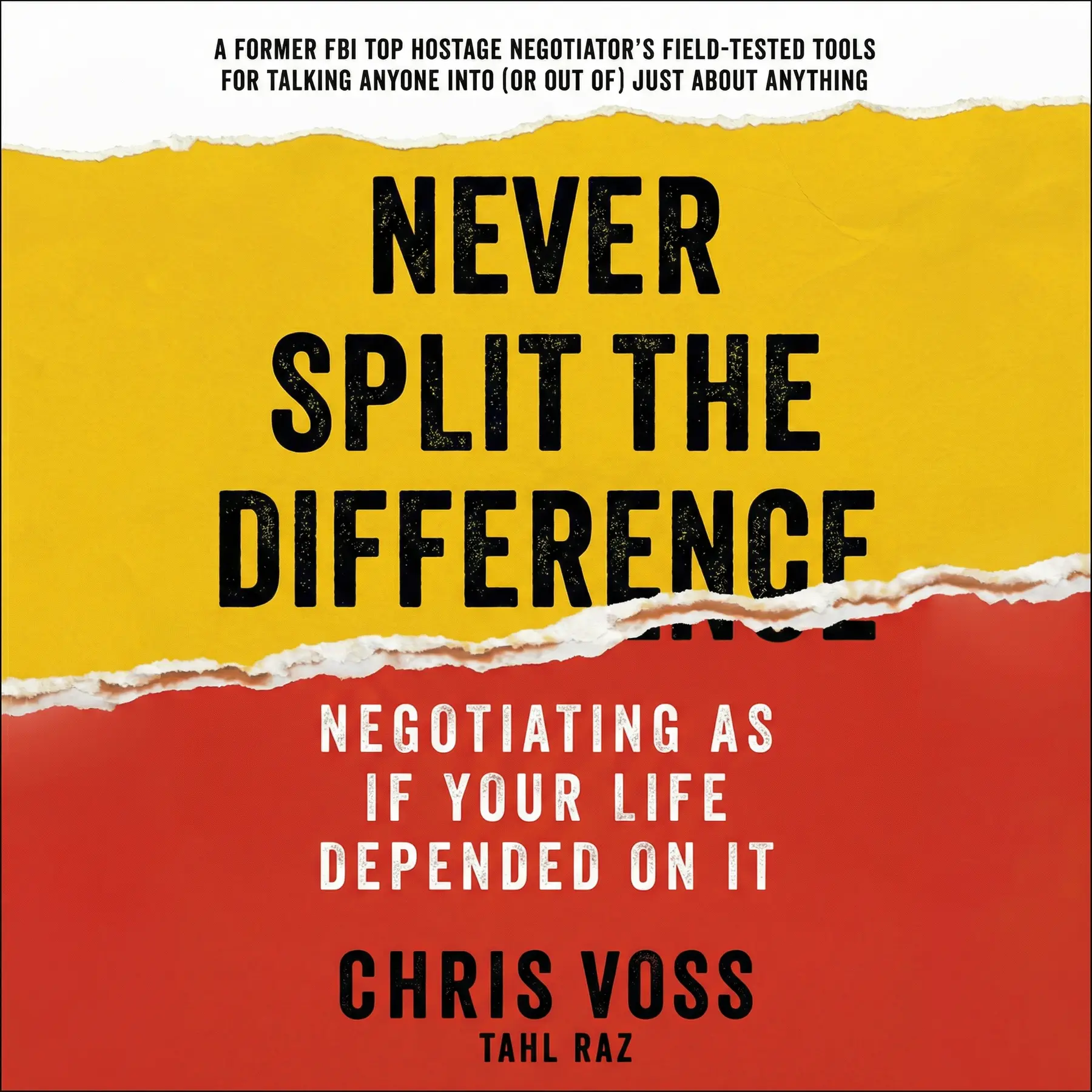
Never Split the Difference: Negotiating As If Your Life Depended On It
By Chris Voss, Tahl Raz
Master the psychological art of negotiation by learning how to build trust, use tactical empathy, and uncover hidden leverage. This guide shows why emotional intelligence beats logic in every high-stakes conversation.
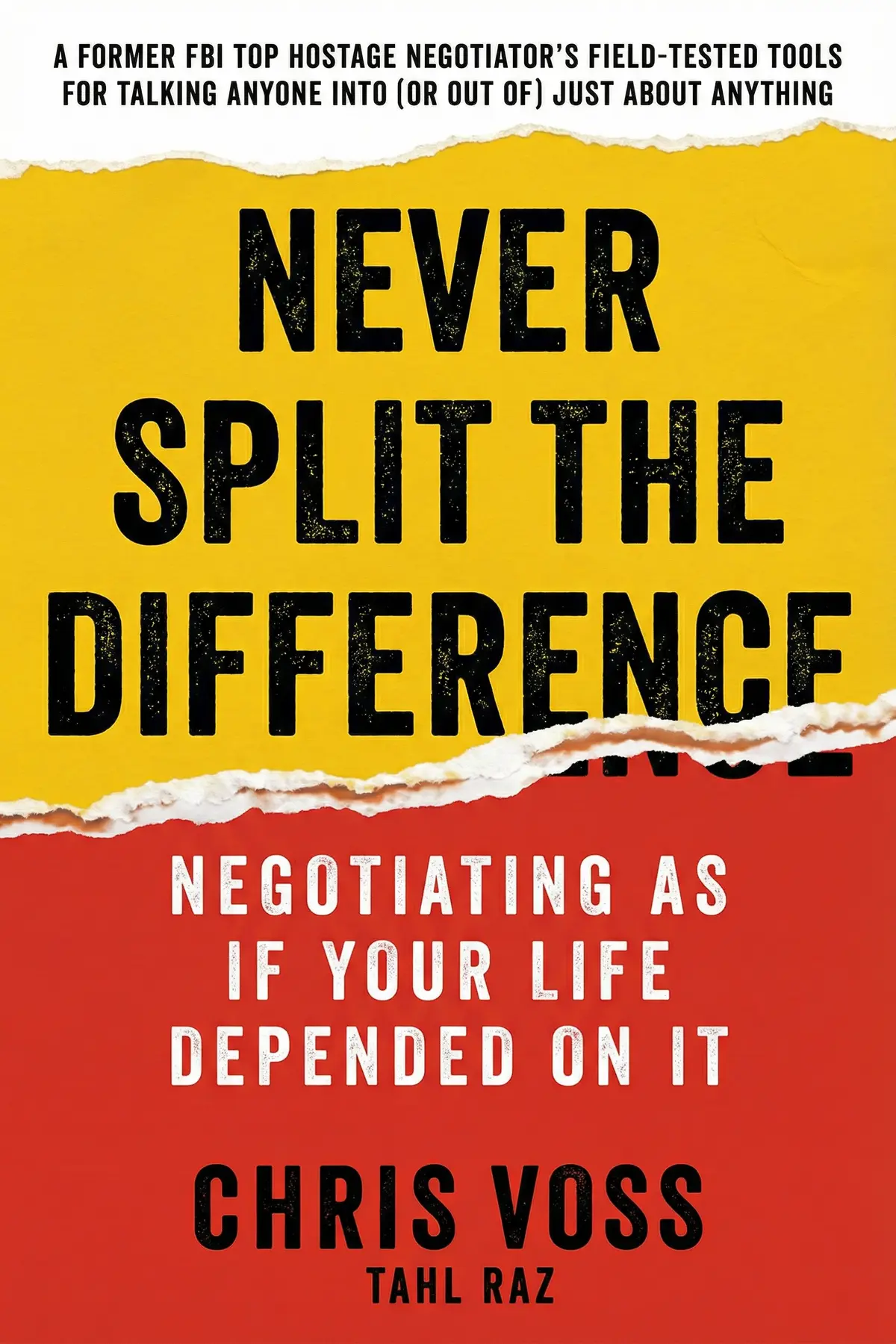
Table of Content
1. Introduction
1 min 33 sec
Have you ever walked away from a conversation feeling like you conceded too much, or perhaps you didn’t get what you really needed? Most of us have been taught that negotiation is a logical tug-of-war where the goal is to find a middle ground. But if you think about your most stressful discussions, you probably realize they were anything but logical. Whether you’re arguing with a partner about household chores or sitting across from a boss who refuses to budge on your salary, emotions are usually in the driver’s seat.
This is where many traditional strategies fail us. They assume people are rational actors making calculated moves. In reality, human beings are unpredictable, driven by hidden fears and instinctive biases. To navigate these waters, we need a different set of tools—ones forged in the highest possible stakes. When a negotiator is dealing with a crisis situation, there is no room for ‘splitting the difference.’ You can’t compromise on a life.
In this summary, we are going to explore a radical approach to communication that prioritizes psychological awareness over cold intellect. You’ll learn how to transform conflict into collaboration by practicing tactical empathy and active listening. We will move through techniques that help you build instant rapport, uncover what the other person is actually thinking, and take control of a room without ever raising your voice. By the end, you’ll see that negotiation isn’t just a professional skill; it’s a fundamental way of interacting with the world that allows you to get what you want while keeping your relationships intact. Let’s begin by dismantling the myth that human beings are rational creatures.
2. The Myth of Rationality
1 min 57 sec
Explore why traditional logic-based negotiation fails and how understanding the deep-seated cognitive biases of the human brain can give you a massive psychological advantage.
3. The Science of the Voice and Mirroring
2 min 00 sec
Learn how the simple act of repeating someone’s words and controlling your vocal tone can create a deep sense of safety and trust in any conversation.
4. The Power of Labeling Emotions
2 min 09 sec
Discover how verbalizing another person’s feelings can diffuse tension and build tactical empathy, making it easier to influence their final decisions.
5. Why 'No' is the Beginning of a Solution
2 min 12 sec
Reframe your fear of rejection by seeing ‘no’ as a powerful tool that provides people with a sense of control and clears the path toward a real ‘yes.’
6. The Illusion of Fairness and the Trap of Compromise
2 min 09 sec
Understand why the common urge to ‘split the difference’ often results in a bad deal for everyone and learn how to navigate the emotional weight of fairness.
7. Uncovering the Hidden Black Swans
2 min 26 sec
Master the art of identifying unpredictable, game-changing information that can completely shift the leverage in your favor during a negotiation.
8. Conclusion
1 min 29 sec
Mastering the art of negotiation isn’t about being the loudest person in the room or having the most facts. It is about having the courage to be quiet, the patience to listen, and the psychological insight to see what is really happening beneath the surface of a conversation. We’ve seen how traditional logic falls short because it ignores the emotional reality of the human brain. By adopting the mindset of a high-stakes negotiator, you can transform your interactions from battles of will into collaborative problem-solving sessions.
Remember the core tools we’ve discussed: use your voice to project calm and authority, mirror words to build a bridge of trust, and use labeling to diffuse negative emotions through tactical empathy. Don’t be afraid of ‘no’—view it as an opportunity to find the truth. And never settle for a weak compromise that leaves everyone unhappy. Instead, stay alert for the ‘Black Swans’—those hidden pieces of information that provide the leverage you need for a real breakthrough.
The throughline of this entire approach is simple: people want to be understood. When you make someone feel safe and heard, you aren’t just being a good communicator; you are gaining the power to influence their behavior and reach agreements that were previously out of reach. Take these techniques into your next meeting, your next phone call, or even your next dinner conversation. You’ll find that when you stop trying to ‘win’ the argument and start trying to understand the person, you’ll end up getting exactly what you need.
About this book
What is this book about?
This summary explores the groundbreaking negotiation strategies developed by a former FBI lead hostage negotiator. It shifts the focus away from traditional, purely rational bargaining and instead dives deep into the messy, emotional reality of human psychology. By understanding that most decisions are driven by irrational impulses and cognitive biases, you can learn to navigate conflicts more effectively using tools like active listening, mirroring, and tactical empathy. The promise of this approach is a total transformation in how you handle disagreements, whether you are asking for a raise, closing a business deal, or simply talking with your family. You will learn how to make others feel safe and understood, which in turn makes them more likely to collaborate. Rather than settling for weak compromises that leave everyone unhappy, you will discover how to uncover hidden information and use leverage to reach agreements that truly serve your interests. It is a roadmap for becoming a more persuasive, confident, and empathetic communicator in every area of your life.
Book Information
About the Author
Chris Voss
Chris Voss is a former lead kidnapping negotiator for the FBI with decades of experience in high-pressure international crises. He is the founder of The Black Swan Group, a consultancy that brings these elite negotiation tactics to the business world, and has shared his expertise as a teacher at prestigious institutions like Harvard and MIT’s Sloan School of Management. Tahl Raz is an accomplished journalist and the coauthor of several high-profile books, including the New York Times bestseller Never Eat Alone.
Ratings & Reviews
Ratings at a glance
What people think
Listeners find this work very accessible and straightforward, packed with actionable lessons and meaningful observations about human psychology. The book is structured to assist people in refining their negotiation skills, as one listener pointed out how effectively the communication tactics are described. Additionally, listeners value the authentic and gripping anecdotes that keep them hooked, and they prize the way the content strengthens their communication and personal bonds.
Top reviews
Paiboon
Ever wonder why logic fails in a heated argument? This book tosses the traditional 'rational' negotiation playbook out the window and replaces it with raw human psychology. Voss argues that emotions aren't obstacles to be ignored, but tools to be leveraged through tactical empathy. I found the concepts of labeling and mirroring to be immediately applicable in my daily interactions at the office. The prose is punchy and moves fast, keeping you hooked with high-stakes FBI stories that illustrate each principle perfectly. While some might find the tactics a bit calculating, the truth is that they simply reflect how our brains actually process information. It’s not about being a jerk; it’s about understanding the person across from you. If you want to stop getting steamrolled and start finding better solutions, this is essential reading.
Show moreSienna
Forget the usual corporate fluff that tells you to meet in the middle. Voss makes a compelling case that 'splitting the difference' usually leads to a terrible deal for everyone involved. What I loved most about this book was how it reframes negotiation as an act of discovery rather than a battle of wills. By using calibrated 'How' and 'What' questions, you force the other party to help you solve your problem. It sounds manipulative on paper, but in practice, it actually makes the other person feel heard and respected. The writing is incredibly engaging, almost like a thriller novel, but with actionable takeaways at the end of every chapter. It’s rare to find a business book that is both a page-turner and a functional manual for life. My communication skills have improved 100%.
Show moreZoey
Not what I expected from a business book, but exactly what I needed. Voss breaks down complex psychological concepts into simple tools that anyone can use, regardless of their profession. I particularly enjoyed the section on the 'Accusation Audit.' It’s a brilliant way to disarm someone by calling out their negative perceptions of you before they even have a chance to voice them. In my experience, this alone has saved several failing projects at work. The book is highly readable and avoids the dry, academic tone you find in most negotiation texts. It’s grounded in the reality of how people actually think and feel, not how we wish they would behave. If you want to understand the hidden drivers behind human interaction, grab a copy. It’s an eye-opening look at the art of persuasion.
Show moreNarumon
After hearing everyone rave about this, I finally dove in and I’m glad I did. This isn't just for 'power hungry' business people; it's for anyone who has to deal with other humans. The insight that 'No' is the start of the negotiation, not the end, was a massive 'aha' moment for me. People feel safe when they say no, and Voss teaches you how to use that safety to uncover what they really want. The writing style is clear and accessible, making it easy to digest even for those of us who aren't in sales. I’ve already used the 'How am I supposed to do that?' question in a difficult client meeting and the results were almost spooky. It works. This book provides a realistic look at human behavior that most 'self-help' gurus completely miss.
Show moreTippawan
Chris Voss delivers a masterclass in communication that feels both dangerous and essential. He manages to bridge the gap between high-stakes crisis negotiation and everyday life with surprising ease. I was worried it would be too focused on 'winning' at all costs, but it’s actually more about deep listening and emotional intelligence. The book is structured beautifully, with each chapter building on the last to create a comprehensive system for influence. Not gonna lie, I was skeptical about the 'Late Night FM DJ Voice,' but it actually makes a huge difference in de-escalating tension. The stories are gripping and the lessons are immediately actionable. If you are looking for a way to improve your relationships and your bank account simultaneously, look no further. This is a five-star resource for understanding what makes people tick.
Show moreTaweesak
Picked this up after hearing it’s the 'anti-Getting to Yes,' and I wasn't disappointed by the shift in perspective. Instead of focusing on win-win scenarios that often feel unrealistic, Voss digs into the messy reality of irrational human behavior. The techniques, like the Accusation Audit, sounded bizarre at first but actually help clear the air in tense meetings. I do think some of the hostage negotiation anecdotes are a bit repetitive, yet they serve their purpose in hammering home the high stakes. Look, I’m not saying every car salesman is a terrorist, but the principles of calibrated questions definitely help in those scenarios. To be fair, some sections feel a bit like filler, especially if you’ve already studied basic behavioral psychology. Still, it’s a very practical guide that offers more than just theory. It significantly changed how I approach my 'No' responses.
Show moreNam
As someone who struggles with social anxiety, the idea of 'negotiating' always terrified me. This book helped me realize that it’s really just about listening and repeating what you hear. The technique of 'Mirroring'—simply repeating the last few words someone said—is a total game changer for keeping a conversation going without feeling awkward. I started using these tips with my landlord and managed to keep my rent from increasing this year. My only complaint is that Voss comes across as a bit of an egoist at times. He definitely thinks his way is the only way, and he doesn't have much patience for other styles. However, if you can get past the bravado, the psychological insights are gold. It's a very readable guide for anyone who wants to navigate human nature more effectively.
Show moreBrooklyn
The chapter on 'creating the illusion of control' is worth the price of the book alone. Most of us try to dominate conversations when we want something, but Voss shows that giving the other person the floor is actually more powerful. By asking calibrated questions, you guide them to the conclusion you want while they feel like they’re in charge. It’s brilliant. My only gripe is the heavy reliance on hostage stories; while exciting, they don't always translate perfectly to deciding where to go for dinner or asking for a small raise. Some of the advice feels a little 'one-size-fits-all,' ignoring personality differences like introversion. Still, the core lessons on empathy and active listening are universal. It’s a solid addition to any professional’s library, even if you have to filter out some of the FBI intensity.
Show moreUbolwan
To be honest, I have mixed feelings about this one. On one hand, the storytelling is top-notch and the concepts like 'System 1' vs 'System 2' thinking are fascinating. On the other hand, it feels like it could have been a long blog post instead of a full book. There is a lot of filler between the actual tips, and the author spends a lot of time patting himself on the back. I also found some of the tactics, like the 'Akselrod' haggling model, to be way too complicated for everyday use. Who has time to calculate diminishing percentages during a quick car deal? It's a decent read if you like true crime stories mixed with business advice, but don't expect it to magically solve every conflict in your life. It’s more of a toolbox than a bible.
Show moreGift
Frankly, I felt a bit greasy after finishing this. The author’s tone often leans into a specific type of aggressive masculinity that assumes everyone else is just a pawn to be 'mirrored' or 'labeled.' While the FBI stories are gripping, they often feel like a stage for Voss to show off how he outsmarted everyone around him. It ignores the reality that these high-pressure tactics don't land the same way when coming from a woman or someone without his inherent authority. Much of the advice feels like a manual for subtle manipulation rather than genuine communication or relationship building. I’m sure it’s a goldmine for the 'alpha' business crowd, but for anyone looking for ethical connection, it’s a bit much. I learned what to watch out for from people who use these tricks, which is the only real value I got.
Show moreReaders also enjoyed
AUDIO SUMMARY AVAILABLE
Listen to Never Split the Difference in 15 minutes
Get the key ideas from Never Split the Difference by Chris Voss, plus 5,000+ more titles in English and Thai.
- 5,000+ titles
- Listen as much as you want
- 7-day free trial
- Cancel anytime







