

ADHD an A-Z: Figuring It Out Step by Step
Leanne Maskell
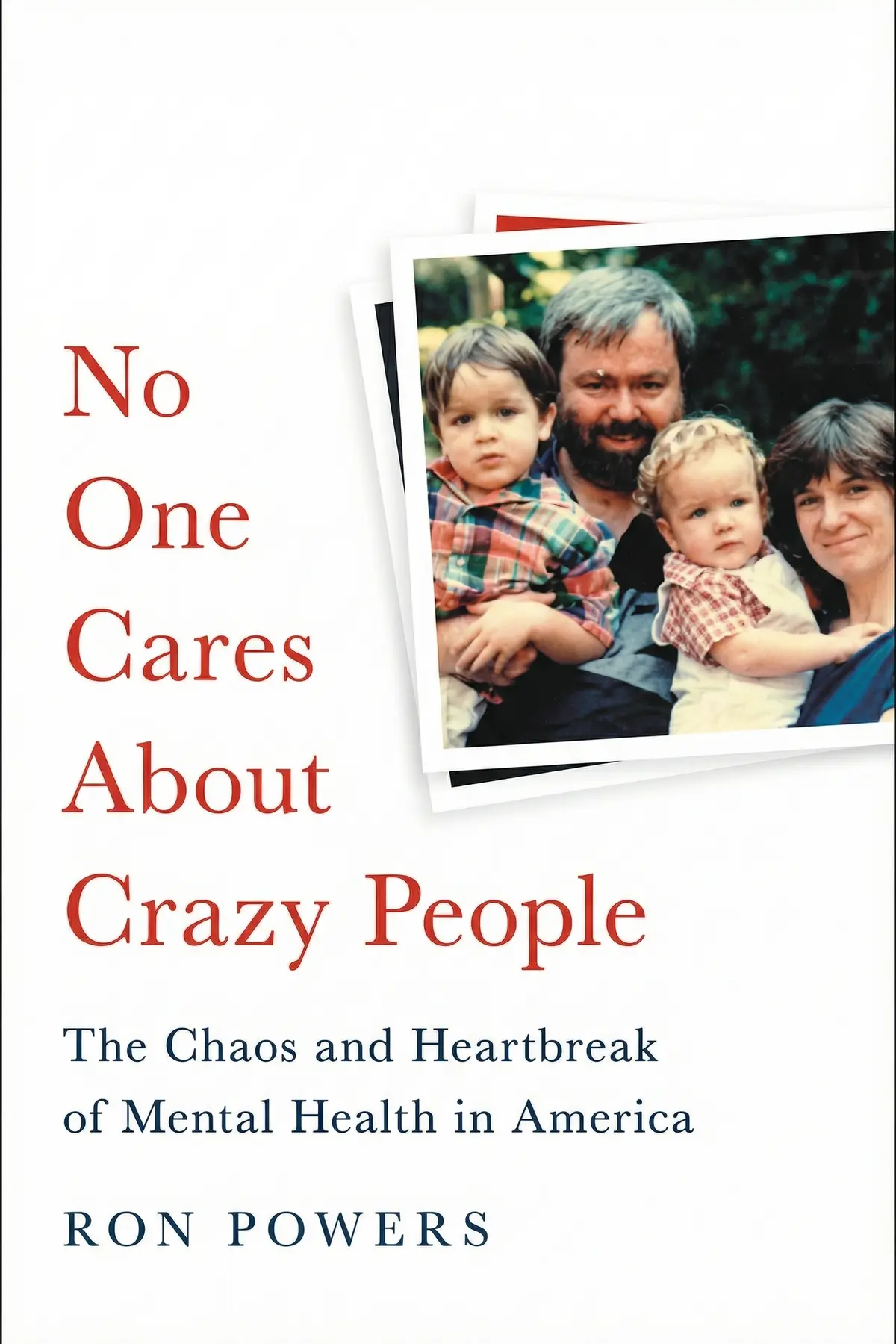
An urgent examination of America’s broken mental health system, blending historical analysis with a father's moving account of his sons’ struggles with schizophrenia and the societal neglect of the vulnerable.
1 min 41 sec
Every year, millions of families navigate the complex and often heartbreaking world of mental illness. We often talk about these conditions—depression, anxiety, or schizophrenia—as medical issues, yet the way our society handles them frequently looks more like a legal or criminal matter. This is the central contradiction at the heart of our exploration today. We are looking into the history and current reality of mental healthcare in America, a system that has, over decades, shifted away from hospital-based care and toward a reality where the street or a jail cell becomes the primary destination for the vulnerable.
This isn’t just a story of statistics or dry policy changes. It is a deeply personal narrative shaped by Ron Powers, an author who has witnessed the devastation of schizophrenia within his own home. By blending the history of psychiatry with the lived experience of his two sons, Powers provides a lens through which we can see how the best of intentions often paved the path to our current crisis. Through this summary, we will trace the origins of modern mental health policy, examining why the transition to community care failed and how philosophical shifts in the mid-twentieth century fundamentally changed the rights and the risks for those in a psychotic state. We will see how science, law, and economics converged to create a world where, all too often, the most distressed among us are simply left to fend for themselves. This journey is a call to look more closely at who we are as a society and to ask what it really means to care for those who cannot care for themselves.
2 min 27 sec
Discover how the transition from adolescence to adulthood can trigger a dormant genetic condition, leading to the onset of a devastating psychotic break.
2 min 16 sec
Explore how the movement to protect the civil liberties of the mentally ill inadvertently left many without the ability to access life-saving care.
2 min 09 sec
Trace the history of the 1960s movement that promised community-based healing but ultimately led to a national crisis of homelessness.
2 min 05 sec
Learn how the collapse of the mental health system has turned the American correctional system into the largest provider of psychiatric care.
2 min 19 sec
Discover why the future of mental health depends on shifting our focus toward early diagnosis and holistic community-integrated treatment.
1 min 20 sec
In reflecting on the narrative of mental health in America, we are left with a sobering picture of how a lack of public concern and political will can lead to systemic failure. We have seen how the biological complexity of schizophrenia meets a legal system that often prioritizes a misunderstood version of liberty over the actual health of the individual. We have traced the path from the closing of state hospitals to the overcrowding of our prisons, revealing a society that has effectively criminalized a medical condition. Yet, the throughline of this exploration is not just one of despair, but one of urgent possibility.
The stories of the families affected by these policies, including the author’s own, remind us that behind every statistic is a human being—a son, a brother, a neighbor. The evidence suggests that when we choose to invest in early intervention and holistic rehabilitation, the results are transformative. We can move toward a future where mental illness is treated with the same urgency and compassion as any other life-threatening disease. The actionable takeaway for all of us is to support policies that fund community care and to challenge the stigma that keeps these issues in the shadows. By refusing to turn a blind eye, we can begin to build a society that finally chooses to care for the people it has ignored for far too long.
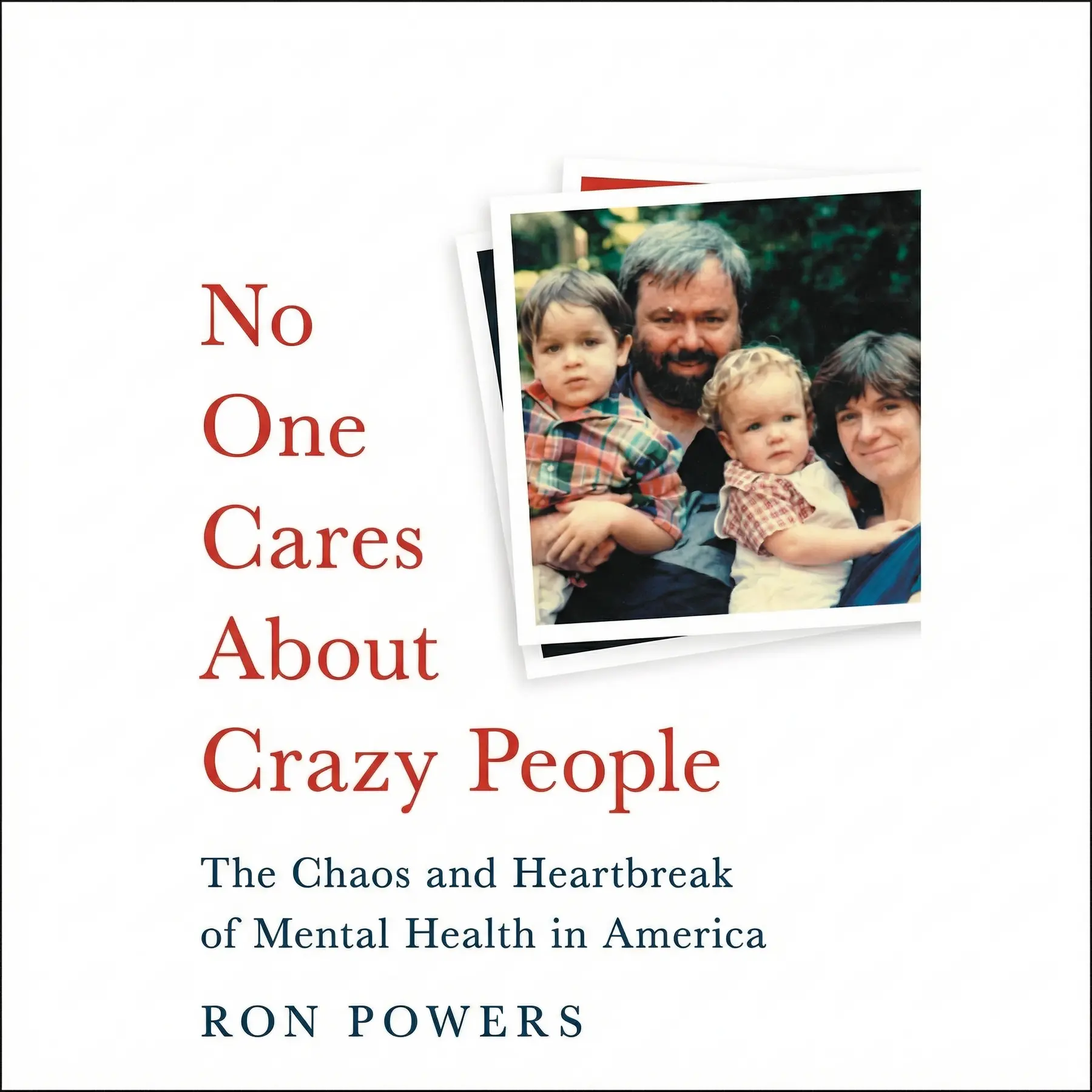
No One Cares About Crazy People is a deeply moving and meticulously researched exploration of how the United States has historically failed those suffering from severe mental illness. Ron Powers, a Pulitzer Prize-winning journalist, uses the tragic personal history of his own two sons—both of whom were diagnosed with schizophrenia—to ground a much larger narrative about policy failures, the closure of psychiatric hospitals, and the subsequent criminalization of the mentally ill. The book promises a sobering look at the evolution of psychiatric care, from the well-intentioned but ultimately disastrous era of deinstitutionalization to the rise of a pharmaceutical industry that often prioritizes profits over long-term stability. It seeks to answer why so many Americans with severe conditions end up on the streets or in prison, while offering a compassionate vision for a future where treatment, early intervention, and community support replace systemic abandonment.
Ron Powers is a celebrated novelist and journalist. In 1973, he was awarded the Pulitzer Prize for Criticism, and, in 2000, he co-authored Flags of Our Fathers, a New York Times best seller. He has a deeply personal perspective on mental illness.
Listeners find this work exceptionally engaging, with one noting that it flows like a novel, and they value its thoroughly documented fusion of historical context and data. The book offers a perceptive examination of mental health, particularly within the chapters detailing the history of American healthcare, and listeners commend the author’s superb prose and gripping narrative structure. They characterize it as a moving and brave account that resonates deeply with audiences, making it essential reading for those advocating for mental health.
Wow. Ron Powers has written something that feels less like a dry textbook and more like a visceral, beating heart. I was struck by the way he weaves the history of lobotomies and the failures of the 1960s deinstitutionalization movement into the tragic personal narrative of his two sons. It’s a courageous piece of work that doesn't shy away from the gut-wrenching reality of schizophrenia. While the dense historical chapters might slow some readers down, they provide essential context for why our system is so broken today. This is a must-read for anyone trying to understand the human cost of mental health policy in America. I found myself in tears by the final chapter because the prose is just that powerful.
Show moreThis book should be mandatory reading for every lawmaker in the country. Powers exposes the "chaos and heartbreak" promised in the subtitle with breathtaking clarity and beautiful prose. He chronicles the shift from horrific asylums to the modern reality where jails have become our primary mental health facilities. The narrative arc regarding his sons, Dean and Kevin, is handled with such dignity and grace that it's impossible not to be moved. Not gonna lie, the chapter on the history of lobotomies made my skin crawl, but it’s a history we cannot afford to forget. While some might find his stance on involuntary treatment controversial, his perspective as a parent who has lived through the worst-case scenario is invaluable. Truly a poignant and necessary piece of literature for mental health advocates.
Show morePowers has crafted a narrative arc that is as compelling as any novel I've read this year. The book succeeds because it humanizes a topic that is too often reduced to cold statistics or sensationalist headlines. By sharing Kevin’s story, the author gives a voice to the millions of people that society prefers to ignore or lock away in prisons. Personally, I found the chapters on the eugenics movement in the United States to be the most chilling part of the entire work. It’s a sobering reminder that our current neglect is part of a long, dark history of state-sanctioned cruelty. This book doesn't offer easy answers, but it forces you to look at the problem directly. It is a courageous, brilliant, and heart-wrenching achievement.
Show moreAfter hearing so much about this, I finally dove in and found it quite gripping. Ron Powers writes with the sharp eye of a seasoned journalist but the tender heart of a grieving parent. The book flows like a novel, which is surprising given how much data and history he manages to pack into every chapter. Truth is, the sections on the pharmaceutical industry and patent law were a bit dry, but they highlighted how corporate greed exacerbates our national health crisis. I appreciated the unflinching look at Kevin’s struggle and the ultimate tragedy that hit their family. It’s a heavy read that demands your full attention, though I wish he had spent more time interviewing others with the diagnosis rather than just speaking for them. Still, it’s a brilliant, necessary contribution to the field.
Show moreThe history of American healthcare has never felt so personal or so devastating. I was fascinated by the way Powers tracks the evolution of psychiatric treatment from the era of Dorothea Dix to the present day. He does a brilliant job explaining how well-intentioned reforms often led to even worse outcomes for the vulnerable. Look, the book is incredibly dense and at times the chronological jumps—like placing the WWII aftermath after deinstitutionalization—are a bit disorienting. However, the emotional core of the book remains steady because of his commitment to telling his sons' stories. He manages to make the reader care about the policy by showing the human faces of those it fails. It’s an insightful, if occasionally disorganized, exploration of a systemic nightmare.
Show morePicked this up because I have a family member struggling with similar issues. This was a painful but cathartic experience that mirrored so many of my own frustrations with the medical system. Ron Powers captures the sheer helplessness of watching someone you love succumb to a brain disorder while the law stands by and does nothing. Frankly, I didn't mind the long descriptions of his sons' early years because it reminded me that they are people first, not just their symptoms. My only gripe is that the book sometimes feels like it's trying to do too much at once. It’s part history, part memoir, and part political manifesto, and occasionally those gears grind against each other. Regardless, the writing is top-notch and the message is urgent.
Show moreEver wonder why so many of our homeless neighbors seem to be struggling with their mental health? This book provides the historical and political answers to that question in devastating detail. Ron Powers explains the "great emptying" of the asylums and how it traded one form of misery for another. His writing style is incredibly engaging, making complex topics like neuroscience and pharmaceutical history accessible to everyone. In my experience, books on this topic can be dry, but this one kept me turning pages late into the night. I do think he pooh-poohs civil liberties concerns a bit too casually, which made me uneasy as a reader. But his passion is undeniable and his research is thorough. It’s a thought-provoking look at a crisis that affects us all.
Show moreThe structure of this book is a bit of a puzzle to me. Powers alternates between a deeply personal memoir and a journalistic history of psychiatric care, but the two genres don't always mesh perfectly. To be fair, the historical sections on eugenics and the development of Thorazine are incredibly well-researched and eye-opening for a layperson. However, the memoir sections felt slightly unbalanced, focusing heavily on his sons' childhoods long before the onset of their illness. I wanted more insight into their adult lives and the actual day-to-day experience of managing their care. His policy suggestions also raised some red flags for me regarding civil liberties and patient autonomy. It's an important conversation starter, but it feels more like a father's lament than a definitive roadmap for reform.
Show moreIs this a history book or a diary? It’s a bit of both, and that’s both its strength and its weakness. I loved the deep dive into the development of antipsychotic drugs, though the legal rants about patent law and Bernie Sanders felt like they belonged in a different book entirely. Powers is a great writer, but he has a tendency to go off on tangents that don't always serve the central theme. For example, the detailed account of a car accident from his son’s youth felt more like a personal grievance than a relevant data point for a book on national policy. It’s an engaging read if you want to understand one man’s perspective, but I’d supplement it with other memoirs written by patients themselves to get a fuller picture.
Show moreNot what I expected based on the glowing blurbs I saw online. While I sympathize deeply with the author's family tragedy, I found his approach to the subject matter quite problematic and one-sided. Powers spends a significant amount of time attacking figures like Thomas Szasz while glossing over the very real concerns of the "mad pride" movement. His tone often felt dismissive of the civil liberties of the people he claims to be championing. Furthermore, the memoir portions were frequently interrupted by long tangents about Darwin or the history of pharmaceutical precursors that felt like filler. It’s more of a vent for a frustrated caretaker than an objective look at mental illness. I was looking for science and policy but mostly got authorial speculation and family anecdotes that lacked the perspective of the sons themselves.
Show moreLeanne Maskell


Johny Pitts


bell hooks
AUDIO SUMMARY AVAILABLE
Get the key ideas from No One Cares About Crazy People by Ron Powers, plus 5,000+ more titles in English and Thai.







