
18 min 12 sec
Other Minds: The Octopus, the Sea, and the Deep Origins of Consciousness
Explore the fascinating evolutionary journey of the octopus. This summary dives into the unique biology, distributed intelligence, and mysterious consciousness of cephalopods, offering a new perspective on what it means to be a sentient being.
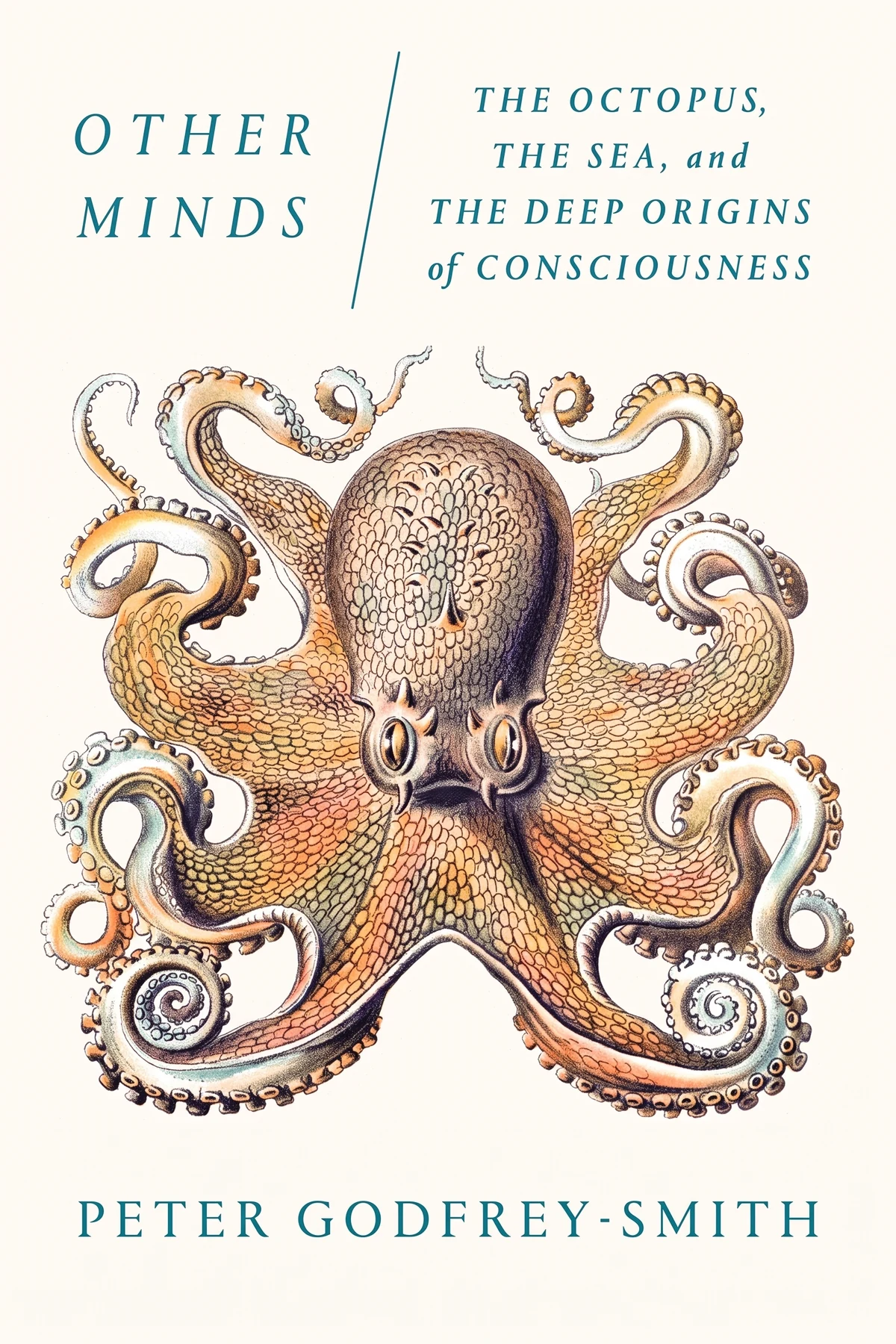
Table of Content
1. Introduction
1 min 46 sec
Imagine, for a moment, that you are floating in the cool, clear waters of a coral reef. Beneath a jagged ledge, you spot a pair of highly observant, intelligent eyes watching you. This isn’t a fish or a fellow diver; it is an octopus. If you reach out, it might reach back, wrapping a suckered arm around your hand not just to grip, but to taste and explore who you are. This encounter isn’t just a brush with a sea creature; it is an encounter with a completely different branch of intelligent life.
For a long time, humanity has viewed intelligence as something that belongs primarily to us, or perhaps to our close relatives like chimpanzees or dolphins. We assume that a complex mind requires a certain kind of brain structure and a long, social evolutionary history similar to our own. But the octopus breaks all those rules. It is a mollusk—distantly related to the humble snail and the stationary clam—yet it possesses a level of cleverness and curiosity that rivals many land mammals.
In this journey, we are going to explore how such a remarkable mind came to be. We will look at the deep history of life on Earth, tracing the path from simple, single-celled organisms to the jet-propelled, color-shifting predators of today. We’ll delve into the strange biology of the octopus, where the mind isn’t just in the head but is spread throughout the arms and even the skin. By the end, we will have to ask ourselves: what does it really mean to be conscious? Through the lens of the octopus, we gain a rare opportunity to see the world through a truly ‘other’ mind, one that evolved in the vast, dark silence of the ocean, offering a parallel version of what intelligent life can look like.
2. The Ancient Origins of Intelligence and Interaction
2 min 38 sec
Deep in our planet’s history, even the simplest single-celled organisms began displaying the foundational behaviors that would eventually evolve into complex animal intelligence.
3. The Great Physical Transformation of the Cephalopod
2 min 39 sec
The octopus underwent a radical evolutionary shift, trading its protective shell for a life of speed, predatory prowess, and physical flexibility.
4. A Mind Spread Through the Skin
2 min 18 sec
The octopus possesses an extraordinary ability to change its appearance, managed by a nervous system that functions independently from the central brain.
5. The Evolutionary Trade-off of a Short Life
2 min 18 sec
Despite their high intelligence, octopuses live remarkably brief lives, a result of their predatory lifestyle and a unique, self-sacrificing reproductive cycle.
6. The Philosophical Debate Over Animal Consciousness
2 min 26 sec
Scientific thought has long debated whether animals truly ‘experience’ life, or if they are simply complex biological machines responding to stimuli.
7. Thinking Without Words: The Link Between Language and Logic
2 min 28 sec
While some argue that complex thought requires language, certain animals prove that sophisticated mental processing can exist without a single word.
8. Conclusion
1 min 39 sec
The story of the octopus is, in many ways, a mirror that helps us see our own intelligence more clearly. By looking at a creature that evolved its smarts in a completely different environment, we realize that there isn’t just one way to be ‘conscious.’ The octopus took a unique path—evolving from a simple, shell-covered mollusk into a soft-bodied, jet-propelled master of the deep. It developed a mind that is spread throughout its body, an intelligence that can change the texture and color of its skin in an instant, and a curiosity that bridges the gap between species.
Though their lives are fleeting and their deaths often a solitary sacrifice for the next generation, octopuses leave us with profound questions about the nature of life. They remind us that intelligence can be decentralized, that logic doesn’t always require language, and that the ocean is home to a form of sentience that is as close to an alien life form as we are ever likely to meet.
What can we take away from this? Perhaps the most important lesson is a sense of humility and wonder. We share our planet with ‘other minds’ that perceive the world in ways we can barely imagine. By respecting and studying the octopus, we expand our own horizons, learning that the capacity for thought, play, and curiosity is a beautiful and diverse thread woven throughout the history of life on Earth. The next time you think about the mysteries of the universe, remember that one of the greatest mysteries is already here, swimming gracefully through the shadows of the sea.
About this book
What is this book about?
This exploration into the deep blue sea reveals the octopus as a truly unique form of life—an intelligence that evolved entirely separately from the lineage that produced humans and other mammals. By tracing the history of life from single-celled organisms to complex predators, the narrative examines how the octopus developed its remarkable abilities, from jet propulsion and masterful camouflage to its sophisticated, decentralized nervous system. Beyond just biology, this is a philosophical journey into the nature of the mind. It challenges traditional views on consciousness by looking at how octopuses interact with their environment and solve problems. You will learn about the trade-offs of their short lifespans and the mystery of their colorblind yet colorful skin. Ultimately, it promises to broaden your understanding of intelligence, suggesting that the octopus is the closest thing we have to an alien mind on Earth.
Book Information
About the Author
Peter Godfrey-Smith
Peter Godfrey-Smith is a distinguished academic who earned his PhD in philosophy from the University of California, San Diego. He shares his expertise as a professor at both the City University of New York and the University of Sydney, specializing in the intersection of biology and philosophy. His academic contributions are highly regarded; his work Darwinian Populations and Natural Selection was honored with the Lakatos Award in 2010 for its outstanding contribution to the philosophy of science.
Ratings & Reviews
Ratings at a glance
What people think
Listeners find this work deeply fascinating and skillfully authored, offering a compelling blend of scientific facts and stimulating ideas regarding human awareness. It provides an exhaustive exploration of cephalopod intelligence, specifically focusing on octopuses, and prompts intriguing inquiries into their behavior. Listeners admire the prose, with one listener mentioning that the author uses a lot of questions to engage the audience. Feedback is mixed regarding the discussion of consciousness, as some listeners note the book is not primarily about this topic.
Top reviews
Mingkwan
Wow. Peter Godfrey-Smith has achieved something truly rare here, blending deep philosophical inquiry with the wonder of marine biology. This book provides a profound shift in perspective regarding how we define intelligence, forcing us to reckon with a creature whose mind is distributed across its eight arms. The descriptions of 'Octopolis' in Australia are absolutely riveting, painting a picture of a secret society beneath the waves that defies our usual expectations of solitary cephalopods. I was particularly struck by the notion that evolution built complex minds twice over, once for us and once for them. It is perhaps the closest we will ever come to encountering an alien intelligence while staying on our own planet. While some might find the sections on neurons a bit dense, the writing is so conversational and curious that I couldn't put it down. The photos in the middle are a wonderful bonus that help bring the author's underwater encounters to life.
Show morePop
Ever wonder what it actually feels like to have a decentralized nervous system where your limbs can essentially think for themselves? This book dives headfirst into that question, offering a brilliant look at the alien minds living in our oceans. Godfrey-Smith manages to bridge the gap between hard science and philosophical wonder, making complex topics like neural connections and subjective experience feel urgent and exciting. The stories of octopuses in laboratories are legendary, but seeing them through the lens of a philosopher adds a layer of depth that a standard biology book might miss. I particularly loved the section on the 'secret octopus garden' and the social interactions observed at Octopolis. The realization that we share a common ancestor with these creatures that was basically a flatworm is staggering. It makes their intelligence feel like a beautiful fluke of nature. This is easily one of the most unique books I've read in years, and I’ll never look at a calamari menu the same way again.
Show moreNang
This book is a masterclass in science communication, taking a subject as complex as the evolution of neurons and making it feel like a thrilling detective story. I was absolutely mesmerized by the descriptions of the Giant Australian Cuttlefish and their ability to change color and texture in a heartbeat. Godfrey-Smith asks the big questions: what is it like to be an octopus? How does a mind work when it's spread throughout eight arms? While he admits we may never truly know the answers, the journey of trying to understand is beautiful. The book is well-written, awe-inspiring, and contains some truly striking photos that help visualize the alien beauty of these animals. It’s a humbling reminder that we aren't the only intelligent life on this planet, even if our minds evolved on completely different paths. If you have any interest in nature or the mysteries of the brain, you need to read this.
Show moreKwan
As someone who spends more time watching nature documentaries than reading academic texts, I was pleasantly surprised by the accessibility of this book. The author’s personal anecdotes about diving with giant cuttlefish and octopuses are the clear highlights, especially when he describes how they seem to recognize individual humans. It’s mind-blowing to think that an animal so biologically similar to a slug can exhibit such playful and sometimes petty behaviors, like squirting water at specific lab workers they dislike. The book does lean heavily into the philosophy of consciousness, which might not be everyone’s cup of tea, but I found it grounded enough in scientific data to remain engaging. I do wish there was more exploration into why such intelligent creatures live only a couple of years, as that feels like a cruel evolutionary joke. Overall, it's a thought-provoking read that will make you look at the 'floppy spiders of the sea' with entirely new eyes.
Show moreSudarat
Finally got around to reading this, and it’s essentially like meeting an extraterrestrial in our own backyard. The central conceit—that the octopus is an independent experiment in the evolution of high-level intelligence—is handled with both grace and scientific curiosity. I was captivated by the description of the cuttlefish's skin, which functions almost like a high-definition computer monitor despite the animal potentially being colorblind. It’s a fascinating paradox. Godfrey-Smith writes with a genuine enthusiasm for his subjects, and his underwater observations bring a level of intimacy to the text that you don't often find in science books. To be fair, some of the philosophical musings on the 'self' feel a bit speculative, but they are necessary for the questions he’s trying to answer. It’s a short, punchy book that manages to be both educational and deeply moving, especially during the final chapter regarding our impact on the oceans.
Show moreKek
The chapter on the evolutionary tree really set the stage for how divergent we are from these cephalopods, and that was the hook for me. I’ve always been fascinated by how octopuses can squeeze through tiny holes, but learning about their three hearts and copper-based blue blood was a cool bonus. Godfrey-Smith does a solid job explaining how intelligence can emerge in different ways, though he does get a bit bogged down in the 'problem of consciousness' toward the middle. In my experience, these types of books can either be too dry or too 'woo-woo,' but this one hits a nice middle ground. The author's descriptions of his dives in Australia are vivid, and you can tell he has a real bond with the creatures he studies. It’s a bit of a shorter read than I anticipated, but it packs a lot of big ideas into its pages. Definitely recommended for fans of science and philosophy alike.
Show moreChamnong
After hearing about 'Octopolis' on a podcast, I knew I had to dive into this one, and I wasn't disappointed. The writing is conversational but still smart, making you feel like you're on a dive with the author himself. There's something so charming about the stories of octopuses being mischievous, like recognizing individual researchers and holding grudges against them. It really highlights the 'otherness' of their minds while showing flashes of personality we can actually relate to. My only real gripe is that the book feels a bit repetitive in its structure, with every chapter following the same 'story then theory' formula. Still, the insights into how their skin works as a sensory organ are worth the price of admission alone. It’s a solid 4-star read that will definitely spark some interesting dinner conversations about what it means to be a sentient being.
Show moreA
Not what I expected after seeing so many people rave about the octopus facts on social media. While the information about cephalopod nervous systems is genuinely interesting, the author spends a lot of time on the history of single-celled organisms and early worm-like ancestors. I understand the need for context, but I felt like I was reading a biology textbook for the first third of the book. Look, the anecdotes about octopuses opening jars and escaping tanks are great, but they are spaced out between long discussions on the philosophy of mind that occasionally grow tiresome. I also struggled with the author's writing style, which involves a lot of 'as I will show in chapter four' and 'now that we have established X.' It feels a bit like an unedited academic paper in places. It is an okay read if you are deeply interested in the origins of life, but it might be too theoretical for casual readers.
Show moreSkylar
Look, the science here is fascinating, but the author’s tendency to ask endless questions without providing concrete answers got old quickly for me. I get that the nature of consciousness is a mystery, but after the fifth time being told that something is 'unanswerable' or 'speculative,' I started to lose interest. The book is at its best when it focuses on the actual behavior of the animals, like the way they use camouflage or how they interact with divers. The parts about the Ediacaran 'bathmats' were a fun visual, though I'm still not entirely sure how much they added to the discussion of octopus minds. Personally, I would have preferred more about the studies at Octopolis and less about the philosophy of perception. It’s a decent book for a plane ride, but it didn't quite live up to the hype of being a definitive work on animal intelligence for me.
Show moreSomboon
Frankly, I found the balance between biology and philosophy incredibly frustrating, and the book often feels like it's suffering from an identity crisis. Godfrey-Smith is a philosopher by trade, not a marine biologist, and his lack of scientific rigor shows in some of his stranger assertions about evolution being 'unfinished.' The beginning chapters are a slog through the fossil record and the Ediacaran period, which felt like filler if you already have a basic grasp of the evolutionary tree. I picked this up hoping for more stories about octopus mischief and their amazing camouflage, but those moments are overshadowed by dry academic self-referencing and endless questions about the nature of pain. Truth be told, watching a quick nature documentary would probably give you the same facts without the tedious tangents on aphasia or the internal dialogue of snails. It’s not that the subject isn't fascinating, but the delivery here is just too disjointed for my taste.
Show moreReaders also enjoyed


A Life Decoded: My Genome: My Life
J. Craig Venter
A Planet of Viruses
Carl Zimmer
A Short History of Nearly Everything
Bill Bryson
A Thousand Brains: A New Theory of Intelligence
Jeff Hawkins
AUDIO SUMMARY AVAILABLE
Listen to Other Minds in 15 minutes
Get the key ideas from Other Minds by Peter Godfrey-Smith, plus 5,000+ more titles in English and Thai.
- 5,000+ titles
- Listen as much as you want
- 7-day free trial
- Cancel anytime







