
17 min 37 sec
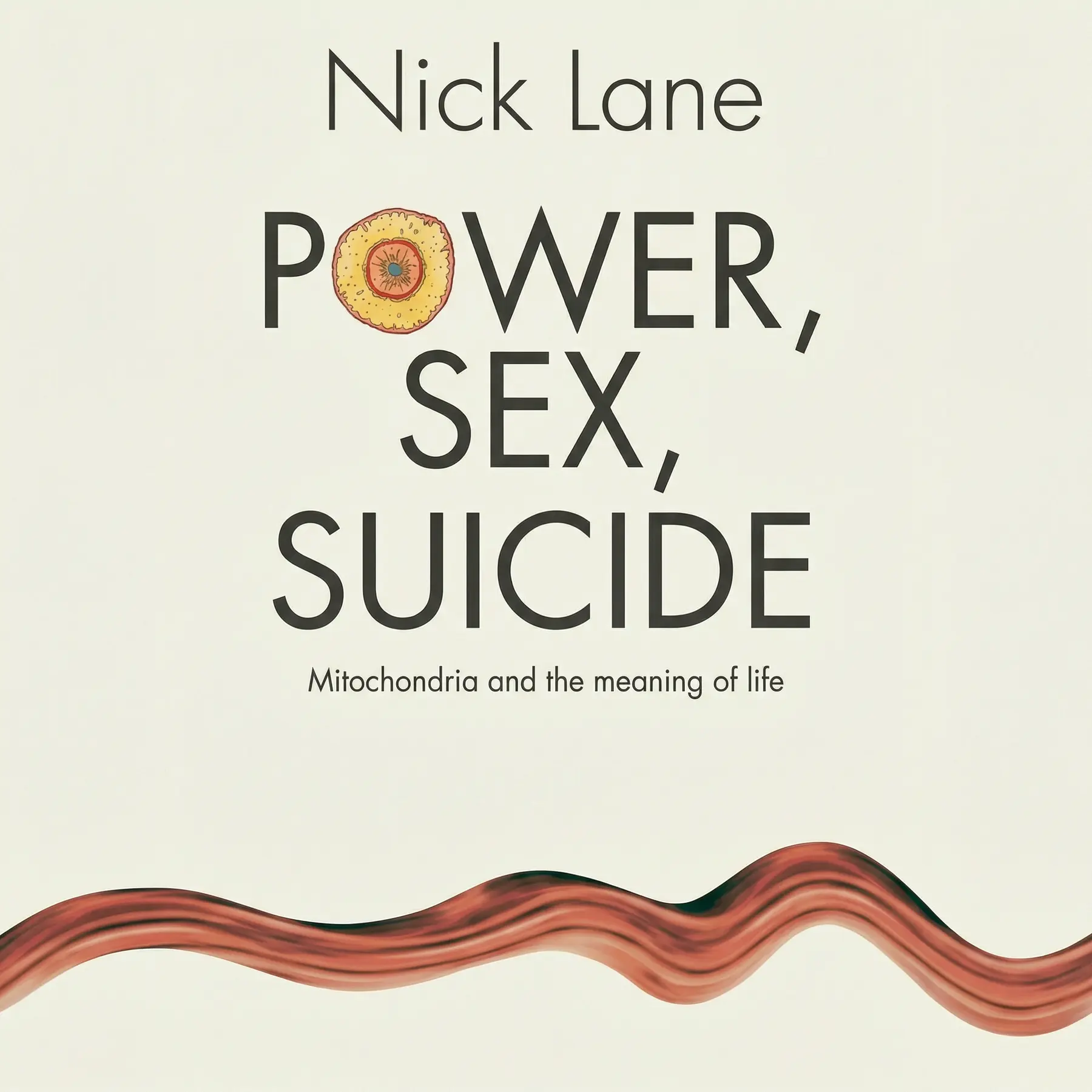
Power, Sex, Suicide: Mitochondria and the Meaning of Life
By Nick Lane
Nick Lane explores how mitochondria, the microscopic powerhouses of our cells, drove the evolution of complex life, dictated the emergence of two sexes, and ultimately control the timing of our aging and death.
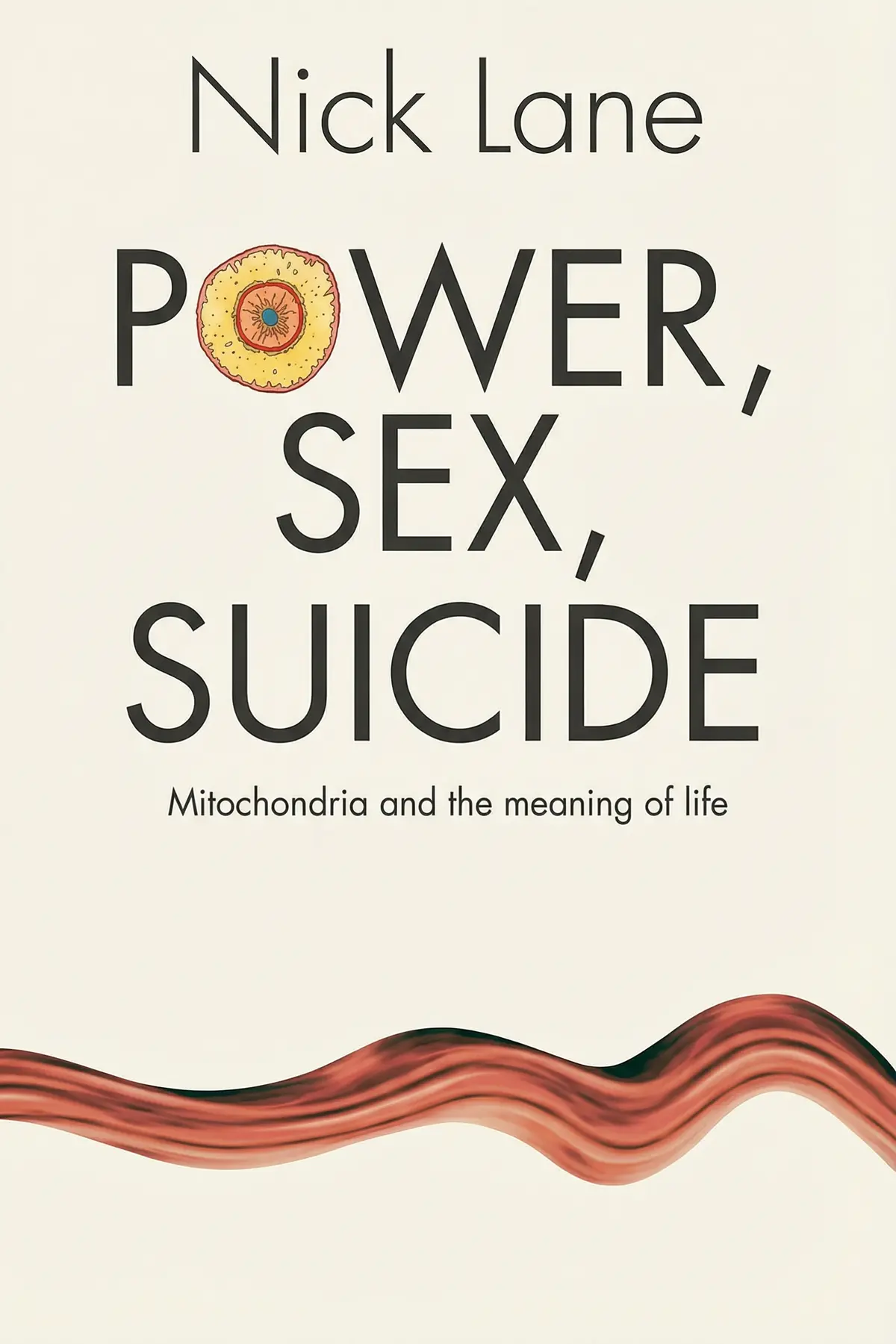
Table of Content
1. Introduction
1 min 38 sec
When we think about the story of life on Earth, we often focus on the grand scale: the rise of the dinosaurs, the first creatures crawling out of the ocean, or the evolution of the human brain. But there is a much smaller, far more fundamental story occurring inside every single one of your cells. It is the story of the mitochondria. Most of us remember from high school biology that mitochondria are the powerhouses of the cell, but that simple description barely scratches the surface of their true importance. They are not just energy generators; they are the master architects of complex life.
In this exploration of Power, Sex, Suicide, we are going to look at how these tiny organelles shaped everything that makes us human. We will see how a chance encounter billions of years ago allowed life to break through a glass ceiling of complexity that had held it back for eons. We will explore how the way these tiny structures handle energy dictates the length of our lives and why we have to grow old at all. Most surprisingly, we will discover how mitochondria might be the real reason behind the existence of two sexes and the origins of our maternal ancestry.
Through this lens, the fundamental mysteries of biology—from the spark of life to the inevitability of death—become clearer. The throughline of our journey is that you cannot understand the meaning of life without understanding the microscopic engines that drive it. By the end, you’ll see your own body not just as a collection of organs, but as a massive, coordinated civilization built upon a foundation of ancient microbial partnerships.
2. The Evolutionary Revolution of the Eukaryotic Cell
2 min 38 sec
Explore the monumental shift from simple bacteria to complex organisms and discover why a rare biological merger was the essential spark for all multicellular life on Earth.
3. The Incredible Scale of Mitochondrial Power
2 min 22 sec
Go inside the cell to understand the sophisticated mechanism of energy production that rivals the power of the sun and fuels every action of your daily life.
4. The Biological Ceiling that Holds Bacteria Back
2 min 22 sec
Discover why bacteria, despite billions of years of evolution, have never achieved complex life, and learn how mitochondria provide the only way out of this energy trap.
5. The Dual Role of Cell Suicide and the Origin of Sex
2 min 30 sec
Uncover the darker side of mitochondria as the cell’s internal police force, regulating life through programmed death and driving the evolution of sexual reproduction.
6. Tracing Human History Through Mitochondrial Eve
2 min 05 sec
Learn how the unique way we inherit mitochondria allows scientists to peer back through time, identifying a single common ancestor for all living humans.
7. The Mitochondrial Theory of Aging and Mortality
2 min 34 sec
Explore the connection between energy production and the ticking clock of our lives, revealing why the cost of being alive is the eventual decline of our bodies.
8. Conclusion
1 min 28 sec
As we look back at the journey we’ve taken through the microscopic world, it’s clear that mitochondria are far more than just cellular batteries. They are the pivot point upon which the history of life on Earth turns. From the moment two ancient microbes merged into one, the path was set for everything we see today. That single event provided the energy surplus necessary for the complexity of the human body, the diversity of the sexes, and the intricate dance of life and death.
We have seen how these tiny structures trace our history back to a single mother in Africa and how they act as a molecular police force, ensuring that our multicellular bodies function as a unified whole. We have also confronted the reality that the very energy that allows us to breathe and love is the same energy that slowly causes our bodies to age. It is a profound biological irony: the spark of life is also the cause of its eventual end.
The takeaway from Nick Lane’s exploration is a sense of deep connection to the natural world. We are not separate from the ancient microbes that preceded us; we are their living legacies. Every breath you take is a tribute to a two-billion-year-old partnership. By understanding the power, the sex, and the ‘suicide’ of the cell, we don’t just learn about biology—we learn about the fundamental terms of our existence. We are complex, vibrant, and mortal, all because of the tiny engines humming inside us at this very second.
About this book
What is this book about?
This exploration dives into the microscopic world to answer the biggest questions about human existence. It moves beyond the traditional focus on DNA to examine the role of mitochondria, the tiny organelles that live within our cells and provide the energy necessary for all complex life. Without these biological engines, life on Earth would likely have remained a collection of simple, single-celled organisms. Nick Lane explains how a rare evolutionary merger billions of years ago changed the trajectory of the planet. By understanding mitochondria, we gain a new perspective on why we age, why we reproduce sexually, and how our ancestors migrated across the globe. The book promises to reveal the fundamental biological mechanisms that connect power, sex, and suicide to the very meaning of life itself.
Book Information
About the Author
Nick Lane
Nick Lane is a British writer and professor of evolutionary biochemistry at University College London. His work has been published in distinguished scientific journals such as Nature, Scientific American and The Lancet.
Ratings & Reviews
Ratings at a glance
What people think
Listeners find the book both fascinating and immersive, providing lucid clarifications of complex biological processes and a vast amount of well-documented data. The narrative style is captivating and stimulates deep thought, with one listener observing its inclusion of alternative viewpoints. The subject matter is compelling and considered a rewarding investment, as one listener points out its thorough exploration of the field. Reactions to the pacing are divided; while some describe it as thought-stirring, others remark that there is an overabundance of reviews of earlier chapters.
Top reviews
Aroon
Ever wonder why complex life exists at all while bacteria stayed stuck in a rut for billions of years? Lane frames this as a high-stakes detective story, investigating the “clandestine rulers” of our cells—the mitochondria. The way he ties power, sex, and death into a single metabolic narrative is nothing short of breathtaking. Personally, I found the section on how two sexes evolved to manage genetic conflict absolutely mind-bending. It isn't just about biology; it’s about the underlying thermodynamics of being alive. While the chemistry gets dense, Lane’s lucid and conversational prose keeps you from drowning in the technicalities. He asks audacious questions and provides even more audacious answers. If you’ve ever felt like a mere vessel for your genes, this book will make you realize you’re actually a vessel for your mitochondria. It’s a dense, chewy, and ultimately rewarding experience that demands your full attention.
Show moreGai
After hearing so much about Nick Lane, I finally dove into his magnum opus on mitochondria. The central thesis—that our very existence hinges on a one-off symbiotic fluke—is hauntingly beautiful. Lane argues that without that initial “chimera” formation, the Earth would be nothing but a blanket of bacterial slime. I was particularly gripped by his explanation of apoptosis, or programmed cell death. It’s strange to think of suicide as a prerequisite for complex health, yet Lane makes the logic undeniable. The writing is sharp and witty, though you’ll need a decent grasp of high school science to follow the molecule-by-molecule descriptions of energy production. This book doesn’t just explain how life works; it explains why it works this way and not another. It’s a profound look at the tiny engines that drive every heartbeat and thought. Truly a standard-bearer for the genre.
Show moreSophia
The chapter on the origins of the eukaryotic cell changed my entire perspective on astrobiology. Lane posits that because the fusion of two disparate cells is so statistically improbable, we might be much more alone in the universe than we’d like to believe. This isn't just a book about biology; it's a book about the physical constraints of the universe itself. Frankly, the way he links the necessity of two sexes to the management of mitochondrial DNA was the highlight for me. It’s a brilliant piece of deductive reasoning. Even when the technical details about chemiosmotic coupling got intense, Lane’s passion for the subject shone through. He has a way of making a proton pump feel as exciting as a car chase. This is essential reading for anyone who wants to understand the 'meaning of life' through a purely materialist lens.
Show moreAndrew
Nick Lane manages to do something rare here: he treats his audience like adults. He doesn't dumb down the complexity of how mitochondria generate power, yet he remains remarkably lucid throughout. The book feels like a grand tour of the inner workings of our cells, revealing the hidden machinery that allows us to be large, warm-blooded, and conscious. I was especially fascinated by the idea of 'mitochondrial-nuclear conflict' and how it shapes everything from our health to our reproductive choices. It’s a beautifully planned book where every question leads naturally to the next, like a well-constructed mystery novel. While some readers might find the density intimidating, the effort is well worth it for the sheer depth of information provided. It’s one of those rare science books that sticks with you long after you’ve put it down. A masterpiece of popular science writing.
Show moreMethinee
Wow. I never thought a book about sub-cellular organelles could be so gripping. Lane presents the history of life as a series of bioenergetic revolutions, with mitochondria at the center of every major turning point. The way he connects energy production to the evolution of sex and the inevitability of death is just brilliant. It’s an incredibly well-researched work that doesn’t shy away from controversial or speculative theories. I loved the 'detective story' feel of the narrative; he leads you through various hypotheses, showing why some fail and why the mitochondrial one stands tall. The book is definitely chewy and requires focus, but the prose is so engaging that it never feels like a chore. It completely reframed how I think about my own body and its place in the tree of life. If you enjoy deep-dive science, this is as good as it gets.
Show moreNoppadol
Not what I expected from a book with such a provocative title, but in a good way. 'Power, Sex, Suicide' is less of a sensationalist romp and more of a deep, scholarly dive into the bioenergetic requirements of complex life. Look, this is definitely not a light beach read. I found myself re-reading several paragraphs about proton gradients and ATP synthase just to keep my head above water. However, the payoff is immense. Lane explains why we age and why we die with a level of detail that makes most pop-sci books look like coloring books. My only minor gripe is the occasional repetitiveness; he tends to summarize previous chapters a bit too frequently. Still, the insight into the 'rare event' of eukaryogenesis is fascinating. It really makes you reconsider the likelihood of intelligent life elsewhere in the cosmos. It’s an intellectual workout that leaves you seeing the world differently.
Show moreRungtip
Picked this up because I wanted to understand the actual mechanism behind aging, and I wasn't disappointed. Lane takes the 'free radical theory' and turns it on its head, or at least complicates it significantly. He explains that antioxidants aren't the magic bullet we’re sold, because the leakage of free radicals is a fundamental part of our mitochondrial signaling. To be fair, some of the chemistry was over my head, but the narrative arc held my interest regardless. I loved the comparisons between the lifespans of birds and mammals—it really illustrated his points about metabolic rates. The book is dense, but the conversational tone helps bridge the gap. It feels like a series of lectures from a brilliant, slightly eccentric professor. It’s a bit long-winded in the middle sections, but the conclusion ties everything together in a way that feels earned and profound.
Show moreFilm
As someone who hasn't touched a biology textbook in a decade, I found this challenging but deeply rewarding. Lane’s central argument is that the 'powerhouse of the cell' is actually the master of our destiny. He walks you through the transition from simple bacteria to complex eukaryotes, explaining why this leap was such a massive hurdle in evolutionary history. Personally, I found the discussions on the origin of life at alkaline hydrothermal vents to be the most compelling part of the book. Gotta say, though, the middle section on the specifics of the Krebs cycle was a bit of a grind. It requires a lot of mental energy to keep up with his pace. Despite that, the overarching themes are so well-communicated that you never feel truly lost. It’s a thought-provoking journey that makes you appreciate the 10 million billion tiny symbiotes living inside you.
Show moreEarn
Truth is, I have a love-hate relationship with this book. On one hand, the information is incredible and Lane is clearly a master of his craft, presenting dissenting views with remarkable fairness. On the other hand, the pacing is incredibly uneven. There are long stretches where he gets bogged down in the minutiae of biochemistry that might lose even a dedicated hobbyist. I also felt that some of the science, particularly regarding Neanderthal genetics and certain free radical theories, felt a bit dated since the original 2005 publication. It’s a heavy slog that often feels like a textbook in disguise. While I appreciate the 'detective puzzle' framing, the frequent recaps of previous points started to feel like filler after the halfway mark. If you are a biology obsessive, you will love it. If you’re looking for a quick overview of evolution, you might want to look elsewhere.
Show moreNatnicha
Finally got around to reading this after seeing it on several 'best of' lists, but I have mixed feelings. Not gonna lie, the level of detail regarding proton gradients and membrane potential was a bit much for me. There were moments where the book felt like it was written for fellow biochemists rather than a general audience. Lane is clearly brilliant, and his passion for mitochondria is infectious, but the pacing often slows to a crawl during the more technical passages. I also found the frequent repetition of key points to be a bit patronizing at times, though I suppose it helps if you’re struggling to follow the logic. It’s a comprehensive and informative journey, to be sure, but it lacks the narrative flow of writers like Dawkins or Ridley. A solid resource for the scientifically inclined, but a tough mountain to climb for the casual reader.
Show moreReaders also enjoyed
A Life Decoded: My Genome: My Life
J. Craig Venter
A Planet of Viruses
Carl Zimmer
A Short History of Nearly Everything
Bill Bryson
A Thousand Brains: A New Theory of Intelligence
Jeff Hawkins
AUDIO SUMMARY AVAILABLE
Listen to Power, Sex, Suicide in 15 minutes
Get the key ideas from Power, Sex, Suicide by Nick Lane, plus 5,000+ more titles in English and Thai.
- 5,000+ titles
- Listen as much as you want
- 7-day free trial
- Cancel anytime







