
24 min 54 sec
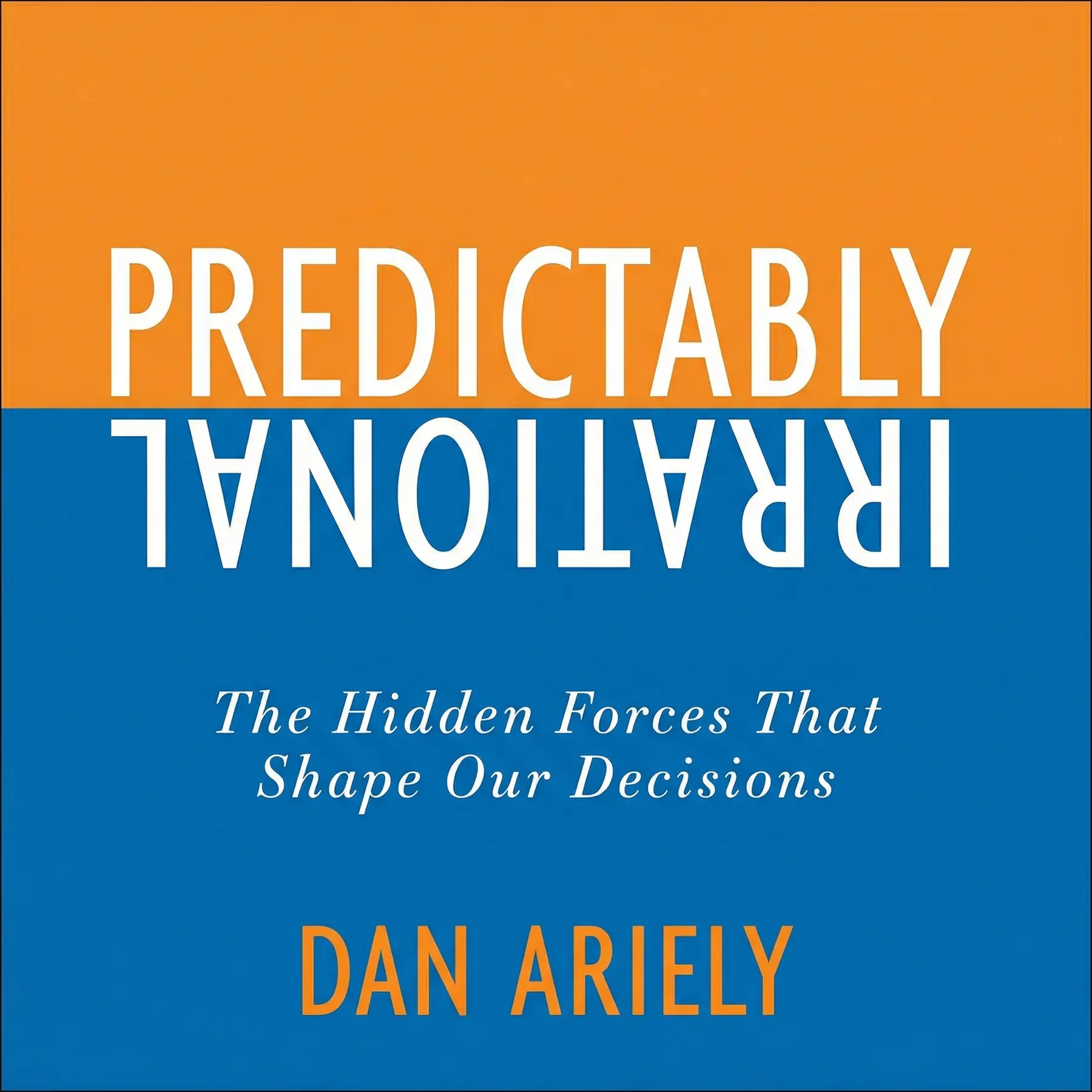
Predictably Irrational: The Hidden Forces That Shape Our Decisions
By Dan Ariely
Explore the hidden psychological forces that drive our decision-making. Dan Ariely reveals why humans consistently make illogical choices and how understanding these patterns can lead to better habits and smarter lives.
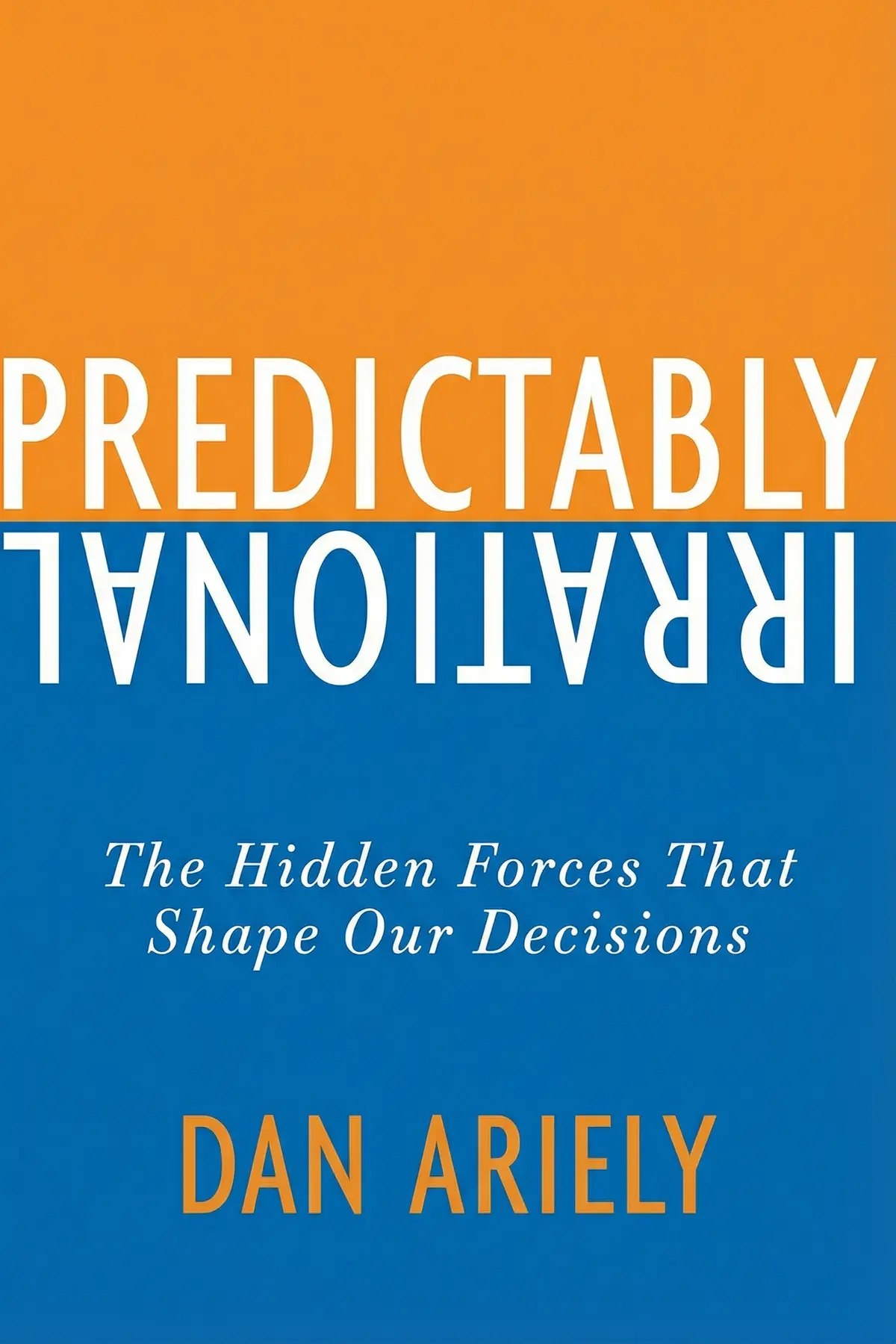
Table of Content
1. Introduction
1 min 31 sec
Most of us like to believe we are the masters of our own minds. We imagine that when we walk into a store, choose a career path, or pick a romantic partner, we are weighing the options logically and making the best possible choice for our future. We see ourselves as rational beings navigating a complex world. But what if that sense of control is largely an illusion? What if our decisions are actually being steered by hidden psychological forces that we barely notice?
This is the core mystery we’re exploring today. The reality is that human beings are not nearly as logical as we’d like to think. We are susceptible to weird biases, emotional triggers, and social pressures that lead us to act against our own best interests time and time again. However, there is a silver lining. These lapses in judgment aren’t random. They follow specific patterns. We aren’t just irrational; we are predictably irrational.
In this summary, we will dive into the fascinating world of behavioral economics to see how these invisible forces shape our lives. We’ll look at why the word ‘free’ can make us act crazy, why we value things more just because we own them, and how our expectations can actually change the physical way we experience reality. By the end of this journey, you’ll have a roadmap for recognizing these mental pitfalls, allowing you to move through the world with a bit more clarity and much more control. Let’s begin by looking at how our brains try to make sense of value through the lens of comparison.
2. The Relativity Trap
2 min 34 sec
Discover why our brains are hardwired to compare things rather than judge them on their own merits, and how marketers use this to influence your spending.
3. The Irresistible Power of Free
2 min 47 sec
Explore the strange emotional reaction triggered by the price of zero and why it leads us to make choices that aren’t actually in our favor.
4. The Anchor of First Impressions
2 min 28 sec
Learn how the first price you see for a new product sets a mental benchmark that dictates what you’re willing to pay forever after.
5. The High Price of Ownership
2 min 23 sec
Understand the ‘endowment effect’ and why we feel that our possessions are worth far more than anyone else would be willing to pay for them.
6. The Impact of Expectations
2 min 17 sec
See how our preconceived notions and labels can actually change the way we experience taste, pain, and even our own performance.
7. Social Norms versus Market Norms
2 min 29 sec
Understand the delicate balance between the world of favors and the world of business, and why mixing the two can lead to disaster.
8. The Complexity of Honesty
2 min 22 sec
Discover why most people are willing to cheat just a little bit, and why we are much more likely to steal objects than cash.
9. The Struggle with Self-Control
2 min 20 sec
Understand the battle between your rational future self and your impulsive present self, and how to use ‘pre-commitment’ to win.
10. The Paradox of Choice and Options
2 min 16 sec
Discover why our desire to keep every door open actually drains our energy and makes us less successful in the things that matter.
11. Conclusion
1 min 27 sec
As we have seen, the image of the ‘rational human’ is largely a myth. We are moved by the gravity of ‘free,’ anchored by the first numbers we see, and blinded by the things we own. Our expectations color our reality, and our impulsive selves often hijack our long-term goals. While this might seem like a discouraging view of human nature, it is actually a source of great empowerment.
The key to a better life isn’t to pretend that we are perfectly logical; it’s to accept that we are predictably irrational. When we know where the pitfalls are, we can start to walk around them. We can recognize when a ‘decoy’ is influencing our purchases. We can use pre-commitment to defeat procrastination. We can protect our social relationships by keeping market norms at bay.
What this really means is that we have the opportunity to design our environments to work *with* our psychology rather than against it. We can become the architects of our own decision-making processes. The next time you find yourself reaching for a ‘free’ gadget you don’t need or struggling to make a choice between too many options, pause for a moment. Ask yourself which hidden force is pulling your strings. By bringing these invisible patterns into the light, you can stop reacting and start choosing. That is the path to a life that is not just predictable, but truly intentional.
About this book
What is this book about?
Have you ever wondered why you can’t resist a sale for something you don't need, or why you’ll happily do a favor for a friend but feel insulted if they offer you a small amount of money for it? This exploration into behavioral economics peels back the curtain on the invisible forces that dictate our daily lives. It challenges the traditional economic assumption that humans are rational actors who always make choices in their own best interest. Instead, the book demonstrates that our irrationality is not accidental or random; it is systematic and predictable. By examining a series of fascinating experiments, the text reveals how relativity, the allure of the word 'free,' social norms, and our own expectations cloud our judgment. The promise of this work is simple yet profound: by recognizing the mental traps we consistently fall into, we can begin to outsmart our own biology and make more deliberate, rewarding decisions in our careers, relationships, and finances.
Book Information
About the Author
Dan Ariely
Dan Ariely is a professor specializing in psychology and behavioral economics at Duke University. He is a prominent voice in his field, having contributed to major publications like The Wall Street Journal, the New York Times, and Scientific American. Ariely is also the author of several other influential bestsellers, including The Upside of Irrationality and The Honest Truth about Dishonesty.
Ratings & Reviews
Ratings at a glance
What people think
Listeners find this work exceptionally accessible and fun to follow, noting that the informal prose maintains their interest throughout. Furthermore, the content is backed by extensive research and offers useful perspectives on human behavior and psychology, supported by numerous persuasive studies. Listeners also value the way it builds upon traditional economics while questioning established theories, all while maintaining a charming sense of wit across the chapters.
Top reviews
Jack
Ever wonder why a five-dollar coffee feels like a total rip-off until it is compared to a seven-dollar latte on the same menu? Dan Ariely takes the dry, dusty bones of classical economics and breathes life into them with a wit that is genuinely rare in non-fiction. This book is an absolute masterclass in explaining social versus market norms, particularly the awkwardness of offering to pay your mother-in-law for a delicious Thanksgiving dinner. The truth is, we aren't just random in our mistakes; we are systematically flawed in ways that can be measured and mapped. I found the conversational writing style incredibly refreshing compared to other academic texts. Ariely makes complex psychological experiments feel like lunchtime stories told by a brilliant friend. While some might find the heavy focus on MIT student samples a bit narrow, the broader implications for how we live and spend are undeniable. It’s a fascinating, hilarious, and deeply insightful look into the machinery of our own minds.
Show moreChamnong
Finally got around to reading this, and my brain is still buzzing with all the new connections Ariely makes between psychology and spending. The way he dismantles the 'rational actor' theory is both brutal and incredibly entertaining to watch. I was especially gripped by the section on relativity and how we almost never choose things in absolute terms, but rather based on what they are standing next to. It's a clever trick that marketers use every day, and seeing the data behind it was a total eye-opener for me as a consumer. The book is full of convincing experiments that are described with such clarity that even someone with zero background in economics can follow along. Frankly, it's one of those rare books that actually changes the way you look at your own daily decisions. If you enjoyed 'Blink' or 'Thinking, Fast and Slow,' this is right up your alley and perhaps even more practical in its application.
Show moreEye
Wow. Dan Ariely has a way of making you feel both smarter and slightly stupider at the same time, and I mean that as a high compliment. This book is a fascinating journey through the quirks of human nature, backed by experiments that are as clever as they are revealing. I was particularly struck by the research on how mentioning the Ten Commandments can drastically reduce cheating, even among people who aren't religious. It shows how much our behavior depends on the immediate context and the 'primes' we encounter in our environment. The writing is punchy, the humor is spot-on, and the takeaways are actually useful for everyday life. Personally, I think this should be required reading for anyone in a leadership position. It provides a much-needed correction to the idea that people are just machines responding to financial incentives. Sometimes, a little bit of social recognition goes much further than a cash bonus.
Show moreLily
This book should be required reading for anyone who works in marketing or just happens to have a pulse. It is an extraordinary look at the hidden motives that drive us, delivered in a style that is both entertaining and deeply researched. The experiment with the beer—where people's preferences changed based on whether they knew the ingredients beforehand—was a perfect illustration of how expectations shape our reality. Ariely manages to make every chapter feel relevant to your own life, whether he is talking about the frustration of multiple options or the weird ways we justify small acts of dishonesty. The humor throughout the text keeps it from ever feeling like a slog, and the insights are the kind that stay with you long after you've closed the cover. I’ve recommended this to several friends already because it’s just that good. It’s a rare book that manages to be both scientifically rigorous and genuinely fun to read.
Show morePrinya
Picked this up on a whim after a coworker mentioned the chapter on the power of 'free.' It is wild how the mere mention of a zero-dollar price tag can make us throw all logic out the window and wait in a three-hour line for a cheap keychain. Ariely’s research is extraordinarily thorough, yet he manages to keep the tone light and full of delightful humor throughout the text. I particularly appreciated the discussion on procrastination and how external constraints can actually help us achieve our goals more effectively than pure willpower. To be fair, some of the middle chapters felt a little repetitive, as if he was trying to stretch a few core concepts to fit a full book length. However, the insights into human nature and our strange relationship with ownership are worth the price of admission alone. It certainly enhances my understanding of why I keep things I don't need just because I already own them.
Show moreTod
As someone who has struggled with deadlines my entire life, the chapter on procrastination was a total gut punch that I desperately needed. Ariely’s experiment with the three different classroom settings—one with firm deadlines, one with no deadlines, and one with self-imposed ones—offered a brilliant look at how we sabotage ourselves. The results were surprising and provided a lot of food for thought regarding how we structure our workplaces and schools. My only minor gripe is that some of his personal anecdotes feel a bit self-indulgent at times, though they do help humanize the data. The book is extraordinarily researched, but it never feels like you are sitting through a boring lecture. Instead, it feels like a series of 'aha!' moments that slowly build a picture of why we are so predictably irrational. It’s a great read for anyone looking to understand the hidden forces that drive our choices, from the beer we order to the partners we choose.
Show moreDen
The chapter on the power of price and the placebo effect completely changed how I look at my own medicine cabinet. It is wild to think that a more expensive pill can actually 'work' better simply because our expectations are primed by the cost. Ariely does an amazing job of showing how our physical responses are tied to our economic perceptions in ways we don't even realize. The book is full of these kinds of insights, delivered with a sense of wonder and curiosity that is quite contagious. I appreciated how he challenged traditional theories without being overly condescending to the reader. While I found the section on 'keeping doors open' a bit long-winded, the overall message of the book is incredibly powerful. It forces you to confront the fact that you aren't as in control of your choices as you think you are. Highly recommended for anyone who likes their science with a side of humor.
Show moreRin
After hearing about behavioral economics for years, it was refreshing to see the 'rational actor' model finally dismantled with such glee and precision. Ariely doesn't just tell you that people are irrational; he shows you exactly how, why, and when it is going to happen. This predictability is the key to the whole book, and it makes the science feel much more applicable to real-world problems like healthcare and education. I loved the section on 'The High Price of Ownership' and how we overvalue what we have simply because it is ours. It explains so much about why we struggle to sell things or let go of bad ideas. The book is a joy to read, though I do wish he had addressed some of the potential flaws in his experimental designs a bit more directly. Still, it’s a brilliant piece of popular science that enhances our understanding of the human condition in a very accessible way.
Show moreGift
Frankly, if you have already read 'Thinking, Fast and Slow' or any of Malcolm Gladwell’s work, you might feel like you’ve seen a lot of this before. All these behavioral economics books seem to rehash the same core set of psychological studies, and Ariely doesn't always add enough new flavor to the mix. That said, his writing style is much more accessible and conversational than Kahneman’s, making it a better choice for a casual weekend read. The chapters on honesty and the way we cheat 'just a little bit' were definitely the highlights for me, especially the part about how people are less likely to steal cash than they are to steal a pencil. It raises some poignant questions about our moral compass in a digital world where money is becoming increasingly abstract. It’s a decent introductory text for the genre, but it might feel a bit thin if you are already familiar with the field's heavy hitters.
Show moreTar
Not what I expected from a book that claims to redefine human behavior. Look, I get that behavioral economics is the 'it' subject right now, but extrapolating a global worldview from a handful of horny MIT students is a bit of a stretch. The experiment involving sexual arousal and decision-making felt particularly problematic and leaned into some rather uncomfortable territory regarding how men perceive women. He ascribes deep emotional motivations to his subjects based on very narrow data sets, which made me question the scientific rigor of the entire project. While the writing is definitely readable and engaging, the logic often feels like a giant straw-man argument against an economic model that most people already know is flawed. It is entertaining enough as a collection of anecdotes, but I wouldn't use it as a manual for understanding the complexities of the human psyche. It feels like a 'Freakonomics' clone that tries too hard to be edgy without having the same level of analytical depth.
Show moreFeatured in
Readers also enjoyed


59 Seconds: Change Your Life in Under a Minute
Richard Wiseman
1929: Inside the Greatest Crash in Wall Street History--and How It
Andrew Ross Sorkin
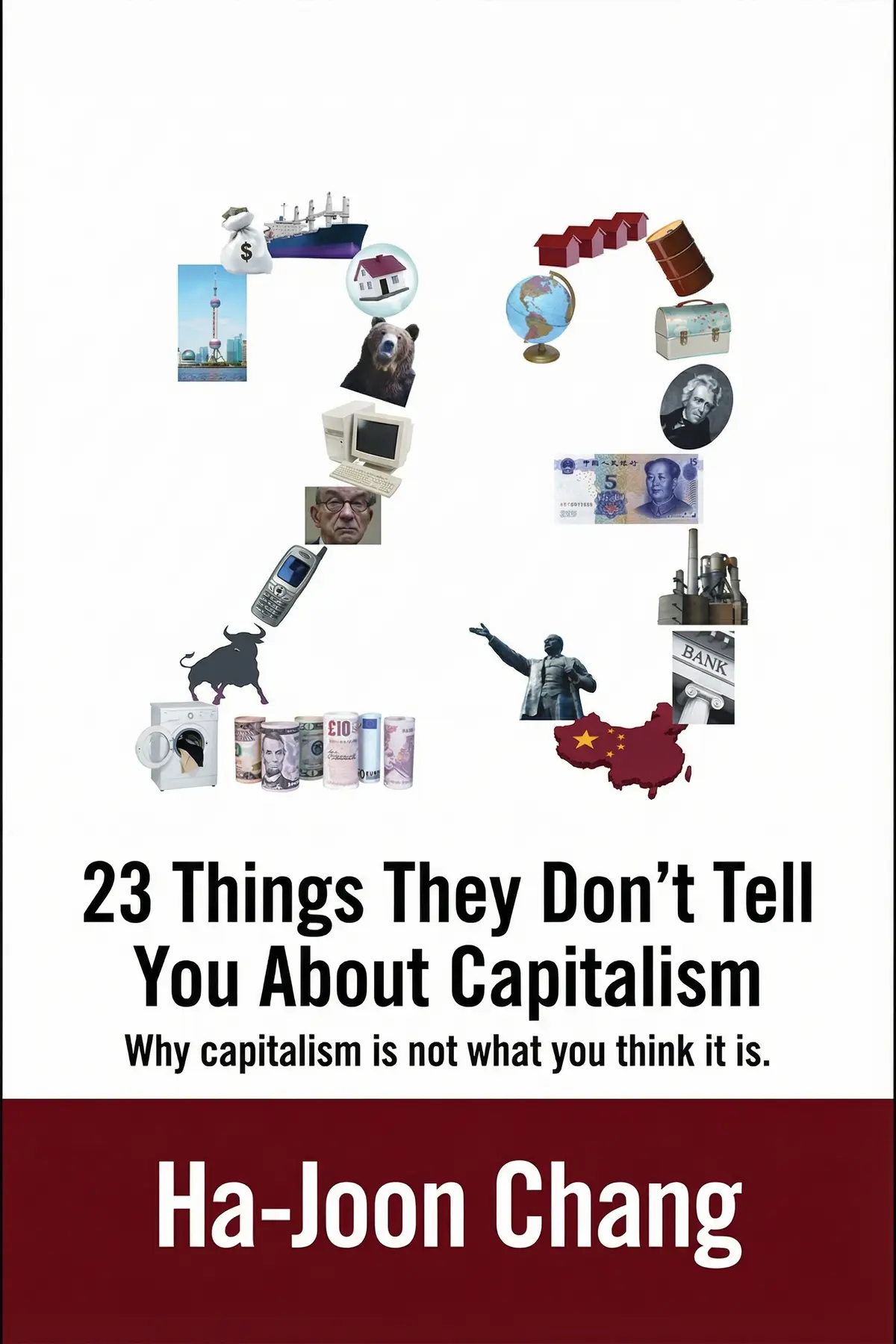
23 Things They Don’t Tell You About Capitalism
Ha-Joon Chang
A Liberated Mind: How to Pivot Toward What Matters
Steven C. Hayes
A Little History of Economics
Niall Kishtainy
AUDIO SUMMARY AVAILABLE
Listen to Predictably Irrational in 15 minutes
Get the key ideas from Predictably Irrational by Dan Ariely, plus 5,000+ more titles in English and Thai.
- 5,000+ titles
- Listen as much as you want
- 7-day free trial
- Cancel anytime







