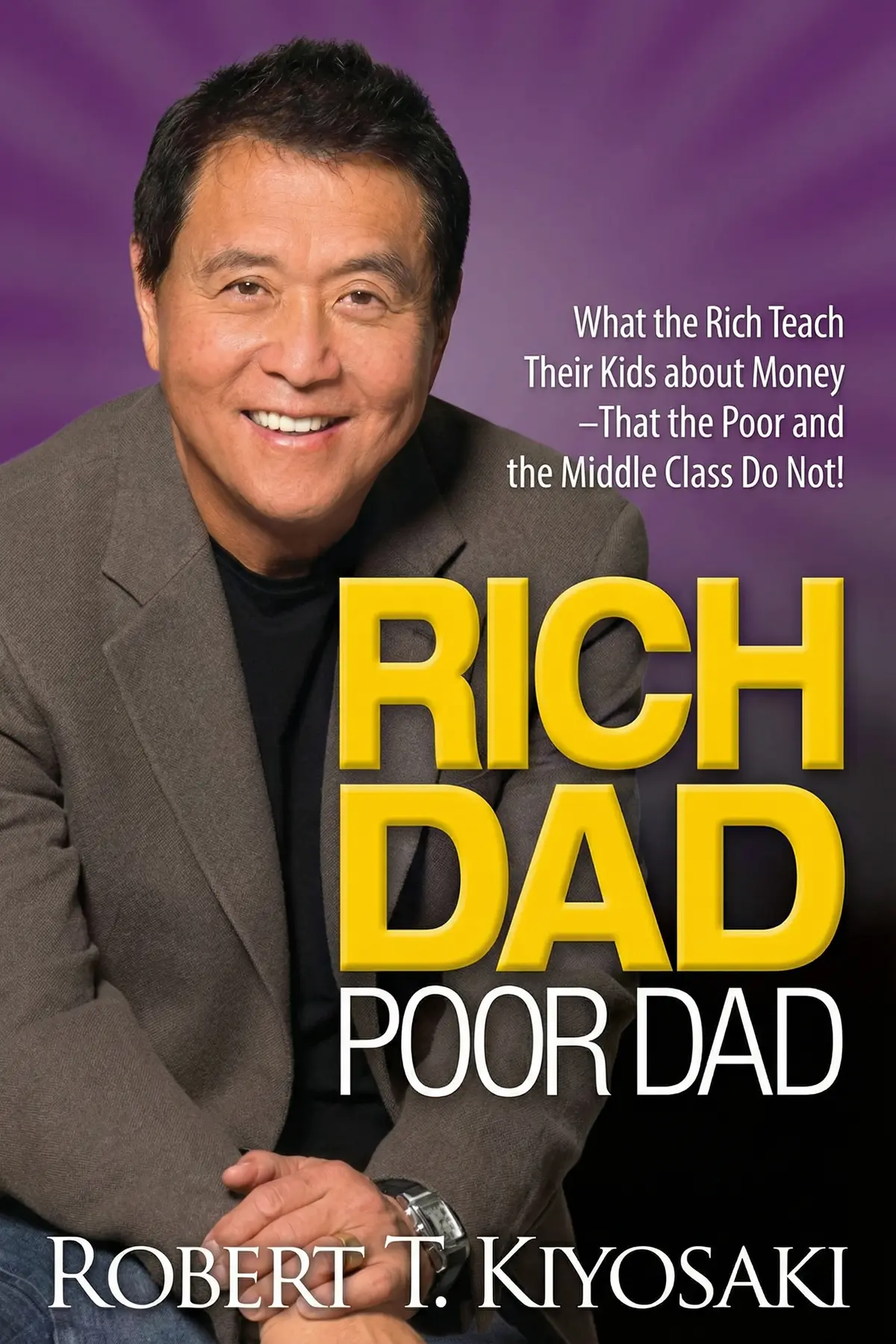
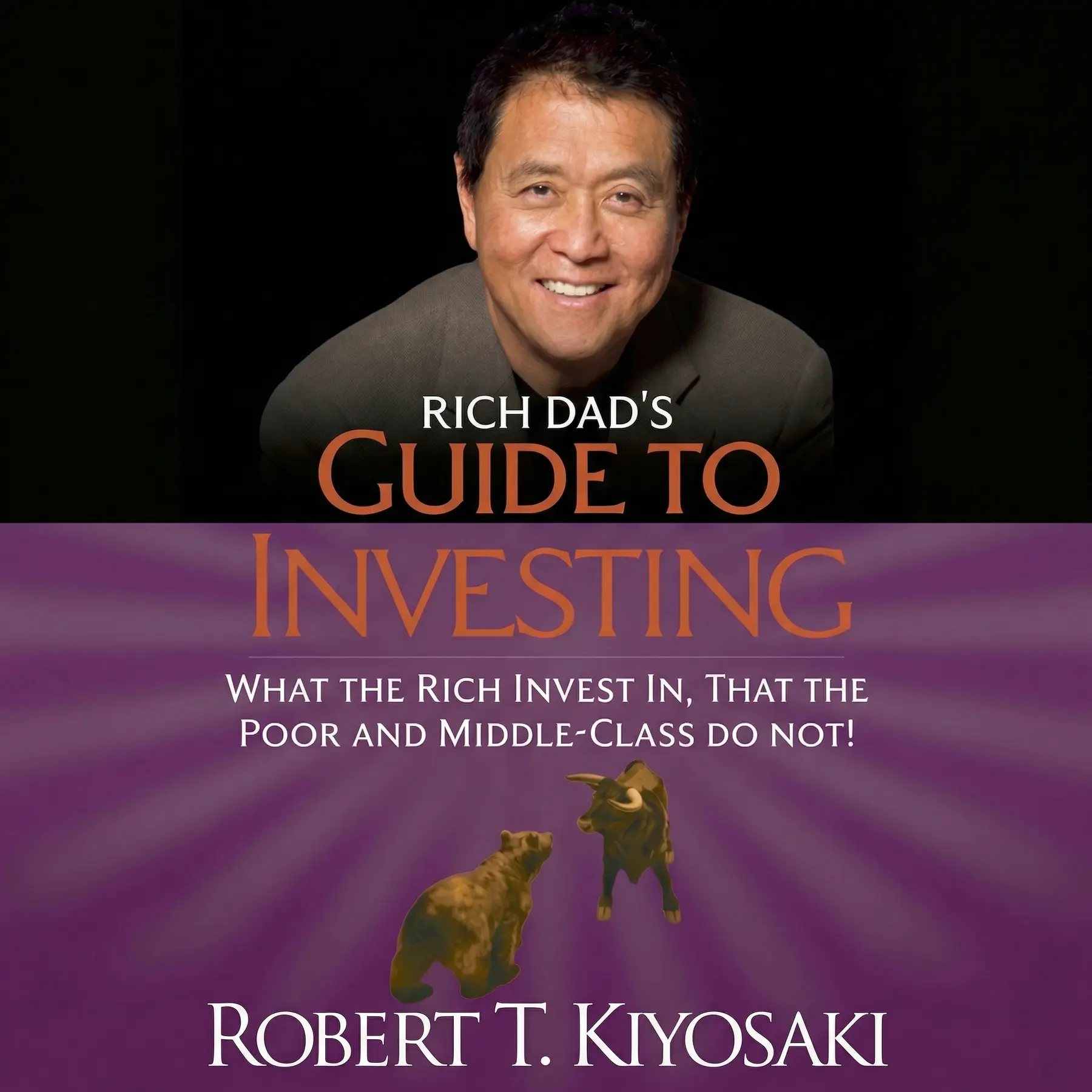
Rich Dad, Poor Dad: What the Rich Teach Their Kids about Money – That
Robert T. Kiyosaki
Robert Kiyosaki reveals why the wealthy invest differently than the middle class. This guide explains how to build a business, master financial literacy, and adopt the sophisticated mindset necessary for true financial abundance.
1 min 35 sec
Which sounds more appealing to you: living a life where you are financially comfortable, or one where you are truly, staggeringly rich? While most of us would pick the latter in a heartbeat, there is a deep-seated feeling in many people that their financial destiny is already written. We are often raised to believe that wealth is a matter of luck, inheritance, or some secret door that is locked to the average person. But the reality is that your level of wealth is a choice, one that begins with the decision to adopt an entirely different mindset. Becoming wealthy isn’t about finding a shortcut or a temporary scheme; it is a long-term commitment to financial education and a complete overhaul of how you view money.
The throughline of our journey today is that the rich do not invest in the same things, or in the same way, as the poor and middle class. To join the ranks of the elite, you have to stop thinking like an employee and start thinking like a business owner and an investor. This transition requires moving away from the traditional advice of ‘working hard and saving’ and moving toward a world where you analyze financial statements with ease and build systems that generate wealth. We are going to look at the specific steps required to cross that bridge. We’ll explore why the tax code favors the business owner, how to distinguish between true assets and deceptive liabilities, and why the most important investment you can ever make is in your own ability to lead and communicate. If you have ever wondered why the top ten percent seems to hold all the cards, this is the blueprint that explains the game they are playing—and how you can start playing it too.
1 min 51 sec
Discover why a tiny fraction of the population controls nearly all the wealth and the legal barriers that keep the average person out of the most lucrative deals.
1 min 54 sec
Common wisdom tells us to work hard and save, but learn why this approach is actually a slow path to staying exactly where you are.
1 min 52 sec
Think your house is your greatest asset? It might actually be your biggest drain. Learn to see your finances through the lens of true cash flow.
1 min 48 sec
Not all investors are created equal. Understand the journey from being a legal outsider to becoming a sophisticated insider who controls the game.
1 min 47 sec
Starting a business isn’t just for the lucky few. Discover how a bit of creativity and a part-time start can build your first real asset.
1 min 54 sec
Success isn’t about the product; it’s about the system. Learn the three essential elements every enduring enterprise must master.
1 min 33 sec
Uncover why selling is the most vital skill for any investor and how your presence can be as influential as your words.
1 min 32 sec
Learn how the pros use corporate structures and the law to protect their wealth and make their money work twice as hard.
1 min 49 sec
As we wrap up this exploration of the path to wealth, it is important to realize that the journey starts with a single, profound decision. You have to decide what your financial priority is: Do you want to be secure, do you want to be comfortable, or do you want to be rich? None of these choices is ‘wrong,’ but they each require a completely different set of actions and mindsets. If your goal is to be rich, you must accept that the traditional advice of playing it safe and saving your pennies will not get you there. You must be willing to invest in your own education, step outside the comfort zone of a steady paycheck, and begin building the assets that will eventually set you free.
Take some time today to reflect on your current financial situation through the lens of what we’ve discussed. Are you surrounding yourself with liabilities that you’ve been calling assets? Are you letting the fear of rejection stop you from developing your communication and sales skills? The shift from saying ‘I can’t afford that’ to asking ‘How can I afford that?’ is the hallmark of the wealthy mindset. It opens your mind to creativity and opportunity rather than shutting it down with a dead-end statement.
Becoming a sophisticated investor isn’t an overnight transformation; it is a ladder that you climb one rung at a time. Start by increasing your financial literacy. Then, look for ways to create an ‘inside’ investment by starting a small business or a side project. Focus on building a team and a mission that is bigger than yourself. As you grow, use the tools of the rich—the legal structures and the tax advantages—to protect what you’ve built. The world of the top ten percent isn’t reserved for the lucky; it is open to anyone who is willing to learn the rules and play the game with discipline and vision. The choice is yours: will you work for money for the rest of your life, or will you start building the systems that will make money work for you?
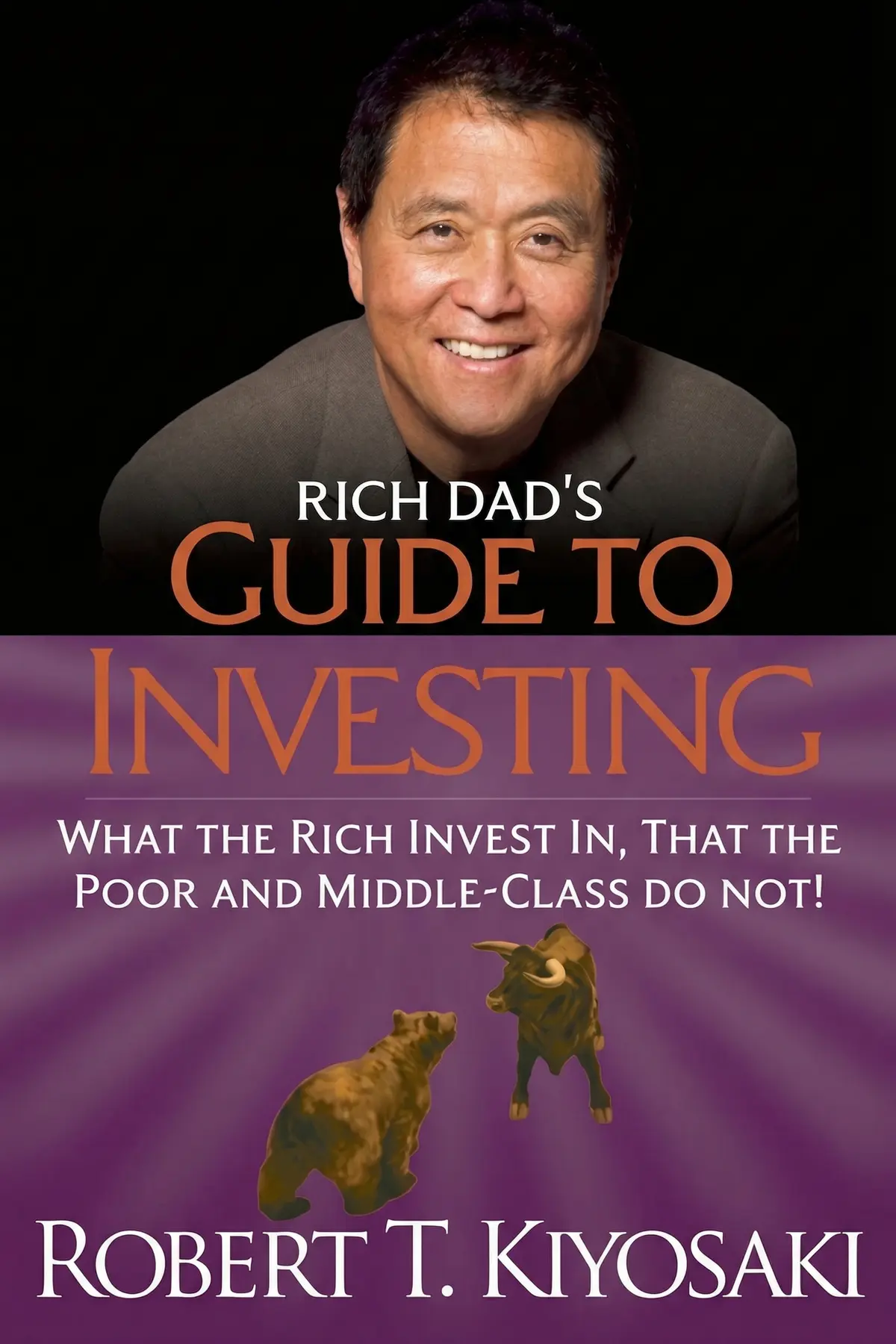
Rich Dad’s Guide to Investing explores the fundamental gap between the financial habits of the masses and those of the elite. While most people are taught to work hard and save, the truly wealthy focus on acquiring and creating assets that work for them. This summary breaks down the transition from being an employee to becoming a sophisticated investor who understands the rules of the game. It emphasizes that investing isn't just about picking stocks; it’s about financial education, understanding tax advantages, and building systems. You will learn why your home might be a liability rather than an asset, how to start a business even with limited resources, and the three pillars of a successful enterprise. The promise of the book is a roadmap for those who are ready to move beyond financial security and toward the kind of wealth that offers complete freedom. By following the strategies of the top ten percent, listeners can learn to stop working for money and start making their money work for them.
Robert Kiyosaki is an entrepreneur, author and personal finance educator. Under his Rich Dad brand, he has published 26 books with sales of over 27 million worldwide. He has set up multiple businesses and has an estimated net worth of $80 million.
Robert T. Kiyosaki
Robert T. Kiyosaki
Robert T. Kiyosaki
Robert T. Kiyosaki
Listeners find the book simple to grasp and appreciate the actionable guidance it offers for building wealth through investment. Furthermore, the work provides a solid groundwork for understanding the broader perspective and shares many useful lessons, with one listener noting it covers every topic needed for investing. They also value the beneficial information and consider it essential reading for anyone wanting to make money.
As someone working in the financial sector with a master's degree, I was pleasantly surprised by how Kiyosaki simplifies complex wealth-building concepts. Most textbooks make investing seem like a series of dry math equations, but this book treats it like a professional system that anyone can learn. The focus on 'inside' investing—building your own business or getting in pre-IPO—is a perspective that average retail investors rarely consider. It completely reframes the idea of expenses, showing how debt and losses can actually be used as leverage if you have the right team of accountants and lawyers. While some critics say he lives on royalties, the principles he outlines regarding passive income and the difference between an employee mindset and an investor mindset are undeniable. It surpassed all my expectations by providing a clear, high-level roadmap for long-term financial abundance. This is a must-read for anyone who is serious about moving beyond the typical mutual fund portfolio and into real wealth.
Show moreWow, I wish I had read this before I started dumping money into mutual funds without a real plan for my life. This book isn't just about money; it's about developing a completely different way of seeing the world and how capital flows through it. Kiyosaki’s advice to be an investor first, regardless of your current job, is something that everyone needs to hear in today's economy. The way he breaks down the difference between earned, passive, and portfolio income makes the tax advantages of the rich so much clearer to the average person. I felt empowered after finishing this because it takes the mystery out of how the 1% actually build their empires through businesses and real estate. It’s easily one of the most helpful books I’ve encountered for understanding the big picture of financial independence. Even with the repetitive writing style, the core lessons are so powerful that I keep a copy on my desk for reference.
Show moreFinally got around to reading the third book in the series, and it’s easily the most practical one yet for anyone looking to build a business. The B-I Triangle is a fantastic framework that covers every topic needed for investing, from cash flow management to legal structures and communications. I love how he stresses that investing is a boring, mechanical process rather than a get-rich-quick scheme, which contradicts what most people think he teaches. He provides a roadmap for moving from an employee to a business owner, and eventually to a sophisticated investor who creates their own assets. Not gonna lie, some of the concepts take a minute to sink in, but once they do, you'll never look at a paycheck the same way again. It is a long-term guide that requires a high standard of financial literacy, and I think it’s essential reading for anyone who wants to take control of their financial destiny.
Show moreEver wonder why some people seem to make money effortlessly while you're stuck in the rat race regardless of how hard you work? This book answers that question by showing you that the rich follow a completely different set of rules when it comes to taxes and debt. Personally, I found the section on assembling a financial team of specialists to be the most eye-opening part of the whole text. You can't do it all yourself, and Kiyosaki explains why having the right lawyers and accountants is actually an investment rather than an expense. The book is loaded with practical steps and general principles for starting a successful company that feeds your investment portfolio. It is definitely a long read, and yes, he says the same things a lot, but that's probably because most people are too stubborn to change their habits. If you want to make serious money, you need to stop thinking like a worker and start thinking like a business owner. This is the blueprint.
Show moreAfter hearing so much about the Rich Dad series, I finally dove into this guide to see if the hype was real. The book is definitely more of a strategic overview than a tactical manual, but the logic behind the B-I Triangle is genuinely solid. Kiyosaki pushes the idea that becoming a sophisticated investor is more about your mental attitude and financial literacy than just having a pile of cash. I especially appreciated the breakdown of how the rich use business structures to minimize taxes legally, which is something they don't teach in school. My only real gripe is that the writing can feel extremely repetitive, as if the author is trying to hammer the same three points into your head for 400 pages. To be fair, some of those points are worth hammering home, but a tighter edit would have made this a much smoother read. Overall, it provides a great foundation for anyone looking to understand the bigger picture of wealth creation.
Show moreThe chapter on the three phases of investing really changed how I view my long-term strategy for the future. Picked this up after finishing 'Rich Dad Poor Dad,' and I found this to be a much more substantial follow-up compared to some of his other spin-offs. He does a fantastic job explaining why the rich invest in things the middle class never even hears about, like private placements and sophisticated hedges. Gotta say, the distinction between investing for security versus investing to be rich was a bit of a wake-up call for me. I’ve been playing it safe for years, but this book helped me realize that security often comes at the cost of true financial freedom. It isn't perfect—the author’s tone can be a bit condescending toward 'educated' people who struggle financially—but the practical nuggets on the Business Triangle are worth the price of admission alone. It's a solid 4-star guide that requires patience to get through the repetitive parts.
Show morePicked this up to understand what the rich do differently, and the distinction between an 'outside' and 'inside' investor was a total lightbulb moment for me. Most people are taught to just hand their money over to a broker and hope for the best, but this guide argues for a much more active and creative approach. I liked the focus on Phase 2, where he describes the different types of investors and the levels of sophistication required for each. To be fair, some of the tax advice is very specific to the United States and might feel a bit dated, yet the underlying principles of using a business to buy assets are universal. It encourages you to stop seeking security and start seeking opportunity, which is a scary but necessary shift. My only complaint is that he spends a bit too much time on the 'why' and not enough on the specific 'how-to' for some of the more complex ratios he mentions. Still, it's a very valuable read.
Show moreTruth is, this book could have been about half its length if the author didn't repeat himself every ten pages. I found myself skimming through the anecdotes about his childhood just to get to the actual investment lessons, which are scattered throughout the text. There is definitely valuable information here, especially regarding the legal benefits of business ownership and the importance of financial vocabulary, but it’s buried under a lot of fluff. Is it easy to understand? Absolutely. Is it a step-by-step handbook? Not even close. You’ll walk away with a better mindset, but you’ll still need to do a ton of outside research to actually implement any of his suggestions. I think it serves as a decent bridge between his introductory books and more technical financial literature. It's okay, but don't expect a magic formula that will make you a millionaire by next Tuesday. It's more about the 'why' than the 'how'.
Show moreLook, if you are searching for actual stock picks or technical analysis, you are going to be incredibly disappointed by this book. Much like his previous works, Kiyosaki spends an enormous amount of time talking about his 'Rich Dad' without offering much in the way of concrete, actionable steps for a beginner. The content feels very dated, especially the sections on tax laws and specific investment vehicles that have changed significantly since the late nineties. I found the constant repetition of phrases to be patronizing and unnecessary, making the reading experience feel like a chore. If you truly want to learn the mechanics of the market, you should probably just go read 'The Intelligent Investor' by Benjamin Graham instead. This book feels more like a motivational speech than a financial guide, and the adulation for aggressive wealth-building at any cost rubbed me the wrong way. It is just too much fluff for the amount of actual information provided.
Show moreNot what I expected from a guide that claims to teach you how to invest in what the rich invest in. Frankly, the author spends more time talking about his disdain for the 'educated poor' and his friendship with Donald Trump than he does on actual investment mechanics. If you want to learn about P/E ratios or debt-to-service ratios, there are about five pages of useful info in a four-hundred-page book. The rest is just a repetitive cycle of the same motivational stories we've heard in his previous three books. It felt like a massive marketing pitch for his other products rather than a standalone educational tool. I also found his attitude toward hard work and austerity to be quite cynical, as if the only way to live is to constantly chase 'quick-gotten' riches through tax loopholes. It's a sad way of looking at life, and there are much better resources out there for someone who wants to learn the fundamentals of the market without all the ego.
Show moreAUDIO SUMMARY AVAILABLE
Get the key ideas from Rich Dad’s Guide to Investing by Robert T. Kiyosaki, plus 5,000+ more titles in English and Thai.