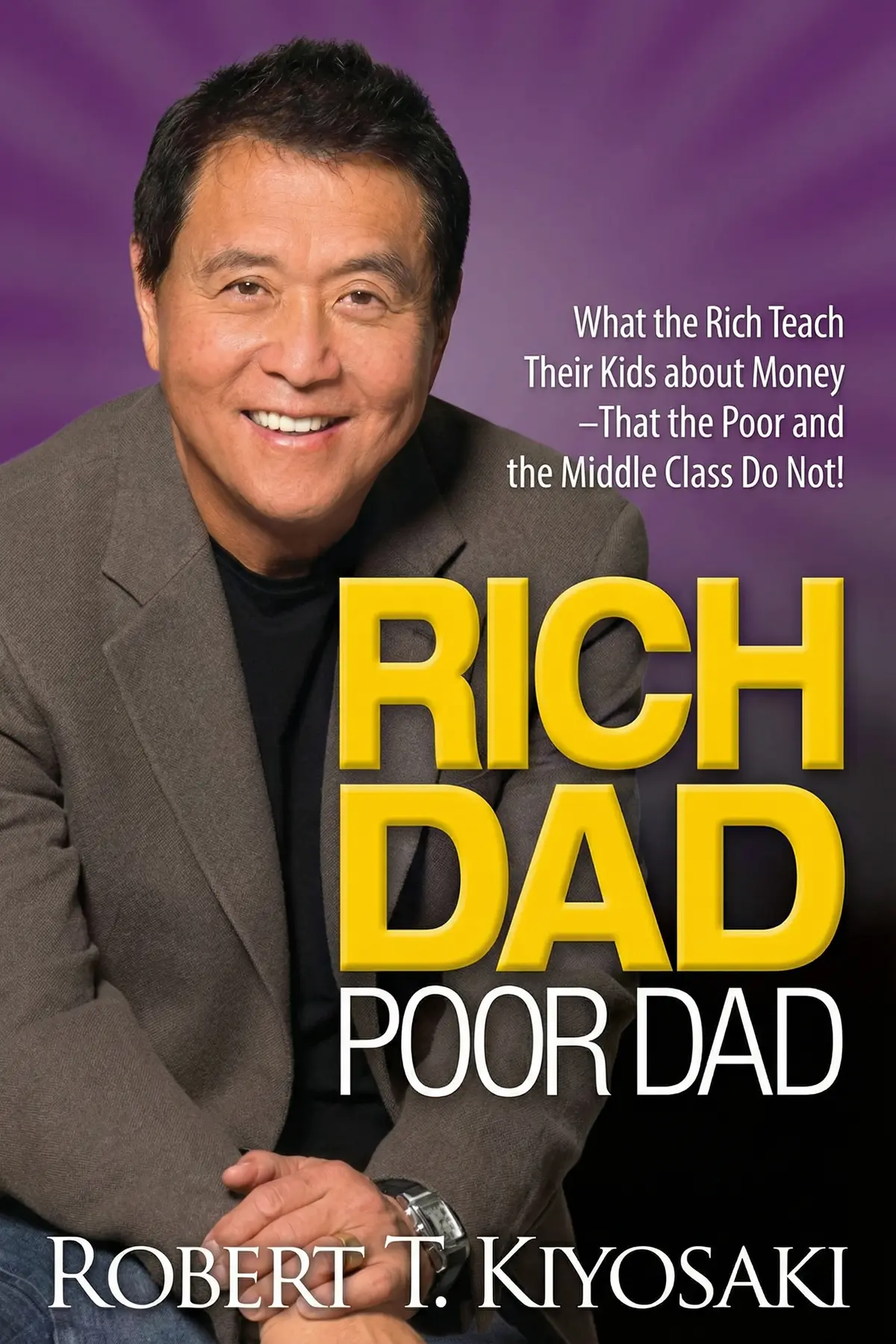
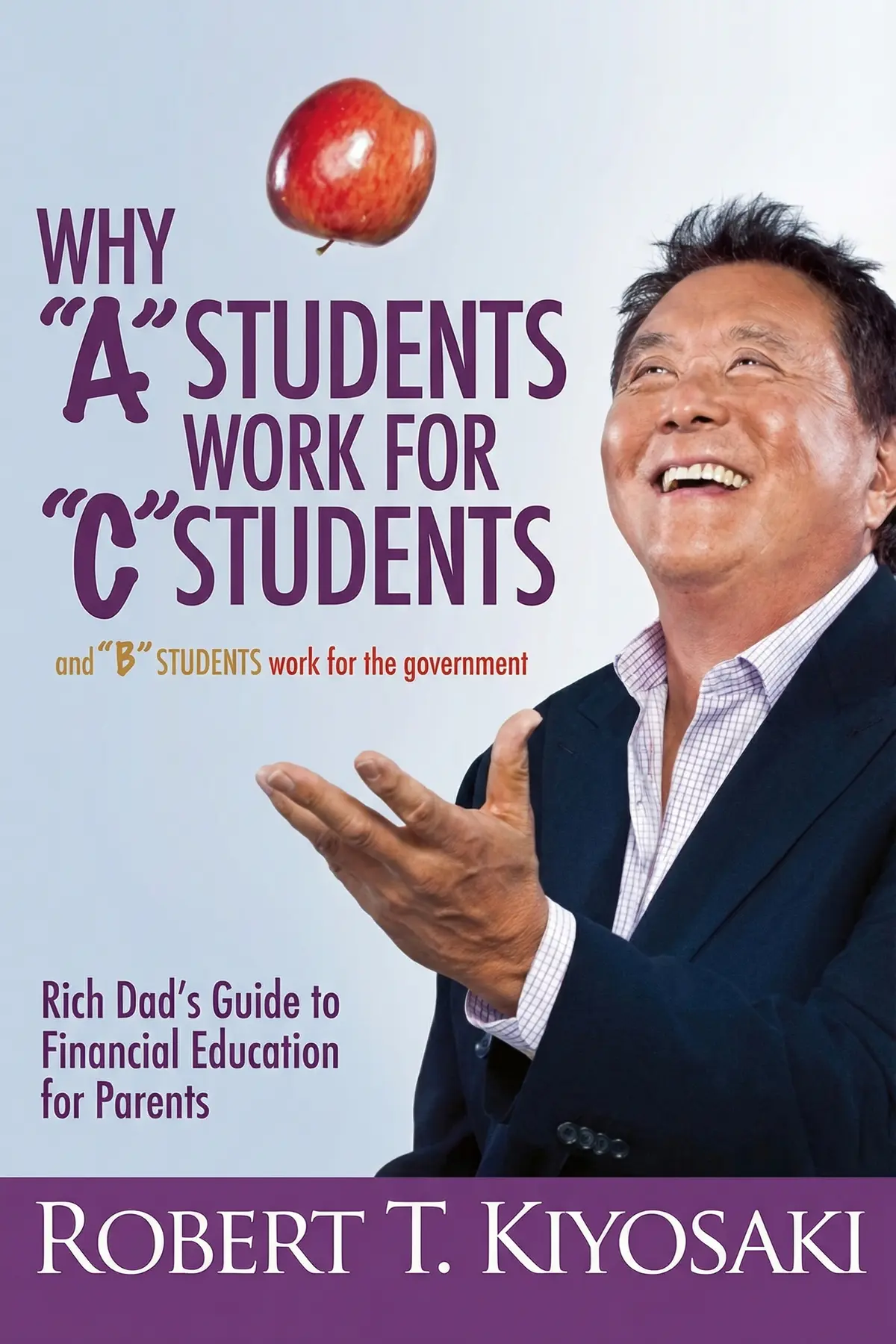
Rich Dad, Poor Dad: What the Rich Teach Their Kids about Money – That
Robert T. Kiyosaki
Discover why academic excellence doesn't always translate to financial freedom. This summary explains how parents can teach their children the essential money skills and entrepreneurial mindsets that traditional schools completely ignore.
2 min 23 sec
Every parent shares a common dream: to see their children thrive and find success in an increasingly complex world. We often believe that the path to this success is paved with high grades, prestigious degrees, and a stable job at a reputable company. However, if we look closely at the modern landscape, we see a curious phenomenon. Many individuals who excelled in the classroom find themselves working for those who barely scraped by. We see brilliant specialists struggling with debt while others, who perhaps never mastered calculus, are building empires. This raises a fundamental question: what are the ‘C’ students learning that the ‘A’ students are missing?
The answer lies in a massive gap in our educational system. Schools are fantastic at teaching verifiable facts, historical dates, and scientific formulas. They are designed to produce excellent employees—specialists who can perform specific tasks within a structured environment. But there is one subject that remains almost entirely absent from the curriculum: the study of money. In the classroom, there is always a right answer and a wrong answer, and making a mistake is a failure. In the real world of finance, however, the rules are different. Mistakes are lessons, and the ability to adapt is far more valuable than the ability to memorize.
This summary is about bridging that gap. It is a guide for parents who recognize that they can no longer delegate their children’s financial future to a system that doesn’t understand wealth. We are going to explore a new way of looking at education—one that focuses on financial literacy as a core life skill. We will look at how to identify the different stages of a child’s development and how to introduce complex financial concepts in a way that is engaging and age-appropriate.
The throughline of this journey is empowerment. By shifting the focus from simply getting a job to understanding how money works, you can provide your children with a level of security that a paycheck alone can never offer. We will dismantle the myths surrounding debt, taxes, and income, and replace them with a practical framework for building long-term prosperity. It is time to look beyond the report card and start preparing our kids for the actual economy they will inhabit. Let’s begin by looking at when and how this education should start.
2 min 44 sec
Financial education is not a single lesson but a developmental journey that evolves as a child grows through different psychological stages.
2 min 31 sec
Your professional title matters far less than where you sit within the four distinct categories of the financial world.
2 min 18 sec
Understanding the difference between what puts money in your pocket and what takes it out is the foundation of true wealth.
2 min 20 sec
Financial literacy provides a sense of security that protects against the greed and desperation that often stem from a lack of knowledge.
2 min 17 sec
True generosity means teaching children the value of exchange and the skills of self-reliance, rather than providing endless handouts.
2 min 18 sec
The ability to distinguish between biased financial suggestions and true financial knowledge is the key to protecting your wealth.
1 min 39 sec
In the end, the most important lesson a parent can teach is that education doesn’t stop when the school bell rings. In fact, for most of us, our real education begins the moment we step out into the world. While the school system continues to focus on a narrow path of academic achievement, it is the parents who must take up the mantle of providing a comprehensive financial foundation. By understanding the different windows of learning, the structure of the cashflow quadrants, and the true nature of assets and income, you can give your children a massive advantage that no degree can match.
We have explored how to move away from a mindset of entitlement and fear toward one of self-reliance and strategic thinking. We’ve seen that being an ‘A’ student in life often means being a generalist who understands how to build and manage systems, rather than a specialist who simply functions within them. The goal is to raise children who are not afraid of the world of money, but who see it as a landscape of opportunity.
To make this real in your own home, start small but be consistent. Consider establishing a dedicated time, perhaps one evening a week, for a ‘Financial Education Night.’ Use this time to play games like Monopoly, discuss your family’s financial goals, or review the basic concepts of assets and liabilities. The point isn’t to be a perfect teacher, but to start the conversation. When you make the language of money a part of your daily life, you take away its mystery and its power to intimidate. You are teaching your children to fish in the vast ocean of the modern economy. With these tools, they won’t just survive; they will have the knowledge and the confidence to build a life of true abundance and freedom.
The traditional school system was designed to create capable employees, not financially independent thinkers. This summary explores the core philosophy of Robert Kiyosaki, which posits that the current educational model is outdated and fails to address the most critical survival skill in the modern world: financial intelligence. By focusing on grades and test scores, schools often lead students toward a life of high taxes and job dependency. This summary breaks down the different ways children learn, the various types of income available, and the psychological barriers that prevent most people from achieving wealth. It provides a roadmap for parents to step in where the educational system falls short. You will learn how to shift your children's perspective from seeking a steady paycheck to building assets, and how to foster a mindset of abundance rather than one of entitlement or fear. Ultimately, the promise of this work is a new framework for raising kids who are not just academically proficient, but financially resilient and capable of creating their own opportunities.
Robert T. Kiyosaki is an entrepreneur, educator, and the author of Rich Dad Poor Dad, the all-time top-selling personal finance book. He has produced over twenty-four titles, including a collaboration with Donald J. Trump titled Why We Want You To Be Rich.
Robert T. Kiyosaki
Robert T. Kiyosaki
Robert T. Kiyosaki
Robert T. Kiyosaki
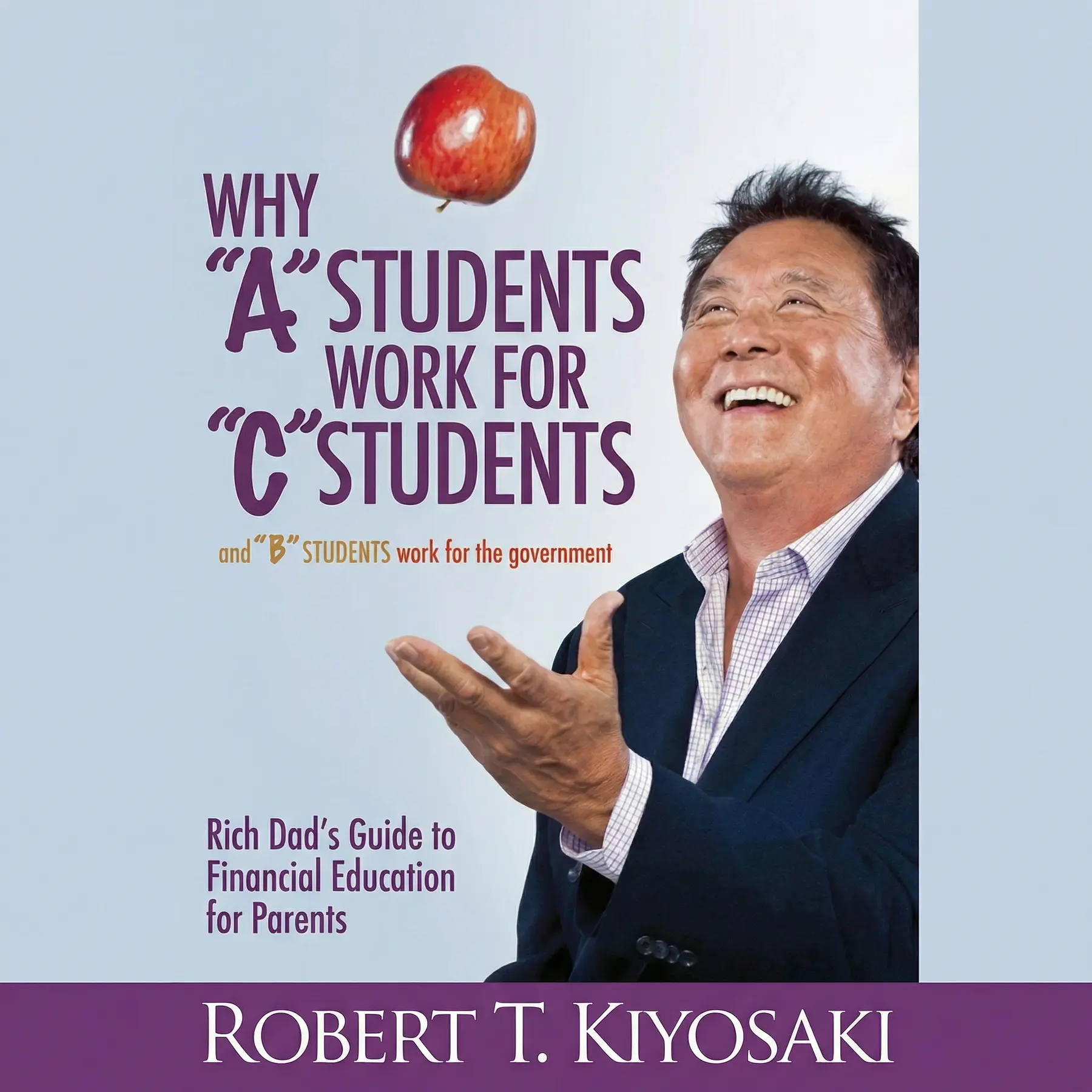
Listeners find this book to be an essential resource that offers profound financial insights while remaining easy to understand. They also value the compelling premise and its focus on practical life lessons, noting its effectiveness for instructing children about money matters. However, reactions to the writing style are inconsistent; some deem it well-written, while others call it terrible. Furthermore, several listeners mention that the text contains numerous grammatical and typographical errors.
Finally got around to reading this latest installment from Kiyosaki, and it hits home for anyone raising kids today. He argues that our schools are essentially factories for employees, training children to be terrified of making mistakes. Truth is, the "A" students are often too paralyzed by the fear of a bad grade to take the real-world risks necessary for building wealth. While the writing is definitely simple and a bit repetitive at times, the fundamental shift in mindset is worth the price of admission. I started encouraging my daughter to look at her small craft business as a learning tool rather than just a hobby. It’s about teaching them to be job creators instead of just job seekers. If you can look past the lack of a professional editor, the financial education provided here is a solid foundation for any family.
Show moreWow, this really changed my perspective on how I talk to my children about their career paths and school grades. For years, I pushed for straight A's, but now I see how that might be hindering their ability to handle real-world failure. The book illustrates how the "C" students are often the ones building the businesses that provide the jobs for everyone else. It’s a tough pill to swallow for some, but the reality is that academic intelligence is not the same as financial intelligence. I loved the parts about encouraging children to start small businesses, like a lemonade stand or a muffin sale. This is about more than just money; it's about raising kids who are resilient and capable of creating their own opportunities.
Show moreLook, if you want to understand the real world instead of just the classroom, read this book immediately. It’s a fascinating look at how "C" students use their social skills and willingness to fail to build massive empires. They then hire the "A" students to manage those companies because "A" students are great at following instructions and avoiding risks. The book is filled with practical wisdom about financial education that you will never find in a standard textbook. Sure, there are some typos, but focusing on the grammar means you're missing the entire point of the message. This is about changing your mindset so you can stop living paycheck to paycheck and start building a legacy.
Show moreThis book is a wake-up call for parents who believe that high marks are the only ticket to a secure future. Kiyosaki explores the reality that "C" students often possess the social skills and risk tolerance that "A" students lack because they aren't afraid to fail. Frankly, the author spends a lot of time repeating himself, which can be frustrating if you're a fast reader looking for new data. However, the breakdown of the different quadrants and how the government "B" students regulate the system is eye-opening. It explains why some of the most brilliant people end up working for those who barely scraped by in school. Even though it feels like a long-shot dream at times, the logic behind the "B" and "I" quadrants remains very compelling.
Show moreAs a former straight-A student now stuck in a government job, this book felt like a personal attack in the best way possible. I realized I’ve spent my life following a script that was designed to make me a reliable cog in someone else's machine. The author emphasizes that financial literacy isn't taught in schools, leaving even the most educated professionals living paycheck to paycheck. My only major gripe is the production quality; the typos and grammatical errors are frequent enough to be distracting. Despite the sloppy editing, the central thesis about the value of real-world experience over academic perfection resonated deeply with me. It’s a must-read for anyone who feels like they did everything "right" but still isn't getting ahead financially.
Show moreEver wonder why the smartest kids in class don't always end up at the top of the food chain? This book tackles that head-on by explaining how the school system punishes the very traits that lead to entrepreneurial success. Kiyosaki’s writing is very straightforward, making complex financial concepts like leveraging debt accessible to someone without a business degree. It’s not a step-by-step manual, but rather a guide to changing how you view money and career paths. I’ve started teaching my kids about the "I" quadrant because I don't want them to be stuck in the "E" quadrant forever. There are some repetitive sections, but the core message about the importance of financial education is too important to ignore.
Show morePicked this up because I wanted a different perspective on the traditional education system, and I certainly got it. The author doesn't hold back in his criticism of how we train children to be employees rather than entrepreneurs. He argues that the fear of making mistakes—which is ingrained in us by the grading system—is the biggest obstacle to financial freedom. While I don't agree with every single point, particularly the idea that everyone should be a business owner, the logic is hard to ignore. Some of the success stories are a bit extreme, but they serve as a necessary counterpoint to the "get a good job" mantra. It’s an interesting read that will definitely make you question your current financial decisions.
Show moreThe core message is actually quite profound, but the delivery leaves a lot to be desired in several chapters. Robert Kiyosaki has a tendency to use his "poor dad" as a punching bag for everything wrong with the academic world. It feels a bit disrespectful at this point, especially since his father isn't here to defend his own life choices. That being said, the insight into why "B" students gravitate toward government roles for security is incredibly accurate based on what I see at work. The book provides a lot of "food for thought" regarding how we view success and the risks we are willing to take. Just be prepared for a lot of repetition and some very obvious spelling mistakes throughout the text.
Show moreTo be fair, Kiyosaki makes some excellent points about leveraging debt and tax advantages that most people never learn. These are the "sensitive truths" that school teachers and government officials usually shy away from discussing in public. However, I found the book's structure to be a bit of a mess, with the same ideas recycled in almost every chapter. It makes the reading experience feel longer than it needs to be, which is a shame because the information is valuable. If you can push through the poor editing, you'll find a wealth of knowledge about how the financial system actually operates. It’s a great starting point for anyone looking to break out of the traditional employee mindset.
Show moreNot what I expected from such a big name in the financial world, and I’m actually quite disappointed. The book feels like a series of disjointed rambles that were never seen by a professional editor. I found myself reading the same three anecdotes over and over again until I started skipping pages just to find something new. To be fair, the concept of "C" students hiring "A" students is an interesting hook, but the research to back it up feels incredibly thin. He relies on massive outliers like Bill Gates to prove his point, which isn't exactly a realistic template for the average person. It’s mostly just an ode to capitalism that ignores the fact that society actually needs doctors and engineers to function properly.
Show moreAUDIO SUMMARY AVAILABLE
Get the key ideas from Why “A” Students Work for “C” Students and “B” Students Work for the Government by Robert T. Kiyosaki, plus 5,000+ more titles in English and Thai.