
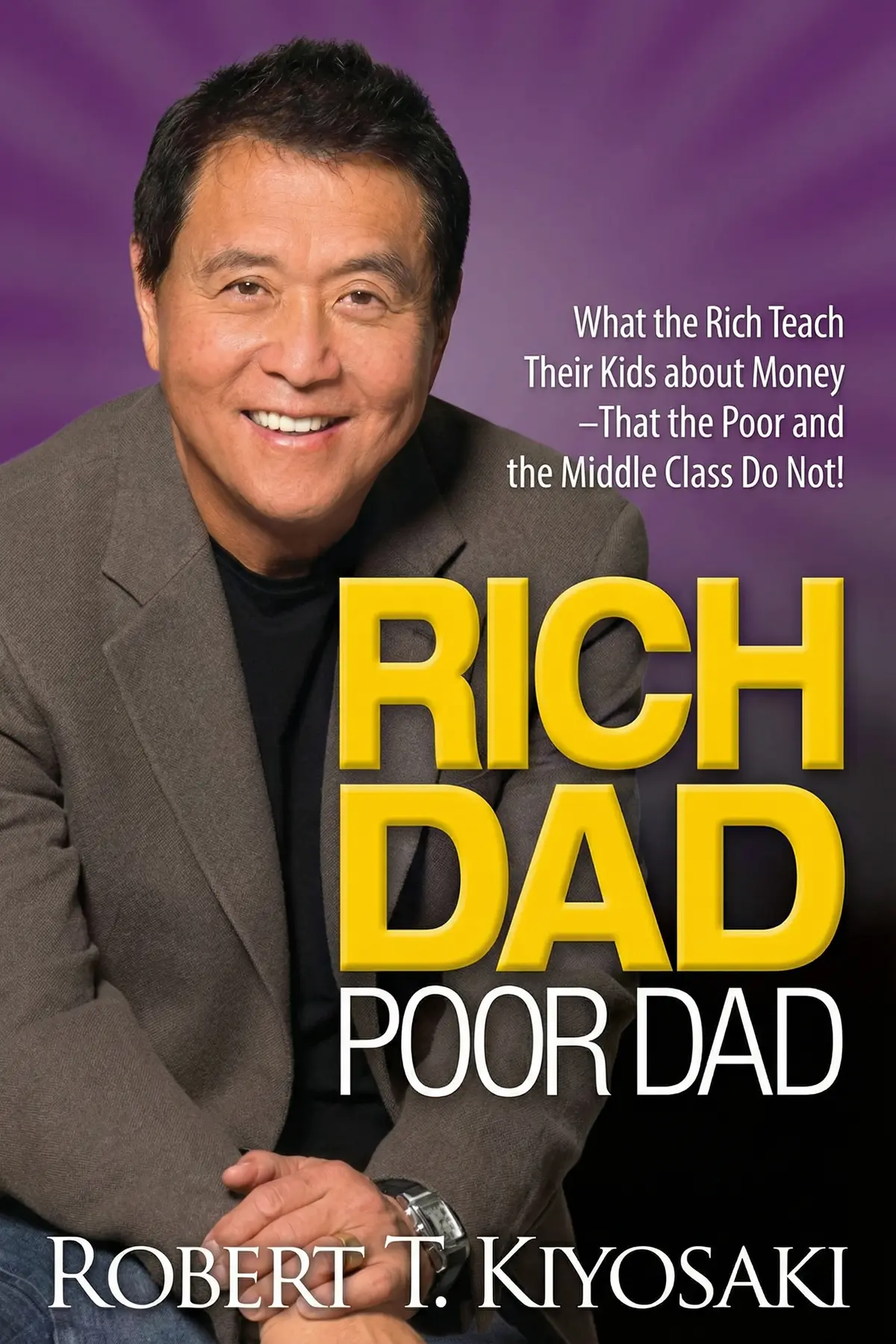
Rich Dad, Poor Dad: What the Rich Teach Their Kids about Money – That
Robert T. Kiyosaki
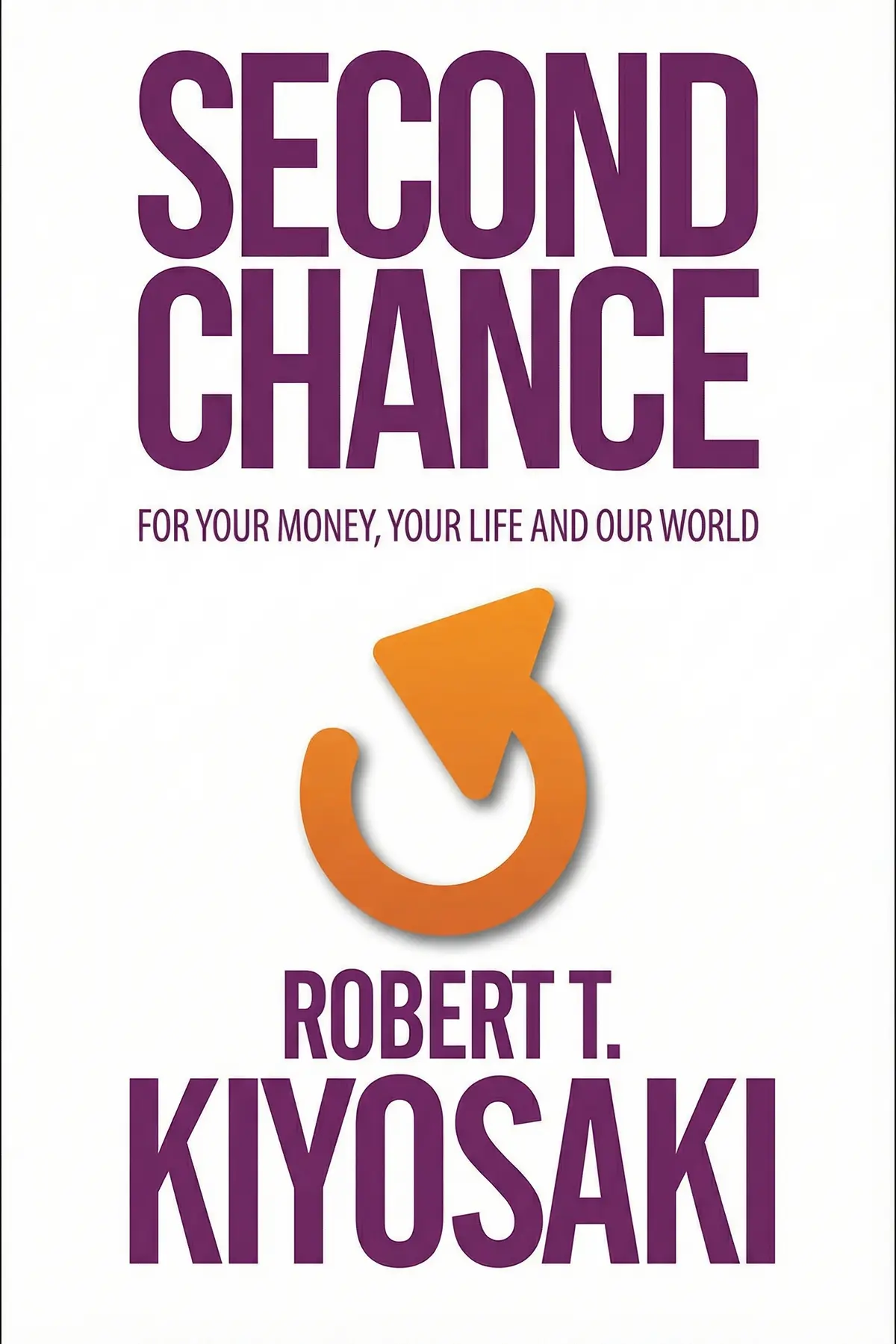
Second Chance explores the mechanics of the modern financial system and provides a strategic roadmap for escaping the cycle of inflation and debt by building real assets and seeking true financial literacy.
1 min 16 sec
Have you ever felt like the harder you work, the less ground you seem to gain? You aren’t alone. In the wake of the 2007 and 2008 global financial crisis, millions of people realized that the rules they had been taught about money were no longer working—if they ever worked at all. We often labor under the massive misconception that a good degree and a high-paying job are the ultimate shields against poverty. However, as the world changes, these old pillars of security are crumbling.
The truth is that our current financial system isn’t designed to reward the hard-working employee who saves every penny. In fact, it’s often set up to do the exact opposite. To thrive in this environment, you need a new perspective, a different kind of education, and a willingness to look at the world of finance through a lens most of us were never given in school. This is the core of the ‘second chance’ Robert T. Kiyosaki offers. It is a chance to unlearn the habits of the poor and middle class and to start thinking—and acting—like those who truly understand how wealth is created and preserved. Over the course of this summary, we will explore the hidden mechanics of inflation, the crucial difference between what you own and what you owe, and how you can reclaim control of your financial destiny by focusing on assets rather than just a paycheck.
2 min 06 sec
Uncover how the global banking system is designed to diminish the value of your hard-earned savings through a cycle of inflation and debt.
2 min 18 sec
Explore why standard schooling often leaves students unprepared for the real-world financial challenges and risks of the modern economy.
1 min 59 sec
Learn how to accurately assess your financial health by understanding what truly puts money in your pocket versus what takes it out.
1 min 57 sec
Discover the different paths to wealth and why choosing an area that aligns with your personal interests is the key to long-term success.
2 min 00 sec
Shift your perspective from a specialized employee to a generalized leader who values cooperation and experience over competition.
2 min 06 sec
Break free from the fear of debt and learn how to use it strategically to acquire income-producing assets and achieve leverage.
1 min 27 sec
The journey to financial freedom is not about finding a better job or working more hours; it is about fundamentally changing how you see the world of money. We live in a system that, by its very nature, devalues the labor of those who simply work and save. To survive and thrive, you must give yourself a ‘second chance’ by pursuing the financial education that schools failed to provide.
This means shifting your focus from earned income to the acquisition of assets that generate cash flow. It means learning to distinguish between what truly builds wealth and what merely looks like wealth to the uninformed. By choosing an asset class you are passionate about, embracing the mindset of an entrepreneurial generalist, and learning how to safely use debt as leverage, you can move from being a victim of the economy to being a participant in its growth.
As a practical first step, start expanding your financial vocabulary today. Make it a habit to read financial news and look up every term you don’t fully understand. If you can master just two new financial concepts or words every day, you will be sixty words smarter by next month. This vocabulary is the foundation of your new financial life. The world is changing rapidly, and while the old rules are failing, the new rules offer more opportunity than ever before for those willing to learn them. Your second chance starts the moment you decide to take control of your own financial education.
This book serves as a wake-up call for those still following the outdated industrial-age rules of money. Robert T. Kiyosaki breaks down why the traditional advice of going to school, getting a job, and saving money is no longer a path to security, but rather a recipe for financial erosion. He explores the deep-seated flaws in the global banking system, the reality of how inflation strips wealth from the middle class, and the reason why standard education fails to provide the tools necessary for modern survival. The promise of this work is a literal second chance at your financial life. By understanding the difference between assets and liabilities and learning how to use debt as a tool for growth rather than a burden of consumption, you can begin to see opportunities where others see only risk. It is a guide to shifting your mindset from that of a specialized employee to a generalized entrepreneur who knows how to make money work for them, rather than working for money.
Robert T. Kiyosaki is the bestselling author of Rich Dad Poor Dad. He’s also an investor, businessman and radio personality.
Robert T. Kiyosaki
Robert T. Kiyosaki
Robert T. Kiyosaki
Listeners find the content engaging and straightforward, with one individual highlighting the use of simple stories and examples. Furthermore, they value its educational merit, noting how it puts financial principles into perspective, and feel it is worth the cost. The work also earns praise for its focus on financial literacy, with one listener specifically mentioning action steps for achieving financial freedom, while others find it motivating, including one who noted it provided fresh perspectives. Nevertheless, several listeners point out that the material can be repetitive.
Wow. This was exactly the wake-up call I needed after feeling like I was just treading water in my career. Robert Kiyosaki has a unique way of taking complex economic shifts—like the transition from the Industrial Age to the Information Age—and making them feel personal and urgent. While some people complain about his style, I found the simple stories and the emphasis on 'knowledge being the new money' to be incredibly empowering. The book doesn't just talk about theory; it actually pushes you to look at your 401k and savings through a much more critical lens. I particularly loved the sections on how the poor work for money that is constantly being devalued by inflation. It is an eye-opening perspective that makes you realize why 'savers are losers' in today's economy. If you are looking for a spark to change your financial trajectory, this is definitely worth the price of admission.
Show moreAs someone who felt trapped in the traditional 9-to-5 mindset, this book provided a refreshing lens through which to view my debt and my future. I loved the concept of the 'Second Chance'—the idea that we can learn from the financial crises of the past to protect ourselves today. The way he breaks down the 1971 shift off the gold standard is brilliant and easy to understand. Not gonna lie, I used over 40 sticky notes to mark important pages for my kids to read later. The information about how taxes are used to steal the value of our labor was particularly life-changing for me. It is an inspirational guide that encourages you to take control rather than waiting for the government to save you. This is essential reading for the new generation who are facing a much tougher economy than their parents did.
Show morePicked this up after a friend recommended it for its insights into the 2008 crash and what’s coming next. It is incredibly well-written and fluid; I found myself flying through chapters because the conversational tone is so engaging. The book does a stellar job of explaining the difference between 'asset rich' and 'income rich,' which is a distinction most people completely miss. I loved the focus on Bucky Fuller’s 'generalized principles' and the idea that the more people you serve, the more effective you become. This isn't just a book about hoarding cash; it's about shifting your contribution to the world. The graphs helped me visualize the 'underwater' mortgage crisis in a way that news reports never could. Honestly, it’s one of the few finance books that actually felt like it was speaking directly to my situation in this crazy economy.
Show moreEver wonder why the gap between the rich and poor keeps widening despite everyone having degrees? This book dives deep into the 'Grunch of Giants' and explains how the system is rigged through taxes and inflation. I really appreciated the 'three sides of a coin' metaphor—heads, tails, and the edge. It taught me that intelligent people stay on the edge to see both perspectives. The charts and graphs in this volume actually made the complex economic theories digestible for a layman like me. Even though he can be a bit cryptic about the specific 'how-to' steps for real estate, the shift in mindset is worth it. I spent a lot of time highlighting the sections on 'defined contribution' plans versus 'defined benefit' plans. It’s scary stuff, but necessary to understand if you want a real second chance at financial freedom.
Show moreThe chapter on Buckminster Fuller alone made this a fascinating read for me. After hearing so much buzz about Kiyosaki being a 'vendehumos' or smoke-seller, I went in skeptical but came away quite impressed with the clarity of his stories. He explains the fractional reserve system in a way that finally clicked for me, showing how banks essentially print money while our savings rot. I’ll admit, the writing is a bit unpolished and the Q&A format gets a little repetitive toward the end, but the educational value is undeniable. It puts your personal finance into a global perspective that you just don't get from standard banking advice. He challenges you to stop being a 'sandwich generation' victim and start building assets. It’s not a get-rich-quick manual, but it provides the foundational literacy needed to stop making the same old mistakes with your money.
Show moreFinally got around to reading 'Second Chance' and it’s a solid follow-up to the Rich Dad series, even if it retreads some familiar ground. What makes this one stand out is the focus on the future and the specific dangers of the current 'Information Age' where old rules no longer apply. I found the mind-mapping techniques and the use of sketches to be very helpful for visualizing wealth building. To be fair, the book can be repetitive, but sometimes you need to hear a message ten times before it really sinks in. He does a great job explaining why the rich get richer during market crashes while everyone else panics. I appreciated the bluntness regarding the education system and how it's designed to create employees rather than entrepreneurs. It’s a quick, punchy read that will definitely change how you look at your paycheck every month.
Show moreDirectly speaking, this book is a wake-up call for anyone relying on a traditional savings account or a 401k to survive. Robert explains how the 'Robber Barons' influenced the education system to keep us financially illiterate, and it makes so much sense when you look at the world today. I liked the focus on 'Information x Education = Knowledge.' While he definitely promotes his Cashflow game a lot, the underlying lesson about the velocity of money is worth the annoyance. He makes you realize that the harder you work for a paycheck, the more you lose to taxes and inflation. I found the stories about his own failures and his 'second chance' after losing everything to be quite humanizing. It's a great tool for anyone wanting to take their financial literacy to the next level without getting bogged down in boring academic jargon.
Show moreLook, if you can get past the constant self-promotion of his board games and previous books, there is a lot of wisdom here about the devaluation of the dollar. The problem is that Robert is getting a bit disconnected from the reality of people who can't just go out and buy a 16-unit apartment building tomorrow. Personally, I found the first half of the book much stronger than the second half, which felt like it was written in a rush. He asks himself great questions but often answers in riddles or refers you to his other products. However, the 'Three Principles'—your house is not an asset, savers are losers, and the rich don't work for money—are still powerful concepts that bear repeating. It’s a decent read for fans, but don't expect a step-by-step blueprint. It's more about 'spirit' and 'vision' than actual logistics, which might frustrate those looking for immediate action steps.
Show moreTo be fair, while the core message remains powerful, the delivery feels a bit like an extended commercial at times. I’ve been a follower of Kiyosaki for a while, and I noticed that he spends a lot of time bragging about his past successes rather than teaching new strategies. The Q&A sections are hit-or-miss; sometimes he nails the point, and other times he completely avoids the question to talk about his 'Rich Dad' philosophy again. That said, the sections on the 'sandwich generation' and the looming retirement crisis were very grounded in reality. It’s a good book for beginners who haven't read his other work, but veterans might find it a bit light on substance. I don't regret reading it because it kept me focused on my goals, but I wish there were more concrete examples of his recent investments.
Show moreFrankly, I found this to be a massive disappointment compared to the original 'Rich Dad Poor Dad' which changed my life years ago. The truth is that the author repeats himself constantly, sometimes even reusing the same paragraphs and those confusing hand-drawn graphs over and over just to pad the page count. It feels less like a book and more like a high-priced brochure for his Cashflow board game and coaching seminars. A huge portion of the text is dedicated to R. Buckminster Fuller, and while his ideas are interesting, I felt like Kiyosaki was hiding behind another man's genius rather than offering new, actionable advice. To be fair, there are a few nuggets of wisdom about the history of the dollar, but they are buried under mountains of self-promotion and narcissistic anecdotes. You are better off re-reading his older work instead of spending your time on this rehash.
Show more

Julien Saunders
Tren Griffin
Michael Batnick
AUDIO SUMMARY AVAILABLE
Get the key ideas from Second Chance by Robert T. Kiyosaki, plus 5,000+ more titles in English and Thai.







