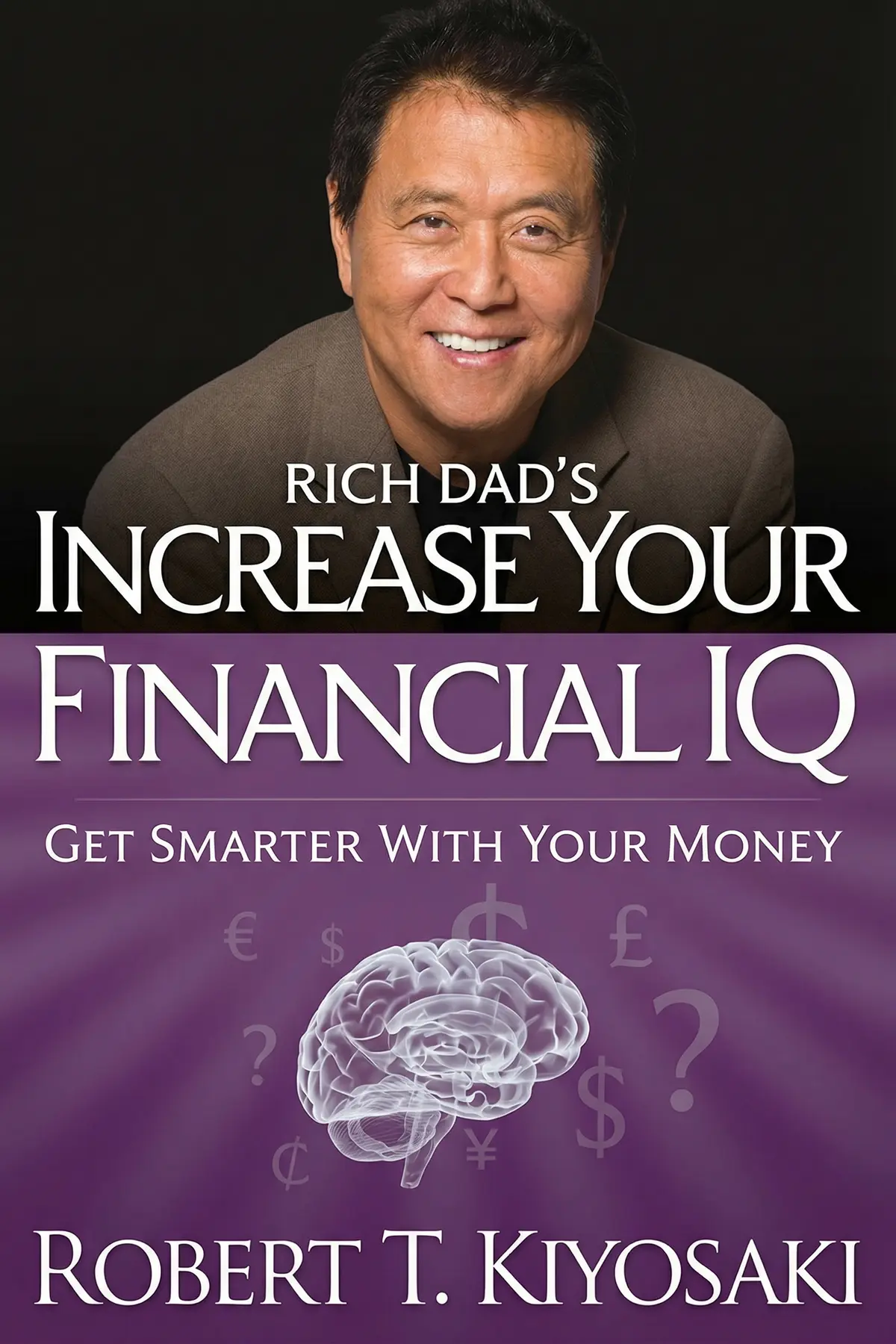
Rich Dad’s Increase Your Financial IQ: Get Smarter with Your Money
Robert T. Kiyosaki
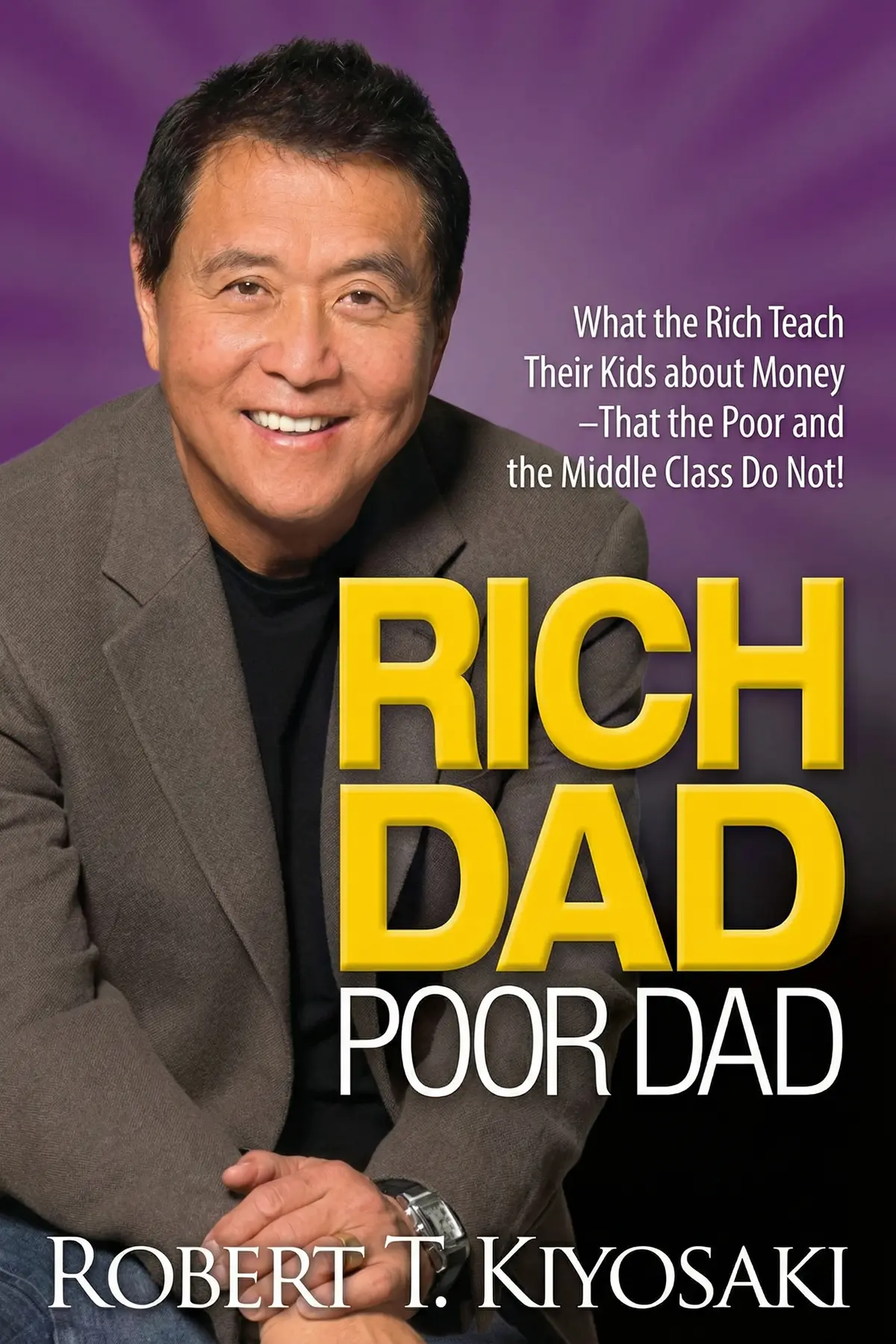
A foundational guide to financial independence that contrasts traditional career advice with the wealth-building strategies of the rich, focusing on asset acquisition, tax literacy, and the crucial distinction between assets and liabilities.
1 min 40 sec
Most of us grew up hearing the same refrain: stay in school, get good grades, and secure a high-paying job with a stable company. It is a script passed down through generations, intended to provide safety and a respectable middle-class life. But what if this advice—given with the best of intentions—is actually the very thing keeping you from true financial freedom? What if the path we are taught to follow leads not to wealth, but to a lifelong cycle of working for everyone else but yourself?
In this exploration of Robert Kiyosaki’s landmark book, Rich Dad, Poor Dad, we are invited to look at the world of money through a completely different lens. The narrative is framed around the author’s own childhood and the two men who shaped his understanding of success. One was his biological father, the ‘Poor Dad,’ an intellectual with a PhD and a high-ranking government position who nonetheless struggled with bills until his dying day. The other was the ‘Rich Dad,’ a man who never finished middle school but became one of the wealthiest individuals in Hawaii by mastering the art of the investment.
This isn’t just a book about numbers or stock tips; it’s about a fundamental shift in mindset. It’s about the ‘throughline’ that connects your daily work to your ultimate financial destination. Over the next hour, we will break down the core principles that separate the wealthy from the middle class and the poor. We’ll look at why a high salary isn’t the same thing as wealth, why your home might not be the asset you think it is, and how the rich use the legal system to keep more of what they earn. By the end of this summary, you’ll have a clearer picture of how to stop working for money and start making money work for you. Let’s dive into the lessons that schools never taught us, and see how a change in perspective can change your financial future forever.
2 min 29 sec
Discover why working harder for a higher salary often leads to more debt rather than more wealth, and how fear keeps most people trapped in a cycle of endless labor.
2 min 52 sec
Learn the simple yet profound definitions of assets and liabilities that the wealthy use to build their fortunes, and why your primary residence might actually be a liability.
2 min 37 sec
Understand the vital distinction between your profession and your business, and why building your own asset portfolio is the only way to achieve long-term security.
2 min 46 sec
Explore how the wealthy use the legal structure of corporations to protect their assets and pay significantly less in taxes than the working class.
2 min 35 sec
Learn why financial intelligence is about more than just numbers—it’s about having the courage to see opportunities where others see risks and ‘creating’ wealth through creativity.
2 min 34 sec
Understand why specializing in one narrow field can be a financial trap, and why the wealthy encourage a broad base of skills to ensure lifelong adaptability.
2 min 42 sec
Explore the five main reasons why even financially literate people fail to become rich, and how to conquer the cynicism and laziness that hold most people back.
1 min 59 sec
As we wrap up our journey through the lessons of Robert Kiyosaki’s Rich Dad, Poor Dad, we return to the central theme that has guided our discussion: the difference between working for money and having money work for you. We have seen that wealth is not just about the size of your paycheck, but about the strength of your asset column. It’s about the shift from the ‘Poor Dad’ mindset of security and specialization to the ‘Rich Dad’ mindset of financial literacy, risk management, and independence.
The core ‘throughline’ here is that you are responsible for your own financial education. Schools are designed to produce good employees, not good investors. Therefore, the task of learning how money works falls squarely on your shoulders. It starts with a simple, daily commitment to tell the difference between assets and liabilities. It continues with the discipline to mind your own business and build a portfolio that produces income. And it is sustained by the courage to face your fears and the wisdom to use the legal and tax systems to your advantage.
What can you do today to start this process? Begin by looking at your current financial state with brutal honesty. Categorize your monthly outflows: are they going toward true assets or are they feeding liabilities? Start small. You don’t need a million dollars to start ‘minding your own business.’ You can start by reading one book on investing, attending a seminar, or setting aside a small amount of money each month to invest in a stock or a piece of property.
Remember, the most powerful asset you possess is your mind. If you train it well, it can create wealth out of nothing. If you leave it untrained, it will keep you trapped in the rat race forever. The choice is yours. You can continue to follow the traditional path of working for others, or you can take the road less traveled—the road that leads to true financial freedom. As the author reminds us, the rich aren’t smarter than everyone else; they just have a different set of rules. Now that you know those rules, it’s time to start playing the game.
Rich Dad, Poor Dad challenges the conventional wisdom of 'get a good education and a stable job' as the primary path to wealth. Instead, it presents a philosophy centered on financial education and making money work for you through passive income and smart investments. The book explores the contrasting mindsets of the author’s two father figures: his biological father, a highly educated but financially struggling academic, and his best friend's father, a self-made multi-millionaire. Through their stories, it promises to reveal the secrets of the wealthy, teaching readers how to escape the 'rat race' by building a portfolio of assets and understanding the legal and tax systems that favor business owners.
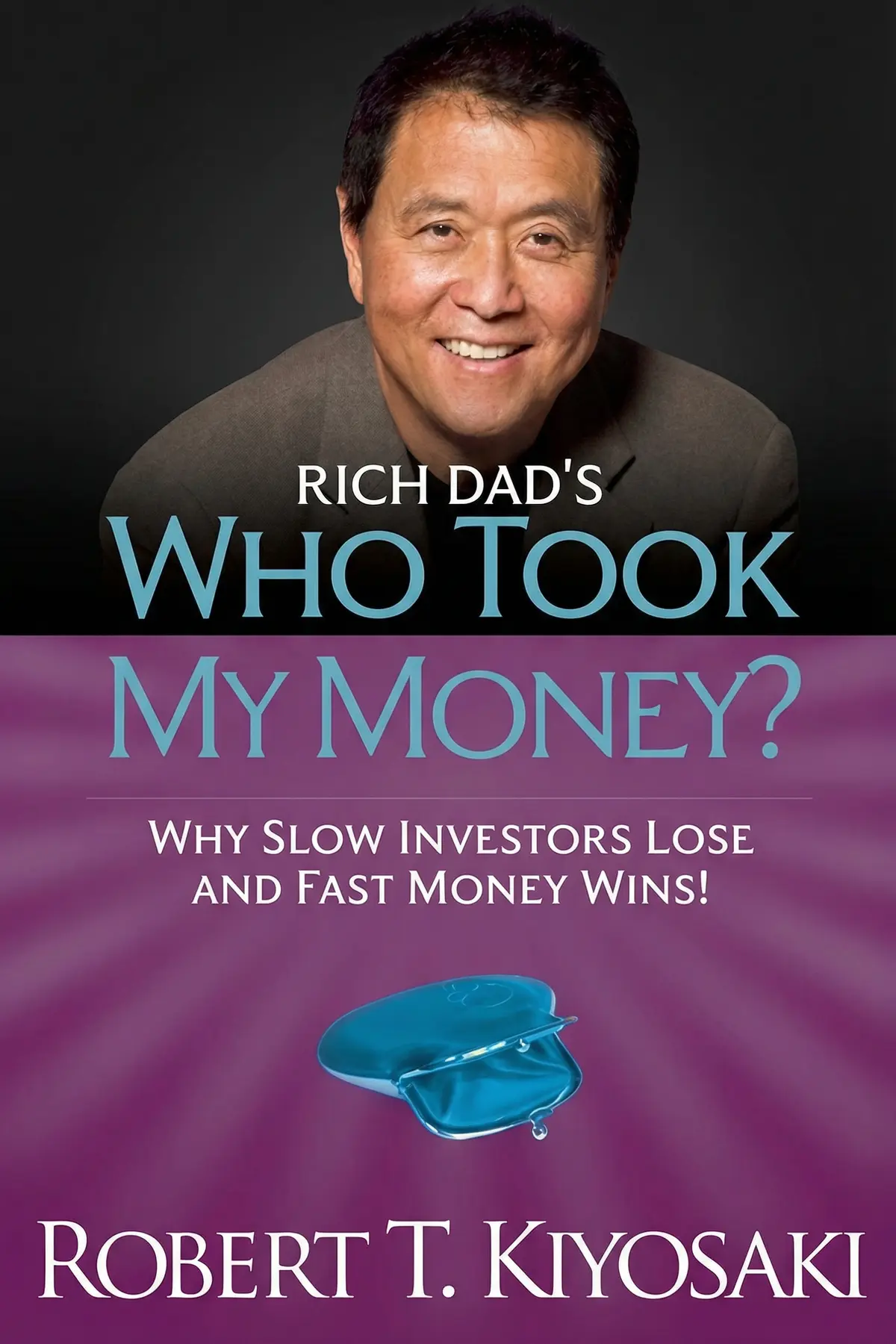
Robert Kiyosaki is an investor and entrepreneur with an estimated net worth of over $80 million. His Rich Dad brand has published more than 15 financial self-help books, which have sold over 26 million copies worldwide.
Robert T. Kiyosaki
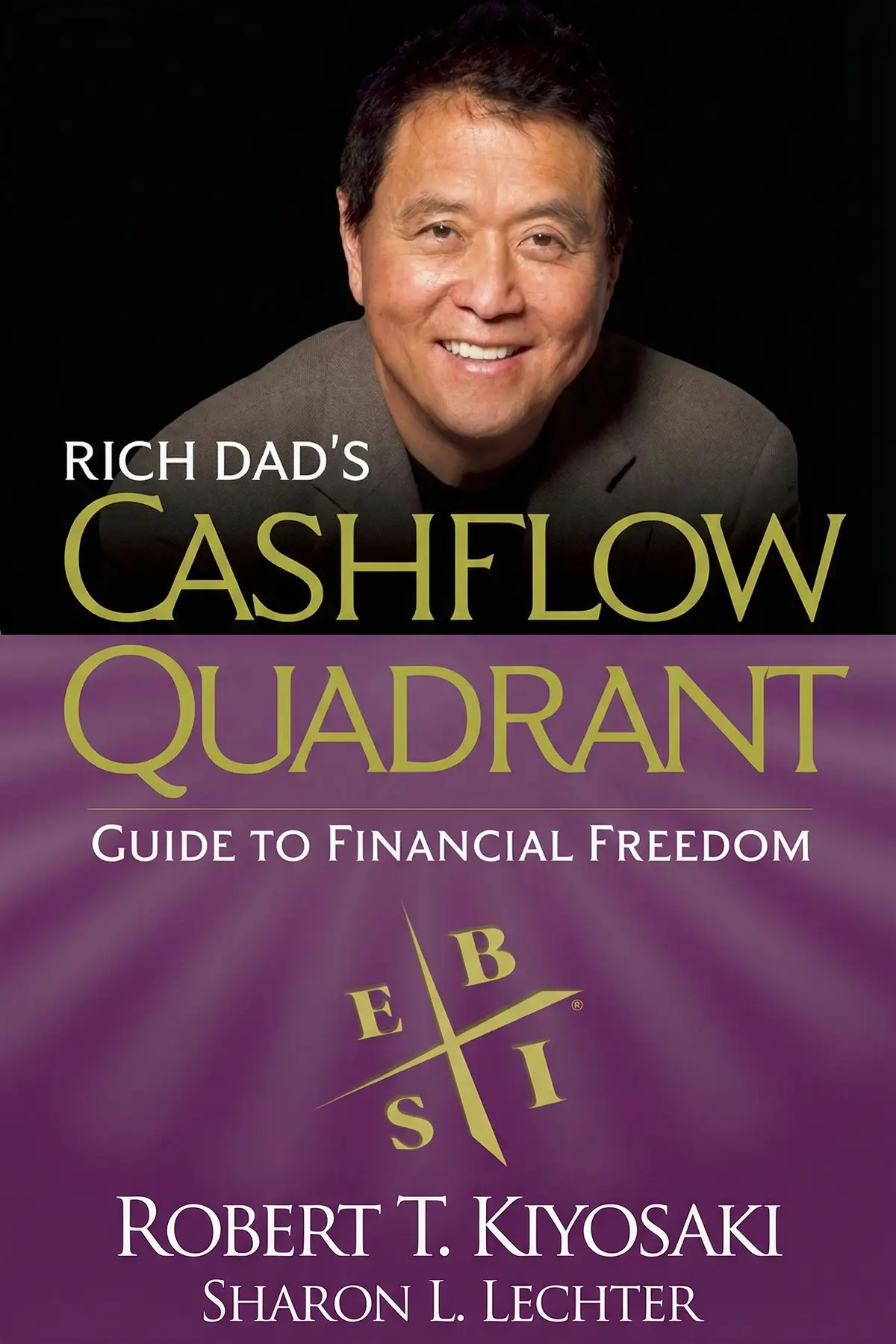
Robert T. Kiyosaki
Robert T. Kiyosaki
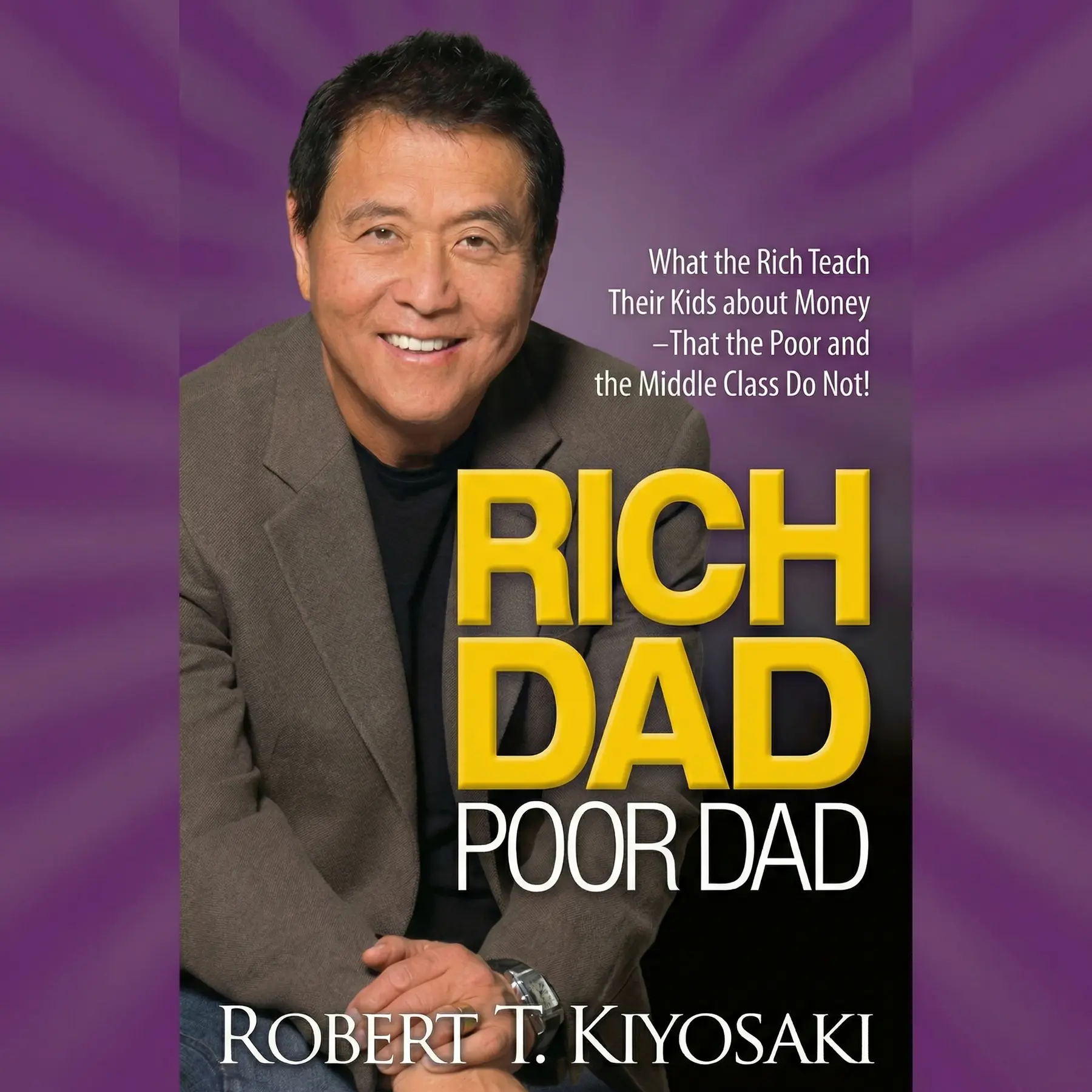
Listeners find the material very straightforward and value the advice given, with one listener noting that it is appropriate for people of all ages. Additionally, the content prioritizes financial literacy and teaches people to think creatively, with one listener remarking that it serves as a helpful overview for people. Listeners also appreciate how the author clarifies difficult fiscal topics and aids in choosing better investments, all while delivering a novel approach to managing money.
Wow. This book fundamentally shifted how I perceive my bank account and my future. Kiyosaki’s central argument about the difference between assets and liabilities is incredibly simple yet profoundly disruptive for anyone stuck in the 9-to-5 grind. I spent years thinking my car was an asset, only to realize it was draining my pocket every single month. To be fair, the writing style is quite repetitive, and he drones on about his 'Rich Dad' without giving much concrete evidence that the man existed. However, the psychological impact is what matters here. It encourages you to stop being a 'loser' who works for money and start making money work for you. If you can get past the tough-love tone, there is real wisdom in these pages for people of all ages. It is a must-read for anyone wanting to escape the rat race once and for all.
Show moreFinally got around to reading this classic, and I wish I had picked it up ten years ago. It’s not just about money; it’s about the philosophy of work and the way our schools fail to prepare us for the real world. The book explains how we are programmed to be good employees rather than creators of wealth. I loved the section on 'mind your own business,' which emphasizes building your asset column while you keep your day job. Some critics say it’s too simple, but honestly, that’s why it works. It takes intimidating topics like taxes and corporations and makes them accessible to the average person. While the author's ego definitely shines through in certain chapters, the core lessons on financial self-reliance are invaluable. It has completely changed the way I look at my monthly expenses and long-term goals.
Show moreEver wonder why they don't teach money in school? This book answers that question by showing how the traditional education system is designed to produce employees, not employers. Rich Dad Poor Dad is a wake-up call for anyone who feels stuck in a cycle of earning and spending. I found the stories about his childhood adventures in business quite charming, even if they are a bit exaggerated. The book emphasizes that financial intelligence is more important than a high salary, which is a lesson everyone needs to hear. Personally, I think this should be mandatory reading for every high school senior. It encourages you to take calculated risks and stop letting fear dictate your financial future. While the writing isn't exactly high literature, the message is powerful enough to outweigh the clunky prose.
Show moreFrankly, this changed how I view my paycheck every two weeks. I used to see my salary as the limit of my wealth, but now I see it as a tool to purchase assets. Kiyosaki’s ability to explain the 'game' of money is unparalleled, making it feel like something anyone can master if they have the right mindset. He challenges you to think outside the box and question the traditional path of high debt and long hours. I appreciate the emphasis on accounting and understanding the law, as these are the tools the rich use to stay ahead. Sure, he's a bit repetitive and the dialogue feels fake, but the core principles of financial literacy are game-changers. This book gave me the 'why' that I was missing from other more technical financial guides. It’s a fantastic overview for anyone ready to take control of their life.
Show morePicked this up on a friend's recommendation after years of avoiding the hype. It’s a fast read, which is a blessing because the author tends to repeat himself every three chapters to drive a point home. The core message is powerful: focus on income-generating assets rather than just working for a salary. I appreciated how he breaks down complex financial concepts into stories that even a teenager could understand. Look, it’s not a technical manual on real estate or stocks, so don't expect a step-by-step guide to millions. Instead, think of it as a mental reset. I did find his dismissal of formal education a bit extreme and frankly irresponsible for certain professions. Not everyone can be an entrepreneur, and the world still needs doctors and engineers. Still, the perspective on 'paying yourself first' is something I'll be implementing immediately.
Show moreAs someone who has spent two decades in the corporate world, reading this felt like a punch to the gut. Kiyosaki describes the 'rat race' with such accuracy that it made me re-evaluate every financial decision I've made since college. The contrast between his highly educated but struggling 'Poor Dad' and his entrepreneurial 'Rich Dad' provides a compelling narrative framework. While the dialogue feels a bit stiff and staged, the underlying principles of financial literacy are solid. I especially liked the diagrams showing the flow of money; they made the abstract concepts of cash flow much more tangible. My only gripe is that he glosses over the risks of the investments he suggests. Real estate isn't always a sure bet, especially when the market saturates or bubbles burst. Overall, it’s a great overview for beginners who need to start thinking outside the traditional employment box.
Show moreThe chapter on assets versus liabilities alone is worth the price of the book. I’ve always been intimidated by finance, but Kiyosaki’s conversational tone made the subject feel approachable. He focuses heavily on the idea that the rich don't work for money—they make money work for them. It’s a radical shift for anyone raised with the 'get a good job' mentality. To be fair, the book is a bit dated, and some of the real estate advice feels like it belongs in a pre-2008 world. He also has a habit of making everything sound much easier than it actually is in practice. However, the motivation it provides is undeniable. It pushed me to start researching index funds and looking into small business opportunities. It’s a solid starting point for a financial education, even if it’s a bit light on the math.
Show moreNot what I expected, but in a good way. I thought this would be a dry textbook about stocks, but it’s actually a compelling narrative about two father figures with completely different worldviews. One dad is a brilliant academic who is always broke, and the other is a high-school dropout who becomes a multi-millionaire. It’s a polarizing book, and I can see why some people find it offensive or anti-intellectual. Frankly, he is quite hard on the 'Poor Dad' character, which can be tough to read. But if you focus on the logic of building a portfolio of income-producing assets, the book is incredibly helpful. It simplifies the path to financial freedom without getting bogged down in jargon. It’s an easy, engaging read that leaves you feeling empowered to make better choices with your paycheck.
Show moreTruth is, I have mixed feelings about this one. On one hand, the idea that your house isn't an asset is a fascinating take that really makes you think about your expenses. On the other hand, the book is incredibly light on actual 'how-to' details. He tells you to buy real estate and build businesses, but he never explains the logistics or the legal hurdles involved in those ventures. It felt like reading a 200-page motivational speech rather than an investment guide. Also, the way he disparages the 'working poor' and those who value job security can feel quite condescending at times. In my experience, you need a balance of stability and risk. It's worth a read for the mindset shift, but you'll definitely need to supplement it with more technical books if you want to actually start investing.
Show moreIs it just me, or is this book basically just a long advertisement for the author's other products? I went in expecting a roadmap to wealth, but instead, I got vague anecdotes and a lot of repetitive 'tough love' storytelling. He claims that your home is a liability, which any accountant will tell you is technically incorrect from a balance sheet perspective, even if his logic about cash flow makes some sense. The lack of specifics is what really bothered me; he mentions turning $60,000 into $80,000 without explaining the mechanics of the deal. Not gonna lie, I felt a bit embarrassed reading this in public because it carries that 'get rich quick' vibe. It might get you excited about money, but the lack of verifiable facts makes me question the entire premise. If you want real advice, read something like 'The Millionaire Next Door' instead.
Show moreAUDIO SUMMARY AVAILABLE
Get the key ideas from Rich Dad, Poor Dad by Robert T. Kiyosaki, plus 5,000+ more titles in English and Thai.