

Ali: A Life
Jonathan Eig
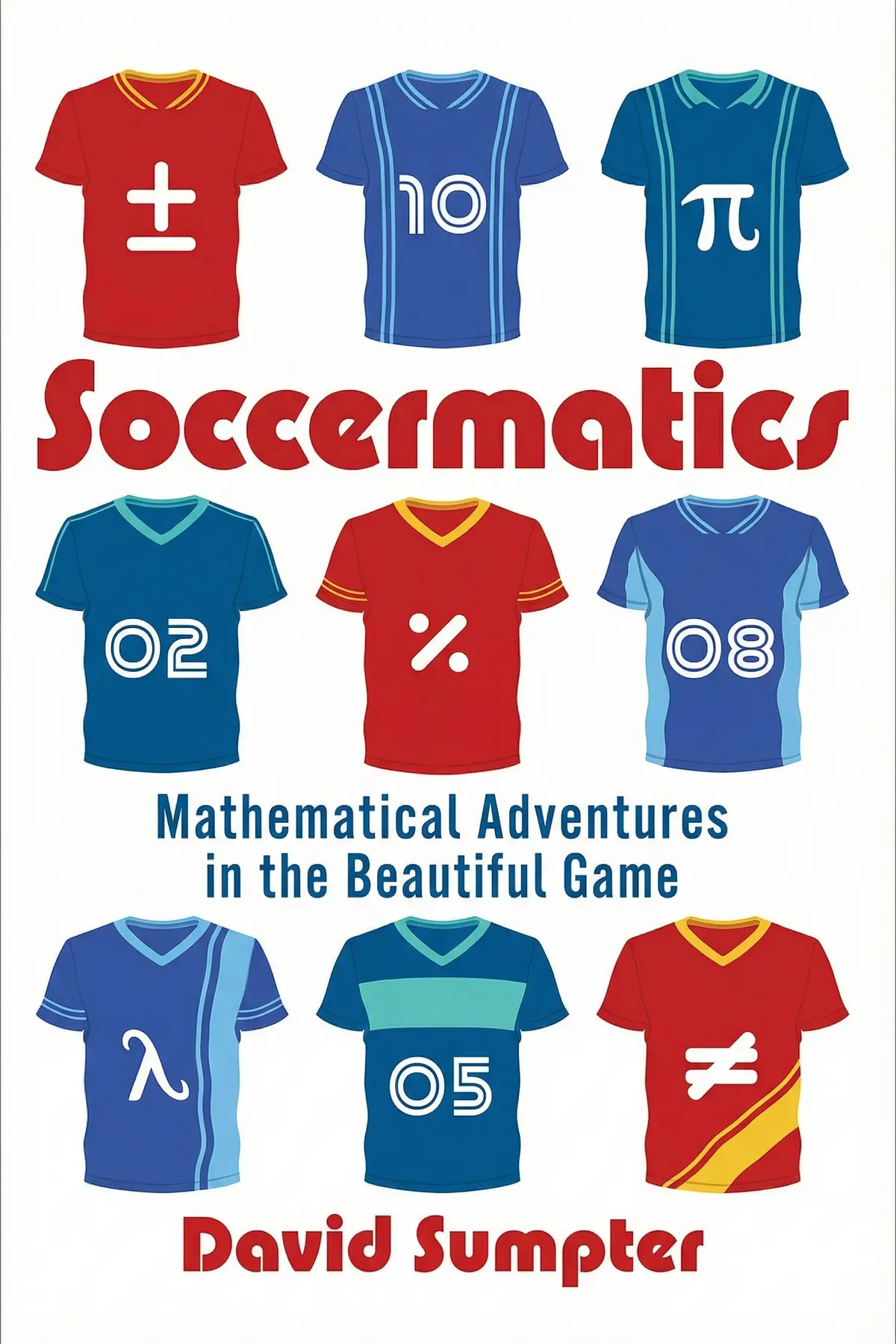
Discover the hidden mathematical patterns governing soccer. From geometric passing networks to the physics of superstar goals, learn how data and statistics are revolutionizing our understanding of the world’s most popular sport.
1 min 58 sec
When we think of soccer, we usually think of the raw, unbridled emotion of the crowd, the dramatic tension of a last-minute penalty, or the sheer athletic grace of a perfectly timed header. It is a sport that lives in the heart and the gut, defined by its unpredictability and its global reach. From small neighborhood dirt patches to the gleaming cathedrals of the World Cup, soccer seems to be about the human spirit in its most spontaneous form. But if you look closer—past the chanting fans and the grass stains—there is a hidden architecture at work. It is an architecture built not of steel and concrete, but of numbers, patterns, and physical laws.
In recent years, the scientific community has turned its analytical gaze toward the pitch. What they have found is that soccer is far less chaotic than it appears. Every movement, every pass, and every defensive stand can be mapped, measured, and optimized through the lens of mathematics. This isn’t just about cold hard data; it’s about a new kind of beauty—a mathematical beauty that explains why some teams dominate for decades while others struggle to find their rhythm.
By the end of this journey, you will see the game in a completely different light. We will explore how geometry dictates the flow of play and why the most successful teams function less like a collection of individuals and more like a single, decentralized organism. We’ll look at the physics that allow superstars to perform seemingly impossible feats and the statistical models that suggest the crowd might know more than the experts. Whether you’re a lifelong fan or someone who simply enjoys the intersection of logic and life, these insights will reveal the secret code behind the world’s favorite sport. Throughline here is simple: math isn’t just a tool for analyzing soccer; it is the very language the game is written in. Let’s dive into the fascinating world where the stadium meets the laboratory.
2 min 48 sec
Explore how top clubs use mathematical shapes and decentralized networks to dominate opponents, proving that success is often a matter of superior geometric positioning.
2 min 33 sec
Witness how elite athletes like Ibrahimovic, Messi, and Ronaldo intuitively master physical laws and defy the traditional models of statistical probability.
2 min 23 sec
Learn how modern technology reveals the most effective times to attack and the precise timing required for a championship-level defensive press.
2 min 17 sec
Discover why the most successful squads function like ant colonies, where individual egos are sacrificed for the greater collective intelligence.
2 min 10 sec
Uncover the mathematical reason why a group of fans often predicts match outcomes better than any single expert—provided they stay independent.
2 min 14 sec
Explore practical strategies for outsmarting the bookies by using long-term trends and multiple data points rather than relying on gut feelings.
1 min 46 sec
As we blow the final whistle on this exploration of soccer through the eyes of a mathematician, the overarching message is clear: the pitch is a place of profound order. What looks like a chaotic struggle for a ball is actually a sophisticated dance of geometry, a test of physical intuition, and a complex network of human cooperation. We’ve seen how the shapes a team forms can determine their offensive flow and how the precise timing of a defensive press can be the difference between a goal and a turnover.
Beyond the tactics, we’ve learned that the stars we admire are often those who either master the laws of physics or live as extreme outliers in the world of probability. We’ve discovered that the most successful teams function like biological super-organisms, where the collective intelligence of the hive outweighs the ego of the individual. And perhaps most importantly, we’ve seen that in a world of uncertainty, mathematics provides a grounded, rational way to predict and understand the game we love.
The beauty of soccer isn’t diminished by this scientific approach; it is enhanced. When you understand the ‘why’ behind a perfectly placed pass or a record-breaking season, the game becomes even more impressive. So, the next time you sit down to watch a match, look past the scoreboard. Look for the triangles. Watch the timing of the press. Listen for the wisdom of the crowd. Soccer is, and always will be, a game of passion—but it is the math that makes it beautiful. Use these insights to deepen your appreciation of every match, and remember that in soccer, as in life, there is always a pattern waiting to be discovered.
Soccer is often viewed as a game of pure passion and unpredictable flair, but beneath the surface lies a world of rigorous logic and mathematical precision. This exploration dives into the science of the pitch, examining how geometry, physics, and probability dictate everything from a team's defensive structure to the likelihood of a record-breaking season. By analyzing the tactics of legendary clubs and the intuitive brilliance of star players, the summary reveals why certain formations succeed while others fail. It also bridges the gap between the stadium and the laboratory, showing how animal collective behavior mirrors team dynamics and how the wisdom of crowds can be harnessed for more accurate match predictions. Whether you are a fan looking for a deeper tactical edge or a data enthusiast, this guide offers a fresh lens through which to view the beautiful game.
David Sumpter is an applied mathematician and a professor at the University of Uppsala in Sweden. He leads the collective behavior research group, specializing in how groups work together. In his personal time, he applies his expertise to the field as a coach for his ten-year-old son’s soccer team.

Listeners find the book’s innovative take on applying math and statistics to soccer impressive, as one listener points out that it goes beyond team and player stats. It is highly regarded for being easy to follow, with listeners calling it an enjoyable and must-read.
Picked this up because I love sports analytics, but Sumpter takes it to a whole new level by looking at biological systems. The comparison between Barcelona's tiki-taka and slime mold patterns was genuinely eye-opening for me as a fan. It is rare to find a book that explains complex mathematical concepts like Poisson distributions without making your head spin. Even if you aren’t a math whiz, the way he breaks down the geometry of the pitch is accessible and fun. This is a must-read for anyone who wants to see the beautiful game through a more scientific lens. The writing is punchy and the author’s passion for both subjects shines through on every single page.
Show moreFinally got around to reading this and I am impressed by how Sumpter links collective animal behavior to football tactics. It is not just about numbers; it is about the philosophy of how groups move together to achieve a single goal. The chapter on how slime mould built Barcelona is easily one of the most creative pieces of sports writing I have encountered. I have been watching football for twenty years, and I am now seeing patterns on the screen that I completely ignored before. Truth be told, it changed how I watch my team every Saturday. If you like stats but want more why than what, you should definitely grab a copy.
Show moreWow, I never thought I would be reading about the Poisson distribution on a Sunday afternoon and actually enjoying myself. David Sumpter manages to bridge the gap between high-level academia and the terrace culture of the local stadium perfectly. The way he describes the wisdom of the crowd in relation to match predictions was both enlightening and slightly terrifying. It is accessible, witty, and deeply researched without feeling like a dry university textbook. This is the kind of book that makes you feel smarter after every chapter, even if you are just a casual fan of the game. I highly recommend it to any sports lover.
Show moreEver wonder how much math is actually happening on the pitch during a ninety-minute match? This book dives into everything from passing networks to the physics of a Zlatan Ibrahimović bicycle kick. I appreciated that it was not just a dry list of statistics about goals and assists, but rather a look at movement and flow. Some chapters, like the one on Mexican waves, felt a bit like filler and did not hold my interest as much as the tactical analysis. Still, the section where the author tries to beat the bookies with his own models was fascinating and worth the price alone. It makes you realize how much calculation goes into every pass.
Show moreNot what I expected, but in a good way, because I thought this would be a Moneyball clone for soccer. Instead, Sumpter uses the game to teach us about broader mathematical principles like probability and network theory. I particularly enjoyed the Analysts Section which brought things up to date with more recent developments in the industry. My only real gripe is that some of the analogies feel slightly forced, as if the math and the football were shoved together. However, the author’s enthusiasm is infectious throughout the whole journey. It is a very readable book that manages to be both educational and entertaining for a casual supporter.
Show moreLook, I am not a math person at all, but I found myself flying through these chapters because the stories are so well told. Sumpter has a knack for taking intimidating concepts and grounding them in something familiar, like the way a flock of birds moves. I loved the bits about how decentralization helped Spain win Euro 2012 by overwhelming a Pirlo-centric Italian side. There were a few moments where the pacing slowed down, especially during the more abstract social behavior sections. Overall, it is a brilliant crossover that proves math is everywhere, even in the boots of Lionel Messi. It makes the complex feel very simple.
Show moreThe chapter on how ants and fish influence our understanding of team discipline was a real highlight for me. Sumpter argues that the best teams are not just collections of stars but are systems that work with a shared, almost biological, intuition. I appreciated the honesty regarding how many of the best secrets are kept behind the closed doors of top-tier clubs. While I would have liked a bit more focus on the specific data sets used, the narrative flow kept me engaged. It is a solid read that offers a fresh perspective on a sport that can sometimes feel over-analyzed. Every coach should probably read the section on defensive lines.
Show moreAs someone who studied applied mathematics, I found the book a bit too shallow in its technical depth. Sumpter introduces some great ideas, like using Voronoi diagrams to understand space, but he often glides over the actual how-to of the modeling. It feels like a collection of interesting blog posts rather than a cohesive, rigorous academic study of the sport. The writing style is engaging and easy to digest, which is great for a general audience, but I wanted more equations. It is a decent introductory text, but seasoned analysts might find themselves wishing for more substance behind the claims. To be fair, it is a fun entry point for casual readers.
Show moreAfter hearing so much hype about this, I found the actual content to be a bit of a mixed bag. The structure feels somewhat incoherent at times, jumping from biology to career counseling to betting without a clear thread connecting them. I enjoyed the bits about passing networks and the geometry of the eighties Liverpool team, but other parts felt like filler. Gotta say, Sumpter is a great writer, even if this specific work feels like it is trying to do too many things at once. It is worth a skim for the interesting anecdotes, but it is not the definitive guide to football analytics I was hoping for.
Show moreThis book attempts to model football using mathematics, but frankly, it falls short of providing any real, actionable insights. A lot of the examples, like the connection between Newton's Laws and Zlatan, felt like they were trying way too hard to be clever. It often feels like the author is cherry-picking specific games to fit his models while ignoring the massive amount of noise in football data. I was also disappointed by the betting section, which seemed more like a personal anecdote than a rigorous statistical strategy. If you are looking for deep tactical analysis, you are better off looking elsewhere for your sports data fix.
Show moreJonathan Eig

Billie Jean King
Ben Reiter

Christopher McDougall





AUDIO SUMMARY AVAILABLE
Get the key ideas from Soccermatics by David Sumpter, plus 5,000+ more titles in English and Thai.







