
16 min 29 sec
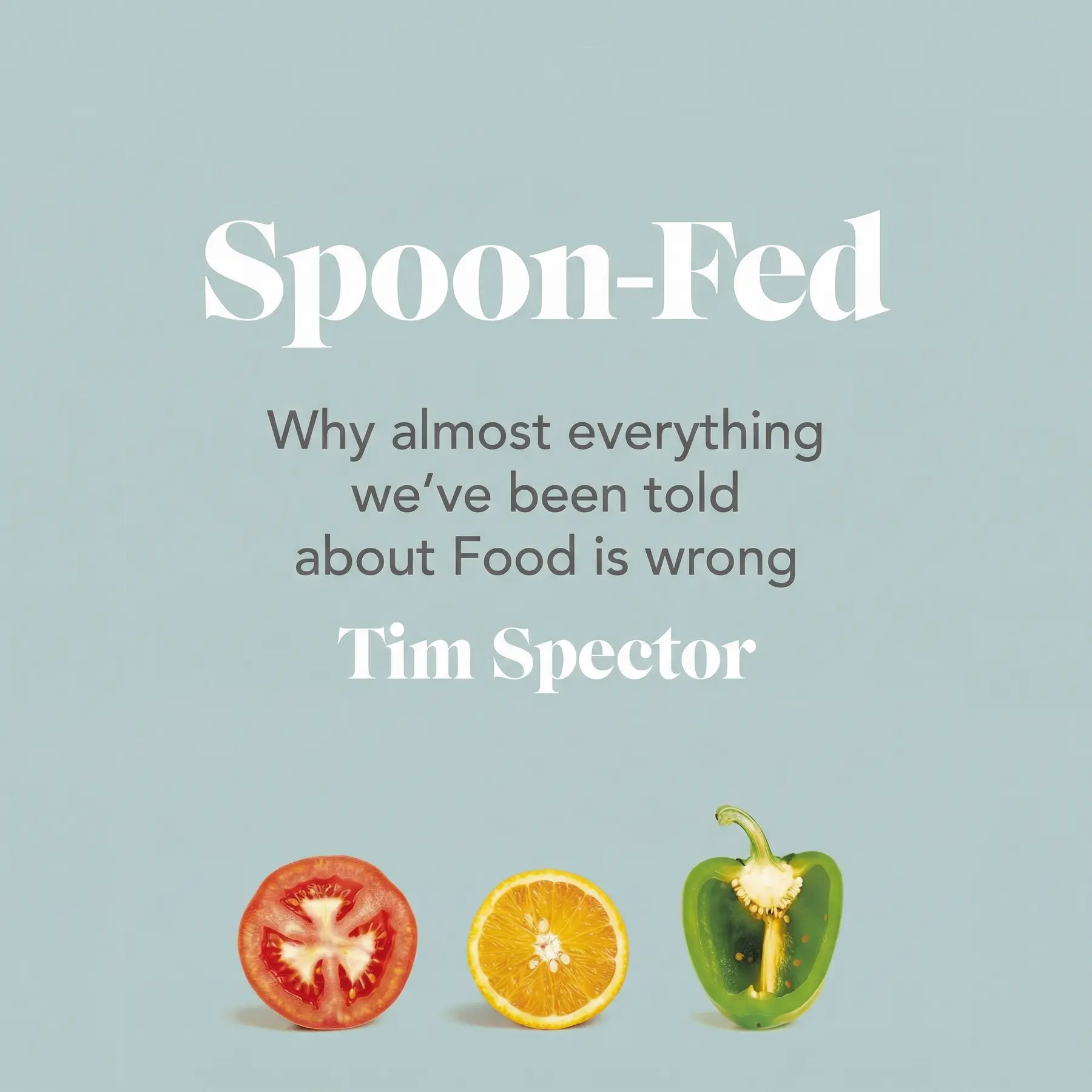
Spoon-Fed: Why almost everything we've been told about food is wrong
By Tim Spector
Spoon-Fed dismantles pervasive nutrition myths, revealing how industry influence and flawed science shape our diets. It advocates for a personalized approach to eating based on individual biology rather than universal guidelines.
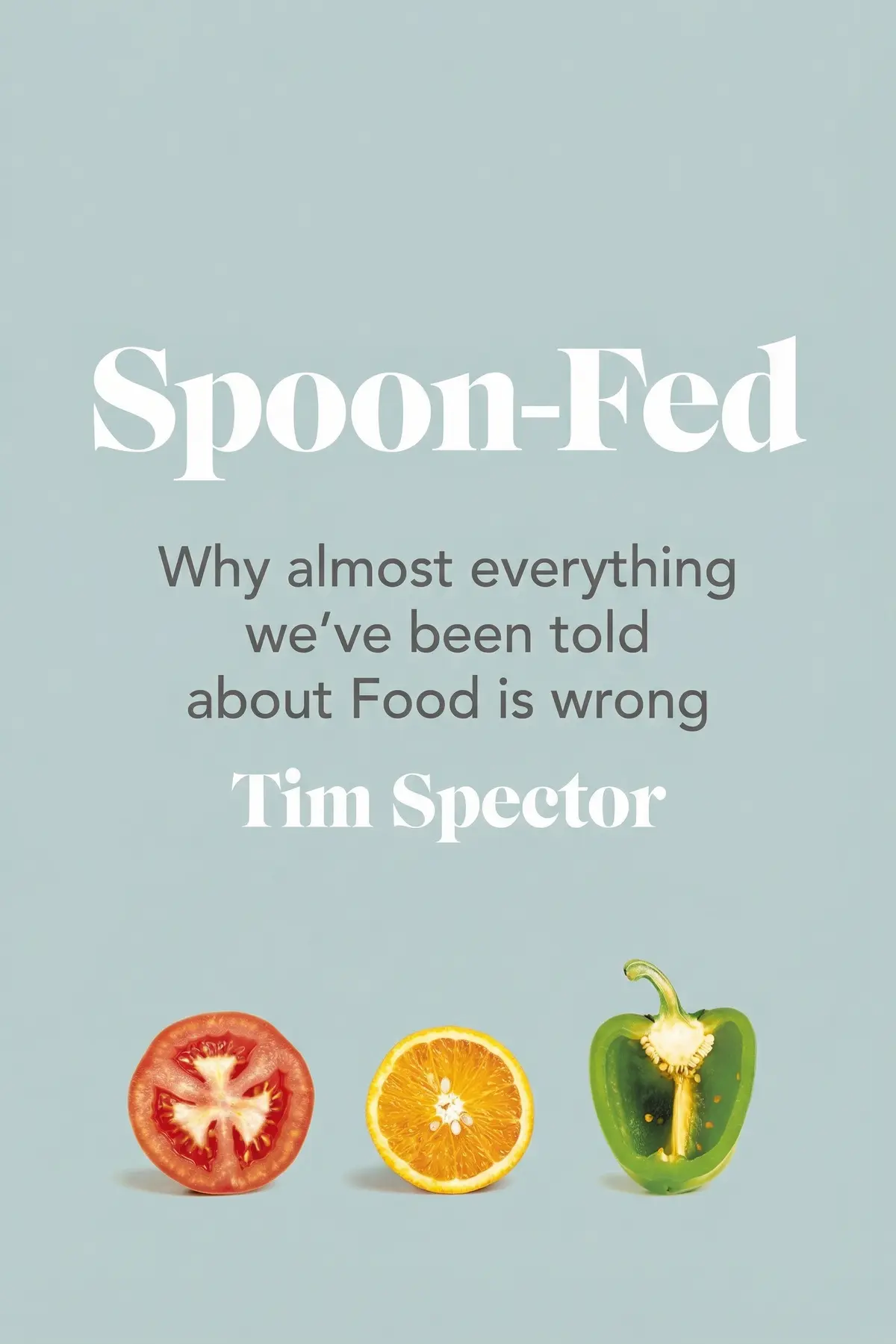
Table of Content
1. Introduction
1 min 23 sec
Have you ever wondered why dietary advice seems to change every other week? One year, eggs are a heart-attack risk; the next, they are a nutritional powerhouse. For decades, we have been told that if we just follow the right set of rules—count our calories, choose low-fat options, and drink plenty of bottled water—we will achieve optimal health. Yet, despite this constant stream of advice, rates of metabolic disease and obesity continue to climb.
This discrepancy suggests that the information we are being fed might be fundamentally flawed. We are often treated as biological clones, expected to respond to the same nutrients in exactly the same way. But as we are about to discover, the reality of human nutrition is far more complex and deeply personal. The central throughline here is that the era of the ‘universal diet’ is over.
In this exploration, we are going to look at the hidden influences of the food industry and the outdated science that still dictates our public health guidelines. We will uncover why your neighbor’s favorite superfood might be your body’s worst enemy, and why the numbers on a food label tell only a fraction of the story. By the end of this journey, you will see that true health isn’t about following a generic map, but about learning to read your own body’s unique biological compass.
2. The Fallacy of the Universal Diet
2 min 28 sec
Discover why identical twins can have completely different reactions to the same meal and how your unique microbiome dictates your health.
3. The Flaws in Calorie Counting
2 min 20 sec
Learn why the way we measure food energy is outdated and how your body’s absorption of calories is anything but a simple math equation.
4. The Myth of Good and Bad Foods
2 min 12 sec
Explore how the food industry and shifting scientific opinions have wrongly demonized certain ingredients while ignoring the real culprits.
5. Questioning the Superfood Status of Fish
2 min 10 sec
Uncover the surprising truth behind the fish oil craze and why the health benefits of seafood might be overstated.
6. The Business of Food Allergies
2 min 15 sec
Learn about the gap between perceived food sensitivities and medical reality, and how to avoid the traps of the testing industry.
7. The Marketing of Purity in Bottled Water
2 min 17 sec
Examine the rise of the bottled water industry and why your tap water might be better for you than you’ve been led to believe.
8. Conclusion
1 min 24 sec
As we have seen, the landscape of modern nutrition is cluttered with myths, industry-funded half-truths, and outdated science. From the way we count calories to our obsession with ‘superfoods’ and the fear of tap water, many of our most ingrained habits are based on a misunderstanding of how our bodies actually work. The most important lesson to take away is that your body is a unique biological system, not a generic template. What works for a celebrity, a researcher, or even your own twin might not be what your body needs to thrive.
So, where do we go from here? The path forward is one of personal discovery and skepticism. Don’t take food labels or health headlines at face value. Instead, start treating your diet as a personal experiment. Pay close attention to how your energy, digestion, and mood fluctuate after different meals. Prioritize whole, minimally processed foods that feed your gut microbiome, and don’t be afraid to challenge the ‘rules’ you’ve been spoon-fed for years. By reclaiming your autonomy from the food and supplement industries, you can finally build a way of eating that is truly nourished, sustainable, and perfectly tailored to you. Real health isn’t found in a bottle or a calorie-counting app—it’s found by listening to the unique signals of your own body.
About this book
What is this book about?
Spoon-Fed is a deep dive into the contradictions and misinformation that dominate the world of nutrition. For decades, we have been told to count calories, avoid certain fats, and rely on specific superfoods to maintain our health. However, as this book reveals, much of this advice is based on outdated studies or funded by the very industries that profit from our confusion. The book explores why universal dietary recommendations fail to account for our unique genetic makeup and individual gut microbiomes. It challenges the legitimacy of the supplement industry, the low-fat craze, and the rise of the bottled water market. The promise of this book is a return to evidence-based eating. By understanding that there is no single perfect diet for everyone, listeners are encouraged to look beyond the labels and marketing hype. Instead, it provides a framework for understanding how your specific body responds to different foods, empowering you to make choices that are truly healthy for you, rather than following the latest trend or a flawed government guideline.
Book Information
About the Author
Tim Spector
Tim Spector is a distinguished scientist and author recognized for his groundbreaking work in genetic epidemiology. Through his research, he has explored the complex relationships between our genes, the gut microbiome, and the food we consume. He has authored several influential books, including Identically Different, The Diet Myth, and Spoon-Fed, which translate high-level scientific findings into practical insights for the general public. His work focuses on challenging dietary dogmas and promoting a more personalized understanding of human health.
Ratings & Reviews
Ratings at a glance
What people think
Listeners find this work to be a revelatory critique of established dietary myths, though some listeners suggest the author’s scientific arguments can occasionally stray into sensationalism. They praise the attention given to the gut microbiome and the dismissal of universal health rules, with one listener observing that the "punchy" organization makes the data extremely accessible. Additionally, they value insights into how corporate food marketing impacts societal health. They also regard the book as an absorbing and clear resource for individuals aiming to re-evaluate their connection to food. They further mention the material is "urgently fascinating," with one listener suggesting it is mandatory reading before a weekly shop.
Top reviews
Sarocha
This book changed how I walk through the supermarket aisles. I’ve spent years counting calories and worrying about fat content, only to find out that most of those guidelines are based on shaky science or industry lobbying. Spector’s deep dive into the gut microbiome is particularly fascinating because it explains why my body reacts differently to food than my partner’s does. The writing is punchy and moves fast, breaking down complex biological processes into something a regular person can actually understand. While he can be a bit dramatic about certain chemicals, the underlying message about food diversity is life-changing. I’ve already started adding more varied plants to my diet. It’s a relief to stop chasing perfect numbers and start listening to what my body actually needs to thrive.
Show moreWit
Finally got around to reading Spector's latest, and it's a total eye-opener for anyone tired of fad diets. The way he exposes the insidious marketing strategies used by big food companies to push healthy alternatives is nothing short of brilliant. It makes you realize how much of our nutritional knowledge is actually just clever advertising designed to keep us buying processed junk. I particularly appreciated the appendix at the back, which provides a clear, 12-point summary of how to actually eat for health and the environment. It isn't just about weight loss; it’s about creating a sustainable lifestyle that supports your internal ecosystem. Gotta say, seeing the research on how exercise isn't a magic bullet for a bad diet was tough to hear but very necessary. Truly an essential guide for the modern shopper.
Show moreKwame
Wow, I didn't realize how much of my 'healthy' knowledge was actually just marketing from big food corporations until I read this. The revelation that many common food allergies are exaggerated or misdiagnosed was particularly shocking and has made me rethink my own restrictive habits. Spector writes with an urgency that makes you want to go out and buy thirty different types of vegetables immediately. It’s not just about what you eat, but how that food interacts with the trillions of bacteria living inside your digestive tract. I loved the chapters on fish and vitamin supplements, as they challenged everything I thought I knew about superfoods. This book is an absolute must-read for anyone who wants to stop being a pawn in the food industry's game.
Show moreChee
Picked this up on a whim and ended up finishing it in two sittings because the bite-sized chapters are so addictive. It’s rare to find a science book that is this readable without feeling like it’s talking down to you or oversimplifying the truth. The central tenet—that we are all individuals with different needs—is something I’ve felt for a long time but never had the data to back up. I’ve already started experimenting with my meal times and fasting, and I can frankly feel a difference in my energy levels. We need more professors who are willing to speak out against the status quo and provide practical, evidence-based advice for the public. It’s an urgently fascinating look at the most important part of our daily lives: what we put in our mouths.
Show moreKiattisak
Ever wonder why every diet you try seems to fail in the long run? Tim Spector argues that the one-size-fits-all approach to nutrition is fundamentally broken because our bodies are all unique. This book is a refreshing challenge to the boring, standard advice we’ve been fed for decades by health departments and so-called experts. I loved the structure of the chapters, where he takes a common myth—like the idea that we need eight glasses of water—and systematically dismantles it with research. The discussion on how the food industry manipulates our choices through deceptive marketing was a real wake-up call for me. Truth is, the science of nutrition is way more personal than we are led to believe. This should be required reading for anyone struggling with their relationship with food.
Show moreDarawan
The chapter on calorie counting alone makes this worth the price of admission for anyone who has ever struggled with their weight. Spector explains that labels are often wildly inaccurate and that our bodies process different calories in different ways depending on our unique microbiota. This insight alone relieved a lot of the guilt I used to feel when my math didn't add up on the scale. The writing style is engaging and free from the dry jargon you usually find in health books, making it very easy to digest in short sessions. Personally, I found the evidence against bottled water and low-fat products to be the most convincing parts of the whole narrative. It’s an empowering read that puts the control back in the hands of the individual rather than the corporations.
Show morePatcharaporn
After hearing Tim Spector on several podcasts, I decided to dive into the full text to see the data for myself. The book effectively highlights how individual our responses to food are, which explains why my friends can eat things that make me feel terrible. His work with the ZOE study is mentioned frequently, and while it’s clear he has a commercial interest there, the science behind the gut microbiome feels solid and revolutionary. I enjoyed the myth-busting format because it allows you to skip around to the topics that interest you most, like coffee or red meat. Some of the comparisons, like the one between stevia and hemlock, felt a bit manipulative and unnecessary. Overall, though, it’s a compelling argument for eating a more diverse, plant-based diet to keep our gut bacteria happy and healthy.
Show moreTar
As someone with a science background, I found myself nodding along at times while cringing at others. The core message—that we should focus on gut health and move away from ultra-processed foods—is absolutely vital in today’s world. However, the tone occasionally leans toward the sensationalist, which can undermine the very credibility Spector is trying to build. I noticed several inconsistencies regarding where certain bacteria live in the gut, and some of the claims about allergies felt a bit dismissive of real-world suffering. Look, the book is incredibly accessible and serves as a great introduction to the microbiome, but you have to take some of the broader generalizations with a grain of salt. It’s a good starting point for a lifestyle change, provided you don't treat every sentence as absolute gospel.
Show moreBig
To be fair, the core message about plant diversity is solid, but the execution feels a bit rushed and overly aggressive toward traditional medicine. I appreciate the call to skepticism regarding nutritional guidelines, especially since they change every five years anyway. However, the author’s tendency to use very small studies to support his own claims—while criticizing the industry for doing the same—felt a bit hypocritical. The sections on pregnancy advice were interesting but felt a little risky given the potential consequences of ignoring certain safety precautions. I think it’s a useful book for people who have no idea how the food system works, but more informed readers might find the tone a bit grating. It’s a decent overview, but I’d recommend cross-referencing his more extreme claims with other scientific sources.
Show moreOtt
I really wanted to like this more, but the lack of rigorous editing made it a frustrating experience for me. There are several distracting typos and odd phrases like sourdough flour that make the scientific arguments feel a bit sloppy. Spector is clearly brilliant, but it feels like the manuscript was rushed to print without a proper fact-check on some of the basic details. While I agree that the food industry is often dishonest, the author’s government is wrong about everything stance gets exhausting after a while. I did find the section on supplements eye-opening, as it confirmed my suspicions that most of them are a waste of money. Still, for a book that prides itself on debunking myths with hard science, the hyperbole was often too much to ignore.
Show moreReaders also enjoyed

AUDIO SUMMARY AVAILABLE
Listen to Spoon-Fed in 15 minutes
Get the key ideas from Spoon-Fed by Tim Spector, plus 5,000+ more titles in English and Thai.
- 5,000+ titles
- Listen as much as you want
- 7-day free trial
- Cancel anytime







