
22 min 08 sec
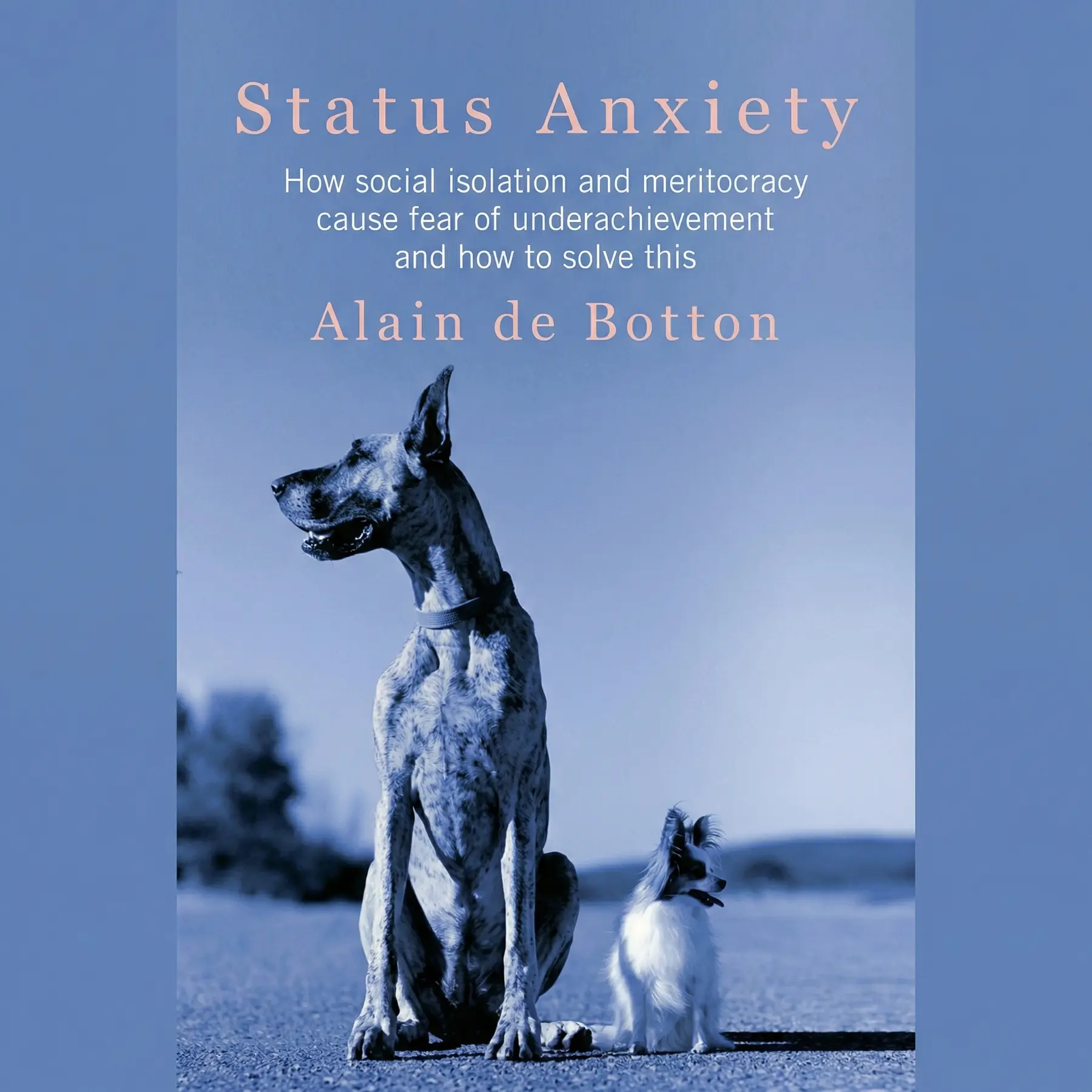
Status Anxiety
Examine the modern phenomenon of status anxiety, exploring why we fear underachievement and how historical, social, and economic shifts have transformed our self-worth into a fragile commodity dependent on external validation.

Table of Content
1. Introduction
1 min 54 sec
Have you ever walked into a room and felt an immediate, sharp pang of inadequacy because you weren’t sure if your job title or your bank account was impressive enough for the people standing there? If so, you’ve experienced a very specific, modern type of dread known as status anxiety. It is the quiet, nagging worry that we are ‘nobodies,’ that we are failing to keep up with our peers, and that our lives lack the markers of success that society has deemed essential. In our current era, we are surrounded by more material wealth and technological convenience than any of our ancestors could have dreamed of, yet we seem to be more anxious about our position on the social ladder than ever before.
In this exploration of the human condition, we’re going to look at the ‘throughline’ of status: the idea that our self-worth has become dangerously dependent on the opinions of others. We will trace the historical shifts that moved us from a world of fixed social roles to a meritocracy where every failure feels like a personal indictment. But this isn’t just a journey into the heart of our insecurities. It’s also a guide to the many ways we can escape this trap. By looking through the lenses of philosophy, art, and even the simple reality of our own mortality, we can begin to dismantle the narrow definitions of success that cause us so much pain.
Over the course of this summary, we will examine why we crave attention as much as we crave food, how the very idea of ‘equality’ actually made us more prone to envy, and why a drawing of a piece of fruit once led to a prison sentence. We’ll see how the definition of a ‘perfect’ person changes depending on when and where you live, and finally, we’ll discover the ‘bohemian’ alternative to the rat race. The goal is to move from a state of constant comparison to a place of internal stability, where we can define our own value on our own terms.
2. The Quest for Status as a Search for Love
1 min 48 sec
What if our drive for wealth isn’t about greed at all, but a desperate need for others to notice and value our existence?
3. The Rise of the Modern Snob
1 min 50 sec
As we enter adulthood, the unconditional love of childhood disappears, replaced by a world of snobs who judge us by our labels.
4. The Agony of High Expectations
1 min 41 sec
How did a world with more equality and opportunity lead to more resentment and a deeper sense of failure?
5. The Cruelty of the Meritocratic Myth
1 min 38 sec
When status is earned, poverty is no longer seen as bad luck—it is viewed as a personal moral failure.
6. Dependency and the Modern Workplace
1 min 38 sec
Our sense of security is constantly threatened by the shifting whims of the economy and the politics of the corporate world.
7. Philosophy as a Filter for Public Opinion
1 min 55 sec
Discover how the ancient philosophers used reason to ignore the insults of the crowd and find their own internal peace.
8. The Power of Art to Challenge Status
1 min 49 sec
Art doesn’t just look pretty on a wall; it acts as a silent rebellion against the idea that only the rich are important.
9. Understanding the Relativism of Success
2 min 02 sec
What we consider ‘successful’ today is just a temporary fashion, as arbitrary as the length of a skirt or the style of a hat.
10. The Perspective of the Grave and the Greatness of Nature
2 min 02 sec
Death and the vastness of the natural world are the ultimate equalizers, making our social anxieties seem wonderfully small.
11. The Bohemian Alternative: A Different Scorecard
2 min 02 sec
Bohemians refuse to play the game of the bourgeoisie, proving that you can live a rich life without being wealthy.
12. Conclusion
1 min 49 sec
As we reach the end of our journey through the landscape of status anxiety, it’s worth taking a moment to reflect on the ‘throughline’ that connects all these ideas. We’ve seen that our anxiety is a deeply human response to a world that has tied our sense of worth to our external achievements. We’ve explored how the hunger for status is often a hidden hunger for love, how the myth of meritocracy has made poverty feel like a moral failure, and how the modern workplace keeps us in a state of perpetual dependence.
But more importantly, we’ve looked at the antidotes. We have the power of philosophy to filter out the noise of public opinion, the power of art to remind us of the beauty of ordinary life, and the power of history to show us that the rules of the game are always changing. We’ve seen how contemplating the vastness of nature and the reality of our own mortality can dissolve the petty hierarchies that cause us so much stress. And we’ve learned from the bohemians that we can choose to live by a different scorecard entirely.
The most actionable takeaway from this exploration is this: you are the editor of your own life story. You do not have to accept the narrow, commercial definition of success that society hands to you. You can choose your own reference group, set your own expectations, and decide for yourself what makes a life well-lived. Status anxiety may be a permanent feature of modern life, but it doesn’t have to be the dominant one. By broadening our perspective and recognizing that we are all equally deserving of respect regardless of our rank, we can begin to quiet the voices of comparison and find a more enduring sense of peace and self-worth. In the end, the only status that truly matters is the one you grant yourself when you look in the mirror and know that you are living a life aligned with your own deepest values.
About this book
What is this book about?
Status Anxiety dives deep into the persistent, often debilitating fear that we are failing to meet the standards of success set by our society. Alain de Botton explores the origins of this modern malaise, tracing it from the shift toward meritocracy and the breakdown of traditional social hierarchies to the rise of mass media and consumerism. The book promises more than just a diagnosis of our collective insecurity. It offers a multifaceted set of solutions rooted in philosophy, art, and history. By reevaluating what it means to live a successful life and looking at how past cultures defined worth, the narrative provides listeners with the tools to build a more resilient sense of self-esteem that isn't tethered to a paycheck or a job title.
Book Information
About the Author
Alain de Botton
Alain de Botton is a philosopher, author, and founder of the School of Life, an institute that teaches emotional intelligence and aims to help people lead more fulfilling lives. He is the bestselling author of The Architecture of Happiness and How Proust Can Change Your Life.
How Proust Can Change Your Life
Alain de Botton
How to Think More About Sex
Alain de Botton
The Architecture of Happiness
Alain de Botton
The Art of Travel
Alain de Botton
The Consolations of Philosophy
Alain de Botton
The News: A User's Manual
Alain de Botton
The School of Life: An Emotional Education
Alain de Botton
Ratings & Reviews
Ratings at a glance
What people think
Listeners describe the work as accessible and intellectually stimulating, with one listener calling it the best they read in 2015. Furthermore, the prose is phenomenologically rich, and listeners value the extensive research and historical context provided. They also find the content highly applicable to daily life; one listener emphasizes its practical utility, while another admires how it encourages us to laugh at ourselves with kindness.
Top reviews
Aom
This book should be mandatory reading for anyone currently stuck in the corporate rat race. De Botton’s erudition is remarkable, yet he remains remarkably accessible. He brilliantly explains how our self-esteem is essentially a balloon that requires the breath of others to stay inflated. By using historical references ranging from Social Darwinism to New Yorker cartoons, he builds a phenomenologically rich argument for why we are so miserable despite our material wealth. The truth is, our expectations have outpaced our reality, and the mass media only exacerbates this by throwing rags-to-riches stories in our faces. I particularly appreciated the chapter on how comedy can undermine the pretensions of the powerful. It is a polished, elegant work that encourages a much-needed self-examination of our own values and what we consider a 'successful' life.
Show moreChai
The way de Botton uses art to subvert modern status norms is nothing short of brilliant. This is a superb meditation on why we are all so consumed by what we 'do' for a living. He manages to balance a high-brow intellectual examination with a kind of gentle, ironic humor that makes the medicine go down easier. By looking at how the poor were once honored as productive members of society, he highlights just how much our current meritocratic values have distorted our sense of worth. I found the discussion on our individual and collective mortality to be a sobering but necessary reminder to focus on non-materialistic values. It’s one of those rare books that actually makes you want to slow down and re-evaluate your entire career path. A truly marvelous and phenomenologically rich investigation into the 21st-century psyche.
Show morePatchara
Finally, a philosopher who can talk about the crushing weight of modern expectations without sounding like a dusty textbook. This is an elegant argument for the art of self-examination. De Botton’s genius lies in his ability to make profound observations about our need for status feel familiar and personal. He explains how progress has actually increased our anxiety by making everything seem attainable, which only makes failure feel more shameful. I found the book hard to put down, especially the sections on how we can use philosophy to become our own judges. While some might find his solutions a bit impractical for the modern world, the perspective shift alone is worth the price of admission. It's a beautiful, thoughtful work that allows us to laugh at ourselves with kindness while questioning the very foundation of our social hierarchy.
Show moreRosa
Ever wonder why we're so obsessed with what our neighbors think of us? De Botton tackles this head-on by exploring 'lovelessness' and our desperate need for the world’s affection. The first half of the book is an incredibly sharp look at how meritocracy has turned success into a moral judgment. If you fail, it’s no longer just bad luck; in a meritocratic society, it’s seen as your own fault. I found his writing light-hearted yet deeply perceptive, though the second half on 'solutions' felt a bit more theoretical than practical. While I loved the section on how art can subvert status, the bohemian lifestyle solution seems a bit out of reach for most of us working 9-to-5 jobs. Still, it’s a thought-provoking read that will make you look at your LinkedIn feed with a much-needed sense of irony.
Show moreJoe
As someone who struggles with impostor syndrome, I found the chapter on meritocracy particularly gut-wrenching. De Botton explains how the shift from inherited status to earned status has made failure feel much more personal and shameful. We judge ourselves against our reference group, which makes us feel poor even if we have more than our ancestors ever dreamed of. The book is well-written and full of acute perceptions about the human condition. I did feel that some of the solutions, particularly the section on politics, were a bit too brief and lacked the depth of the earlier chapters. However, the author’s ability to use tragedy and comedy as tools for coping with our fallible shared humanity is truly moving. It’s a solid 4-star read that offers a lot of comfort through perspective.
Show moreCha
After hearing several friends rave about this, I finally sat down with it over the weekend and was pleasantly surprised. De Botton's writing style is incredibly light-hearted for such a heavy topic. He does a great job of explaining how the 'meritocracy' we all praise actually increases our anxiety by removing the excuse of 'bad luck' from our failures. The examples he uses, from old-timey salesmen to modern success stories, help ground his philosophical arguments in reality. My only real gripe is that the presentation style is a bit odd, with paragraphs that don't always flow logically into one another. It's a very good book for self-reflection, especially if you feel like you're constantly falling behind. Just don't expect a step-by-step 'how-to' guide on curing your stress, as the solutions are more about changing your mindset.
Show moreAndrew
Picking this up felt like a gentle slap in the face from a very well-educated friend. De Botton hits the nail on the head regarding our dependence on the economy and luck, factors we can't control but which dictate our social standing. The book is an uncommonly well-reasoned argument for why we should stop caring so much about the 'love of the world.' I loved the selection of illustrations and the way he weaves in poetry to make his points more vivid. To be fair, he does meander a bit in the religion and art sections, but the core message remains powerful. We are often mistaken about what will make us happy, and this book serves as a polished mirror to our own vanity. It's a fascinating conceptual investigation that will leave you feeling a little less alone in your insecurities.
Show moreLadawan
To be fair, de Botton's prose is as elegant as ever, but the structure here feels a bit disjointed compared to his other works. The book is essentially split into two halves: the causes of status anxiety and the potential remedies. I found the causes—like snobbery and the dark side of meritocracy—to be fascinating and well-researched. However, the solutions section meanders quite a bit into art history and philosophy without offering many concrete steps. The numbered paragraph style felt a bit too academic for what I expected to be a 'retail' read. It felt at times like he was more interested in describing the art itself than explaining how it helps our anxiety. If you are a fan of his TED talks, you might find this a bit repetitive, though his insights on dependence and luck remain quite salient.
Show moreArjun
Not quite the life-changing manual I was expecting, though it certainly provides plenty of food for thought. Look, the historical research is impressive, but the book feels like it's missing a certain heart that was present in 'The Art of Travel.' Some sections become very dry and academic, almost as if the author was ticking boxes on a list of causes and solutions. I appreciated the insight that we judge ourselves based on our expectations rather than absolute wealth, but the remedy of living a 'bohemian' lifestyle feels incredibly dated. It’s a decent read that articulates a subject usually ignored in mainstream society, but it lacks the punch of his earlier works. It is well-organized, yet at times it feels a bit contrived in its attempt to bridge the gap between high philosophy and everyday life.
Show moreSienna
Frankly, I found the first half of this book fascinating and the second half nearly unreadable. While the investigation into snobbery and our need for social love started strong, the 'solutions' section felt like a dry art history lecture. De Botton seems to reach for connections between 19th-century painting and modern anxiety that just aren't there. The writing is certainly accessible, but it wanders off-topic so frequently that I lost interest in his original thesis. It is also quite frustrating that he ignores secular mindfulness or modern psychology in favor of 'bohemia' as a cure. While he makes some good points about how we determine our status by comparison, the lack of practical advice makes this feel more like a coffee table book than a helpful guide. I'd stick to his YouTube videos instead.
Show moreReaders also enjoyed
A Little History of Philosophy
Nigel Warburton
A Force for Good: The Dalai Lama's Vision for Our World
Daniel Goleman
A Theory of Justice
John Rawls

A Room of One’s Own
Virginia Woolf
Abolish Rent: How Tenants Can End the Housing Crisis
Tracy Rosenthal
Abortion: Our Bodies, Their Lies, and the Truths We Use to
Jessica Valenti
AUDIO SUMMARY AVAILABLE
Listen to Status Anxiety in 15 minutes
Get the key ideas from Status Anxiety by Alain de Botton, plus 5,000+ more titles in English and Thai.
- 5,000+ titles
- Listen as much as you want
- 7-day free trial
- Cancel anytime







