
30 min 09 sec
How to Think More About Sex
Alain de Botton applies a philosophical lens to the complexities of human desire, exploring why we feel shame, how our childhoods shape our attractions, and how to maintain intimacy in long-term relationships.
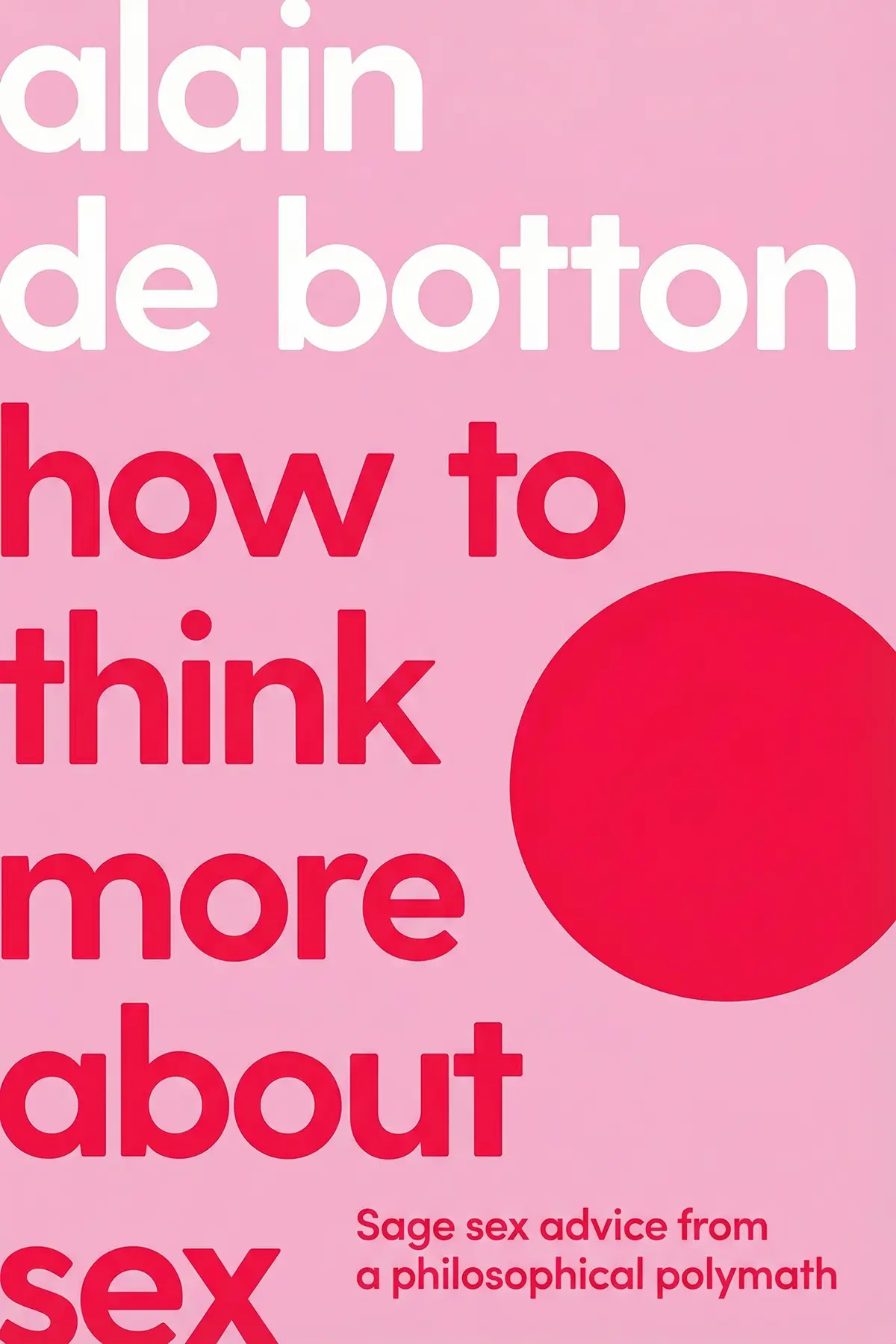
Table of Content
1. Introduction
1 min 36 sec
It is often said that we live in a hyper-sexualized culture, one where imagery and conversation about desire are everywhere. Yet, despite this saturation, how many of us actually take the time to think deeply about what sex means to us? We talk about it, we joke about it, and we certainly worry about it, but we rarely subject it to the kind of rigorous philosophical inquiry that might actually make us feel better. Alain de Botton, a thinker who specializes in bringing high-minded philosophy down to the level of our everyday struggles, argues that we need a new way of conceptualizing our intimate lives. He suggests that the confusion, the awkwardness, and the occasional despair we feel regarding sex aren’t signs of failure. Instead, they are the natural result of trying to balance our biological drives with our deep-seated psychological needs.
In the pages that follow, we are going to explore why sex is so much more than a physical act. We will look at how our childhood development leaves us feeling isolated and how the bedroom becomes a sanctuary where that isolation can finally be broken. We will investigate the strange language of fetishes, the painful reality of rejection, and the challenges of keeping passion alive when you are also trying to manage a household and raise a family. By the end of this journey, the goal isn’t just to understand the mechanics of attraction, but to gain a more compassionate perspective on ourselves and our partners. Sex is a window into the soul, and if we look through it with enough curiosity, we might find that the very things we find most shameful are actually the keys to our greatest connections. Let’s begin by looking at why science alone can’t explain why we want what we want.
2. The Limits of Biological Attraction
2 min 19 sec
Explore why evolutionary explanations for beauty and strength only tell half the story of human attraction and why the individual soul demands more.
3. The Journey from Innocence to Isolation
2 min 08 sec
Trace the path from childhood intimacy to the walls of adult shame, revealing why we feel so disconnected from our own bodies.
4. Sex as the Ultimate Act of Acceptance
2 min 05 sec
Discover how the bedroom serves as a unique space where our private ‘shameful’ selves can finally find validation and belonging.
5. Beauty as a Promise of Fulfillment
2 min 10 sec
Uncover the psychological meaning behind our aesthetic preferences and why we are often drawn to what we lack in ourselves.
6. The Hidden Meaning of Fetishes
2 min 03 sec
Look beneath the surface of unconventional desires to see how everyday objects can become symbols of profound emotional needs.
7. Balancing the Needs for Love and Sex
1 min 55 sec
Navigate the tension between our desire for romantic connection and our raw physical urges, and why honesty is the only way through.
8. Learning to Depersonalize Rejection
1 min 59 sec
Reframe the sting of being turned down by understanding the reflexive, non-judgmental nature of human attraction.
9. Why Habit is the Enemy of Desire
2 min 02 sec
Examine the paradox of long-term intimacy, where the very closeness we crave can end up dampening the flames of passion.
10. The Conflict Between Domesticity and the Erotic
2 min 07 sec
Explore why the roles we play as responsible adults are often at odds with the playful, vulnerable roles required for great sex.
11. The Shadow of the Incest Taboo
1 min 58 sec
Analyze how deep emotional bonds can inadvertently trigger ancient taboos, making it harder to feel desire for those we love most.
12. Adopting the Artist’s Eye
1 min 53 sec
Learn how to use the power of focused attention and aesthetic distance to rediscover the beauty and sexiness in your long-term partner.
13. The Complicated Truth About Pornography
2 min 03 sec
Move beyond the debate over morality to understand how pornography affects our virtues and why we need a more ‘enlightened’ sexual art.
14. Reframing Fidelity and Infidelity
2 min 07 sec
Explore the nuances of betrayal and the profound, often overlooked sacrifice involved in remaining faithful to one person.
15. Conclusion
1 min 44 sec
As we have seen, thinking more about sex doesn’t mean obsessing over the physical act. It means having the courage to look at the psychological landscape that underlies our desires. We have explored how the biological drive for reproduction is just the beginning, and how our individual histories of isolation and shame shape what we find beautiful and what we find arousing. We’ve looked at the inherent tensions in long-term relationships—how domesticity, habit, and even deep love can conspire to cool the fires of passion. And we’ve seen that the answers aren’t found in fleeing to new partners, but in changing the way we perceive the person we already have.
The throughline of all these ideas is the importance of self-knowledge and compassion. When we understand why we have certain fetishes, why we struggle with intimacy, or why rejection hurts so much, we can stop judging ourselves so harshly. We can move away from the idea that we are ‘broken’ or ‘perverted’ and realize that we are simply human beings trying to navigate a very complex part of life. By bringing philosophy into the bedroom, we turn sex from a source of anxiety into a source of wisdom.
So, as you go forward, try to adopt the ‘artist’s eye’ toward your partner and yourself. Be honest about your needs for both love and sex, and recognize the nobility in the choice to remain faithful. Sex is one of the most powerful ways we have to connect with another human being, and by thinking more deeply about it, we can make those connections more resilient, more honest, and ultimately more fulfilling. The question isn’t just whether you are having sex, but whether you are using sex to become a more whole and integrated person. That is the true promise of a philosophical sex life.
About this book
What is this book about?
Alain de Botton explores the intersection of the primal and the philosophical in How to Think More About Sex. While society often views sexual desire through the lens of biology or morality, de Botton argues that our intimate lives are deeply rooted in our psychological development and our search for meaning. He peels back the layers of shame, habit, and expectation to reveal how our past experiences shape our present attractions. The book promises a more compassionate and analytical way to view our most private urges. By moving beyond the mechanics of intercourse and focusing on the emotions behind it—such as the need for acceptance and the fear of isolation—readers can develop a more resilient approach to their relationships. It tackles the difficult realities of long-term partnership, including the inevitable cooling of passion and the sting of rejection, offering philosophical tools to navigate these challenges with grace rather than despair.
Book Information
About the Author
Alain de Botton
Alain de Botton is a thinker determined to bring philosophy into the heart of everyday life. The author of seven books on topics ranging from architecture to social anxiety, he is also the founder of the School of Life, an educational company that offers courses designed to help us lead fulfilling lives.
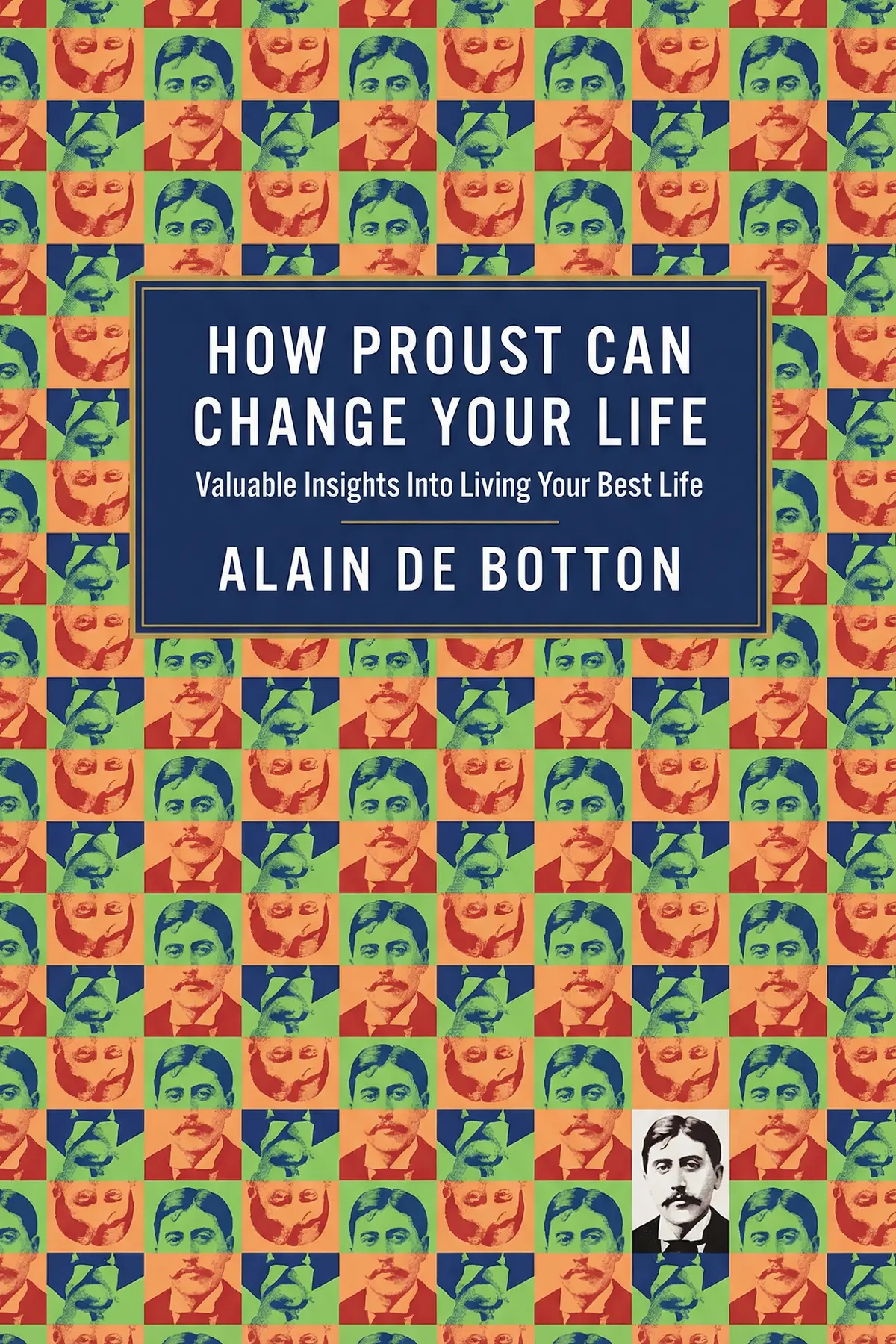
How Proust Can Change Your Life
Alain de Botton
Status Anxiety
Alain de Botton
The Architecture of Happiness
Alain de Botton
The Art of Travel
Alain de Botton
The Consolations of Philosophy
Alain de Botton
The News: A User's Manual
Alain de Botton
The School of Life: An Emotional Education
Alain de Botton
Ratings & Reviews
Ratings at a glance
What people think
Listeners find this title to be a brief and amusing read that prompts them to consider various subjects from a new perspective. The prose is captivating, and listeners value the educational quality of the text, as one listener emphasizes its original viewpoint on human sexuality. Furthermore, the work is lauded for its applicable and kindhearted tone, with one listener observing how it directly challenges modern taboos.
Top reviews
Sue
This book manages to be both profoundly awkward and deeply enlightening at the same time. Ever wonder why we feel so much shame about something that is supposed to be natural? De Botton tackles this head-on, confronting contemporary taboos with a level of grace you don't often see in the 'self-help' genre. The chapter on Renaissance art and how it used sexuality to highlight lofty principles was a highlight for me. It completely reframes the way you look at attraction. Personally, I think the 'School of Life' series is hit-or-miss, but this one is a definite hit. It’s informative without being dry. It’s short. It’s punchy. Most importantly, it makes you feel significantly less 'weird' about your own internal life. It’s about time someone spoke about the existential dread of the sex drive with this much honesty. Truly a must-read for the modern adult.
Show morePraepimon
Wow. I didn't expect to feel so seen by a philosophy book. De Botton's description of sex as a communion of our 'polluted sides' is probably the most accurate thing I've ever read on the subject. We spend so much energy trying to be respectable, and sex is the one place where we are allowed to be 'dirty' and still find welcome. That thought alone is worth the price of the book. The prose is elegant and the insights into fidelity were particularly helpful for me. It’s a quick, entertaining read that manages to confront some very heavy contemporary taboos without being crass. To be honest, I think everyone should read this just to realize they aren't as 'weird' as they think they are. It’s a deeply empathetic work that stays with you. It’s definitely my favorite in the School of Life series so far.
Show moreRin
As someone who usually finds philosophy books too dense, this was a breath of fresh air. De Botton has this unique way of taking something as messy and frantic as human desire and placing it under a calm, clinical light. The truth is, we spend so much time feeling guilty about our 'polluted sides,' but this book argues that these kinks and urges are exactly what make us human. It’s a relatively quick read, but the ideas stick with you long after you close the cover. I particularly appreciated the compassionate tone he takes when discussing the difficulties of maintaining desire in a long-term marriage. Some of the suggestions regarding pornography censorship felt a bit extreme and idealistic, admittedly. However, the core message about sex being a 'promise of happiness' rather than just a physical act is genuinely illuminating. It’s an engaging, witty look at why we are the way we are.
Show moreManop
Finally got around to reading this, and I gotta say, the chapter on the 'mundane realities' of relationships hit home. De Botton is spot on about how choosing a sofa or educating children can slowly kill the sexual spark. He writes with such a sparky, engaging style that you almost don't notice how radical some of his ideas are. He views sex not as a domesticated impulse, but as a force of nature that we should approach with caution. That perspective is quite rare today. While I didn't agree with his stance on censorship, I found his suggestion for a 'new kind of pornography' with artistic merit to be a fascinating thought experiment. The book is compassionate and relevant to anyone struggling with the friction between love and lust. It’s not perfect, but it’s a very informative and unique perspective on human sexuality.
Show moreJoshua
The chapter on whether 'sexiness' can be profound really changed my perspective on physical attraction. De Botton argues that our attraction to someone’s 'cute bum' or 'nice lips' is actually a promise of a certain kind of happiness, which is a beautiful way to think about it. His writing style is incredibly engaging and he has a knack for summarizing complex feelings in a single, witty sentence. Not gonna lie, some of his cultural criticisms about the porn industry and Natalie Portman are a bit strange. He gets a little bogged down in his own theories toward the end. Still, the book is a great tool for anyone wanting to think in a different light about their desires. It’s informative, it’s quirky, and it’s surprisingly relevant to the 'social awkwardness' of modern dating. A solid four stars for the arresting thoughts alone.
Show moreOscar
Pick this up if you want a short, punchy essay that won't take more than an afternoon to finish. It’s a bit of a ditty, really. The title is slightly misleading; it’s more of a meditation on the *philosophy* of sex rather than a practical guide. I found the sections on how sex liberates the self to be quite compelling. He has a way of turning the profane into something lovely. However, the second half of the book takes a turn into some pretty grim territory. He basically argues that we are all doomed to disappointment and that our sex drives are 'cray' monsters we can barely control. Some of the diagrams in the 'School of Life' edition are also unintentionally hilarious. It’s an interesting look at our culture, but don't expect it to solve your relationship problems. It’s more about opening a dialogue with yourself.
Show moreNoi
The title is a bit of a bait-and-switch, but the content inside is still quite charming. It’s less 'how to think more' and more 'how to think differently.' De Botton is excellent at pointing out the absurdities of our sexual lives. He captures that 'existential dread' we feel after a random hookup perfectly. However, the book is very much centered on the male, heterosexual experience, which limits its reach. To be fair, he acknowledges this is his own perspective, but it still feels a bit narrow at times. I enjoyed the 'Homework' bibliography at the end—it’s a nice touch. Overall, it’s a smooth and elegant read that adds up to a little less than you want it to. It won't change your life, but it will give you some great talking points for your next dinner party. A decent, light-hearted look at a heavy topic.
Show moreOwen
After hearing so much about De Botton, I found this volume surprisingly disconnected from actual human experience. Look, the writing is undeniably smooth, but he spends far too much time in his own head. He categorizes sexual experiences into these stereotypical, Hollywood-esque boxes that don't reflect any reality I recognize. One minute he’s talking about the 'sweetness' of oral sex, and the next he’s advocating for a state-mandated ban on pornography so we’ll all go back to reading highbrow literature. It’s pretentious. The logic is often circular, relying on naturalistic fallacies to justify why relationships get boring. I felt like I was getting a 'birds and bees' talk from a very sophisticated, very depressed uncle. There are some arresting thoughts scattered throughout, but they are buried under a mountain of shaky arguments. It adds up to much less than the title promises.
Show moreNang
Not what I expected from a supposed philosopher, frankly. I found the arguments here to be a frustrating mix of reductive Freudian tropes and questionable evolutionary psychology. To be fair, the prose is elegant, but the substance is lacking. De Botton seems to think he can solve the 'problem' of sex by intellectualizing it into oblivion. He treats our deepest, most private urges like a math problem to be solved by a shy teacher who has never actually left the library. His take on adultery is particularly bizarre, suggesting we just need a 'failure of imagination' to stay faithful. It felt elitist and wildly out of touch with how real people actually experience intimacy. If you want a book that uses Boticelli paintings to explain why you feel empty after a hookup, this is for you. For everyone else, it’s a pass. A total disappointment.
Show moreFon
Truth is, this felt more like a therapy session for the author's own hang-ups than a guide for the rest of us. De Botton seems obsessed with the idea that sex is inherently shameful and repugnant. He uses these grand, sweeping absolutes to explain away complex human emotions, which felt incredibly reductive. 'X is because of Y,' he claims, with almost no evidence to back it up. He isn't a psychologist, and it shows. The book is full of these boring attempts at humor that just don't land. I found his constant references to Godard and Boticelli to be a bit of a 'look how cultured I am' flex that didn't add much to the actual discussion. It’s a pathetic attempt at explaining human behavior that fails to challenge any conventional values. If you're looking for enlightenment, you won't find it here. Just a lot of pretentious navel-gazing.
Show moreReaders also enjoyed
All About Love: New Visions
bell hooks

Conscious Uncoupling: 5 Steps to Living Happily Even After
Katherine Woodward Thomas
AUDIO SUMMARY AVAILABLE
Listen to How to Think More About Sex in 15 minutes
Get the key ideas from How to Think More About Sex by Alain de Botton, plus 5,000+ more titles in English and Thai.
- 5,000+ titles
- Listen as much as you want
- 7-day free trial
- Cancel anytime







