
21 min 13 sec
The Art of Travel
Explore the philosophy behind our journeys as Alain de Botton examines why we travel and how to transform routine sightseeing into a profound journey of self-discovery and lasting personal fulfillment.
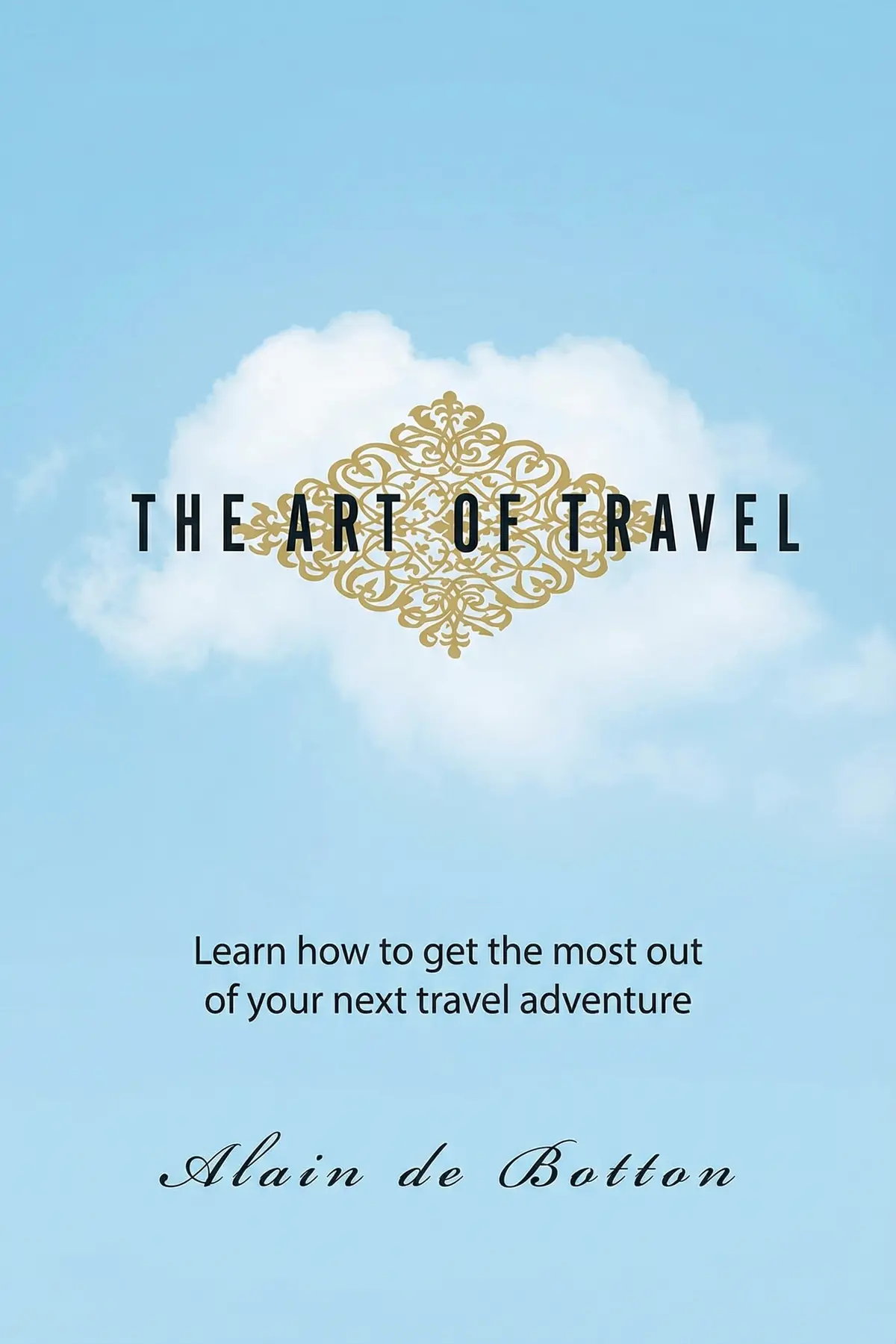
Table of Content
1. Introduction
1 min 36 sec
Imagine for a moment that you are sitting at your desk. The fluorescent lights are humming, the emails are piling up, and your mind begins to drift. You see yourself in a hammock, the air is warm, and the sound of turquoise waves lapping against a white sandy shore is the only thing you can hear. This fantasy of the tropical getaway is a nearly universal human experience. It is a mental escape from the pressures of the everyday. However, as many of us have discovered, the actual reality of that island is often dominated by long lines at the airport, humid weather, and the persistent annoyance of mosquitoes.
There is a profound gap between the travel we imagine and the travel we actually experience. But what if the problem isn’t the destination itself, but how we approach the entire concept of the journey? Alain de Botton suggests that we often take the enjoyability of travel for granted, assuming that simply moving our bodies to a new location will automatically trigger happiness.
In this exploration, we are going to look at travel through a different lens—a philosophical one. We will dive into why we seek out the exotic, how technology like air travel can radically shift our worldview, and why a poet from the nineteenth century might have the best advice for your next vacation. By the end of this journey, you’ll see that getting the most out of your adventures isn’t about the miles you cover, but about the receptivity and curiosity you bring to the world around you. We’ll learn how to store up “spots in time” to sustain us during stressful moments and why sometimes, the greatest journey you can take is right in your own bedroom.
2. The Divide Between Fantasy and Reality
2 min 29 sec
Explore why our mental images of distant lands rarely match the physical experience, and discover why we can never truly leave ourselves behind.
3. The Psychological Impact of Modern Flight
2 min 07 sec
Discover how the sheer scale and speed of air travel can provide a unique form of healing by shrinking our worldly problems.
4. The Allure of the Exotic
2 min 19 sec
Unpack the concept of exoticism and how the unfamiliar details of a foreign land can act as a powerful antidote to domestic boredom.
5. Moving from Exploration to Inquiry
2 min 03 sec
Learn how to overcome the ‘fatigue’ of modern travel by replacing the search for facts with a deeper sense of personal curiosity.
6. Nature as a Psychological Balm
2 min 18 sec
Discover why the natural world has such a profound effect on our well-being and how to preserve that peace long after you’ve returned home.
7. The Sublime and the Scale of the Divine
2 min 14 sec
Explore how the vastness of landscapes like the Sinai desert can put our personal struggles into a broader, more manageable perspective.
8. Art as the Architect of Appreciation
2 min 11 sec
Learn how painters and poets define what we find beautiful and how art can teach us to see new value in the world around us.
9. The Meditative Power of Observation
2 min 17 sec
Discover why the slow acts of drawing and writing can enhance your travel experiences far more than a camera ever could.
10. Conclusion
1 min 39 sec
As we reach the end of this philosophical journey, the message is clear: the success of a trip is not determined by the distance traveled or the number of famous landmarks visited. Instead, it is found in the traveler’s state of mind. We’ve seen that while we cannot escape our own internal baggage, we can use the tools of flight, nature, and art to gain a new perspective. We’ve learned that the exotic is a mindset that can turn even a routine walk into an adventure, and that the slow work of drawing or writing can help us truly possess the beauty we encounter.
To wrap things up, consider the advice of the eighteenth-century author Xavier de Maistre. He famously wrote a book about a journey he took around his own bedroom. He treated his bed, his desk, and his window as if they were foreign wonders, describing them with the same curiosity and attention he would give to a distant land. His work reminds us that the qualities of a great traveler—receptivity, curiosity, and a keen eye for detail—are not geographical. They are psychological.
The next time you find yourself yearning for an escape, remember that the most important part of the journey is the person you bring with you. Try to look at your surroundings with the eyes of an artist or a poet. Ask your own questions, store up your own “spots in time,” and don’t be afraid to slow down. Whether you are crossing an ocean or just exploring a new neighborhood, the art of travel is ultimately the art of learning how to live more fully in the world. Safe travels, wherever your mind takes you.
About this book
What is this book about?
Have you ever wondered why the holiday you spent months planning felt slightly hollow once you actually arrived? In this deep dive into the human psyche, we explore the friction between our grand travel fantasies and the often-mundane reality of being abroad. Drawing on the wisdom of poets, explorers, and artists, this summary unpacks the underlying motivations that drive us to cross borders and oceans. From the high-altitude perspective shifts of modern aviation to the quiet meditative power of sketching a landscape, we learn that the true value of travel isn't found in checking off landmarks. Instead, it lies in the psychological transformation of the traveler. We look at how exoticism cures boredom, how nature provides a blueprint for patience, and how art teaches us to see beauty in the most unexpected places. This is a guide for anyone who wants to return from their next trip feeling truly changed, rather than just tired.
Book Information
About the Author
Alain de Botton
Alain de Botton is a renowned philosopher of the everyday who explores the complexities of modern life. As the author of several best-selling works, he has applied philosophical inquiry to topics ranging from romantic love and architecture to the works of Proust and the nature of travel. He also cofounded The School of Life, a London-based organization dedicated to developing innovative forms of emotional and psychological education.
How Proust Can Change Your Life
Alain de Botton
How to Think More About Sex
Alain de Botton
Status Anxiety
Alain de Botton
The Architecture of Happiness
Alain de Botton
The Consolations of Philosophy
Alain de Botton
The News: A User's Manual
Alain de Botton
The School of Life: An Emotional Education
Alain de Botton
Ratings & Reviews
Ratings at a glance
What people think
Listeners find this exploration of travel stimulating and enjoyable, noting its profound observations on the experience of journeying and the inclusion of philosophical reflections from historical figures and explorers. The writing is expertly composed, and listeners particularly value the various literary allusions woven into the text. They describe the work as humorous and captivating, while one listener emphasizes its deeply reflective and inward-looking quality.
Top reviews
Ice
This book isn’t your standard guidebook or a collection of 'must-see' lists, and that is exactly why it resonates so deeply with me. De Botton explores the why of travel rather than the where, using thinkers like Wordsworth and Hopper to explain our internal restlessness. I found the chapter on anticipation particularly haunting because it captures that weird letdown when the reality of a hotel room doesn't match the glossy brochure. His prose is exceptionally smooth, turning mundane experiences like waiting at an airport into profound philosophical inquiries. While he can occasionally sound a bit detached, the intellectual weight he gives to our wanderlust is refreshing. It changed how I look at my own bedroom, not just my vacation destinations. Truly a thoughtful companion for any introspective traveler.
Show morePatchara
Finally got around to reading this and now I just want to write like Alain de Botton. His ability to find symbolism in the mundane—like the take-off of an airplane representing a decisive shift in one’s life—is nothing short of genius. This is a spiritual awakening of a book that challenges you to find the 'sublime' in massive mountaintops and barren deserts alike. It helped me realize that my own mind is often the most temperamental accomplice in my travels. The blend of personal essay and philosophical history works perfectly here. If you’re looking for a book that helps you reach for the beautiful in life, this is it. It’s a beautiful, flowing, and deeply intellectualized meditation on why we leave home.
Show moreGung
A masterclass in observation. This book is for the person who stands in an airport terminal and feels a strange sense of poetry in the flight boards. De Botton’s exploration of the internal elements that affect our journeys is spot on. He uses art and history not just as window dressing, but as vital tools for understanding our own hunger for the exotic. I loved the section on Ruskin and the importance of drawing what we see to truly possess it. It’s a quiet, introspective book that rewards slow reading and deep thought. Even the slightly pedantic moments felt earned because the overall vision is so cohesive. A must-read for anyone who thinks too much about their holidays.
Show moreKomsan
It turns out that Alain de Botton is exactly the travel companion I needed. This isn't a book about where to go, but a book about how to see things in newer, more enlightening ways. His prose is smooth and articulate, making even the most complex philosophical ideas feel accessible. I particularly loved the historical tidbits about Flaubert; they were hilarious and informative in equal measure. The book functions as a set of 'perceptual enhancements' for the soul. It reminded me that the most important part of any trip isn't the destination, but the mindset we bring to it. If you want to enrich your life experience and find beauty in the everyday, pick this up. It’s a masterpiece of the genre.
Show moreJames
As someone who spends more time looking at paintings than at maps, this was an absolute delight. I loved how de Botton weaves the lives of artists like Van Gogh and writers like Ruskin into his own travel narratives. The way he describes Arles through the lens of post-impressionism made me want to catch the next train to Provence just to see the light. His writing is incredibly articulate and poignant, though I will admit he occasionally wanders off into pedantic territory. The chapter on 'Eye-Opening Art' dragged a bit toward the end, losing that initial spark of wonder. Still, the core idea—that we should learn to see before we learn to move—is a powerful one. It’s a book that demands you slow down and actually notice the world around you.
Show morePenelope
De Botton manages to turn a simple vacation into a deep dive into the human soul. I was particularly struck by the chapter on 'On the Sublime'—it’s visceral and illuminating. He argues that we don't need to go far to expand our minds, and his appreciation for beauty is contagious. My only real gripe is that he contradicts himself occasionally, oscillating between wanting to see the world and suggesting we stay in our bedrooms. The literary references to Flaubert in Egypt added a lot of flavor and kept the more academic sections grounded. It’s an engaging read that forces you to question your own motivations for boarding a plane. A solid four stars for the sheer quality of the prose alone.
Show moreRose
Ever wonder why the idea of a trip is often better than the trip itself? De Botton tackles this head-on in his opening chapters, and his insights on the 'psychology of the plane' are brilliant. However, the middle of the book felt a bit disjointed and overly Euro-centric for a book claiming to be about the universal art of travel. I appreciated the historical tidbits about Alexander von Humboldt, but the tone shifted from engaging to dry far too often. It’s definitely not an easy beach read; you have to be in the mood for some heavy lifting. I think I preferred his other works more, as this one felt a bit too rooted in his own narrow sphere of experience. Good, but definitely flawed.
Show moreAdam
To be fair, I think I went into this with the wrong expectations. I thought it would be a collection of travel stories, but it’s really more of an airy-fairy philosophy lecture. While some of the insights are sharp, de Botton can be quite a temperamental narrator. He seems to spend a lot of time overthinking things that should be felt, which makes the prose feel a bit stiff at times. I enjoyed the parts about Edward Hopper’s paintings, but the transition into more abstract concepts felt jarring. It’s a quick read, which is a plus, but I didn't feel a strong connection to his 'dandy' style of exploring the world. It’s a bit too pretentious for my liking, though I can see why others find it profound.
Show moreKasemsan
Look, I wanted to love this, but I struggled with the author’s perspective throughout most of the text. De Botton seems to view travel through a lens of extreme privilege that most of us simply don't share. His 'philosophies' feel a bit arrogant when he’s talking about exclusive resorts in Barbados or having chocolate donuts at a friend's French estate. Where is the grit and the genuine danger that makes travel feel alive? Instead of the thrill of the unknown, we get a dandy’s musings on aesthetics and high art. To be fair, the sections on Gustave Flaubert were interesting, but they weren't enough to save the book for me. It felt more like an academic exercise than a celebration of the actual, messy world. Not my cup of tea.
Show morePla
Frankly, this felt like reading the diary of a man who has never had to worry about a budget or a lost passport. There is a total lack of the 'unsafe' or the 'unknown' here; it’s all resorts and high-end aesthetics. De Botton writes beautifully, sure, but his perspective is so sheltered that it becomes hard to relate to his 'struggles.' He talks about the 'art' of travel while seemingly avoiding the actual experience of being a traveler in a strange land. It’s all very Euro-centric and, at times, incredibly dry. I was expecting something more adventurous and got a lecture on why I should look at clouds like a 19th-century poet. If you like pretentious wanderings, you’ll love it, but it wasn't for me.
Show moreReaders also enjoyed
A Guide to the Good Life: The Ancient Art of Stoic Joy
William B. Irvine
A Little History of Philosophy
Nigel Warburton
A Theory of Justice
John Rawls
Becoming Beauvoir: A Life
Kate Kirkpatrick
Being and Nothingness: A Phenomenological Essay on Ontology
Jean-Paul Sartre
AUDIO SUMMARY AVAILABLE
Listen to The Art of Travel in 15 minutes
Get the key ideas from The Art of Travel by Alain de Botton, plus 5,000+ more titles in English and Thai.
- 5,000+ titles
- Listen as much as you want
- 7-day free trial
- Cancel anytime







