
18 min 33 sec
Super Crunchers: Why Thinking-by-Numbers Is the New Way to be Smart
By Ian Ayres
Super Crunchers explores how massive data sets and statistical analysis are replacing traditional intuition, revolutionizing fields from medicine and business to social policy and professional sports through the power of algorithmic decision-making.
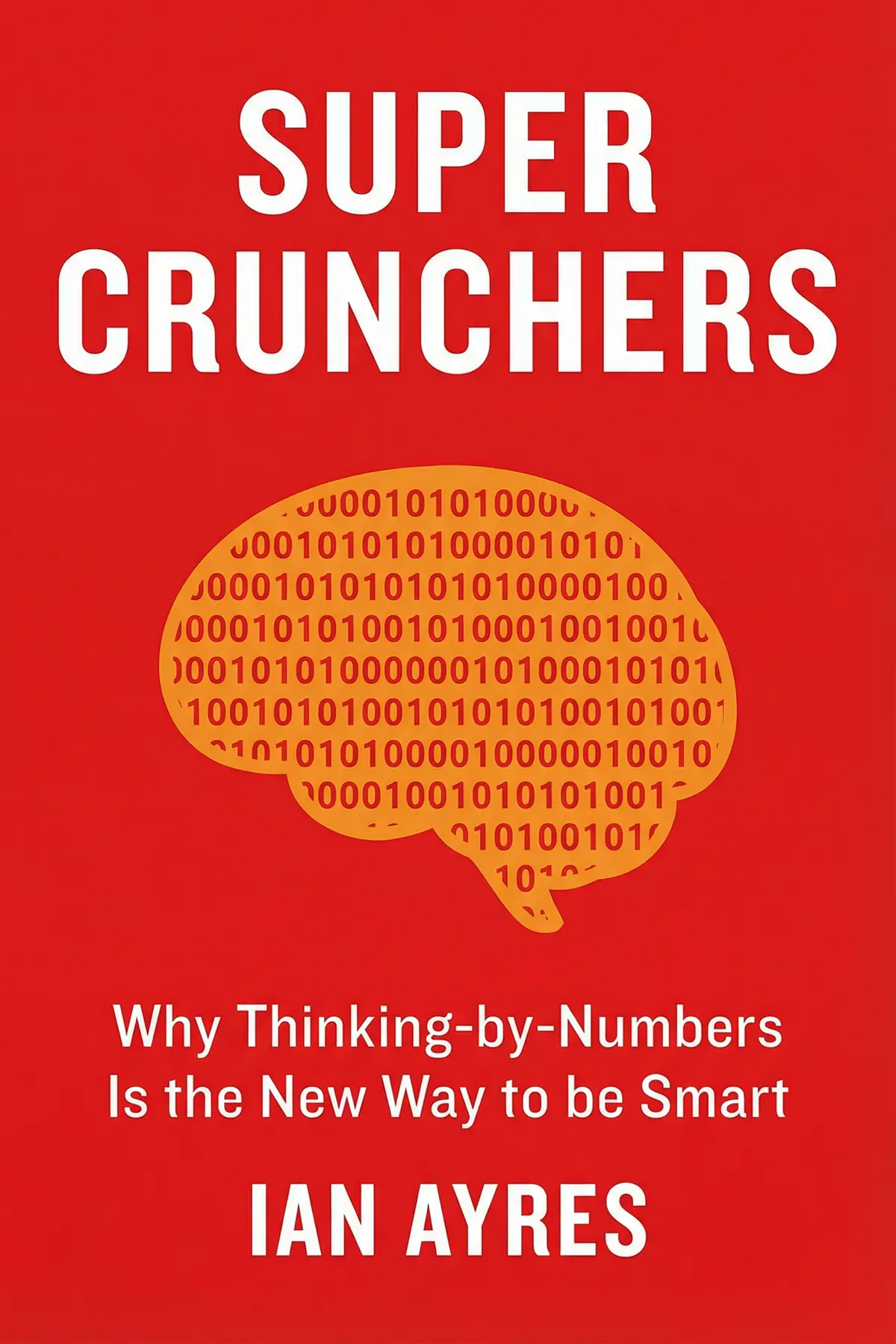
Table of Content
1. Introduction
2 min 02 sec
We live in an era defined by a constant, invisible torrent of information. Every time we make a purchase, click a link, or even just walk down a city street with a smartphone in our pocket, we are contributing to a massive digital archive. For a long time, this mountain of data was seen as noise—a byproduct of modern life that was too large and too messy to be of any real use. But a shift has occurred. A new breed of thinkers, whom Ian Ayres calls ‘Super Crunchers,’ has arrived. They have found the tools to reach into this chaos and pull out meaningful, actionable insights that are changing the way we understand the world.
In this exploration of the data revolution, we aren’t just talking about tech giants or Silicon Valley startups. We’re looking at a fundamental change in how decisions are made in every corner of society. From the doctor deciding which treatment will save a life to the government official trying to lift a neighborhood out of poverty, the reliance on human intuition is being replaced by the precision of the algorithm. The throughline here is simple but profound: numbers, when wrangled correctly, can see patterns that the human brain is literally wired to miss.
Over the course of this summary, we will look at how statistical tools like regression and randomized testing have moved from the laboratory into the real world. We will see how they’ve upended the worlds of professional sports, high-end investments, and even our romantic lives. Most importantly, we’ll explore the uneasy tension between the old guard of experts and this new quantitative reality. It is a journey into the heart of how we know what we know, and why ‘thinking by numbers’ has become the most essential skill of the twenty-first century. By the end, you’ll see why the era of the ‘gut feeling’ is drawing to a close, replaced by a more rigorous, evidence-based approach to being smart.
2. The Universal Reach of Data Analysis
2 min 43 sec
From the vineyards of France to the baseball diamonds of America, learn how statistical models are outperforming the world’s most seasoned experts.
3. The Power of Regression Analysis
2 min 35 sec
Explore how a single mathematical tool can find patterns in past behavior to predict future success and even uncover hidden criminal activity.
4. Randomization as a Path to Truth
2 min 23 sec
Discover why the best way to make a decision isn’t to think harder, but to run a controlled experiment that lets the data speak for itself.
5. Transforming Social Policy Through Evidence
2 min 13 sec
Learn how governments are moving away from ideology and toward experimentation to solve deep-seated social issues like poverty and housing.
6. The Inherent Bias of the Human Mind
2 min 27 sec
Why are experts so often wrong? The answer lies in the psychological shortcuts our brains take that numbers simply don’t.
7. The Evolution of Expertise
2 min 25 sec
As algorithms take over the task of prediction, the role of the human expert is shifting from being the ‘decider’ to being the ‘designer.’
8. Conclusion
1 min 45 sec
The rise of the Super Cruncher represents one of the most significant shifts in human history. We are moving out of an era where we relied on the wisdom of the few and into one where we rely on the evidence of the many. As we have seen, this transition is happening everywhere, from the way we treat disease and fight poverty to the way we scout athletes and find life partners. The common thread through all these examples is that data-driven decision-making consistently yields better, more reliable results than human intuition alone.
However, embracing this new world requires a certain level of humility. We have to accept that our brains, though capable of incredible feats, are also flawed and biased. We have to be willing to let the numbers challenge our most cherished assumptions. But this isn’t a story of machines replacing people; it’s a story of humans gaining a more powerful set of eyes. By using tools like regression and randomized testing, we can see the world with a clarity that was previously impossible.
The final takeaway is highly actionable: don’t just rely on your experience or your gut. Wherever possible, look for the data. If the data doesn’t exist, try to create it through your own experiments. Whether you’re running a small business or just trying to make better personal choices, the principles of super crunching apply. Start by tracking your results, look for correlations, and don’t be afraid to test two different approaches to see which one actually wins. In a world defined by information, the ultimate advantage goes to those who know how to crunch the numbers. This is the new way to be smart, and the revolution is only just beginning.
About this book
What is this book about?
In a world drowning in data, Ian Ayres reveals how a new generation of professionals—the Super Crunchers—is using regression analysis and randomized testing to out-predict even the most seasoned experts. This book explains the fundamental shift from relying on 'gut feelings' and 'expert intuition' to making choices based on hard evidence and statistical patterns. It promises to show you how these techniques are applied in everyday life, from the wine you drink to the person you date. Through a series of compelling case studies, Ayres demonstrates that while the human element remains vital for forming hypotheses, the heavy lifting of evaluation and prediction is increasingly handled by equations. You will learn about the pitfalls of human bias and why mathematical models consistently outperform experts in a variety of high-stakes environments. Ultimately, the book offers a roadmap for navigating a future where data-driven smarts are the only way to stay competitive.
Book Information
About the Author
Ian Ayres
Ian Ayres is a distinguished lawyer, econometrician, and professor at both Yale Law School and the Yale School of Management. Beyond his academic roles, he is a well-known columnist for Forbes and a frequent commentator on the radio program Marketplace. Ayres has authored several influential books, including Carrots and Sticks: Unlock the Power of Incentives to Get Things Done.
Ratings & Reviews
Ratings at a glance
What people think
Listeners find the work educational and articulate, with one listener characterizing it as a superb entry-level book regarding data mining. They value how easy it is to read, with one listener remarking that it is especially appropriate for individuals with a big data background. This title motivates audiences to pursue further knowledge, and one listener emphasizes its ability to enhance decision-making via computational creativity. Listeners view it as an empowering guide and enjoy the subject matter, although views on the material quality are varied.
Top reviews
Supaporn
As someone with a background in data science, I found this to be an incredibly inspirational look at the early days of the big data movement. Ayres perfectly captures the friction between 'old world' experts and the new wave of statistical profiling. The discussion on the 100,000 lives campaign was particularly moving; the slogan 'Some is not a number, soon is not a time' should be required reading for every corporate manager. I also loved the quiz on page 113—it really exposes how overconfident we are in our own biased estimates. The truth is, we are all prone to cognitive errors, and this book provides the framework for why we need to let the data do the talking. It’s a pellucid, well-researched argument for computational creativity that has aged surprisingly well despite the rapid changes in technology since its publication.
Show moreRafael
Ever wonder why a computer can predict a winning Greyhound better than a seasoned track expert? Ayres dives into these types of 'super crunching' scenarios with a style that is both informative and highly readable for non-mathematicians. The Greyhound racing example is particularly mind-blowing because it shows how a simple computer model can yield a 25% profit while human experts consistently fail to keep up with the cold, hard numbers. I found the exploration of how casinos calculate a player's 'pain point' to be both fascinating and slightly terrifying. It’s a wake-up call about how corporations use our own data to manipulate our behavior. Personally, I think the most useful takeaway is that we should always be skeptical of 'expert' intuition when a randomized trial could provide a much clearer answer. This is an excellent, thought-provoking read that encourages you to seek out the data in your own life.
Show moreEvelyn
Finally got around to reading this classic, and the discussion on evidence-based medicine alone made it worth the price of admission. The way Ayres explains how Google is transforming medical culture—allowing patients and young doctors to bypass the 'wisdom' of older peers—is still incredibly relevant today. He does a fantastic job of explaining complex concepts like heteroskedasticity and regression without making your head spin. I loved the insight into how T-Rex was reimagined as a scavenger through data; it's a perfect example of why we shouldn't get too attached to our 'intuitions.' This is an inspirational read for anyone who prefers the 'pure truth' of an algorithm over the biased guesses of a human. It’s a bit of a 'money machine' of information. Highly recommended for those who want to understand the shift toward a more quantified society.
Show moreOm
Picked this up after reading Freakonomics, and it functions as a solid companion piece for anyone interested in how algorithms are quietly reshaping our everyday lives. Ayres focuses on the shift from expert intuition to data-driven decision-making, using the famous wine vintage prediction formula as a primary example. It’s fascinating to see how simple variables like rainfall and temperature can outperform the palates of world-renowned critics. While the book was written in 2007, the core message about the power of regression remains incredibly relevant today. Some sections feel slightly repetitive, and the author definitely likes to pat himself on the back, but the insights into evidence-based medicine and the '100,000 lives campaign' make it a worthwhile read. To be fair, if you already work in big data, some of this will feel like an introductory text, but for the general public, it's an eye-opener.
Show moreChatri
After hearing so much about 'computational creativity,' I decided to give this a go and wasn't disappointed by the breadth of real-world examples provided. Ayres makes a compelling case for why we should be wary when corporations start being 'nice' to us; it usually means they've crunched the numbers and realized we're overpaying. The section on car dealership discrimination was a gut-punch, showing how statistical profiling can be used to exploit certain demographics. It's an analytical look at the shift of power from the periphery to the 'Super Crunching' center. The writing is accessible, though the author's tone can be a bit self-congratulatory at times. Still, the explanation of neural networks versus traditional regression was one of the clearest I've ever read. It’s a great reference for anyone who wants to understand the logic behind the algorithms that run our world.
Show moreAlice
In my experience, books about math are either too dense or too shallow, but Ayres finds a decent middle ground here. He highlights how randomization and large sample sizes are the only real ways to determine what actually works in government and medicine. The bit about how annual physical exams are largely obsolete according to data was shocking but well-supported. It really opens your eyes to the predictability of the world. While the 2007 publication date makes some of the technology talk feel like ancient history, the underlying logic of data-driven decision-making is timeless. I particularly appreciated the discussion on how the internet is disrupting the traditional 'sage' status of doctors. It's a well-written, informative text that will definitely make you rethink your own decision-making process. I’m glad I didn't shove it back on the shelf.
Show moreThawee
Look, the book is a bit dated now, especially when Ayres discusses the 'novelty' of internet data mining which is now just standard corporate practice for almost every company on earth. I found the chapter on regression to the mean interesting, particularly the bit about how tall fathers often have shorter sons, but I wish he had snuck those statistical foundations in much earlier. The Greyhound racing study mentioned in the beginning felt like a missed opportunity; if a computer model is a 'money machine' with 25% profit, why isn't everyone doing it? Something felt a little fishy there. It’s a decent introductory text if you’ve never thought about A/B testing or randomization before. However, if you’ve read anything published in the last five years on big data, you can probably just skim this one. It's okay, but not groundbreaking anymore.
Show moreGift
This book attempts to bridge the gap between human intuition and mathematical algorithms, though it sometimes leans too far into the 'formula is always right' camp. I struggled with the idea that 'direct instruction' for teachers—literally reading from a script—is the best way to educate children just because the numbers look good on a chart. Statistics are powerful, but they don't always capture the nuance of the human experience. The wine vintage discussion was the highlight for me, as it perfectly illustrated the outrage experts feel when their 'wisdom' is challenged by a simple equation. It's a bit of a mixed bag. Some chapters are brilliant and others feel like filler seasoned with dabs of fun. It’s worth reading for the parts on standard deviation, but be prepared for some 'blah' stretches in the middle.
Show moreFinn
The word 'supercrunch' appears so many times in these 270 pages that it starts to lose all meaning. Dr. Ayres clearly wanted to write the next big pop-economics hit, but he missed the mark by being overly repetitive and a bit too self-promotional regarding his ties to Steven Levitt. It’s just grating. The book focuses heavily on anecdotes rather than teaching the reader the actual statistical techniques he champions. I was looking for a deeper dive into how to apply these methods, yet I walked away only knowing that regression was discovered by Darwin’s cousin. Frankly, it feels like a collection of research descriptions fleshed out with too much filler. If you want to know that computers are better than people, this book tells you that a billion times. It doesn't really show you how to join the revolution yourself.
Show moreErn
Not gonna lie, I expected a lot more 'how-to' and a lot less 'wow, look at me.' Ayres spends so much time using the prefix 'nano-' and the word 'supercrunch' as every possible part of speech that the actual message gets buried. He stresses the need for the public to understand statistics but then fails to go over any actual techniques in a meaningful way. It feels very much like a Freakonomics wannabe that lacks the charm and tight editing of the original. The anecdotes vacillate between being creepy and overly exuberant. For example, the way he describes data mining in dating and medicine feels a bit paranoid at times. It’s a short enough book that it doesn't completely waste your time, but it certainly didn't leave me feeling like I learned anything I couldn't have found in a long-form magazine article. Very repetitive.
Show moreReaders also enjoyed
1929: Inside the Greatest Crash in Wall Street History--and How It
Andrew Ross Sorkin
23 Things They Don’t Tell You About Capitalism
Ha-Joon Chang
A Little History of Economics
Niall Kishtainy
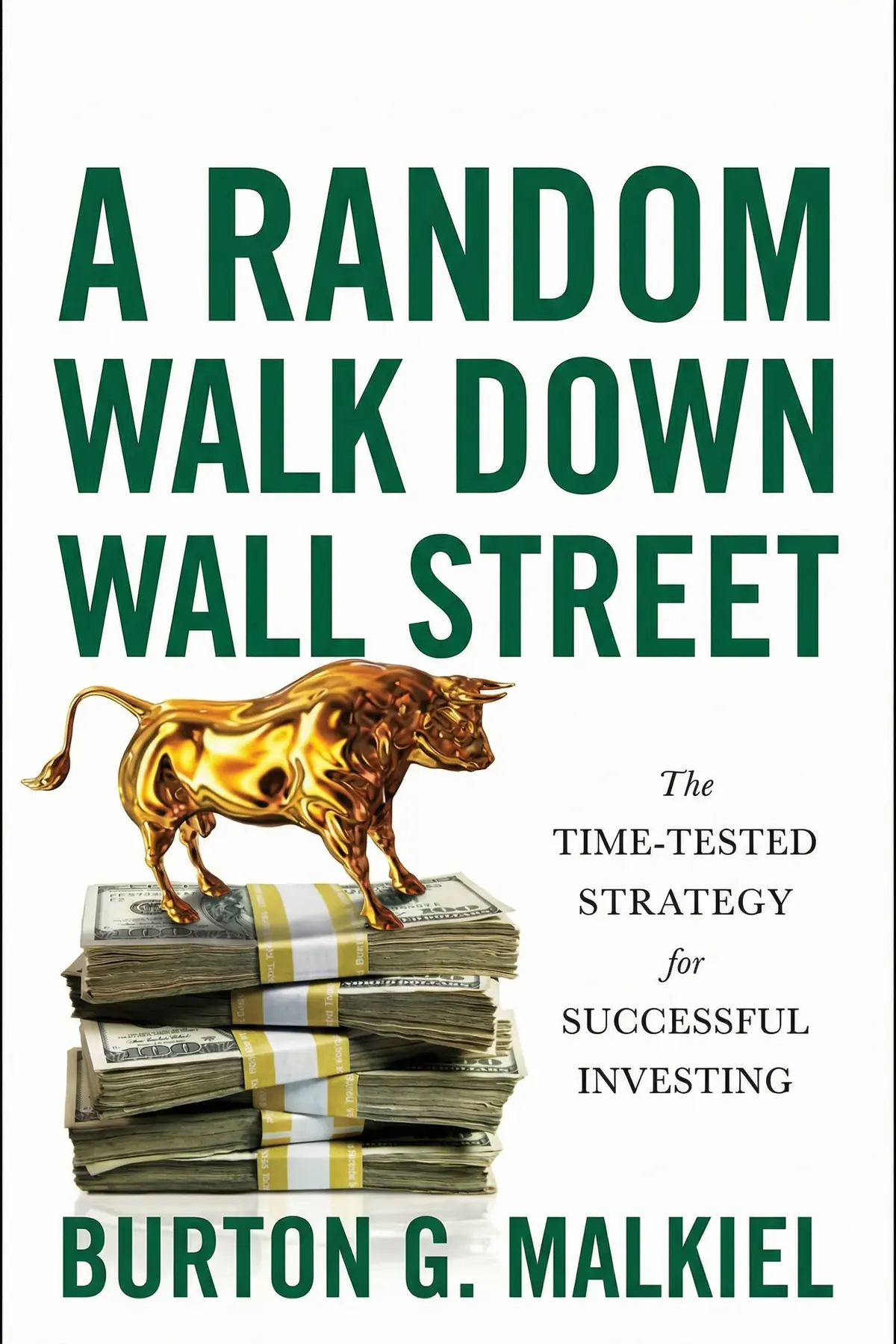
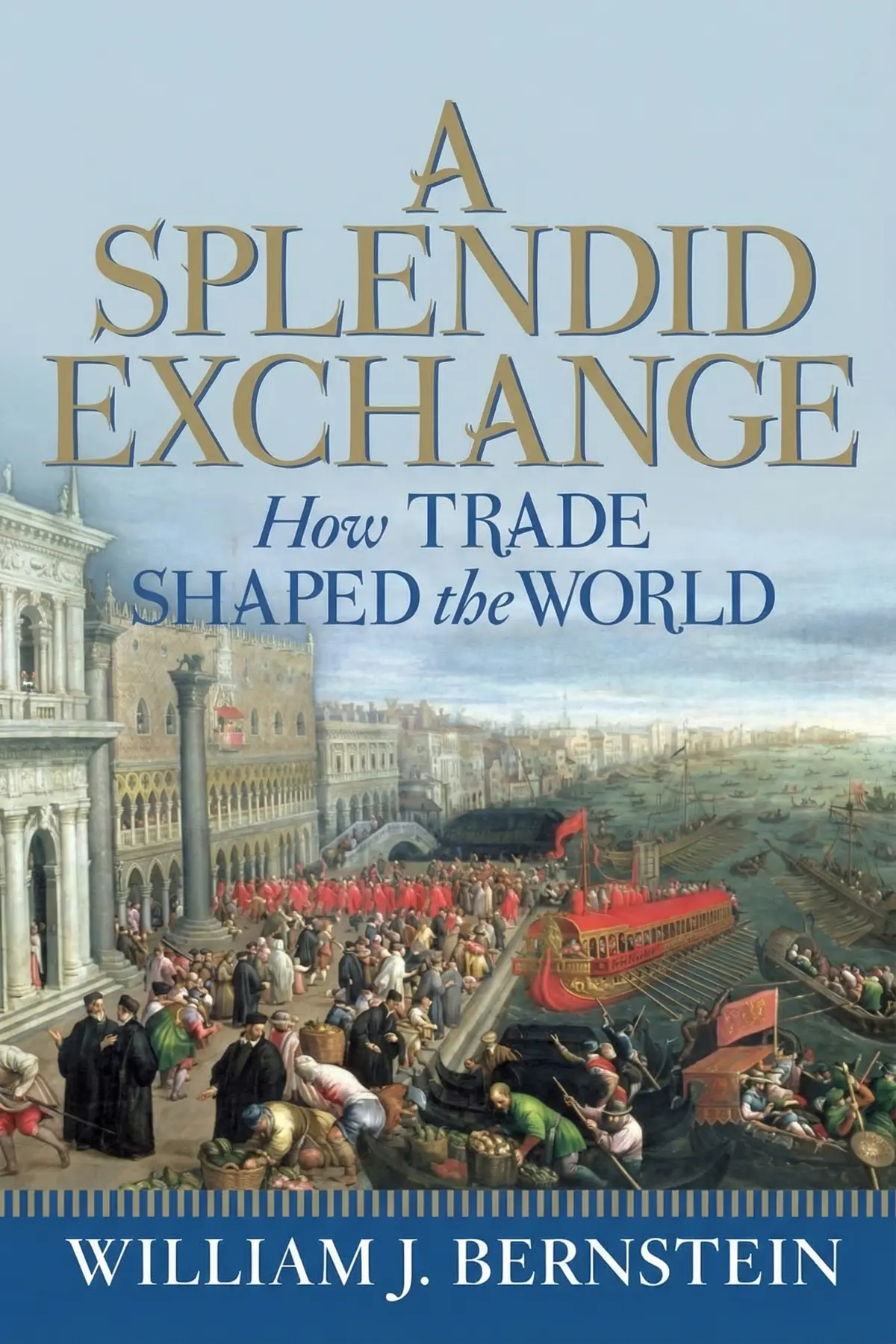
A Splendid Exchange: How Trade Shaped the World
William J. Bernstein
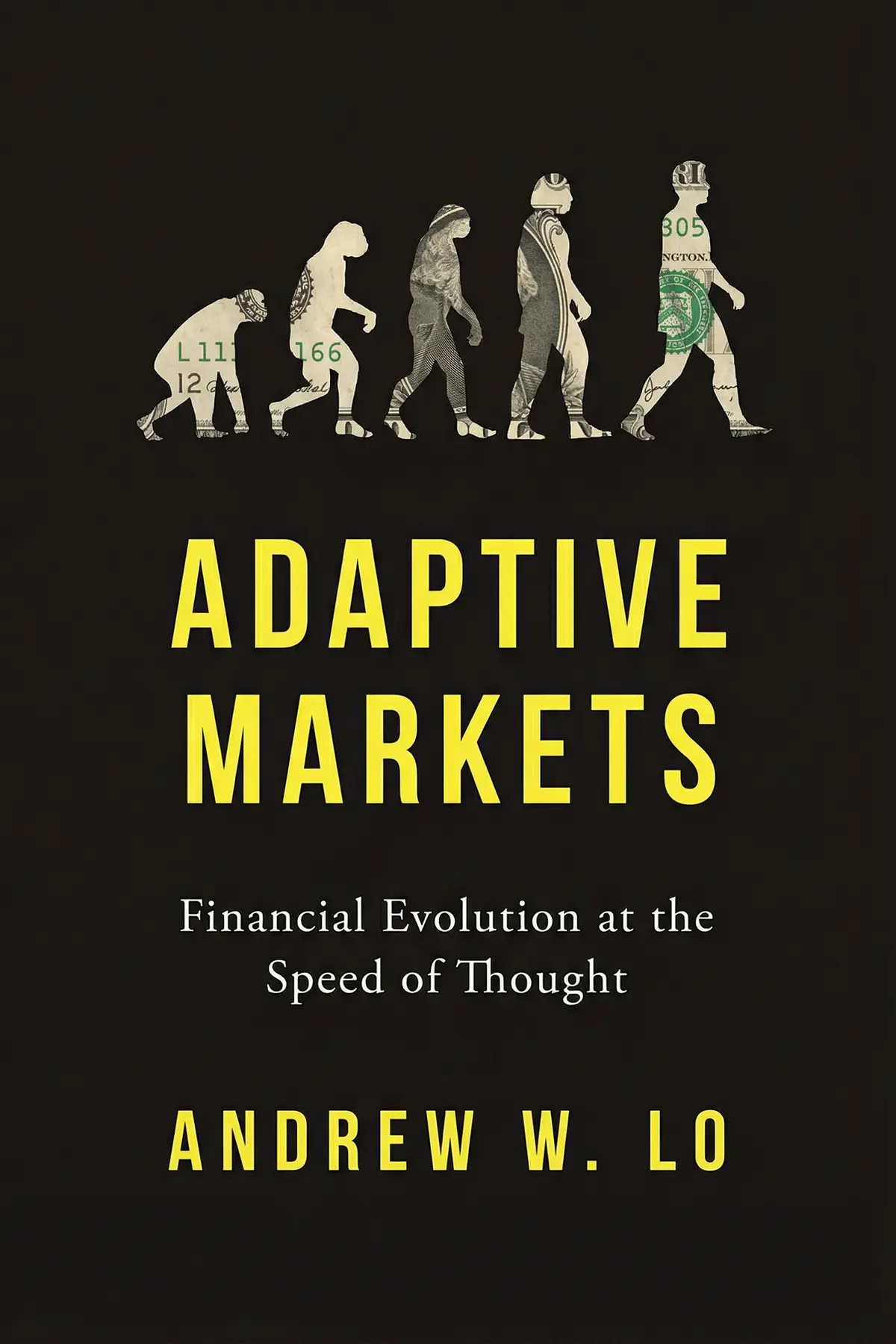
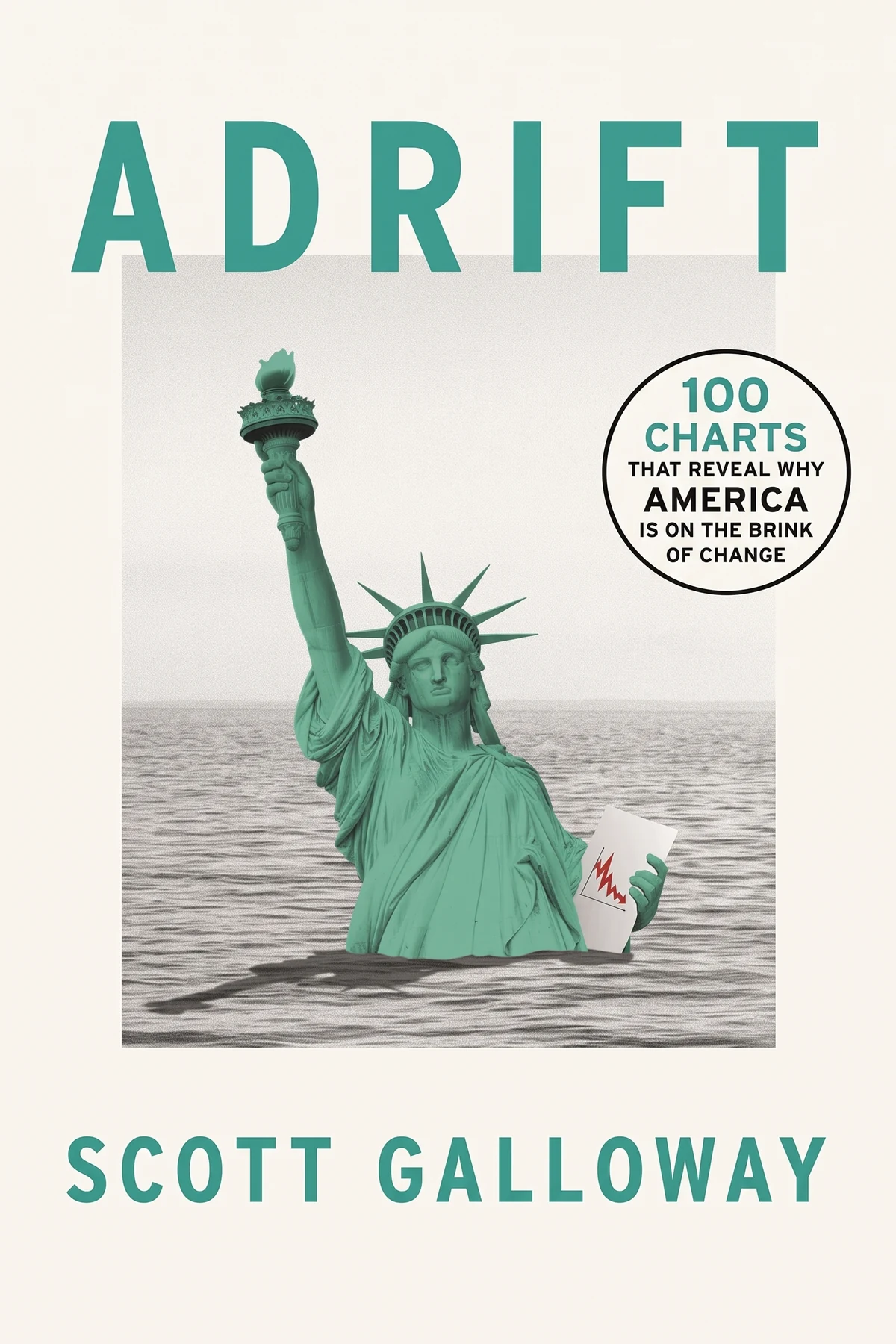
AUDIO SUMMARY AVAILABLE
Listen to Super Crunchers in 15 minutes
Get the key ideas from Super Crunchers by Ian Ayres, plus 5,000+ more titles in English and Thai.
- 5,000+ titles
- Listen as much as you want
- 7-day free trial
- Cancel anytime







