
24 min 46 sec
The Alchemy of Us: How Humans and Matter Transformed One Another
The Alchemy of Us examines the profound interplay between human innovation and material science, revealing how eight life-changing inventions—from clocks to glass—redefined our culture, our biology, and the way we experience reality.
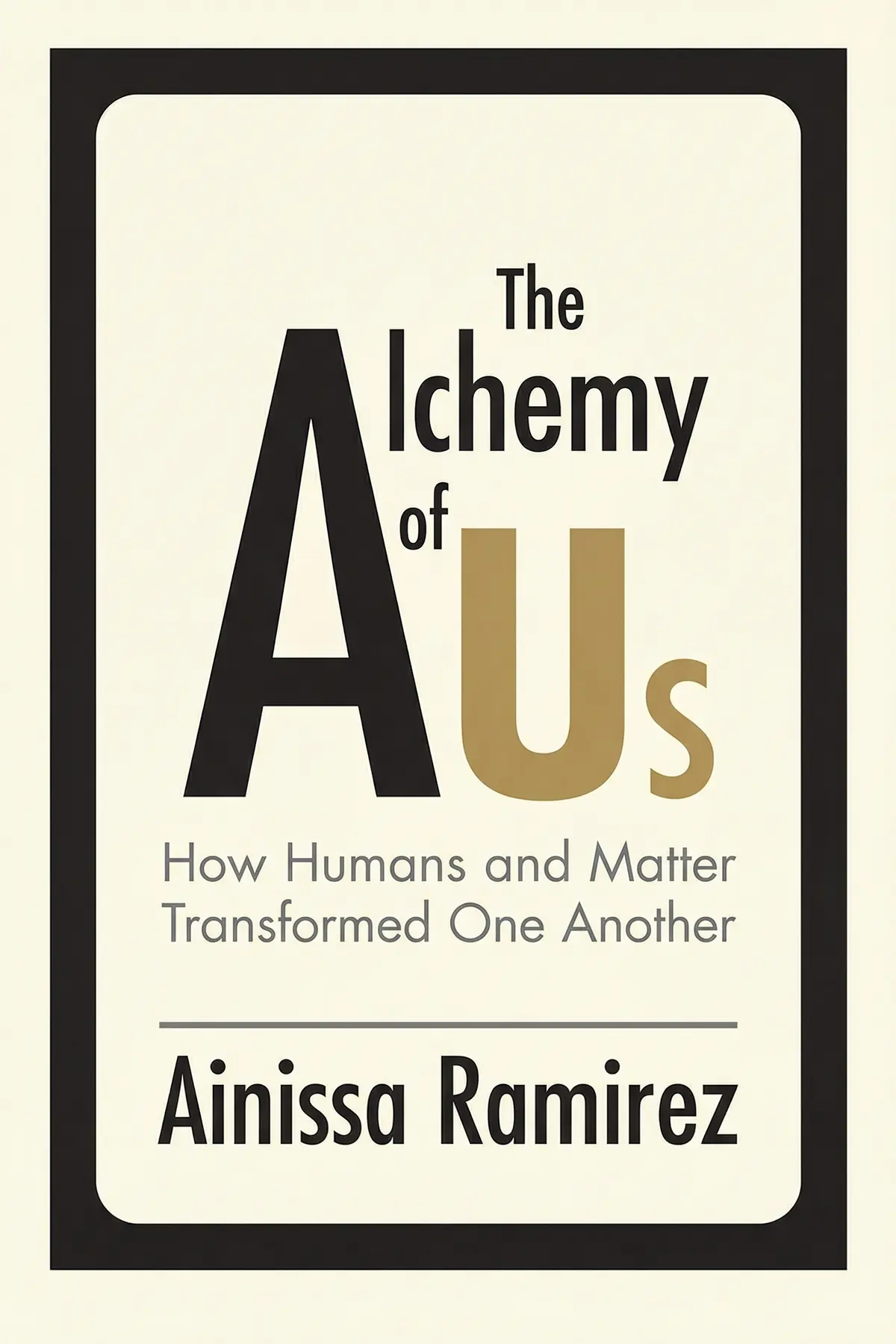
Table of Content
1. Introduction
2 min 09 sec
In the modern world, we are surrounded by miracles of engineering that we often take for granted. We live in a landscape defined by the glow of LED screens, the speed of digital data, and the absolute precision of the clocks on our wrists. It is easy to assume that we simply created these tools to make our lives easier and that we remain the masters of our inventions. But there is a deeper, more reciprocal story at play. The relationship between humans and the materials they manipulate is not a one-way street. Instead, it is a form of alchemy—a process of mutual transformation.
Think about the fundamental shifts in our daily existence. Not too long ago, the rhythm of human life was dictated by the rising and setting of the sun. Our world was lit by flickering candles, and our movements were limited by the physical strength of horses or our own feet. Today, we have conquered the darkness and collapsed the distances that once separated us. But every time we have bent a material to our will—whether it was forging steel, drawing glass, or recording sound—that material has bent us in return. Our biology, our language, our social values, and even the way our brains function have all been altered by the tools we thought we were merely using.
As we explore these shifts, we must also look at the stories that aren’t usually found in the headlines of history. We need to consider how human biases became embedded in our chemistry and how certain technologies were used as tools of both liberation and oppression. We will see how a grieving husband’s desire for speed changed the way we write, how the pursuit of a better light bulb affected our internal health, and how the very way we remember information is being outsourced to the machines in our pockets.
This journey is about more than just the history of science; it is about understanding the essence of who we are in a world of our own making. By examining the hidden narratives behind everyday objects, we can gain a clearer perspective on our past and, perhaps, more agency over our future. Let’s dive into the fascinating interplay between the substances of the earth and the spirit of human ingenuity.
2. The Commercialization and Precision of Time
2 min 59 sec
In an era before digital synchronization, how did people know the exact time? Discover the story of the woman who sold time as a commodity and how quartz changed everything.
3. Steel Rails and the Compression of Space
2 min 26 sec
Explore how a breakthrough in metalworking transformed the American landscape, turning a vast wilderness into a connected network of commerce and creating the modern holiday season.
4. The Telegraph and the Birth of Modern Prose
2 min 27 sec
When communication moved at the speed of electricity, language had to adapt. Learn how Samuel Morse’s invention forced writers to be brief and shaped American English.
5. Photography and the Chemical Reflection of Bias
2 min 41 sec
Technology is often seen as objective, but the history of photography reveals how human prejudices can be baked into the very chemistry of our inventions.
6. The High Cost of Constant Light
2 min 36 sec
Thomas Edison’s light bulb conquered the night, but it also disrupted our biological clocks. Discover why more light isn’t always better for human health.
7. Capturing Sound and the Origins of Data Tracking
2 min 33 sec
From a tin foil cylinder to the digital cloud, the ability to record sound has transformed more than just our music. It laid the groundwork for the modern data economy.
8. Glass: The Transparent Material that Revealed the Invisible
2 min 22 sec
Glass is more than just a window; it’s a scientific tool that allowed us to see atoms. Learn how the quest for perfect glass led to the electronic age.
9. The Evolutionary Impact of the Digital Age
2 min 33 sec
We have always co-evolved with our tools. Now, as the internet becomes an extension of our minds, how is it reshaping the way we think, remember, and create?
10. Conclusion
2 min 00 sec
The history of human progress is often told as a series of great men and their machines. But as we have seen, the true story is found in the alchemy between people and materials. We are not just the users of our technology; we are its partners. Every time we have forged a new substance or invented a new tool, we have set off a chain reaction that reshapes our world in ways we could never have predicted.
From the rigid schedules imposed by the clock to the streamlined sentences of the telegraph and the biological disruptions of electric light, our materials have left an indelible mark on our lives. They have shaped our commerce, our culture, and even our chemistry. Some of these changes have been undeniably positive, connecting us and expanding our understanding of the universe. Others have brought hidden costs, reinforcing biases or distancing us from our natural selves.
The lesson of these stories is not that we should fear technology, but that we should be more conscious of our relationship with it. We must recognize that our inventions are not neutral; they carry the values and the limitations of their creators. As we move further into the digital and biotechnological ages, the stakes are higher than ever. We have the power to shape the materials of the future, but we must also consider how those materials will shape us.
As you go about your day, take a moment to look at the objects around you—the glass in your window, the steel in your car, the screen in your hand. Each of these things has a history, and each is playing a role in the ongoing story of human evolution. By understanding the alchemy of our past, we can be more intentional about the kind of world we want to build for the future. We are the creators, but we are also the creations. The journey of transformation continues, and the next chapter is ours to write.
About this book
What is this book about?
The Alchemy of Us explores the deep-rooted relationship between humanity and the physical materials we have shaped into technology. It moves beyond the traditional narrative of the 'lone inventor' to reveal how materials like steel, glass, and carbon have, in turn, reshaped human behavior and social structures. Through a series of compelling historical narratives, it illustrates how our obsession with precision timekeeping altered our sleep cycles, how the telegraph shortened our sentences, and how the chemistry of photography mirrored societal biases. This summary provides a bridge between the hard sciences and the humanities, showing that every invention carries with it a set of unintended consequences. You will discover the stories of forgotten figures and the social movements that arose in response to technological shifts. Ultimately, the book promises a new perspective on the objects that surround us, urging us to consider how we might steer the future of technology to better serve the human experience rather than being merely driven by it.
Book Information
About the Author
Ainissa Ramirez
Ainissa Ramirez is a distinguished materials scientist and science communicator. She has shared her expertise through writing for prestigious publications such as Time, Scientific American, the American Scientist, and Forbes. Beyond her written work, she is a frequent guest on PBS's SciTech Now, where she helps translate complex scientific concepts into engaging stories for the general public.
Ratings & Reviews
Ratings at a glance
What people think
Listeners find this work captivating and skillfully composed, providing an extensive level of research that fuses scientific concepts with historical contexts. Furthermore, the narrative style receives high marks; one listener likens the experience to unfolding a mystery book, and another observes how it draws people directly into the settings. The book also showcases fascinating accounts regarding significant breakthroughs and their creators, while one listener emphasizes how the text inspires the audience to pose insightful questions.
Top reviews
Eye
Ever wonder how a simple piece of glass changed the course of human history? Ramirez does a masterful job of weaving together the cold, hard facts of materials science with the warmth of human experience. I was particularly moved by the section on the Voyager’s Golden Record and how a diverse team ensured the sounds of our planet were represented authentically. The prose flows beautifully, making complex topics feel accessible to anyone, regardless of their scientific background. Truth is, I haven't been this captivated by a nonfiction book in a long time. It encourages you to ask thoughtful questions about the objects we take for granted every single day. While some say it’s a bit US-centric, the focus on underrepresented voices more than makes up for it.
Show moreNit
Ramirez has a gift for turning materials science—a topic that usually sounds like drying paint—into a gripping narrative. She moves beyond the usual "Great Men" of history to show how a diverse group of people shaped our world through eight key inventions. The way she connects the chemistry of photographic film to racial bias was a sobering and necessary lesson in how technology is never truly neutral. I found the section on magnetic data storage and silicon chips surprisingly poetic. Every chapter feels like a deep dive into a different world, full of obsessive personalities and accidental discoveries. The research is clearly extensive, and her passion for the subject shines through on every page. This is exactly the kind of science writing we need more of.
Show moreJeeranan
Finally got around to reading this, and it feels more like digging into a mystery novel than a textbook. Ramirez has an incredible knack for research, uncovering details about the Polaroid boycott and the Voyager mission that I’d never heard elsewhere. The book does a fantastic job of melding science and history into a seamless, engaging narrative that kept me turning pages late into the night. It’s a very human look at the inventors who shaped our lives, depicting them with all their faults and obsessions intact. Some of the conclusions about modern technology felt a bit subjective, but they definitely encouraged me to ask more thoughtful questions about the gadgets I use daily. This is an essential read for anyone who wants to see the world through a different lens.
Show moreSamroeng
As someone who rarely sees people of color highlighted in STEM history, I found this incredibly refreshing. Ramirez highlights how the things we build end up building us, specifically focusing on how bias is baked into our inventions. The chapter on the Polaroid Revolutionary Workers Movement was a standout, detailing a piece of anti-apartheid history I had never heard before. The writing is engaging, and the way she connects materials like steel and silicon to societal shifts is brilliant. I did notice some repetitive sentences, and the narrator for the audiobook was a bit too robotic for my taste. Despite those minor gripes, the research feels incredibly thorough. This book is a vital contribution to the history of science that deserves a spot on your shelf.
Show moreYulia
Picked this up on a whim and was immediately transported into the lives of these forgotten inventors. It reads less like a dry textbook and more like a mystery novel where the clues are made of steel and glass. The storytelling is top-notch, especially when she describes the high-stakes world of early telegraph cables and the sheer perseverance of the people involved. I loved learning that Pyrex was inspired by a simple cake baked by a researcher's wife! It makes the world of science feel so much more human and less like something hidden away in a sterile lab. My only complaint is that some chapters end on a bit of a negative note about modern life. Still, it’s a fascinating journey through the materials that define our existence.
Show moreEmma
Frankly, I never thought I’d be so interested in the origins of my kitchenware. This book takes everyday objects and reveals the incredible human drama behind their creation, from the battle over film patents to the development of laboratory glass. The prose is quite lyrical, which makes for a quick and engaging read, although some of the metaphors are definitely a bit over the top. I particularly enjoyed the section on how the telegraph changed the way we use language, even if the connection to American vs. British English seemed a bit thin. It’s a well-written exploration of how we interact with the physical world. The author successfully makes the case that every invention is a reflection of the society that birthed it. A great pick for history buffs.
Show moreBun
The premise of this book is absolutely stellar, but the execution felt a bit uneven in places. I loved the story of Ruth Belville, the "Time Lady" who sold Greenwich time, because it grounded the concept of clocks in a vivid, human way. However, the author relies on some really strange similes—comparing Edison’s phonograph to chocolate and peanut butter felt distracting and unnecessary. There are also some scientific claims regarding light and health that felt poorly researched and borderline alarmist. To be fair, the exploration of racial bias in Kodak film was eye-opening and deeply important. I just wish the editing had been tighter to smooth out the flowery language and occasional inaccuracies. It’s an interesting read, though perhaps better for a younger or more casual audience.
Show moreGun
The chapter on Ruth Belville selling time was easily the highlight for me. It’s these small, quirky human stories that make the book worth reading, even when the broader scientific conclusions feel a bit shaky. I appreciated the inclusivity, particularly the stories about women and people of color who are usually left out of the history books. However, I found the author’s opinions on texting and social media to be a bit "get off my lawn" in tone. She makes some bold claims about technology’s impact on our brains without providing the same level of evidence used for the historical sections. Gotta say, the section on the Voyager record was beautiful, even if it omitted some of the more technical details. It’s a bit of a mixed bag, but mostly enjoyable.
Show moreDylan
Not what I expected from a book published by an academic press. While I appreciate the attempt to highlight diverse figures, the historical inaccuracies regarding Edison and the lightbulb were frustratingly persistent. It feels like the author cherry-picked stories to fit a specific narrative rather than providing a balanced history of materials science. The tone also shifts toward a strange technophobia in the later chapters, making sweeping claims about how the internet makes us less smart. Personally, I found the constant "like a" similes to be grating after the first fifty pages. There are some gems here, like the history of Pyrex and the Sunday school teacher who worked on film, but they get lost in the noise. It’s a very simplified, US-centric view of global innovation.
Show moreAmy
Look, the stories are interesting, but the author’s bias against modern technology is hard to ignore. She starts with fascinating historical anecdotes but often ends the chapters with unscientific rants about how electric lights cause cancer or how the internet is ruining our intellect. It felt like she was using the history of materials as a soapbox for her own personal grievances with the 21st century. The audio version was also quite difficult to get through due to the monotone narration. While I liked learning about Hannibal Goodwin and the early days of celluloid, I couldn't shake the feeling that I was getting a very lopsided version of history. It’s a shame because the focus on diversity is genuinely excellent. It just needed more objective analysis.
Show moreReaders also enjoyed

AUDIO SUMMARY AVAILABLE
Listen to The Alchemy of Us in 15 minutes
Get the key ideas from The Alchemy of Us by Ainissa Ramirez, plus 5,000+ more titles in English and Thai.
- 5,000+ titles
- Listen as much as you want
- 7-day free trial
- Cancel anytime







