
A Promised Land
Barack Obama
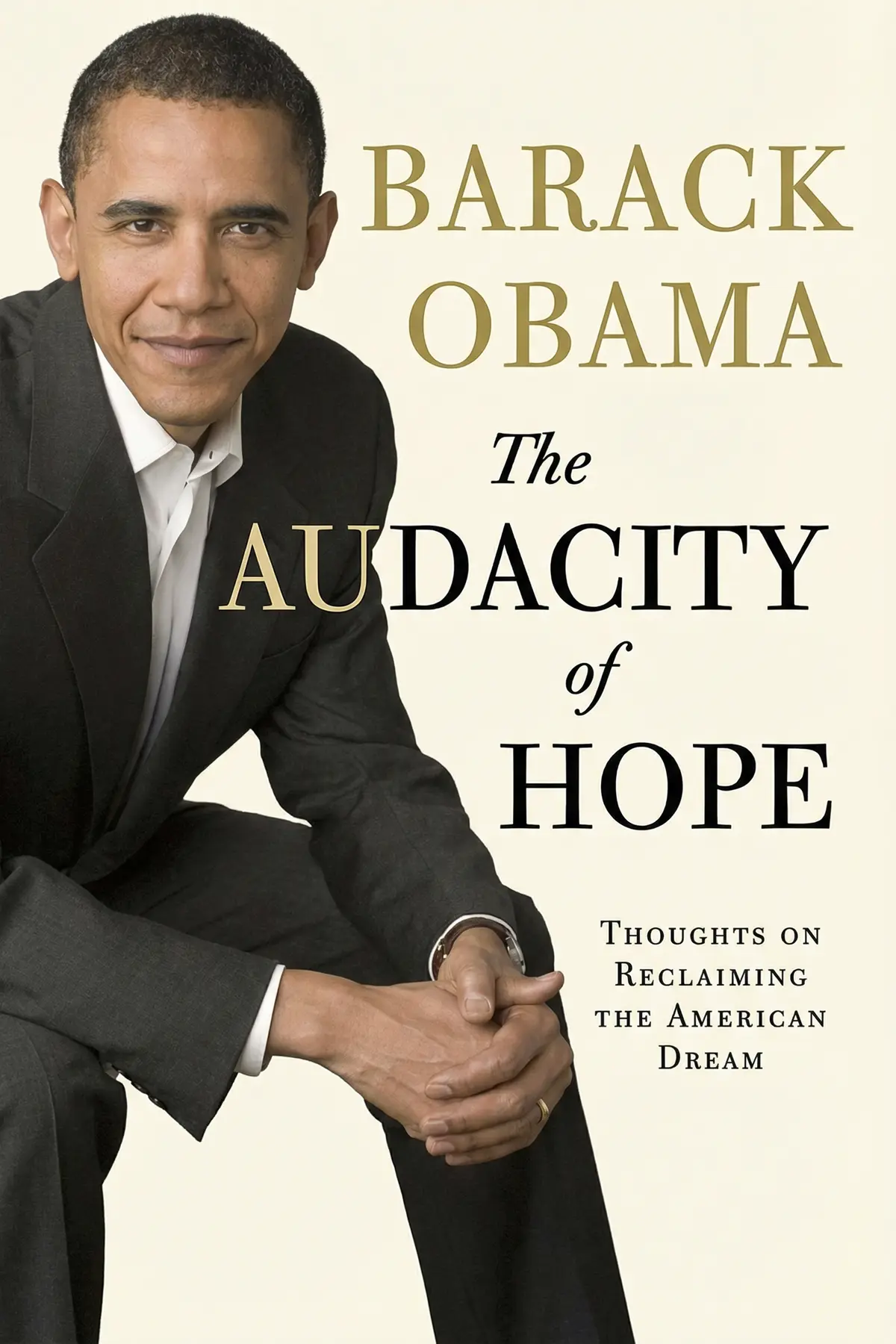
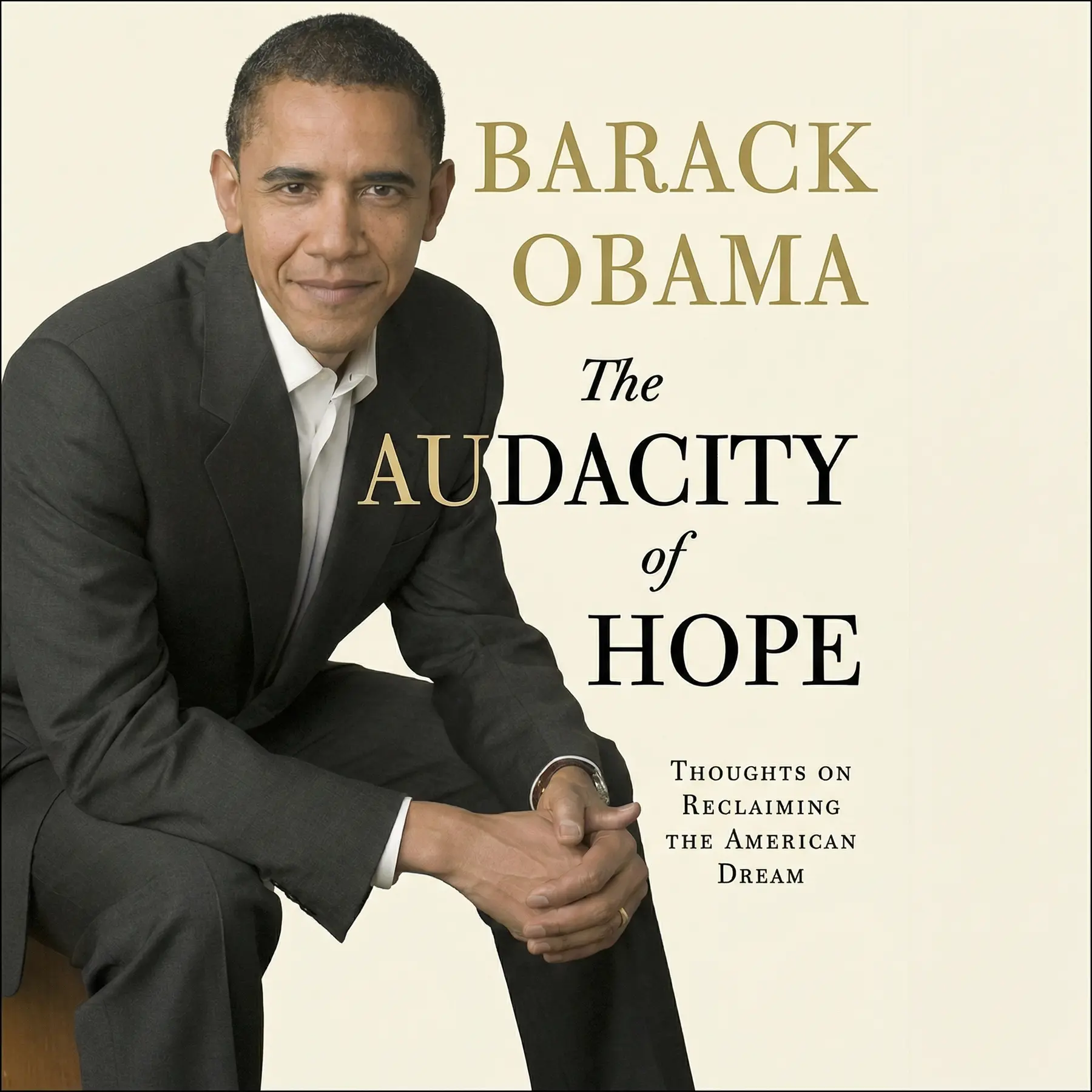
A thoughtful exploration of American politics, The Audacity of Hope outlines a vision for national unity by returning to shared values, addressing economic inequality, and navigating the complexities of modern global challenges.
1 min 37 sec
In a world increasingly defined by political friction and deep-seated divisions, it can be difficult to remember that the American experiment was built on a foundation of shared aspirations. The Audacity of Hope is not just a political manifesto; it is a meditation on the possibility of a more unified future. The central throughline of this journey is the belief that despite our many differences—whether they are based on geography, race, religion, or economic status—Americans are bound together by a core set of values that trace back to the nation’s founding.
This isn’t an argument for blind optimism. Instead, it’s an exploration of how we can reclaim the American Dream by applying those foundational principles to the messy, complicated realities of the twenty-first century. We often find ourselves trapped in a cycle of partisan bickering where the needs of ordinary citizens are drowned out by special interests and the relentless pace of the media. However, if we peel back the layers of rhetoric, we find a common language of liberty, community, and equal opportunity.
Throughout this discussion, we will look at the various facets of American life—from the inner workings of Washington and the pressures of the global economy to the intimate structures of the family and the role of faith in the public square. The goal is to see how a renewed sense of empathy and a commitment to pragmatic solutions can help us bridge the gaps that currently divide us. As we move through these ideas, notice how the concept of ‘hope’ isn’t framed as a passive feeling, but as an active, audacious choice to believe in a better version of ourselves. Let’s dive into how we can move from a society of ‘you’re on your own’ to one where we truly feel we are ‘all in it together.’
1 min 49 sec
Explore how the architects of America balanced the desire for individual freedom with the essential need for community values to ensure a stable and lasting democracy.
1 min 47 sec
Consider the growing disconnect in American society and how a lack of perspective-taking fuels conflict and leaves the most vulnerable citizens behind.
1 min 44 sec
Examine how the relentless pursuit of campaign funding and the media’s appetite for conflict isolate leaders from the daily struggles of average citizens.
1 min 40 sec
Discover why ordinary workers are bearing the brunt of globalization and why the modern ‘winner-take-all’ economy is failing to distribute prosperity fairly.
1 min 30 sec
Learn why a functional market requires a tax code and safety net that ensure those who benefit most from society also contribute their fair share.
1 min 40 sec
Understand how religious values can drive social justice while recognizing the need for a common language of reason in a pluralistic society.
1 min 42 sec
Examine the progress made in civil rights and the work that remains to bridge the gaps in income, representation, and social justice for all Americans.
1 min 38 sec
Look past the frustration of urban poverty to see how focused improvements in education and health care can break the cycle of crime and hopelessness.
1 min 33 sec
Discuss the changing dynamics of home life and why modern parents need better access to early education and flexible support systems.
1 min 36 sec
Debunk the myth of the ‘magic’ free market and explore why government oversight is necessary to ensure fair play and social mobility.
1 min 35 sec
See why the path to global leadership lies in investing in science, technology, and a robust education system that prioritizes teachers and engineers.
1 min 55 sec
Discover how transitioning to alternative energy and embracing multilateral foreign policy can enhance national security and restore America’s standing.
1 min 37 sec
The Audacity of Hope ultimately reminds us that the challenges facing the United States—no matter how daunting they appear—are not insurmountable if we return to our core convictions. The throughline of this entire exploration is the recognition that our fundamental values are the most powerful tools we have for creating a more just and prosperous society. Whether we are talking about reforming the tax code, improving our schools, or navigating complex international conflicts, the answer lies in our ability to find common ground and act with a sense of shared purpose.
We have seen how a lack of empathy and the distorting influence of money and media have created a sense of disconnection in our politics. But we have also seen that progress is possible when we invest in one another. From the inner-city classroom to the global stage, the principles of opportunity and mutual responsibility can guide us toward better outcomes. The ‘audacity’ the author speaks of is the courage to reject the cynicism that says we are too divided to function. It is the belief that a vibrant free market, a diverse society, and a robust democracy can all coexist and thrive if we are willing to do the hard work of listening and compromising.
As you move forward, consider the ways you can apply this sense of audacity in your own life and community. It starts with recognizing that our fates are intertwined. By reclaiming the American dream for everyone—not just the few—we ensure a more stable and hopeful future for ourselves and for generations to come. The path forward isn’t always clear, but if we stay rooted in the values that first defined this nation, we can move toward that more perfect union with confidence.
The Audacity of Hope is an examination of the American political system and a call for a more empathetic, pragmatic approach to governance. It moves beyond the polarized debates of the day to identify the common ground rooted in the nation’s founding documents. The book promises to show how traditional values like hard work, community, and individual liberty can be synthesized to solve modern problems, from the stagnation of middle-class wages to the complexities of international diplomacy. Through a series of reflections on his own political journey and his observations of the American people, the author argues that the audacity of the American experiment lies in our ability to maintain hope and work toward progress even when the path is difficult. It addresses how wealth, race, and religion intersect with policy, offering a framework for a more inclusive and functional democracy. Ultimately, it is a guide for reclaiming the American dream by focusing on what connects us rather than what divides us.
Barack Hussein Obama II served as the 44th president of the United States. His career began as a community organizer in Chicago, followed by work as a civil rights attorney and a professor of constitutional law at the University of Chicago. After serving in the Illinois Senate and the U.S. Senate, he was elected as the nation's first African American president in 2008 and re-elected in 2012. In 2009, he was awarded the Nobel Peace Prize for his efforts in international diplomacy.
Barack Obama
Listeners consider this title an essential read that offers significant perspective on Obama’s outlook and political principles. The prose is expertly written, and listeners value the author’s sincerity and modesty. It is frequently described as bold and stimulating, with one listener mentioning that it functions as a beautiful reminder of hope.
After hearing so much about the 2004 convention speech, I finally picked up the audiobook narrated by the author himself. Hearing his voice deliver these thoughts on American history and values makes a massive difference in how the material lands. He speaks with an intelligent, inspiring cadence that makes even the denser policy discussions feel accessible and urgent. I was particularly moved by the sections detailing his early work in Chicago and the ambitious journey that led him to the Senate. To be fair, it is clearly a book written by a man with higher aspirations, but his understanding of the issues facing everyday families feels genuine. It is a well-crafted look into his political philosophy that remains a must-read for anyone trying to understand the shift in American politics. One thing is certain: his humility shines through even when he’s discussing his own successes.
Show moreWow, the level of introspection here is something you rarely see from a sitting senator, let alone a future president. He takes the time to explain the 'why' behind his positions, which gives the reader a great insight into his governing style. The section on foreign policy was particularly enlightening, especially his critique of the Iraq war and the need for a legal framework in international relations. He argues for leading by example rather than just by force. It’s a thought-provoking approach that feels even more relevant today. I appreciated his humility when discussing the compromises a politician has to make to get anything done. Truly a must-read for anyone who values well-reasoned discourse over partisan shouting matches. It’s a courageous look at the flaws in our system and a roadmap for fixing them.
Show moreThis book provides a fascinating deep dive into the political philosophy of a man who clearly respects the framework of the Constitution. I spent a lot of time on the third chapter, where he examines the document as a flexible conversation rather than a static blueprint. It's an impressive analysis from someone who has actually taught constitutional law. He doesn't shy away from the darker moments of history, like how those same documents were used to justify slavery. Instead, he argues for a modern interpretation that adapts to our current crisis. The truth is, it’s refreshing to see a politician engage with the 'Founding Fathers' on an intellectual level rather than just using them as props for a stump speech. There’s a lot of honesty here regarding how money influences the legislative process, which made me respect his perspective even more.
Show moreEver wonder why the political landscape feels so polarized and toxic? Obama attempts to answer that by focusing on empathy and the 'Audacity of Hope' required to see an opponent as mistaken rather than evil. I found the 'Opportunity' chapter to be the most impressive section by far. He offers a sophisticated look at the economy, discussing investment in research and energy self-sufficiency with an innumerate clarity that is rare in Washington. He doesn't just offer soundbites; he explains why the US is losing its competitive edge in science. Not gonna lie, some of the political maneuvering he describes is frustrating to read about, but his honesty regarding the 'rich man's club' of the Senate is illuminating. It’s a courageous book that asks us to reclaim a sense of community that often feels lost in the modern era.
Show moreFinally got around to reading this years later, and it serves as a powerful reminder of what hope used to feel like in the public square. The way he discusses his mother’s secular humanism and his own path to faith is genuinely moving. He’s an excellent listener, and that quality comes through in the way he writes about the struggles of everyday people. Whether he's talking about the cost of healthcare or the need for better daycare, the focus is always on the human element. It’s a well-crafted piece of writing that feels both intimate and grand. Look, you might disagree with his policies, but it’s hard to deny the man’s intellect and his commitment to the idea of a better America. It left me feeling surprisingly optimistic about the possibility of meaningful change.
Show moreThe chapter on family really stuck with me, even if it got a little sentimental at times. He writes about his daughters and his wife with such genuine affection that he comes across as the 'first feminist president' in the making. He understands that policy isn't just about numbers; it's about whether a mother can afford childcare or if a father can take time off work. It’s a refreshing perspective that centers the home as much as the Senate floor. I did find some of the writing to be a bit overly polished, which occasionally makes the author feel out of reach. But when he talks about the vicious circles of neglect in inner cities, his passion is undeniable. He’s trying to bridge a gap that most politicians won't even acknowledge exists.
Show morePersonally, I found the section on 'The World Beyond Our Borders' to be the most complex part of the entire narrative. He navigates the difficult history of US interventionism with a lot of grace, acknowledging both the good and the bad. His childhood in Indonesia gives him a unique perspective that most American politicians simply don't have. He understands how the rest of the world views us. While I wish he had been more critical of certain allies, his overall call for consistency and mutual trust in foreign policy is a wonderful reminder of what's possible. The book is a bit of a tightrope act, trying to balance progressive ideals with the realities of a polarized electorate. In the end, it’s a successful attempt to define what a modern American identity could look like.
Show moreAs an outsider looking in, the obsession with religious signaling in American politics is quite jarring. In this book, the amount of time dedicated to discussing faith and God felt somewhat excessive compared to what we expect from politicians in other countries. I found myself cringing during the descriptions of his interactions with more conservative senators where he felt the need to loudly declare his Christian credentials. However, to be fair, his take on the 'Golden Rule' as a basis for empathy is a strong argument. He manages to bridge the gap between secular and religious values in a way that feels inclusive, even if it’s wrapped in a lot of traditional American imagery. It’s a decent read that highlights the polarized nature of the US, but I think I would have preferred less focus on the divine and more on the pragmatic.
Show moreTo be fair, the prose is a bit flowery in places, and some of the personal anecdotes feel slightly staged for a general audience. It's a long book that could have benefited from a tighter edit to keep the momentum going. That said, the chapter on race is handled with incredible nuance. He avoids the typical traps of being either too dismissive or too angry, choosing instead to focus on inclusion and the shared American experience. Personally, I found his critique of the 'Social Darwinism' of the right to be sharp and well-reasoned. It’s not a perfect book, and it definitely feels like a product of its pre-presidency time. But as a historical document of his views, it’s still worth the time. Just be prepared for some heavy-handed sentimentality regarding his personal life.
Show moreLook, I wanted to like this more, but it often felt like a carefully curated campaign brochure designed to offend the fewest people possible. While Obama is undoubtedly a gifted writer, the sections about his family and his relationship with Michelle felt far too saccharine for my personal taste. It’s all a bit too perfect. The prose is frequently flowery, bordering on the overwritten, which makes it hard to find the concrete substance beneath the lofty rhetoric. Frankly, the constant deference to the Founding Fathers feels a bit alien if you aren't already bought into that specific brand of American exceptionalism. It is a thought-provoking read in parts, but the calculated nature of the narrative left me feeling cold. I respect the ambition, but the execution felt like a series of safe bets rather than a bold manifesto.
Show more
Miles Taylor
Tracy Rosenthal
Jessica Valenti

Yanis Varoufakis
Yuval Noah Harari
Jacinda Ardern
AUDIO SUMMARY AVAILABLE
Get the key ideas from The Audacity of Hope by Barack Obama, plus 5,000+ more titles in English and Thai.







