
18 min 32 sec
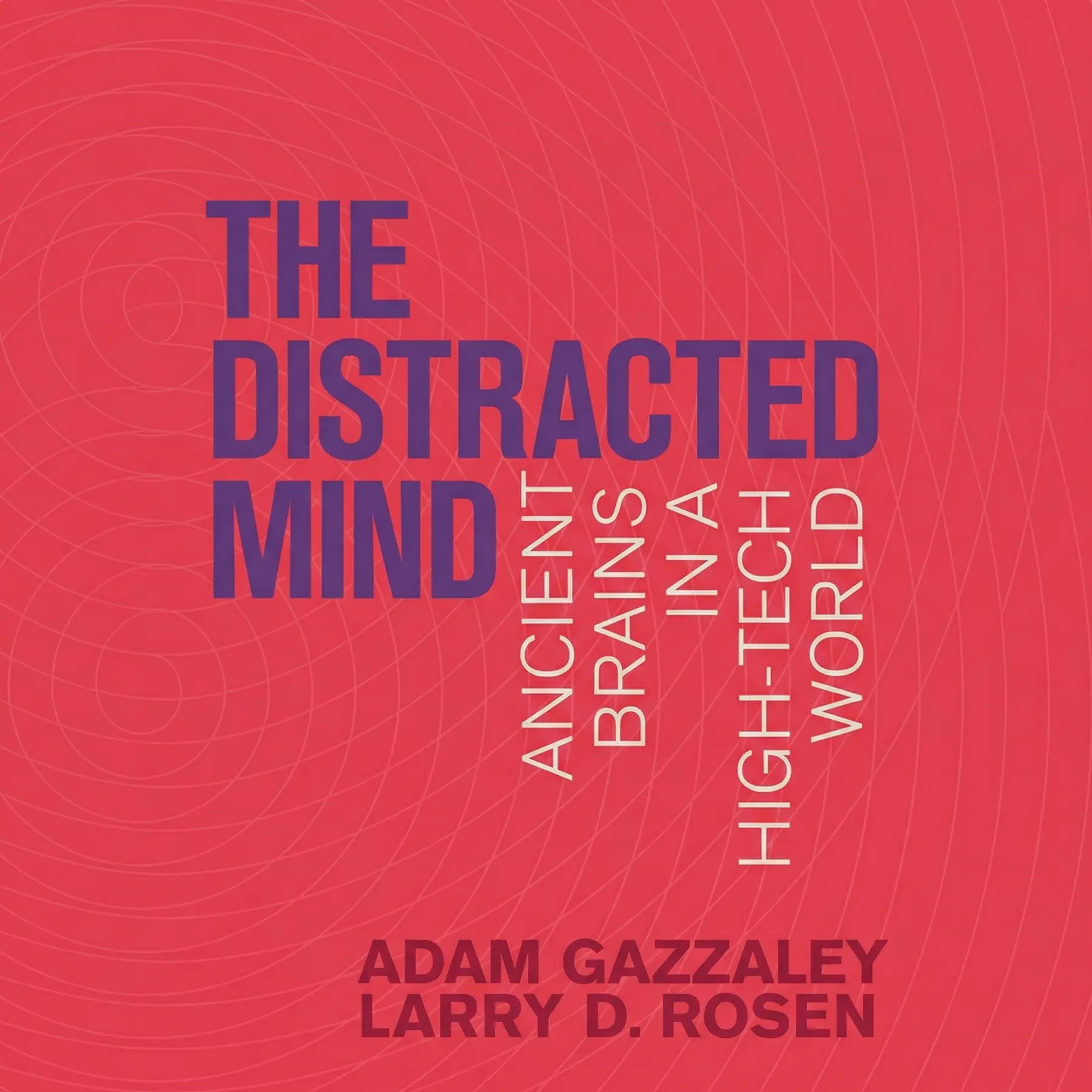
The Distracted Mind: Ancient Brains in a High-Tech World
The Distracted Mind explores the clash between our ancient evolutionary biology and the high-tech demands of the modern world, offering neuroscientific insights and practical strategies to reclaim our focus and productivity.
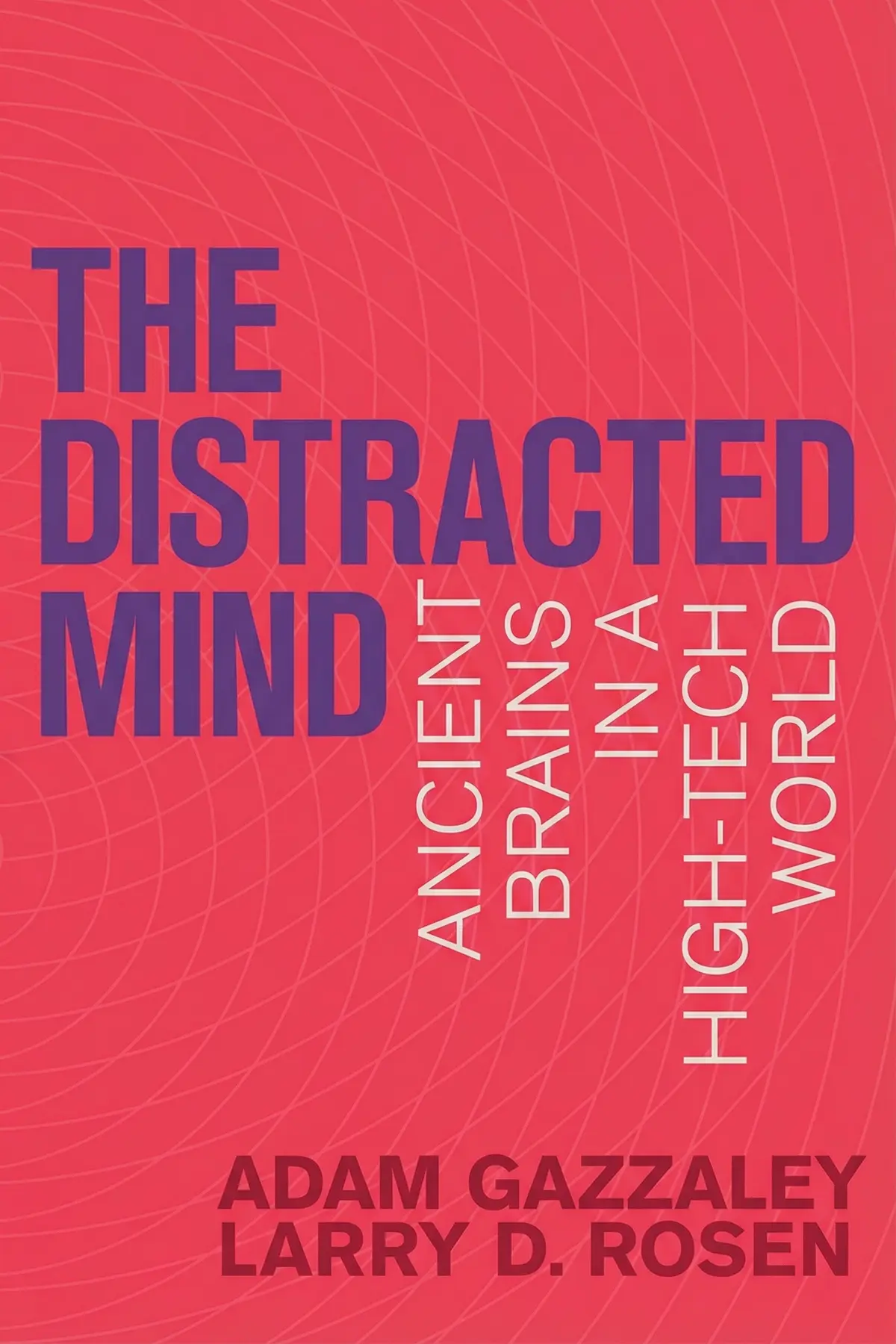
Table of Content
1. Introduction
1 min 51 sec
Have you ever found yourself opening your phone to check the weather, only to realize twenty minutes later that you’re deep in a social media rabbit hole and you still don’t know if it’s going to rain? You’re not alone. This is the central conflict of the modern era: we are navigating a high-speed, information-saturated world using hardware that was designed for a completely different environment.
In The Distracted Mind, authors Adam Gazzaley and Larry D. Rosen take us on a journey through the inner workings of the human brain to explain why we are so vulnerable to the constant pull of technology. We like to think of ourselves as masters of our own attention, but the reality is that our brains are the product of millions of years of evolution—an evolution that prioritized survival on the savanna, not productivity in an open-plan office.
This isn’t just a book about why phones are distracting; it’s a deep dive into the ‘why’ behind our behavior. It explores the ‘interference’ that prevents us from reaching our goals and explains why our brains struggle to keep up with our ambitions. But it’s not all bad news. By understanding the biological limitations of our cognitive control, we can start to implement strategies that work with our biology rather than against it.
Over the next several sections, we will explore how your brain manages goals, why you are biologically programmed to seek out new information like a hungry primate seeking fruit, and how you can actually rewire your neural pathways to improve your focus. We’ll look at the specific psychological triggers that keep us clicking and scrolling, and we’ll conclude with practical, evidence-based ‘hacks’ to help you stay present in your relationships and safe on the road. This isn’t about abandoning technology; it’s about learning to live with it in a way that respects the limits of the human mind.
2. The Evolutionary Gap in Cognitive Control
2 min 09 sec
Our brains are excellent at dreaming big, but our internal systems for actually executing those plans haven’t kept pace with our evolving ambitions.
3. The Tug-of-War Between Bottom-Up and Top-Down Influences
2 min 12 sec
Discover why your brain is hard-wired to react to sudden sounds and bright lights, and how this survival instinct clashes with your conscious goals.
4. Humans as Information Foragers
2 min 10 sec
We are biologically driven to seek out new data, experiencing a chemical reward in the brain that mirrors the satisfaction of finding food.
5. The Myth of Multitasking and the Cost of Switching
1 min 51 sec
While you might think you’re doing several things at once, your brain is actually just jumping between tasks, losing efficiency with every leap.
6. The Four Drivers of Distraction
2 min 16 sec
Boredom, anxiety, accessibility, and a lack of self-awareness create a perfect storm that keeps us tethered to our digital screens.
7. Enhancing the Hardware through Physical and Mental Training
2 min 06 sec
The brain is remarkably plastic, meaning we can actually strengthen our focus through specific exercises and lifestyle changes.
8. Practical Strategies for Reclaiming Your Attention
2 min 03 sec
From ‘tech-free zones’ to driving hacks, learn how to create a digital environment that supports your focus rather than draining it.
9. Conclusion
1 min 54 sec
The Distracted Mind offers a sobering but ultimately empowering look at the state of the human brain in the twenty-first century. We have learned that our inability to stay focused isn’t a personal failure of willpower, but a natural consequence of the mismatch between our ancient biology and our high-tech environment. We are wired to seek information, we are programmed to react to novelty, and we are easily swayed by the psychological pull of dopamine and the fear of missing out.
However, the throughline of this journey is that we are not helpless. By understanding the science of cognitive control and the myth of multitasking, we can start to see our habits for what they are. We can use the power of neuroplasticity to strengthen our brains through physical exercise and cognitive training. We can take control of our environment by setting boundaries, reducing the accessibility of our devices, and practicing metacognition.
As a final piece of actionable advice, consider the power of meditation. Beyond the physical and cognitive exercises we’ve discussed, meditation has been scientifically proven to improve the brain’s ability to focus and resist distraction. Even just a few minutes a day can help you build the mental ‘muscle’ needed to pause before reacting to a notification.
The goal is not to retreat from the modern world or to view technology as an enemy. Technology is an incredible tool that has expanded our horizons in ways our ancestors could never have imagined. The challenge is to use that tool with intention and moderation. By respecting the limits of our ancient brains, we can enjoy the benefits of our high-tech world without losing our capacity for deep thought, meaningful connection, and true productivity. It’s time to close the tabs, put down the phone, and rediscover the power of a focused mind.
About this book
What is this book about?
We live in an era of unprecedented connectivity, where the sum of human knowledge is accessible with a single tap. However, this convenience comes at a significant cost to our mental clarity. The Distracted Mind examines why our brains are so easily led astray by notifications, emails, and social media feeds. By combining the expertise of a neuroscientist and a psychologist, this summary explains the biological mismatch between our survival-driven instincts and the digital landscape. You will learn about the limitations of cognitive control, the myth of multitasking, and the psychological triggers—like boredom and anxiety—that keep us tethered to our devices. More importantly, it provides a roadmap for enhancing your brain’s resilience through physical exercise, cognitive training, and intentional behavioral changes, helping you navigate a distracted world without losing your mind.
Book Information
About the Author
Adam Gazzaley
Adam Gazzaley is a renowned American neuroscientist and professor at the University of California, San Francisco. He founded Neuroscape, a center dedicated to bridging the gap between neuroscience and technology to optimize brain function. Larry D. Rosen is a professor emeritus of psychology at California State University and a leading expert on the psychology of technology. He has authored several books, including IDisorder and Me, MySpace, and I, and is a frequent keynote speaker on how digital tools affect human behavior.
Ratings & Reviews
Ratings at a glance
What people think
Listeners find this work exceptionally well-crafted and educational, with one noting how it grounds the narrative in scientific research. Furthermore, the book earns praise for its engaging examination of tech-driven distraction, mental performance, and focus, with one listener emphasizing its groundbreaking studies on attention and interference. Listeners also value its approachability, with one individual mentioning its clear analogies, and find the subject matter captivating. Yet, opinions on the prose style vary; some consider it a straightforward read, whereas others characterize the text as dense.
Top reviews
Noo
Ever wonder why your phone feels like an extra limb you can't stop checking? This book provides a fascinating deep dive into why our 'ancient' brains are fundamentally ill-equipped for the high-tech bombardment of the 21st century. Gazzaley and Rosen explain that our minds are essentially designed for foraging information, much like our ancestors foraged for food. This makes the 'pings' and notifications of modern life almost impossible to ignore. I found the distinction between distractions and interruptions particularly enlightening. While the prose can be a bit dense at times, the pioneering research from the Gazzaley Lab makes this an essential read for anyone feeling overwhelmed by their digital life. It is a persuasive wallop that might finally convince you to put the phone down during dinner.
Show moreArt
Picking this up was a total game-changer for how I manage my daily workflow. Not gonna lie, I used to pride myself on being a master multitasker, but Gazzaley and Rosen thoroughly dismantled that delusion. They show how we are actually just rapidly switching between networks, which creates a huge 'switching cost' in terms of brain power. The book is extremely well written and manages to stay grounded even when discussing complex topics like the Marginal Value Theorem. I especially loved the section on 'neuro-treatments' and how certain types of video games—like the ones developed in the Gazzaley Lab—might actually help improve cognitive control. It’s rare to find a book that is both this scientifically dense and this practically useful. Highly recommend for the digital age.
Show morePornpimon
This study of the intersection between ancient biology and modern technology is nothing short of exceptional. The authors, a neuroscientist and a psychologist, provide a dual-lens view that is both thorough and accessible. I was fascinated by the concept that our brains simply haven't evolved as fast as our tools. The statistics provided about distracted driving and lost productivity are genuinely frightening. What sets this book apart is that it doesn't just preach; it uses the Marginal Value Theorem to explain the 'why' behind our behavior. It’s a bit dense, but the analogies make it much easier to digest. If you want to understand the mechanics of your own mind and how to reclaim your focus, this is the book to read.
Show moreKwan
As a neuroscientist-psychologist duo, Gazzaley and Rosen bring a level of academic rigor that is often missing from the usual self-help fluff. They nest the entire discussion in solid research findings, moving beyond simple 'tech is bad' rhetoric to explain the actual cognitive limitations of the human brain. I was especially struck by the statistics on how even the mere presence of a smartphone in a room can diminish social connection. The authors use understandable analogies to explain complex neural processes, making the high-level science accessible to someone like me. My only gripe is that it can feel repetitive. Once the point about our limited top-down control is made, the book continues to hammer it home with study after study. Still, it’s a brilliant wake-up call.
Show moreSuthee
To be fair, the first half of this book is quite heavy on neuro-jargon, which might scare off some readers. However, if you stick with it, the insights into 'goal interference' are incredibly valuable. I learned that suppressing irrelevant information isn't a passive act; it’s an active process that requires significant energy. That explains why I feel so exhausted after a day of 'just' checking emails and Slack! The authors do a great job of explaining why we feel a constant need to forage for new information, even when it’s detrimental to our long-term goals. It isn't a quick, easy read, but the depth of information on cognitive performance is second to none. It definitely changed how I view my relationship with my laptop.
Show moreWatcharee
Look, the science is solid, but you have to be in the right headspace for this one. It isn't a thrilling page-turner; it’s a serious look at how we’re losing our ability to perform single tasks with any real efficiency. The authors cite shocking statistics—like how students can barely go three minutes without checking social media—which really put my own habits into perspective. I appreciated that they didn't just complain about the problem but actually prescribed solutions, such as taking 'tech breaks' and practicing mindfulness. The writing is a bit textbook-like, which makes it feel longer than it actually is, but the content is just too relevant to ignore. It’s a necessary deep dive into our collective attention crisis.
Show moreBoss
After hearing so much about the 'attention economy,' I wanted to understand the actual biology behind it. This book delivered exactly that. It's a compelling look at technology distraction and how it impacts everything from driving safety to our intimate relationships. The authors don't just blame the gadgets; they explain why our brains are vulnerable to them in the first place. I found the discussion on how aging affects our ability to filter out distractions particularly interesting (and a bit depressing!). While I would have liked even more practical tips in the earlier chapters, the scientific foundation they build is incredibly strong. It’s a sophisticated, informative read that nests its arguments in pioneering research rather than just anecdotes.
Show moreSarawut
The core message here is vital, but the delivery feels more like a dry, first-year college lecture than a compelling trade paperback. Truth is, the authors spend about 200 pages proving a point that most of us already intuitively understand: multitasking is a myth and technology is ruining our focus. I really appreciated the explanation of 'task switching' and how it degrades efficiency, yet the book suffers from a lack of personality in the writing. It feels like a very long magazine article stretched thin to meet a word count. If you can push through the plodding, textbook-like middle sections, the last two chapters offer some decent practical tips on meditation and exercise. It’s informative, just not particularly enjoyable to sit through.
Show moreViroj
Frankly, I expected more objectivity from authors with these credentials. While the premise is relevant, I noticed several glaring factual errors that made me question the rest of the data. For instance, citing that 860 million Europeans own smartphones when the entire population of the continent is much lower is a huge oversight. Beyond the typos, the tone feels heavily biased against younger generations, using loaded words like 'admit' for harmless phone habits. They also rely on some questionable studies, like the one about iPads and sleep where they had participants use maximum brightness in a dark room—hardly a realistic scenario. I wanted a scientific look at cognitive load, but what I got felt more like an 'old man yells at cloud' manifesto disguised as research. Disappointing.
Show moreMilk
My attention span was already struggling, and this book did absolutely nothing to help it. Imagine your most boring science teacher ever droning on for hours—that is the tone of this entire work. I was looking for a guide to help my distracted mind, but the writing is so devoid of life that I couldn't even finish it. It’s ironic that a book about focus is so difficult to focus on. To be fair, the science seems legitimate, but there is zero attempt to make the data engaging for a general audience. If you aren't already a neuroscientist or a dedicated academic, you will likely find this a chore. I felt betrayed by the positive blurbs on the back.
Show moreFeatured in
Readers also enjoyed
Acting with Power: Why We Are More Powerful Than We Believe
Deborah Gruenfeld
21 Lessons for the 21st Century
Yuval Noah Harari
Age of Propaganda: The Everyday Use and Abuse of Persuasion
Anthony Pratkanis

AUDIO SUMMARY AVAILABLE
Listen to The Distracted Mind in 15 minutes
Get the key ideas from The Distracted Mind by Adam Gazzaley, plus 5,000+ more titles in English and Thai.
- 5,000+ titles
- Listen as much as you want
- 7-day free trial
- Cancel anytime







