
18 min 07 sec
The Fate of Food: What We’ll Eat in a Bigger, Hotter, Smarter World
The Fate of Food examines the future of our global food supply, exploring how scientists, farmers, and innovators are adapting to climate change and population growth to build a sustainable food system.
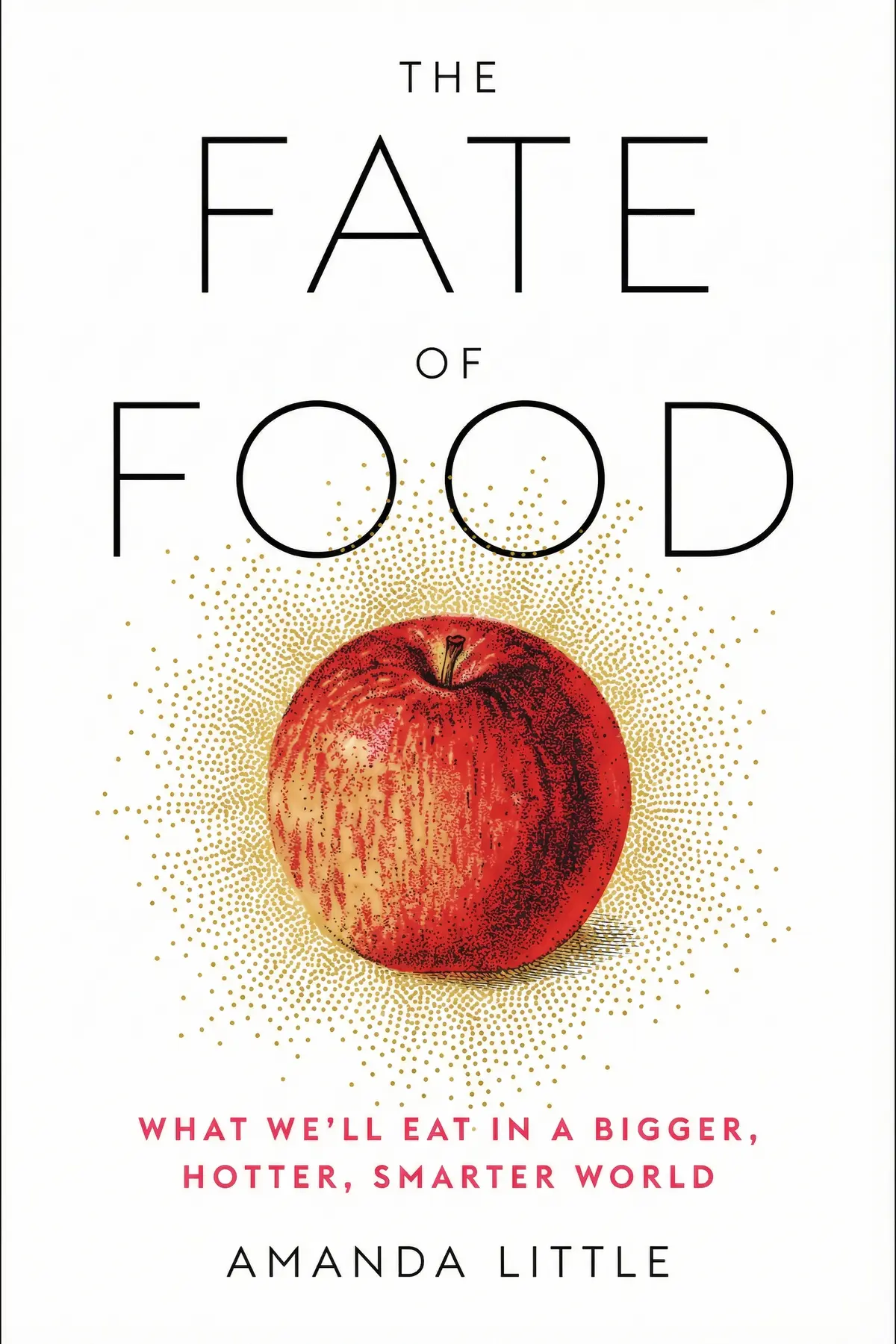
Table of Content
1. Introduction
1 min 41 sec
When we look at the horizon of the next several decades, the challenges facing humanity can feel overwhelming. We often talk about climate change in the context of melting glaciers or rising tides—events that feel distant or abstract to many of us. But there is a much more intimate way we will all experience the shifting state of our planet: through our food. Every meal we eat is the result of a complex, global web of biology, logistics, and weather. As that weather becomes more volatile and the global population marches toward ten billion people by the year 2050, the stability of that web is being called into question.
In this exploration of The Fate of Food, we are going to look at the intersection of tradition and technology. We are entering an era where the old rules of farming no longer apply, and the new rules are still being written in laboratories, indoor farms, and experimental orchards. The central question we must answer is how we can possibly scale up production to meet the needs of a bigger, hotter, and smarter world without destroying the very ecosystems that provide our sustenance.
This isn’t just a story about doom and gloom, though. It’s a story about human ingenuity. We’ll meet the scientists who are teaching plants to survive on less water, the entrepreneurs who are growing meat from cells, and the farmers who are using drones and robots to save their harvests. Throughout this journey, we will see that the future of food is not a single path, but a tapestry of diverse solutions. By understanding these shifts, we can begin to see how our own choices—from what we buy at the store to how we manage our kitchens—play a vital role in this global transformation. Let’s dive into how we’re going to feed the future.
2. The Ecological Toll of Modern Agriculture
2 min 25 sec
Discover how the post-war agricultural revolution successfully tripled the world’s food supply, while simultaneously planting the seeds for a modern ecological crisis that threatens the very stability of our global environment today.
3. Fruit as the Climate’s Early Warning System
2 min 42 sec
Learn why the delicate nature of fruit makes it a perfect barometer for a changing climate, and how unpredictable weather patterns are currently devastating orchards and forcing farmers to use radical measures.
4. Engineering Solutions for a Thirsty Planet
2 min 26 sec
Explore the cutting-edge intersection of biology and engineering as scientists develop crops that can survive extreme droughts and nations pioneer high-tech water management systems to turn deserts into productive farmland.
5. The Rise of the Indoor Urban Farm
2 min 29 sec
Investigate the revolutionary world of indoor agriculture, where vertical farms and soil-free growing methods are reclaiming urban spaces and providing a potential solution for nations facing severe shortages of traditional arable land.
6. Protein Reimagined: From Sea to Lab
2 min 31 sec
Examine the radical shifts occurring in the protein industry, from high-tech salmon farms in Scandinavia to the Silicon Valley labs where real meat is being grown without the need for traditional livestock.
7. The Battle Against Global Food Waste
2 min 23 sec
Uncover the shocking scale of global food waste and learn how simple shifts in our perception of “ugly” produce and label dates could help bridge the gap between scarcity and abundance.
8. Conclusion
1 min 30 sec
As we have seen, the path to feeding our future is not a simple one. We are living through a period of profound transformation, where the old ways of the Green Revolution are colliding with the new realities of a changing climate. From the high-tech orchards of Michigan to the vertical farms of Japan and the desalination plants of Israel, the story is the same: we must adapt or we will go hungry. The Fate of Food shows us that while the challenges are daunting, the human capacity for innovation is immense.
The throughline of our future food system is one of balance. We cannot rely solely on the technology of the laboratory, nor can we expect to feed the world using only the methods of the nineteenth century. We need both. We need the efficiency of GMOs and the precision of indoor farming, but we also need the wisdom of soil health and the traditional values of community-based food sharing.
You can take action in your own life today. One of the simplest and most effective things you can do is to embrace frozen fruits and vegetables. They are often just as nutritious as fresh ones because they are frozen at the peak of ripeness, and they have the added benefit of not spoiling in your refrigerator. By reducing your own waste and being open to the new technologies that are reshaping our world, you become a part of the solution. The world is getting bigger, hotter, and smarter—and if we work together, our food system can grow right along with it. Thank you for joining us on this journey into the future of what we eat.
About this book
What is this book about?
The Fate of Food investigates the urgent challenges facing our global food systems in an era of climate instability and rapid population growth. As the world moves toward a population of 10 billion, the traditional methods of agriculture that sustained us through the twentieth century are reaching their limits. Journalist Amanda Little takes readers on a global journey to meet the people reinventing how we grow, harvest, and consume what we eat. This summary explores a wide range of innovations, from vertical farms and aeroponics to lab-grown meat and drought-resistant crops. It provides a balanced look at the tension between traditional agrarian values and the high-tech solutions necessary to prevent global hunger. By the end, listeners will understand the complex interplay of technology, policy, and individual choice that will define the dinner plates of the future, offering a roadmap for a more resilient and equitable food world.
Book Information
About the Author
Amanda Little
Amanda Little is an award-winning environmental journalist whose writing has appeared in the New York Times Magazine, Wired, and Vanity Fair, among many others. She is a professor of investigative journalism and science writing at Vanderbilt University and the author of Power Trip: The Story of America’s Love Affair with Energy.
Ratings & Reviews
Ratings at a glance
What people think
Listeners find the book captivating and skillfully written, with one noting its remarkably thorough research. They appreciate the author's method, as one listener highlights how the narrative examines diverse viewpoints and develops a more expansive understanding of our connection to food.
Top reviews
Eli
Picked this up during a flight and ended up glued to the pages until we touched down. Little manages to take incredibly dense topics—like CRISPR technology and AI-driven weeding robots—and turns them into a compelling narrative that feels both urgent and hopeful. I particularly enjoyed the peek into the "chicken pie room" and the massive scale of our current industrial food system. While some might find her focus on the people she meets a bit much, I think it adds a necessary human element to the cold hard science. It’s rare to find an environmental journalist who isn't just shouting about the apocalypse from a soapbox. Instead, we get a carefully researched look at the "reinvention" of how we eat. This is essential reading for anyone who wants to understand the complex intersection of climate change and our dinner plates.
Show moreSara
The chapter on Memphis Meats was a total game-changer for me. Before reading this, I had a very narrow view of what "real" food should be, but Little’s reporting helped me see the ethical and environmental benefits of bioreactors. The book is incredibly well-researched, and you can tell she spent years traveling the globe to get these stories first-hand. It’s not just about the tech; it’s about the people on the front lines of the climate crisis. I loved the balance between the "deinvention" camp and the "reinvention" camp. The truth is usually somewhere in the middle, and this book finds that sweet spot perfectly. It's a fascinating look at the race to secure our global food supply that actually leaves you feeling like there’s a path forward.
Show moreHana
After hearing several people recommend this for its nuanced take on GMOs, I had to dive in. It’s a superb book that grapples with ideas we may need to seriously consider implementing if we want to avoid total disaster. I loved the concept of "innovating with humility." Little doesn't claim that technology is a silver bullet, but she makes a convincing case that we can't afford to ignore it. The writing is incredibly vivid; I could almost smell the recycled water and see the massive vertical farms she visited. It’s an essential piece of environmental journalism that manages to be both informative and entertaining. If you’re looking for a book that shapes a broader view of our relationship with the earth, this is definitely it.
Show moreDimitri
As someone who cares deeply about sustainability, I found Little’s "third way" approach to be incredibly refreshing and necessary. She refuses to take sides in the bitter war between organic purists and industrial giants, arguing instead that we need every tool in the shed to survive. The exploration of Memphis Meats and the possibility of slaughter-free protein was both fascinating and a little bit unsettling. I appreciated that the author included photos to help visualize some of the more futuristic technologies, like the sensors used in smart orchards. My only real gripe is that the book can feel a bit repetitive when she’s describing the various global challenges. Still, it’s a brilliant way to reshape your relationship with food in an era of massive uncertainty.
Show moreSuphan
Ever wonder what dinner will look like in thirty years? This book offers some wild possibilities, from lab-grown steaks to robots that can thin lettuce with surgical precision. I was particularly gripped by the chapters on China’s struggle with pollution and Kenya’s fight against drought. Little has a very conversational, relaxed style that makes the heavy subject matter much easier to digest than a standard textbook. However, there were moments where the narrative felt a bit like a PR campaign for some of the tech companies she visited. I would have liked to see a bit more skepticism regarding the corporate interests involved in these "innovations." Despite that, it’s an eye-opening read that will definitely make you think twice about the source of your next meal.
Show moreNitaya
To be fair, I initially feared this would be another "end of the world" environmental manifesto that would leave me feeling depressed. Thankfully, Little focuses on solutions and the incredible ingenuity of people working to fix our broken systems. The stories about autonomous weeding robots and the use of algae in aquaculture were highlights for me. I did feel like the transition between chapters was a bit abrupt at times, making the book feel more like a collection of essays. It doesn't always "weave together" as seamlessly as the jacket claims, but the individual pieces are strong enough to stand on their own. It’s a timely and thought-provoking read for anyone curious about how we’re going to feed nine billion people.
Show moreKomsan
Finally got around to finishing this, and the breadth of Little’s reporting is truly impressive. She doesn't just talk about climate change; she goes to the places where it's already causing havoc, like the parched fields of sub-Saharan Africa. The section on "Golden Rice" and the controversy surrounding GMOs was particularly enlightening and challenged some of my own preconceived notions. I think the book does a great job of showing that there are no easy answers to our food problems. My only criticism is that the tone can occasionally skew a bit too optimistic, almost bordering on techno-optimism. We should be careful about assuming that robots and sensors can solve everything without major policy changes. That being said, the research here is top-notch.
Show moreNikolai
Frankly, I didn't think a book about agriculture could be so hard to put down. Little has a gift for finding the most interesting personalities in the field, from "scrappy little start-ups" to the engineers at John Deere. The book is full of "what-if" scenarios that are both scary and exciting. I found the discussion on "the fate of water" just as compelling as the parts about the food itself. While some of the sample reviews I saw mentioned it felt like propaganda, I thought she was quite fair in presenting the trade-offs of each new technology. It’s not a perfect book—some sections definitely drag more than others—but it’s a solid 4-star read for anyone interested in the future of our planet.
Show morePreeda
Not what I expected given the glowing blurbs on the back cover. I went in hoping for a deep, data-driven dive into the biology of food security, but it felt much more like a travelogue or a personal memoir. Amanda Little is a talented writer, but she spends way too much time describing the physical appearance of the farmers and scientists she interviews. At times, the "jumbled mishmash" of stories made it difficult to see the overarching thesis she was trying to prove. The sections on lab-grown meat and African drought-resistant crops were interesting, but they felt like isolated snapshots rather than a connected argument. It’s an okay introduction for a layperson, but if you’re looking for a dense scientific text, you might find yourself skimming large sections.
Show moreA
This book covers a lot of ground, but it feels like a collection of magazine articles rather than a cohesive narrative. One minute we’re in an apple orchard in Maryland, and the next we’re looking at salmon farms or water treatment plants. It’s all very interesting in bits and pieces, but I struggled to stay engaged with the author’s personal anecdotes. I don't really need to know about her awkward social interactions with farmers to understand the science of crop rotation. Some of the chapters felt like they were skimming the surface of the real issues to make room for more "human interest" fluff. If you enjoy long-form journalism like you'd find in the New Yorker, you'll probably love this style. Personally, I just wanted more data and fewer descriptions of people's outfits.
Show moreReaders also enjoyed

AUDIO SUMMARY AVAILABLE
Listen to The Fate of Food in 15 minutes
Get the key ideas from The Fate of Food by Amanda Little, plus 5,000+ more titles in English and Thai.
- 5,000+ titles
- Listen as much as you want
- 7-day free trial
- Cancel anytime







