

21 min 54 sec
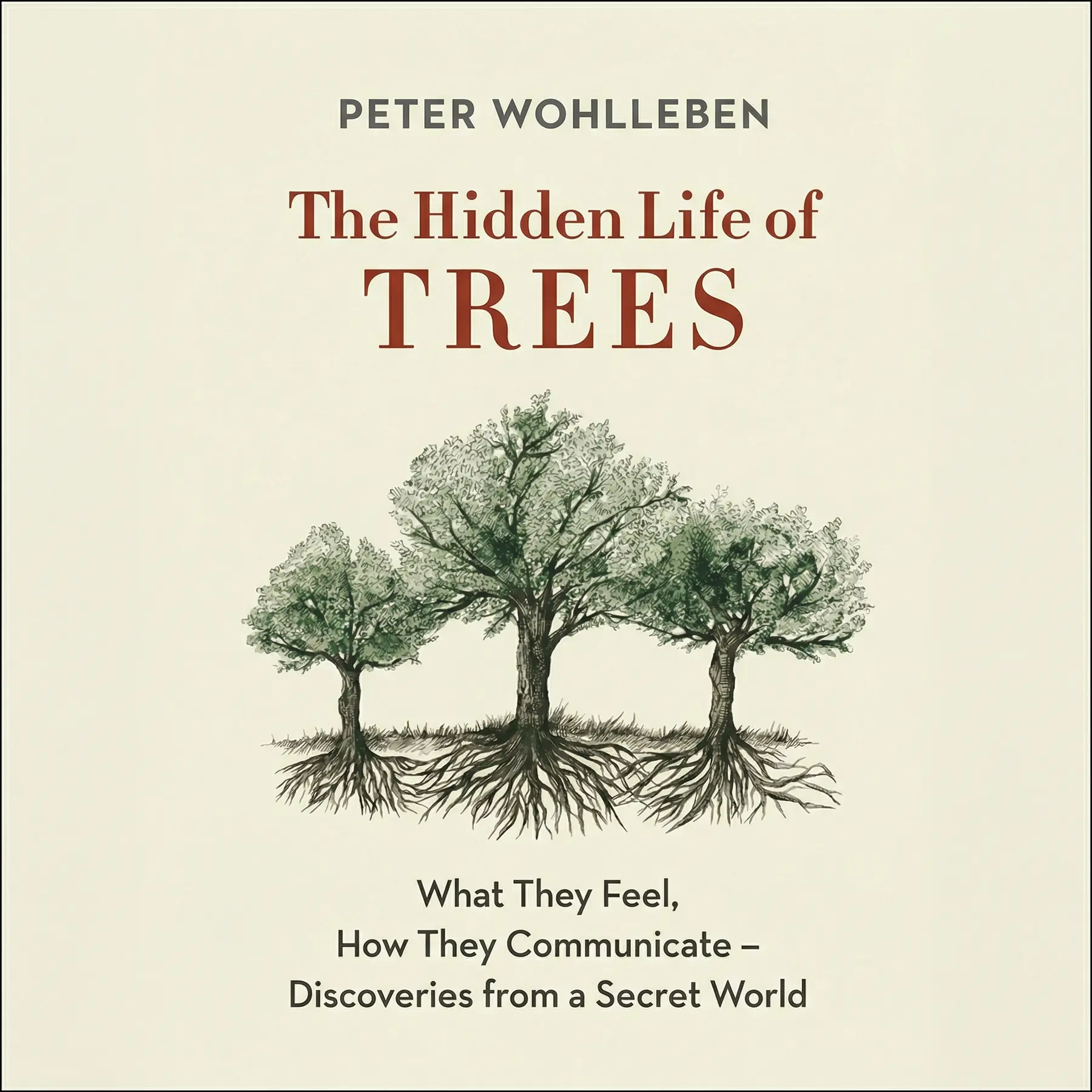
The Hidden Life of Trees: What They Feel, How They Communicate – Discoveries from a Secret World
Explore the secret social networks of the forest. This summary reveals how trees communicate, share nutrients with sick neighbors, and learn from their environment to survive and thrive as a community.
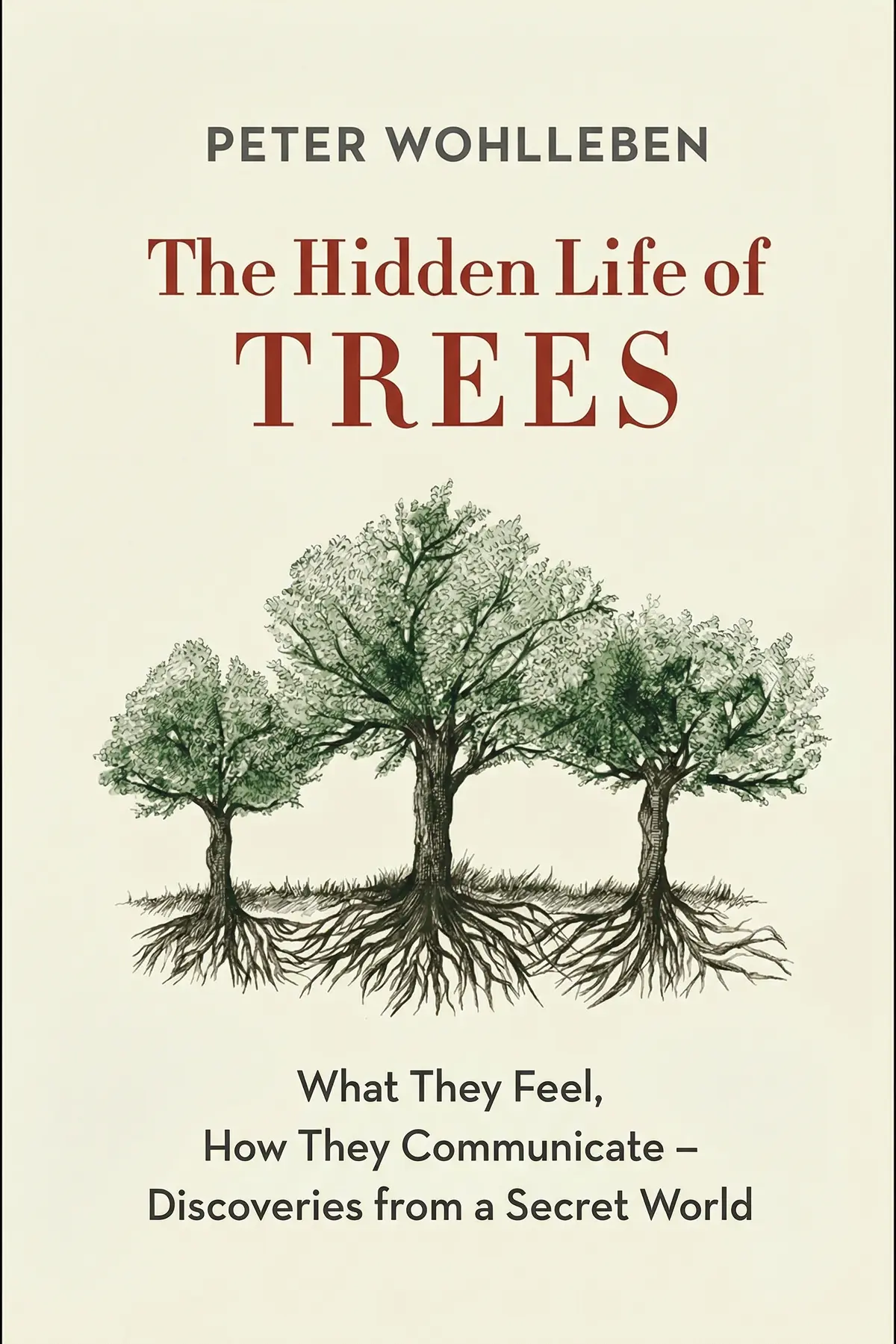
Table of Content
1. Introduction
1 min 50 sec
Have you ever walked through a dense forest and felt as though you were in the presence of something much older and wiser than yourself? Most of us view trees as static fixtures of the landscape—useful for shade, perhaps, or as a source of wood for our homes. We see them as individuals, standing in silent competition for sunlight and rain. But if you look closer, beneath the bark and under the soil, a much more dramatic and interconnected story is unfolding. Trees are not the solitary, passive organisms we often imagine. They are social creatures with complex inner lives, capable of communication, memory, and profound cooperation.
In this exploration of the forest’s hidden dynamics, we are guided by the insights of Peter Wohlleben. After decades spent managing forests, Wohlleben began to notice patterns that traditional forestry often overlooked. He realized that trees behave more like a family or a tight-knit community than a group of independent competitors. They look out for one another, sharing food with the weak and warning their friends about incoming threats. They have distinct personalities, with some individuals being more cautious while others take bold risks.
This journey into the woods will reveal the incredible mechanisms that allow trees to thrive for centuries. We will discover the ‘electric internet’ that links the forest floor, the chemical signals that drift through the canopy, and the vital role these green giants play in keeping our entire planet habitable. By the time we reach the end of this walk, you will likely never look at a single tree the same way again. Instead of seeing a lone trunk, you will see a member of a vast, whispering society that has mastered the art of survival through connection. Let’s step into the secret world of the forest and learn what it truly means to be a tree.
2. The Forest as a Global Life-Support System
2 min 09 sec
Discover how trees act as massive biological pumps and carbon vaults, maintaining the delicate balance of the earth’s climate and water cycles.
3. The Deep Connection Between Trees and Soil
2 min 04 sec
Learn how the very ground beneath your feet is a product of ancient forests and how living trees continue to shape the earth.
4. The Perilous Journey from Seed to Giant
2 min 04 sec
Explore the diverse reproductive strategies of trees and the incredibly slim odds a tiny seed must overcome to reach adulthood.
5. Individual Characters and the Capacity to Learn
2 min 00 sec
Think trees are all the same? Discover how individual trees exhibit personality traits and learn from their past mistakes.
6. The Secret Language of Scents and Signals
2 min 04 sec
Trees are surprisingly chatty. Find out how they use invisible chemicals and electrical pulses to talk to their friends.
7. Mutual Aid and the Power of the Community
2 min 01 sec
Discover the heartwarming ways trees support their sick and elderly, proving that for a tree, it’s better to collaborate than compete.
8. The Mycelial Alliance: Fungi as Forest Partners
1 min 59 sec
The relationship between trees and fungi is a masterclass in diplomacy, involving high-stakes trade and even a bit of ruthlessness.
9. Survival Strategies and the Art of Healing
2 min 04 sec
From blood-sucking insects to snapping limbs, learn how trees defend their bodies and heal their wounds over centuries.
10. Rethinking the Future of Our Forests
1 min 57 sec
Modern forestry often treats trees like crops, but the true value of a forest lies in its age, its diversity, and its social bonds.
11. Conclusion
1 min 42 sec
We began this journey by looking at trees as silent, perhaps even boring, fixtures of the natural world. But as we have seen through the eyes of Peter Wohlleben, nothing could be further from the truth. The forest is a place of constant conversation, profound empathy, and strategic intelligence. Trees are the ultimate social networkers, using the ‘Wood Wide Web’ to ensure that the entire community survives and thrives together. They teach us that competition is only one part of the story of life; cooperation is what creates true longevity and resilience.
The throughline of the forest’s hidden life is the power of connection. From the massive water pumps that hydrate our continents to the microscopic fungal threads that carry electrical warnings, everything in the forest is linked. When we understand that a tree is a feeling, learning, and social being, our responsibility toward the woods changes. We can no longer view a forest as merely a collection of trunks to be counted and harvested. We must see it as a delicate, ancient society that we have the privilege of witnessing and the duty to protect.
As you walk among trees in the future, take a moment to pause. Listen for the signals passing through the leaves and think about the vast conversations happening beneath your feet. Remember that the giant standing before you likely has a family, a history, and a community that supports it. By bringing this newfound respect into our relationship with nature, we can ensure that these secret, hidden lives continue to flourish for centuries to come. The forest has much to tell us, if only we are willing to slow down and listen to its quiet, green wisdom.
About this book
What is this book about?
The Hidden Life of Trees reveals that a forest is far more than just a collection of individual plants standing near one another. It is a sophisticated, social community where trees actively communicate, support their struggling neighbors, and even nurture their offspring through complex underground networks. Drawing on years of observation and scientific research, the book explains the mechanics of the 'Wood Wide Web' and the remarkable ways trees manage resources like water and carbon. You will learn how trees use scent and electricity to warn each other of danger, how they partner with fungi to expand their reach, and why the longevity of an ancient forest depends on the cooperation of every inhabitant. By the end, you will see the woods not as a source of timber, but as a vibrant, feeling society that deserves our protection and respect. It promises a total shift in your perception of the natural world, moving from a view of trees as static objects to seeing them as intelligent, social beings.
Book Information
About the Author
Peter Wohlleben
Peter Wohlleben is a German author and forester who spent over twenty years working in traditional forest management. Eventually, he left his position to establish an ecologically minded forest enterprise in the Eifel region of Germany. There, he champions alternative forestry practices and the preservation of primeval forests. He has written several books on nature and environmental protection, including the notable title Der Wald – Ein Nachruf, which translates to The Forest – An Obituary.
Ratings & Reviews
Ratings at a glance
What people think
Listeners find this work captivating and a joy to experience, packed with marvelous facts regarding trees as intricate, living organisms. The straightforward prose of the German arborist ensures the material is easy to understand, and listeners enjoy how it ignites a fresh consciousness of the vibrancy within the natural world. Additionally, they cherish the observations on tree communication and social interaction, characterizing the experience as nearly spiritual.
Top reviews
Laddawan
Ever wonder why a forest feels so different from a park? This book provides a deeply moving explanation by revealing the hidden social networks that exist beneath our feet. Peter Wohlleben manages to take complex biological processes and turn them into a narrative that feels almost like a fairy tale, yet it’s grounded in his years of observation as a forester. I found the concept of the 'wood-wide-web' particularly mind-blowing, especially how older mother trees actually nourish their saplings through fungal connections. It’s a paradigm-shifting read that makes you realize trees aren't just objects; they are a community with their own etiquette and communication. Truth is, I’ll never look at a beech or spruce the same way again.
Show moreNam
After hearing several people rave about this German forester, I finally dove in. The way Wohlleben describes the forest as a superorganism is nothing short of brilliant. He breaks down how trees communicate through pheromones and electrical impulses to warn each other of danger, like a giraffe attack or a spreading fungus. Personally, I appreciated how he bridges the gap between scientific research and common observation. While some might find his personification of plants a bit much, it helps create a bridge of empathy that we desperately need in our current climate crisis. It’s an accessible, fascinating look at a world that usually moves too slowly for us to notice.
Show moreCameron
Walking through the woods will never be the same experience for me again. This book is almost spiritual in the way it redefines our relationship with nature, painting a picture of trees as sentient, caring members of a community. I loved the section on how they use scent to summon specific predators to eat the insects attacking their leaves; it’s like they have their own security system! Wohlleben’s perspective as a seasoned German arborist brings a level of authenticity that you just don’t get from academic textbooks. It’s a beautiful, gentle book that encourages us to slow down and listen to the world around us. Absolutely essential reading for anyone who feels a connection to the outdoors.
Show moreManee
Picked this up on a whim and ended up finishing it in two sittings. I was totally captivated by the stories of acacia trees warning their neighbors about giraffes and the way beech trees help keep their fallen friends alive for centuries. It’s a fascinating, almost magical look at the secret lives of the organisms we usually take for granted. The author's genuine passion for his work as a forester shines through on every page, making the information feel personal and urgent. While I understand why some critics dislike the anthropomorphic language, I think it’s a necessary tool to make people care about conservation. It's a delightful, eye-opening book that everyone should read at least once.
Show moreJune
This book completely changed how I view my morning hike. Before reading this, a tree was just a static part of the landscape, but now I see them as active participants in a complex social drama. The chapters on how trees manage their water usage and 'socialize' with their neighbors are genuinely eye-opening. Wohlleben’s writing is clear and engaging, making it easy to digest even if you don't have a background in ecology. I did find some of the analogies a little repetitive toward the end, but the overall message is so powerful it hardly matters. It’s a wonderful reminder that we share this planet with incredibly sophisticated beings that deserve our respect.
Show moreOoi
Wohlleben writes with such infectious glee that it’s hard not to get swept up in his world. He acts as an enthusiastic guide, leading you through the woods and pointing out the 'street kids' and the 'executive offices' of the canopy. Not gonna lie, I was skeptical about trees having a 'memory,' but the evidence he presents about how they adapt to droughts is compelling. My only real gripe is that the chapters are sometimes frustratingly brief, leaving you wanting more depth on specific species. However, as an introductory text to forest ecology, it succeeds in sparking a renewed sense of wonder for the natural world. It's a quick, delightful read that stayed with me long after I finished.
Show moreEnd
To be fair, I went into this expecting a dry botanical textbook and was pleasantly surprised by how readable it was. The translation from German is excellent, maintaining a warm and conversational tone throughout. I particularly enjoyed learning about the differences between planted forests and ancient, old-growth systems. It turns out that trees in managed forests behave like 'street kids' because they lack the parental guidance of older trees. While the author occasionally leans too heavily on metaphors, the core science about electrical signals traveling through root tips is grounded in real research. It’s a solid, informative read that manages to be both educational and entertaining for a general audience.
Show moreEleanor
Maybe it’s just the translation, but there’s a certain poetic simplicity to the way these concepts are explained. I’ve always felt a sense of calm in the forest, and now I have a better understanding of the complex biological activity contributing to that atmosphere. The way the author explains how trees coordinate their blooming cycles to maximize survival is genuinely clever. In my experience, most nature books are either too academic or too 'woo-woo,' but this finds a comfortable middle ground. Some might find the short chapters a bit light on detail, but I think it makes the book much more accessible for a casual reader. It’s a great gift for the gardener or hiker in your life.
Show morePim
The information here is undeniably fascinating, but the structure felt disjointed. It's like having a conversation with a very knowledgeable old man at a pub who keeps jumping from one cool factoid to another without ever fully finishing his thought. Each chapter is only a few pages long, which leads to a bit of intellectual whiplash as you pivot from 'tree school' to 'the wood-wide-web' in the blink of an eye. Look, the content about how trees support their sick neighbors is beautiful and heart-wrenching, but the organization could be much tighter. It functions better as a collection of essays than a cohesive argument. Still, it’s worth reading if you want to understand the basics of forest communication.
Show moreThida
I really struggled with the tone of this one. While the underlying science regarding symbiotic networks and root communication is fascinating, the constant anthropomorphism felt incredibly grating. Do trees really have 'feelings' or 'personalities,' or are we just projecting our own human experiences onto complex biochemical reactions? Every time Wohlleben used terms like 'tree kindergarten' or suggested a tree says 'ouch,' it pulled me out of the narrative. Frankly, I would have preferred a more rigorous, scientific approach with clearer citations instead of these short, anecdotal chapters that often end right when they get interesting. It's okay as an introduction for laypeople, but it feels a bit too childish for my taste.
Show moreReaders also enjoyed



Beyond Words: What Animals Think and Feel
Carl Safina
Cod: A Biography of the Fish That Changed the World
Mark Kurlansky

Comfortably Unaware: What We Choose to Eat is Killing Us and Our
Richard A. Oppenlander

Cradle to Cradle: Remaking the Way We Make Things
William McDonough

Drinking Water: A History
James Salzman

Earth for All: A Survival Guide for Humanity
Sandrine Dixson-Decleve

Eating Animals
Jonathan Safran Foer
AUDIO SUMMARY AVAILABLE
Listen to The Hidden Life of Trees in 15 minutes
Get the key ideas from The Hidden Life of Trees by Peter Wohlleben, plus 5,000+ more titles in English and Thai.
- 5,000+ titles
- Listen as much as you want
- 7-day free trial
- Cancel anytime







